When Sam Sharpe Rose that day In Jamaica Revolution birthed Christmas strike sought wages Plantations burned, peace was lost Sixty thousand enslaved rose—armed Hanged, yet named National hero When Sam Sharpe rose that day in Jamaica
Afterword: Emancipation in Jamaica was not granted. It was fought for. It was won through the courage, faith, and resistance of enslaved Africans who refused to accept slavery as their destiny.
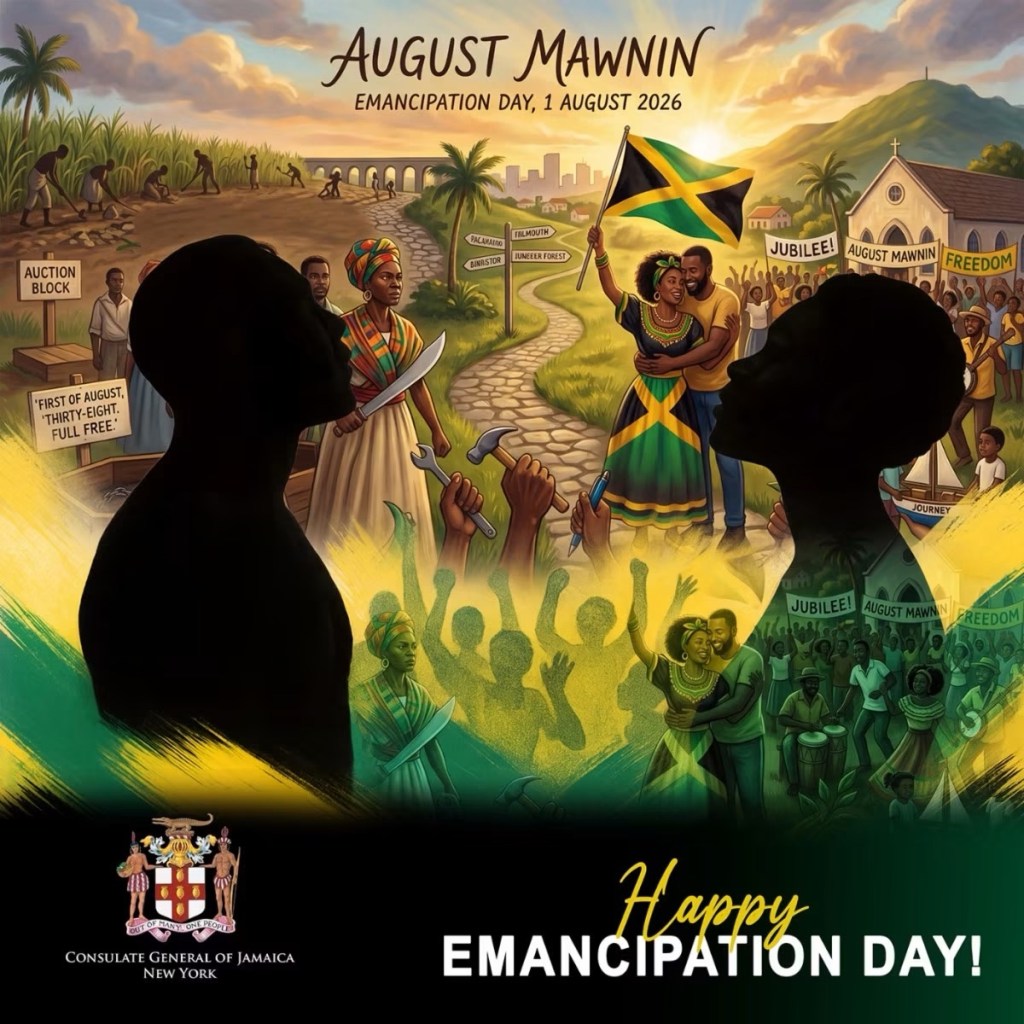
One of the defining moments came on Christmas Day, 1831, when Baptist deacon Samuel Sharpe led what was intended to be a peaceful strike for freedom and fair wages. Instead, it became the Sam Sharpe Rebellion—the largest slave uprising in the British West Indies. For eleven days, as many as 60,000 enslaved Jamaicans stood together in one unyielding demand: freedom.
Although the revolt was suppressed, it changed history. The brutality of its aftermath and the economic losses shook Britain and helped pave the way for the Slavery Abolition Act of 1833. On August 1, 1834, slavery was legally abolished across the British Empire, with full freedom finally arriving in 1838.
As we commemorate Emancipation, we remember this truth:
There is something special about the first week of August for every Jamaican. It is a time when we pause to remember where we have come from, celebrate who we are, and look with hope toward the future.
Emancipation Day
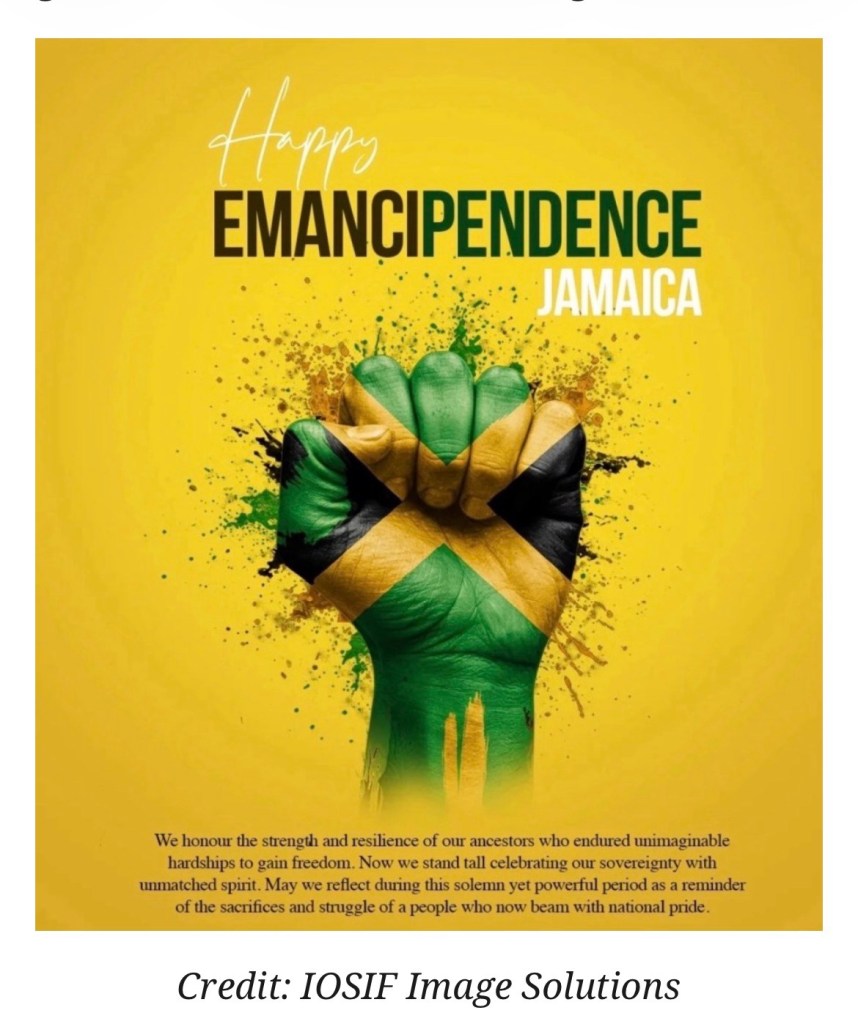
Emancipation Day, observed on August 1, marks the abolition of slavery in the British colonies.
For Jamaicans, it is more than a public holiday. It is an opportunity to reflect on the enduring significance of freedom while honouring the resilience, courage, and achievements of those whose sacrifices helped shape Jamaica into the nation it is today.
The observance has its own remarkable history.
August 1st became an official public holiday in 1893 to commemorate emancipation.
Following Jamaica’s Independence in 1962, the celebration was discontinued as national attention shifted to Independence Day.
In 1997, our then Prime Minister—P. J. Patterson—restored Emancipation Day as a standalone national holiday on August 1, ensuring that this defining chapter of our history would never be forgotten.
Independence Day
In five days, on August 6, we celebrate Jamaica’s Independence, marking another milestone in our journey as a nation.
Together, these two commemorations invite us to reflect on both freedom gained and nationhood forged.
Over the next week—from August 1 to August 6—I invite you to join me for Jamaica, My Jamaica, a special series celebrating the island I will always call home. I’ll be sharing stories, poetry, history, culture, food, travel, and personal reflections that capture the beauty, resilience, creativity, and spirit of Jamaica.
Whether you’re Jamaican by birth, heritage, or simply in heart, I hope you’ll come along for the journey of Jamaica’s Emancipendence.
Beforeword: In recent days, Jamaica has found itself in renewed conversation about the place of Patois/Patwa in national life, sparked by debate over its attempted use in Parliament. The moment reignited discussion—at home and across the diaspora—about language, identity, culture, and belonging.
This piece,“Speak Jamaican”, does not enter that debate. Rather, it pauses to appreciate something the conversation itself reminds us of: that Patwa is deeply woven into the fabric of Jamaican life and culture. This piece is an offering to the story of Patwa.
[Read and listen along]
Speak Jamaican
As a Jamaican living abroad When asked where I’m from an’ me seh: “I’m from Jamaica” Non-Jamaicans are soon to ask me to: “Speak Jamaican!”
Dat usually mean: Dem wan fe ear de melody De lilt—yuh know dat sing-song way dat we talk? De rhythmic roll like poetry pan beat
Dem ear de music But dem nuh feel de fight
Cause when yuh ask mi fi “speak Jamaican” Yuh nah jus ask fi ear de soun Yuh ah ask me fi call pan Mi lineage Mi bloodline Mi people dem Yuh ah ask me fi reclaim me identity, me dignity, me language— Patois (Patwa)!
Patwa a nuh “broken English” It’s a language dat was bawn in bondage Shape pan suga plantations weh African tongues blen wid de colonial Spanish, French, Portuguese, an’ di “Queen’s English”
It was code It was kin It was freedom in syntax It was survival
So when yuh ask me fi “speak Jamaican” Yuh really a ask mi fi channel de powas of dose dat come before me Like Louise Bennett-Coverley—who we lovingly call Miss Lou Who tek de same words weh dem seh wasn’t proppa, an mek dem magic She seh: patwa belang pan di page, pan di stage, an inna de people dem mout Suh, She gi we permission fi talk like weself
But when you seh: “speak Jamaican” Mi know weh yuh really waan fi ear, yuh nuh Yuh waan fe ear: “Wha’gwone?” “Mi irie!” “No problem, mon.” De cute phrase dem De soundbites Yuh nuh really waan fi ear ’bout de istry weh mix wid sweat, blood, bullets, an rebellion Cause yuh nuh undastan seh yuh a ask mi fi talk a language weh carry di istry, di struggle, an di brilliance of a people who neva did wait fi freedom but who tek it
Suh— Yuh ready fi ear bout colonial rule? Bout how we bruk free? Bout de 1950s, early ’60s— De rise of Patwa in book, in band, in beat? Yuh ready fi stan up in de trut, bout how English siddun high pan pedestal while di native language was silenced in classrooms an courtrooms?
An’ who can feget de ’70s— De era when reggae did a com inna its own—saturated wid Patwa, it chant de Jamaican struggle against poverty an social injustices It was de voice of those who lived in de ghettos dat was turned into garrisons De cry gainst dose dat ‘arm de yout dem fi lock dun votes an’ lock dun neighborhoods Where Cold War powers played chess wid people lives An’ in a matta of months, ova 800 dead in di lead-up to a election An still we cyaah feget di cries inna di streets
So when yuh ask mi fi “speak Jamaican” Mi haffi ask yuh back— Yuh ready fi listen? Yuh ready fi feel how dis language carry trauma an triumph, ardship an ope? Yuh ready fi know dat dis language hol’ we togedda— Jamaicans ah yawd, to Jamaicans abroad wid— One tongue One riddim One heart One love
Patwa— A resistance song A blueprint of resilience A living archive of emotions Dis a de voice weh preserve culcha long before wi could a write it dun Wid every phrase a reflection of who we are as a people weh we ah come from an how we still a rise
Suh yeh, mi can “speak Jamaican” But understan— Yuh nah jus get words Yuh a get all ah we— All a we legacy All a we istry An how wi tek back wi voice How wi claim independence— Not just fe we nation But fi weself
Suh, yeh, mi can “speak Jamaican” But, can you hear it?!
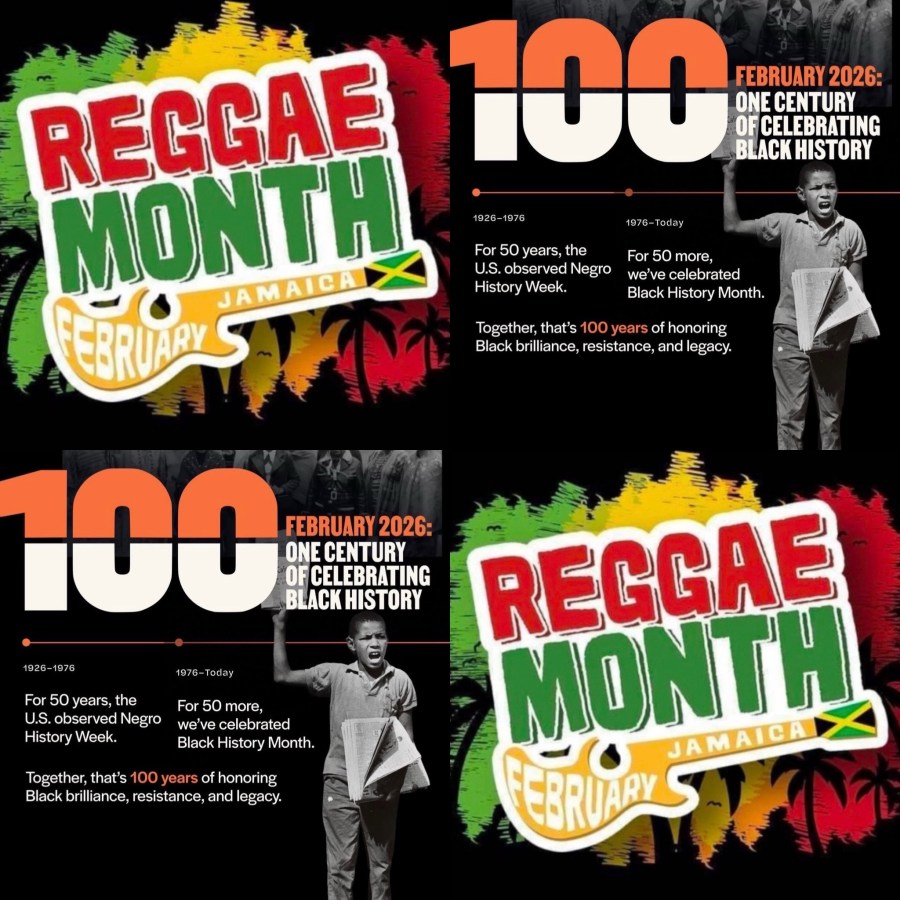
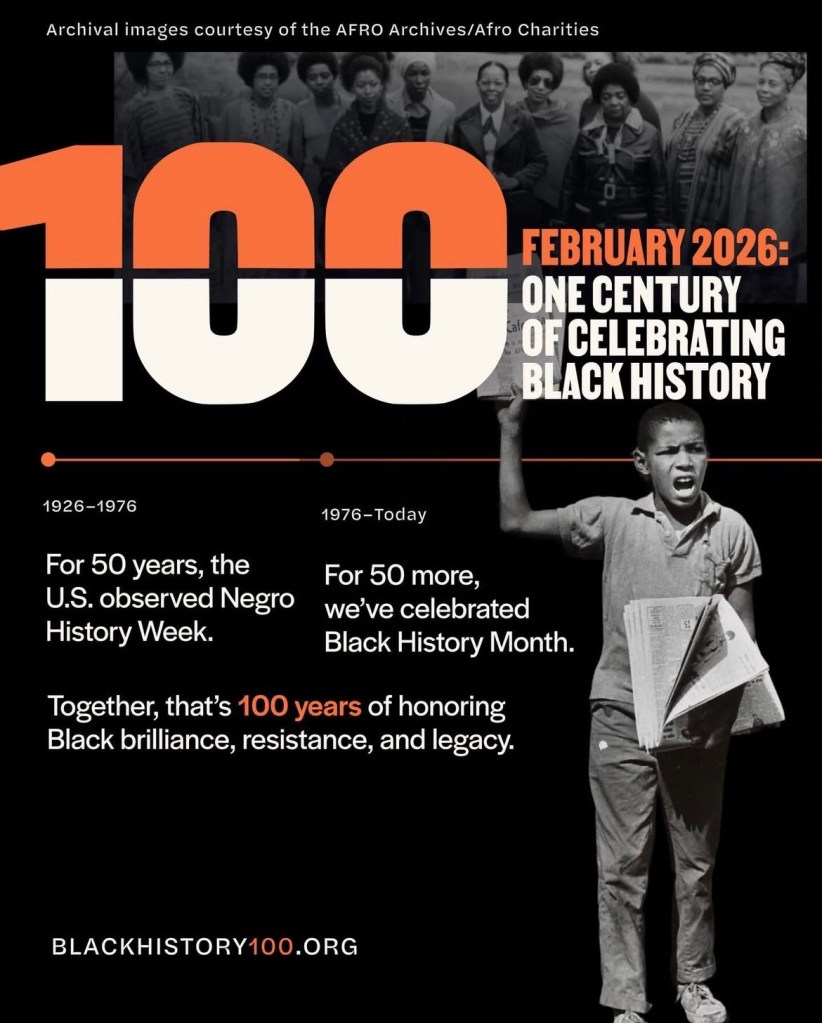
Black History Month — 100 Years Theme: A Century of Black History Commemorations
It started as a week, quiet but determined A steadfast commitment to keep memory alive In the stories carried by teachers, parents, preachers On the wings of “good trouble” when the fight is needed It started as a week, quiet but determined From 1926 to 2026, black history kept moving A century marking time with names, faces Experiences that became presence When derided, learned how to go high It started as a week, quiet but determined.
Reggae Month — Jamaica Theme: Rhythms of Resilience
This music rose from survival, not trend From yards, sound systems, everyday struggle Lyrics telling truth before it was safe Bass line steady as the voices that hummed it This music rose from survival, not trend By 2008, the world was already listening— to justice wrapped in melody to culture feeding both soul and economy Reggae still teaches us how to endure This music rose from survival, not trend
I grew up when reggae was finding its roots When reggae was suspect When Rasta meant trouble When dreadlocks closed doors and the music was blamed for what the country didn’t want to face
Flashback—seventies Jamaica Transistor radios balanced on window sills Needles dropping on scratched vinyl while elders shook their heads: “Turn down dat” “Change de station” “Dat a no music”
Reggae wasn’t welcomed then It was scrutinized, watched Dreadlocks meant no job, no classroom Rastas crossing the street to avoid harassment Church sermons thick with warning Babylon named, not understood as Rasta knew it—as rebellion not revelation
Sound systems told a different story Speaker boxes stacked like monuments Bass ricocheting off zinc fences Beats thumping through yards where truth was louder than fear Reggae carried news The sentiments of a people in the struggle Stories the national newspaper wouldn’t headline
It survived on borrowed amps on spiritualism and repetition on voices that refused to be silent: Toots and the Maytals helped to name the genre: “Do the Reggay,” Toots said in 1968 The Wailers—Bob Marley, Peter Tosh, Bunny Wailer—grounded reggae in social reality and Rastafarian thought Then came Jimmy Cliff, preparing global audiences for reggae
Now look—
The same music once dismissed is Jamaica’s loudest ambassador The same rhythms once scorned now open world stages Reggae feeds families Fuels festivals Artists across the world build careers on this foundation— our basslines under their success, our cadence shaping their sound
Some cite the source Some remix and rename it But the root remains— Reggae. Jamaica.
So Reggae Month is a pause to remember how we once doubted our own voice and how that voice went on to teach the world how to listen
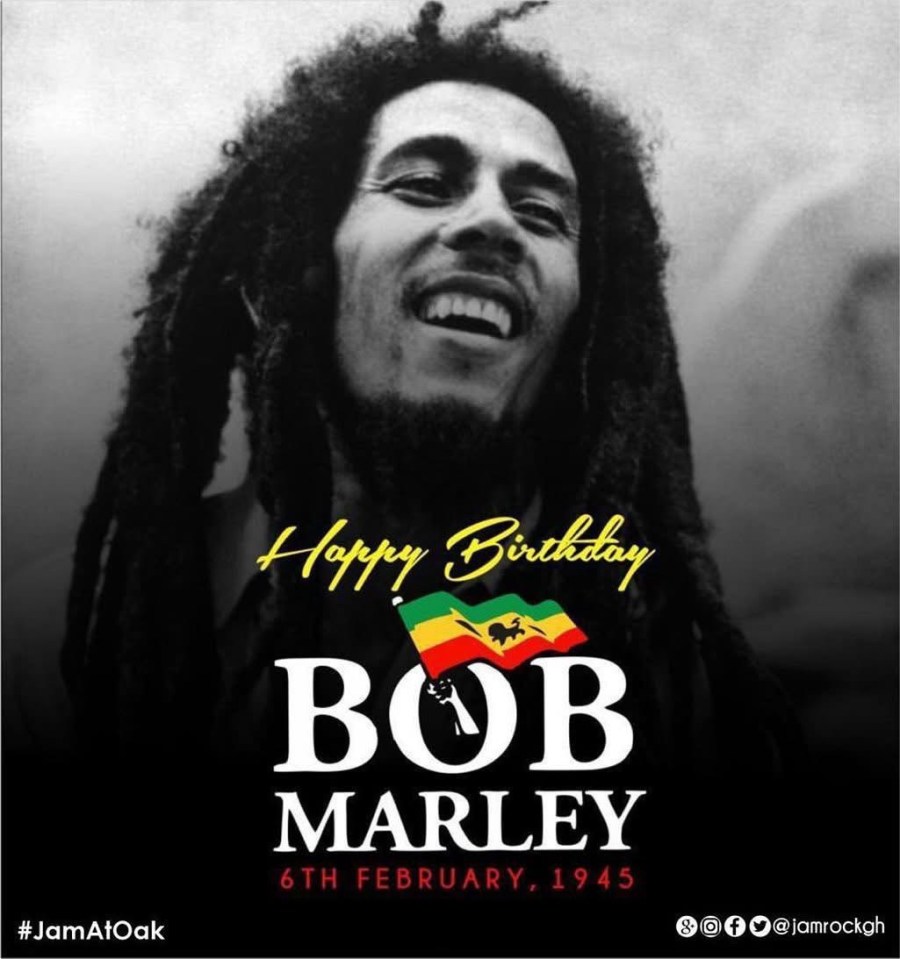
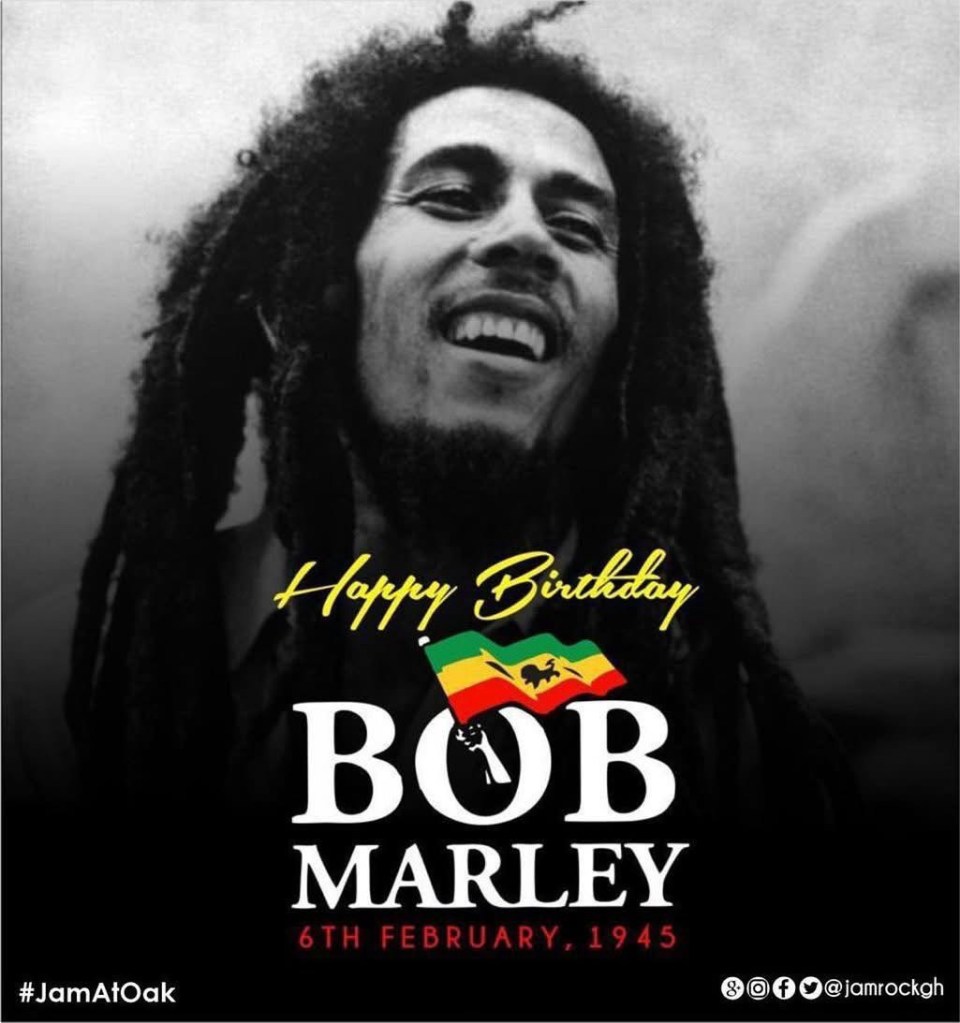
A four-part birthday tribute to the Legend and in honor of Reggae Month 2026
(6 February 1945 – 11 May 1981)
PART I: BEFORE THE ICON
Before the T-shirts Before the flags dangled in dorm rooms Before the word legend softened the edges There was a yard Tin roofs Shanty houses Bare feet kicking soccer ball Musicians learning rhythm from dust
Reggae wasn’t a product yet Bob arrived as a witness One more voice from Trench Town saying: This is what hunger sounds like This is how hope stays alive
PART II: THE MESSAGE
People like to say the music was about love That’s only one side of it
Love, yes—but, It was A love that argued back A love that named Babylon—the system of oppression A love that would not let leadership lapse into amnesia A love that challenged power, challenged politicians, that made comfort uneasy
“Is this love that I’m feeling, or is this the love that I’ve been dreaming of?”
When bullets came for him, they weren’t confused They knew the danger of a man who could move crowds without running for office
Bob didn’t claim politics Politics claimed him
PART III: WHEN JAMAICA SPOKE TO THE WORLD
Through Bob, a small island stopped whispering Suddenly, Jamaica wasn’t just a place on a map— it was a position A voice in the hallowed halls of the United Nations Denouncing apartheid Reggae crossed borders South Africa heard it Rhodesia heard it as Marley’s liberation song “Zimbabwe” ushered in independence Reggae in the hands of Bob— Protest learned melody Redemption was song Philosophy you could dance to People who had never seen Jamaica felt understood by it
Bob didn’t market He transmitted
PART IV: THE COST OF IMMORTALITY
Now he is everywhere Often reduced to smoke and slogans Stripped of context Sold back to descendants of struggle as lifestyle
But listen closely— the songs still resist simplification They still ask hard questions: “How long shall they kill our prophets, while we stand aside and look?” They still refuse silence: “Get up, stand up: stand up for your rights.” They still carry the unfinished work: “Open your eyes and look within, are you satisfied with the life you’re living?”
Legacy Legend isn’t comfort it’s responsibility Bob Marley was never asking to be worshipped He was asking: Who will carry this next?
Globally, February is widely known for celebrating Black history, and in Jamaica and across the Caribbean, for celebrating reggae.
Theme: A Century of Black History CommemorationsTheme: Rhythms of Resilience
This year I’ll be writing about bothbecause2026 is a significant year. It marks one hundred years since Black history was formally named and recognized in the United States, and eighteen years of acknowledging reggae music’s impact on culture and global consciousness. It is also no coincidence that reggae legends Dennis Brown and Bob Marley were both born in February—on the 1st and 6th, respectively.
I’ll be writing about both together because they carry shared histories of Africans displaced from the Motherland. Both are rooted in demonstrations of African love, resilience, survival, and the demand for social justice. Both exist to remember out loud our story, struggle, creativity, and endurance. Both became global while remaining connected to their African roots.
And, writing of both side by side show that history is not just about books or dates, but that its a living force in rhythm, language, memory, and the ways we tell our stories across cultures and borders.
Timing really is everything. My trip to Jamaica aligned with one of the island’s longest and most enduring stories of freedom, resistance, self-determination, and cultural resilience—the story of the Maroons.
The original Maroons were a mix of indigenous Taínos and Africans brought to Jamaica in the seventeenth and eighteenth centuries who resisted British enslavement and established independent communities deep in the rugged mountainous interior known as the Cockpit Country.
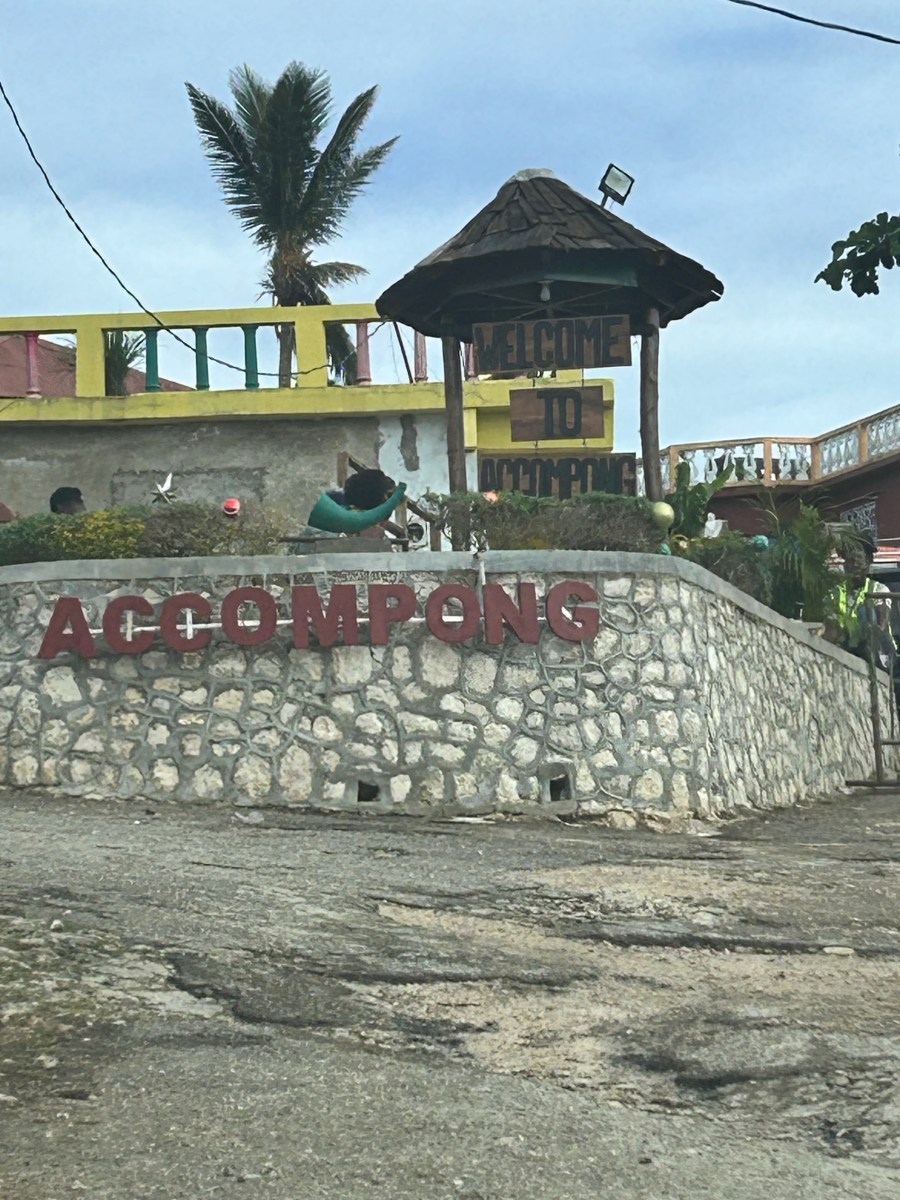
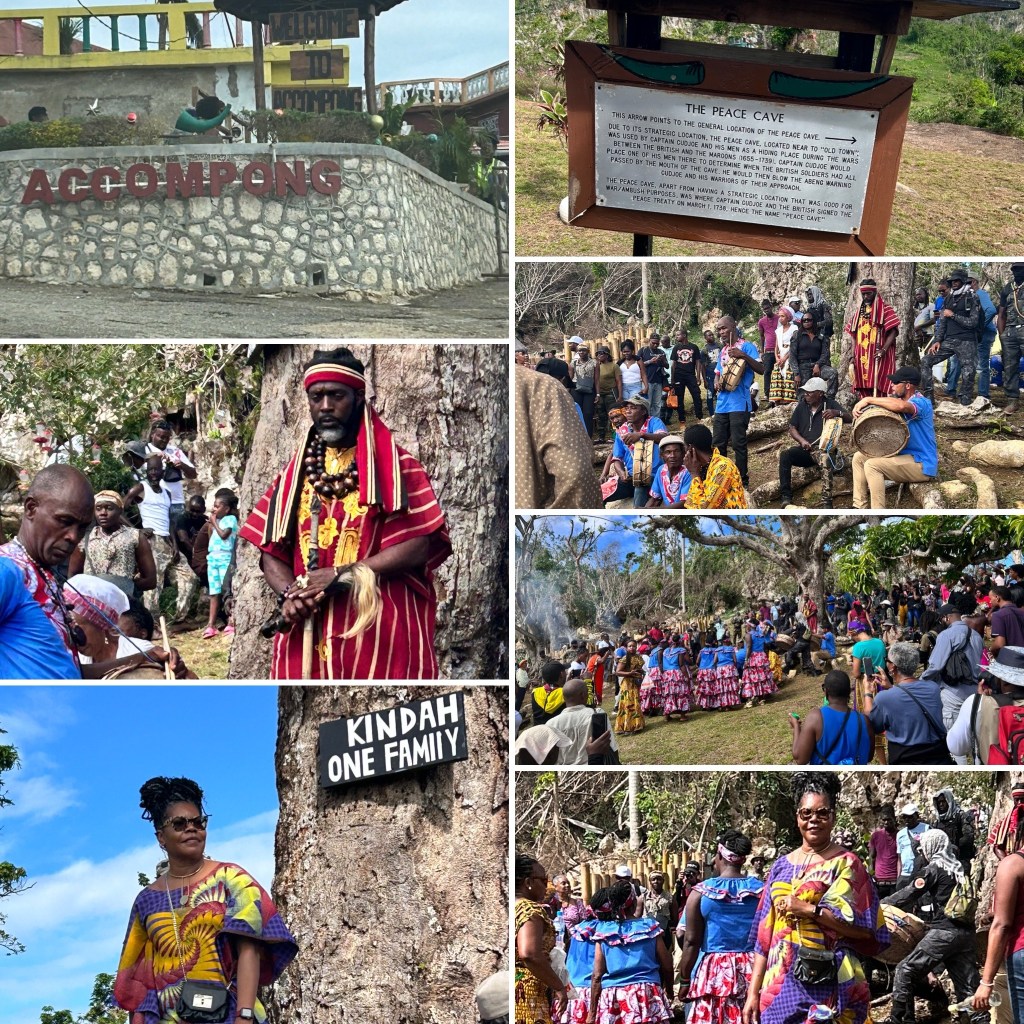
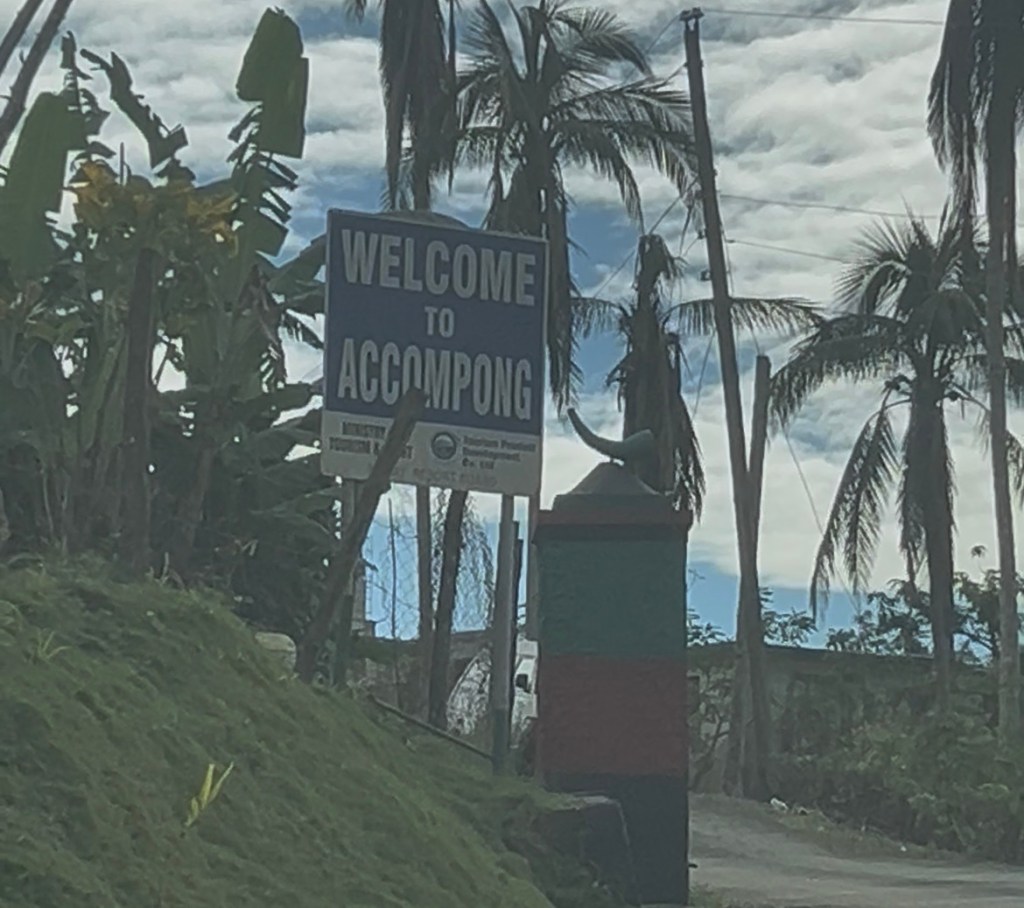
On January 6, 2026 I had the privilege of attending the 288th annual celebration of the Maroons of Accompong.
The story behind the Accompong celebration stretches back nearly three centuries to the end of the First Maroon War.
The day commemorates both the birth of the Maroon leader Kojo (Cudjoe) and his victory over the British, which led to the signing of the 1739 Peace Treaty. That treaty formally recognized Maroon freedom, granted land and self-governance, and laid the foundation for an autonomy that is still honored today.
The road to Accompong took us through small rural farming towns and villages, many shaped during the plantation era. Roads precariously carved into mountainsides—with deep precipices on one side—kept my foot planted on an imaginary brake on the passenger side, while the driver calmly assured us he knew these roads well enough to get us there safely.
Accompong is in St. Elizabeth Parish. The community sits approximately 1,400–1,500 feet above sea level, surrounded by steep limestone hills and dense forest—terrain that once provided natural protection for Maroon resistance fighters.
The Parish was severely impacted by Hurricane Melissa. The damage is still visible in both nature and infrastructure. Known as Jamaica’s breadbasket, St. Elizabeth contributes a significant share of domestic food output. The effects of Melissa’s destruction will be felt here and across the Island for years to come.
Still, the hurricane could not interrupt 288 years of commemoration. Even as rain fell, the Maroons, under the leadership of Chief Richard Currie, carried on.
As I arrived, the sound of the Abeng horn—a cow horn once used to signal danger and communicate across the mountains—rang out, calling the Maroons to assemble.
We made our way to the Kindah Tree—Kindah meaning “one family.”Once a massive mango tree that spread its canopy wide to shelter gatherings from the sun, it now stands reduced to less than half its size after Hurricane Melissa’s winds.
Chief Currie addressed the gathering with no script, speaking plainly about peace, autonomy, and the responsibility to keep Maroon culture alive, not simply remembered.
Drummers, singers, and dancers gathered for ritual. Attendees sat on rocks likely used by Maroon warriors centuries ago—places where strategies were planned against the British or victories quietly celebrated.
Though as visitors we looked on, this was no performance, no spectacle—only purpose. Sound and movement drawing people into a shared memory. And for me, standing there alongside two of Jamaica’s leading historians who offered history lessons in real time, the past felt close and conversational.
Later, the Maroons descended to the old town to honor their ancestors with offerings of freshly cooked food. This part of the observance is reserved for Maroons only, and the boundary is deeply respected.
Attendance was lighter this year due to the storm’s aftermath, but those of us who were present witnessed ancestral rituals, drumming, dance, and storytelling—core expressions of the Maroon legacy.
For a first-time witness, nothing about the day felt like reenactment. In the movement of bodies, the rhythm of drums, the blare of the Abeng, and the unfiltered words of the Chief, I saw pride, reflection, and remembrance moving together. I felt humbled to witness it.
The drums still beat. The Abeng still calls. The people still gather.
Ever wondered what it’s like at a Maroon celebration? It’s not history on display. It’s continuity. Accompong remains freedom practiced—resilient, rooted, and self-defined.
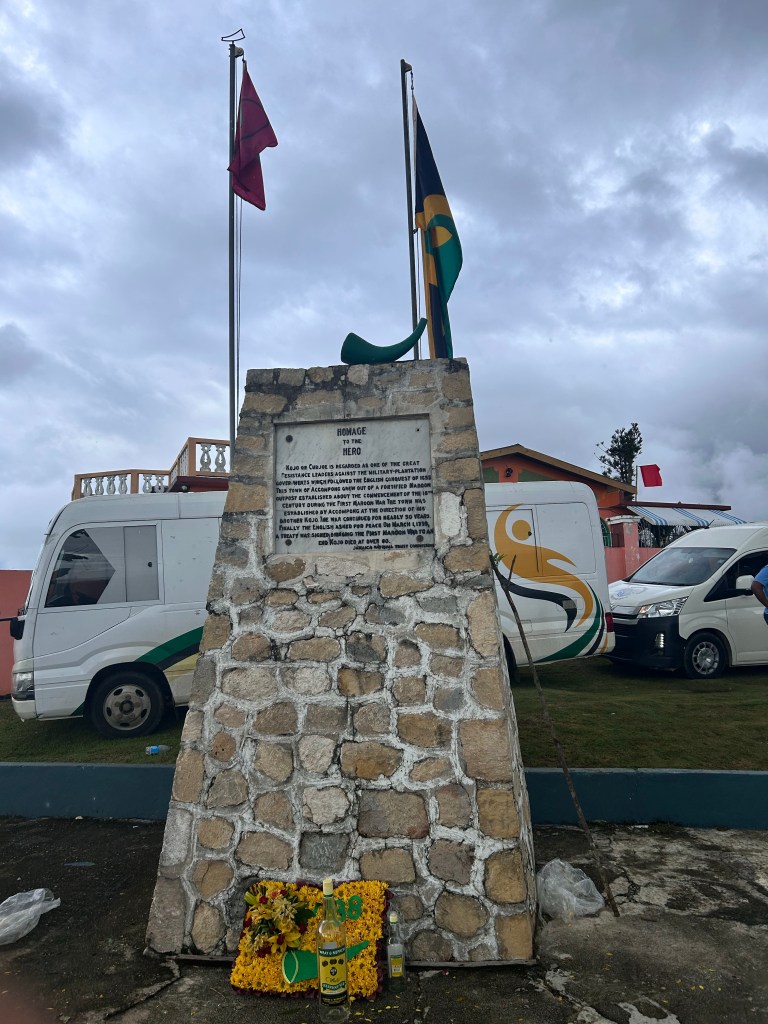
Monument close to entrance of the town reads: HOMAGE TO THE HERO Kojo or Cudjoe is regarded as one of the great resistance leaders against the military-plantation governments which followed the English conquest of 1655. This town of Accompong grew out of a fortified Maroon outpost established about the commencement of the 18th century during the First Maroon War. The town was established by Accompong at the direction of his brother Kojo. The war continued for nearly 50 years. Finally the English asked for peace. On March 1, 1739, a treaty was signed bringing the First Maroon War to an end. Kojo died at over 90. Jamaica National Trust Commission
Have you ever wanted to express a deep feeling and standard English words just weren’t enough?
Take njabulo — from isiZulu and also used in isiXhosa — it names a joy so full it spills over. The kind that rises from deep inside and radiates outward, touching everyone in its path.
Or, have you had those moments when language needed stretching?
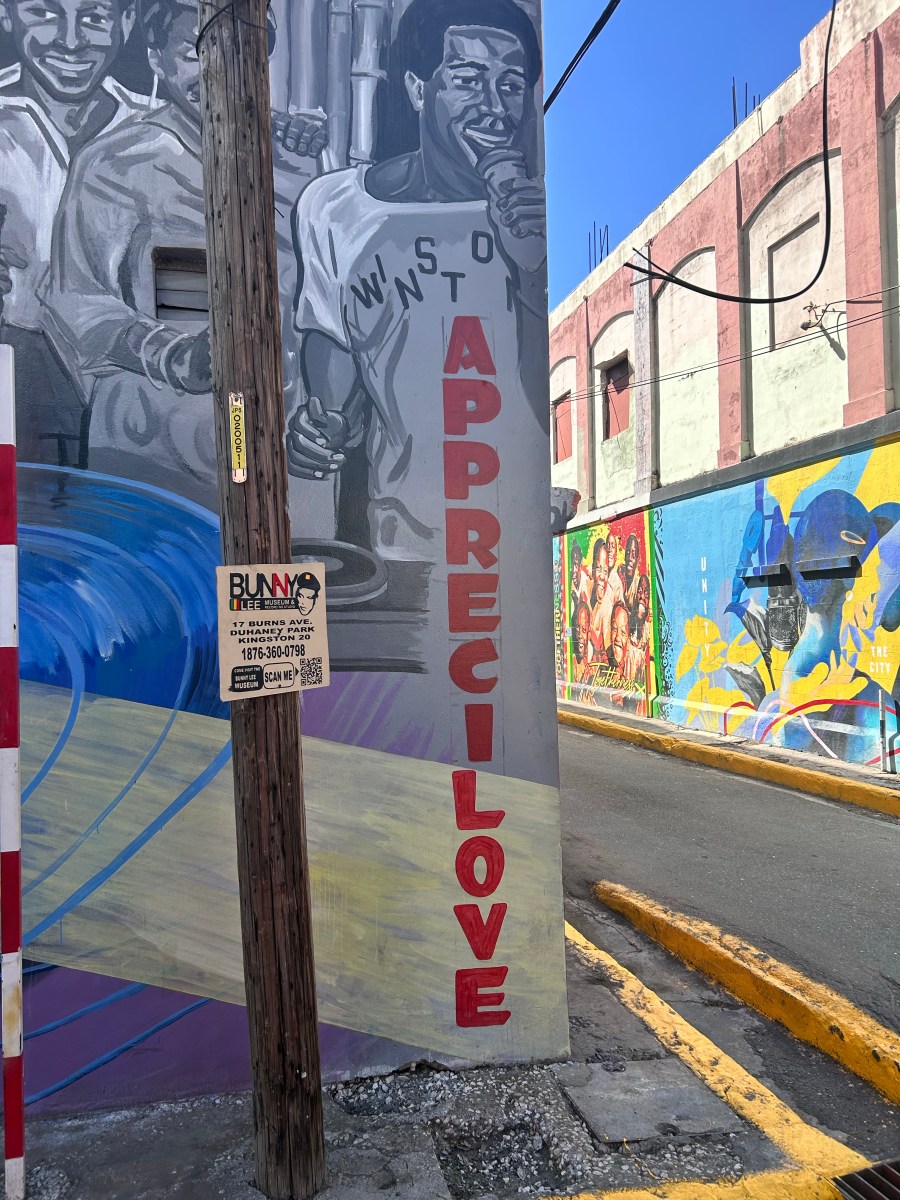
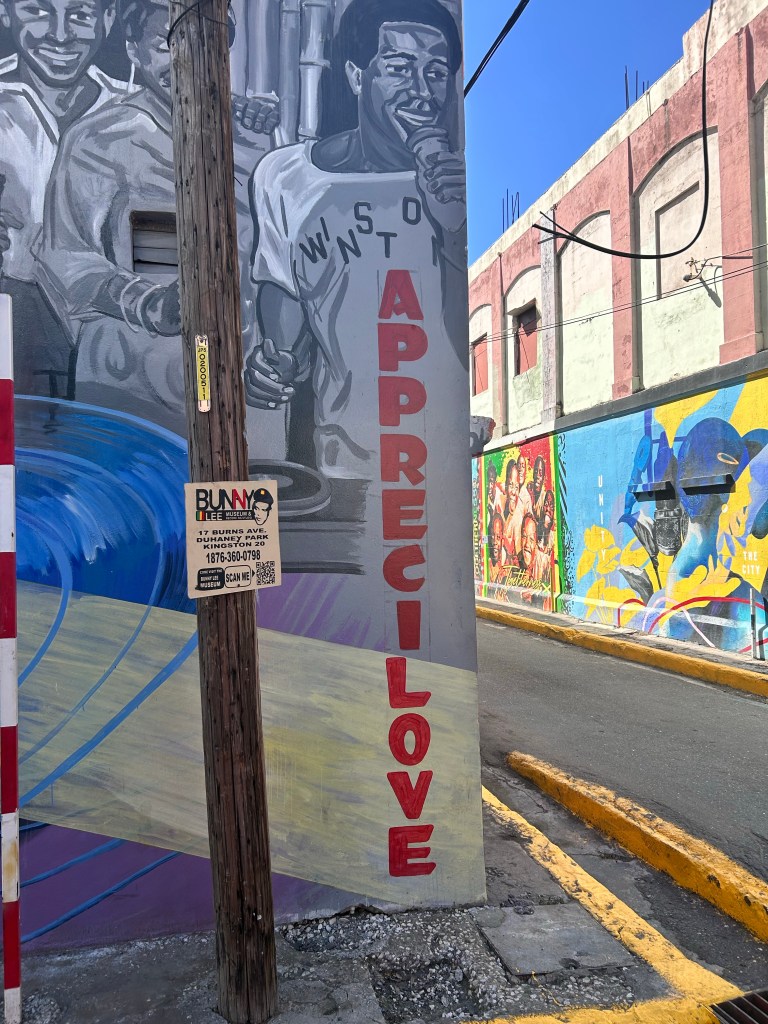
In Jamaica, we play with the English language to say more, to create words that carry weight. For instance, apprecilove—instead of appreciate—to express a level of gratitude rooted in care, affection, and presence, not mere politeness.
I start here because this piece is an expression of njabulo and of apprecilove — written for the friends who held me while I came home to support hurricane relief in Jamaica. (You can read that piece here.)
I came for three weeks to volunteer in communities affected by the hurricane. I was able to do that freely because friends stepped in without hesitation. When I said, “mi need a place fi cotch” (I need somewhere to stay), the response was immediate: “Yeah man, come.”
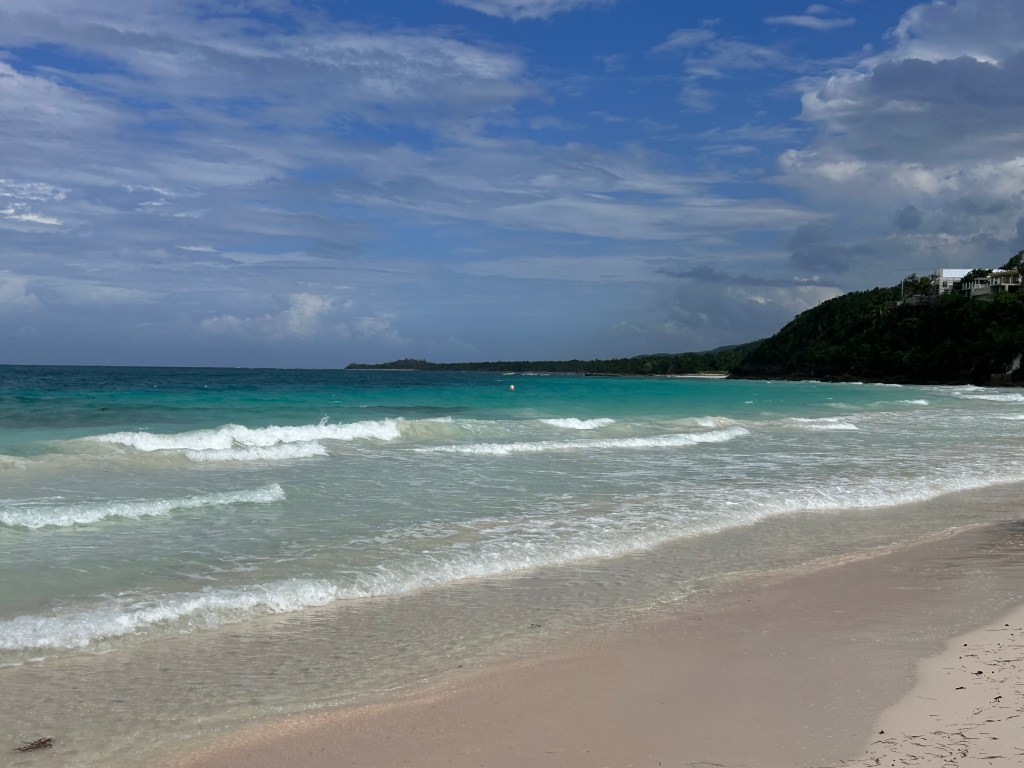
They opened their homes. Offered beds. Shared meals. Made space for rest between long days. One friend gave me a base — a place to store suitcases packed with supplies as I moved from parish to parish. Another offered her Airbnb so I could pause, breathe, and reset. In that small window of reprieve I had a few days to walk on sand soft as clouds under my feet and swim in water as clear as glass—Jamaica still knows how to restore!
Photo taken by me
Their generosity removed every practical barrier and let me focus on supporting. But more than that, it deepened our bonds. In the middle of relief efforts, shared tables and quiet conversations became part of the healing too. Their care didn’t just sustain, it strengthened our connection and affirmed the JamaiCAN-do spirit in the most personal way.
In apprecilove Open doors, steady friendships Thanks that run deep still
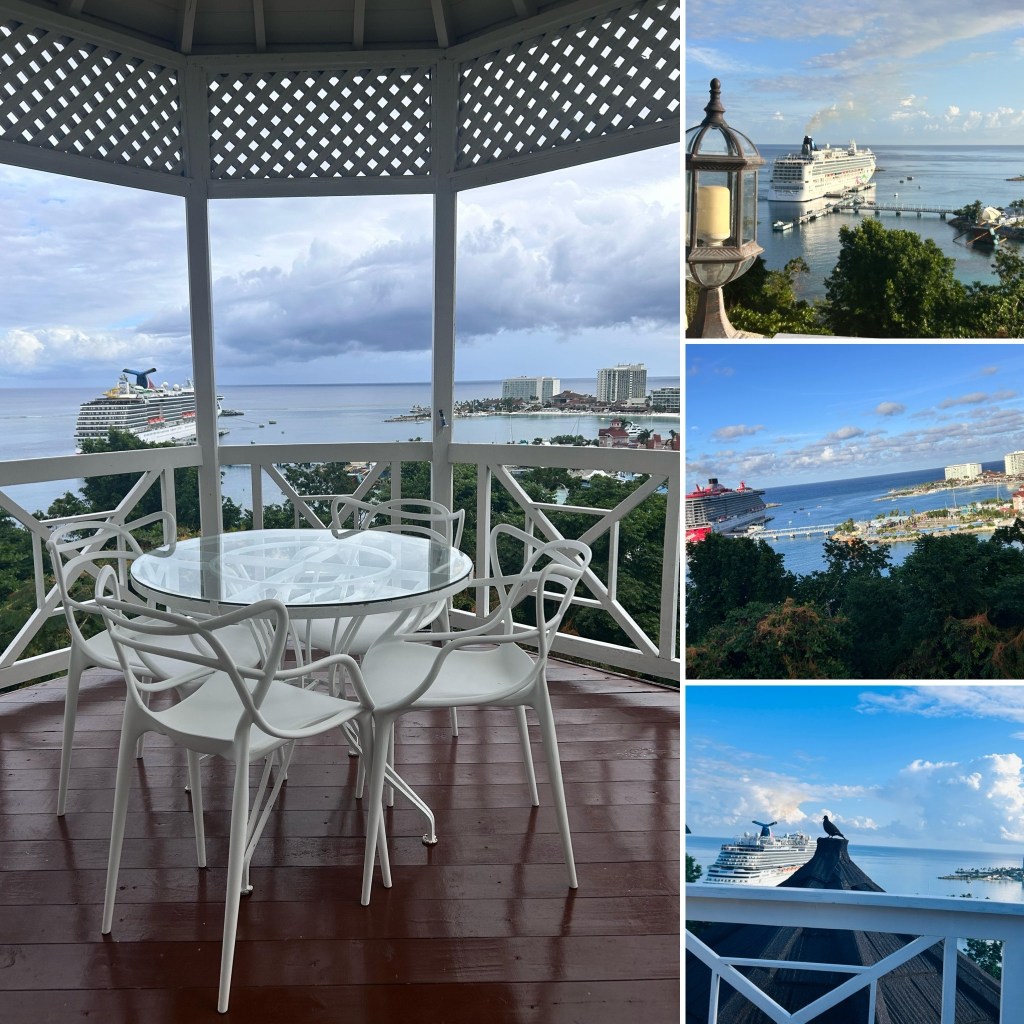
When next you plan to visit Jamaica and Ocho Rios (in beautiful St Ann Parish) is on your itinerary, check out this sweet spot—click HERE—the Airbnb with a most stunning view and easy access to beaches that feels like a glimpse of heaven.
Photos taken by me while enjoying this stunning view at the Airbnb
In my article Holding Change & Loss I promised to return with more writing and on-the-ground updates from being in Jamaica.
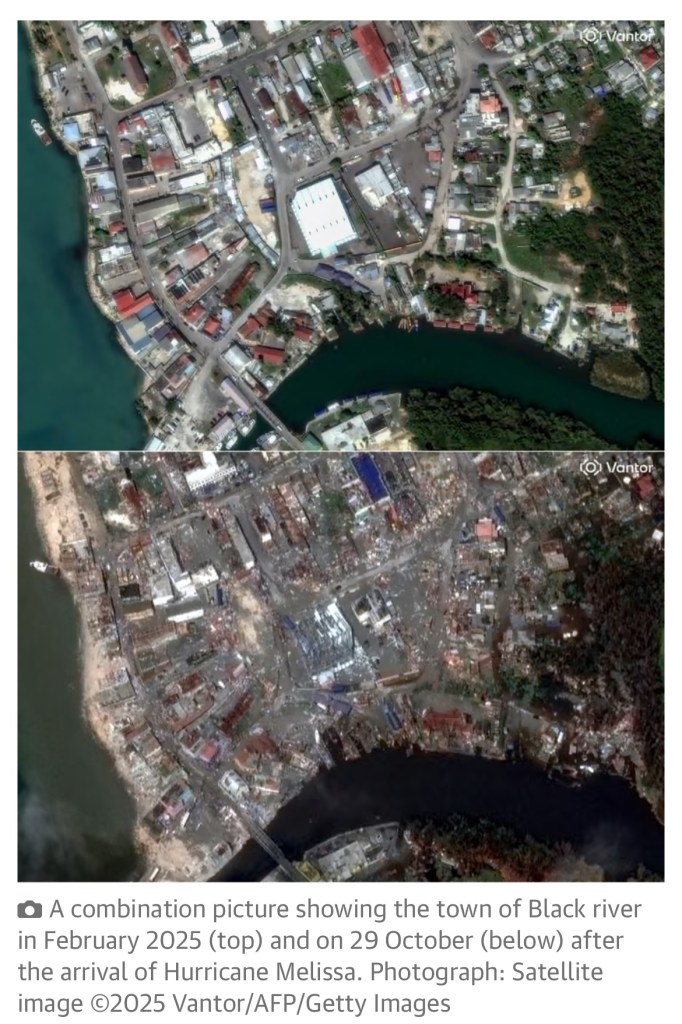
You’ll recall, on October 28, 2025, Hurricane Melissa — a catastrophic Category 5 hurricane with sustained winds around 185 mph (295 km/h) — made historic landfall near Jamaica’s southwest coast. At the time, every major news outlet carried images and stories of devastation; now the world has moved on, but the work of recovery is just beginning and sustained attention, accountability, and action are essential.
With that in mind, I made it to Jamaica. I wanted to be here sooner, but the reality is this: the country will be in recovery for a long time. So arriving now still feels right — not too late.
If you’ve read my other posts about Jamaica, you know how heightened the anticipation of returning home always is for me. I’m always on the lookout for that first stretch of green and coastline which always settles something in me. This time I started filming earlier than usual — not just the landing, but the first sight of land itself.
When the wheels touched down, the usual clapping broke out — the applause of gratitude. Then the flight attendant invited a louder one. We obliged. It felt earned. My lips spoke the sentiments of my heart: “Me reach home!”
But this trip wasn’t just about returning home. It was about the work on the ground, and seeing what’s real beyond the headlines.
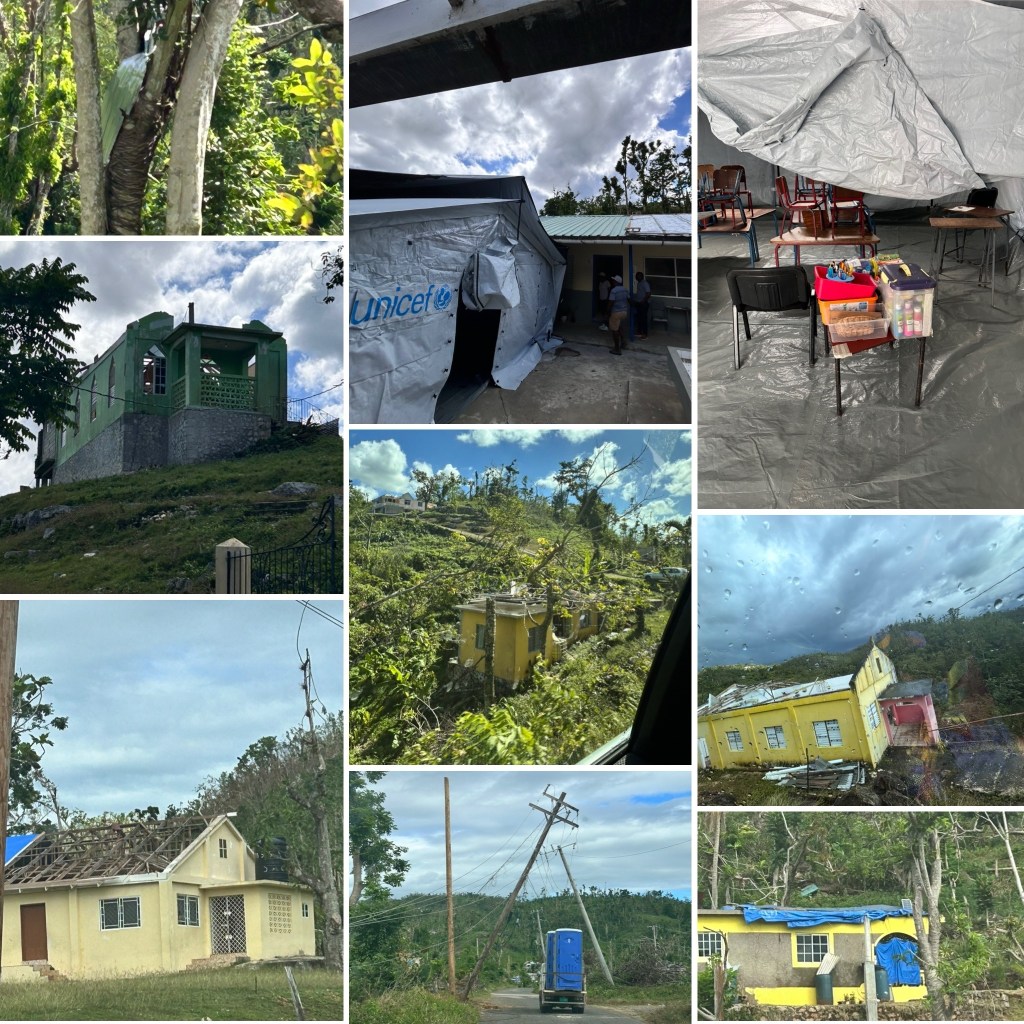
In Kingston it’s possible to feel like all is well. That illusion didn’t last long. On the drives west the story changed. There were more than 170 communities severely impacted in the 6 parishes that felt the brunt of the storm. I went to three of them: St. Elizabeth, Trelawny and Hanover.
From a distance, you’d miss the damage.
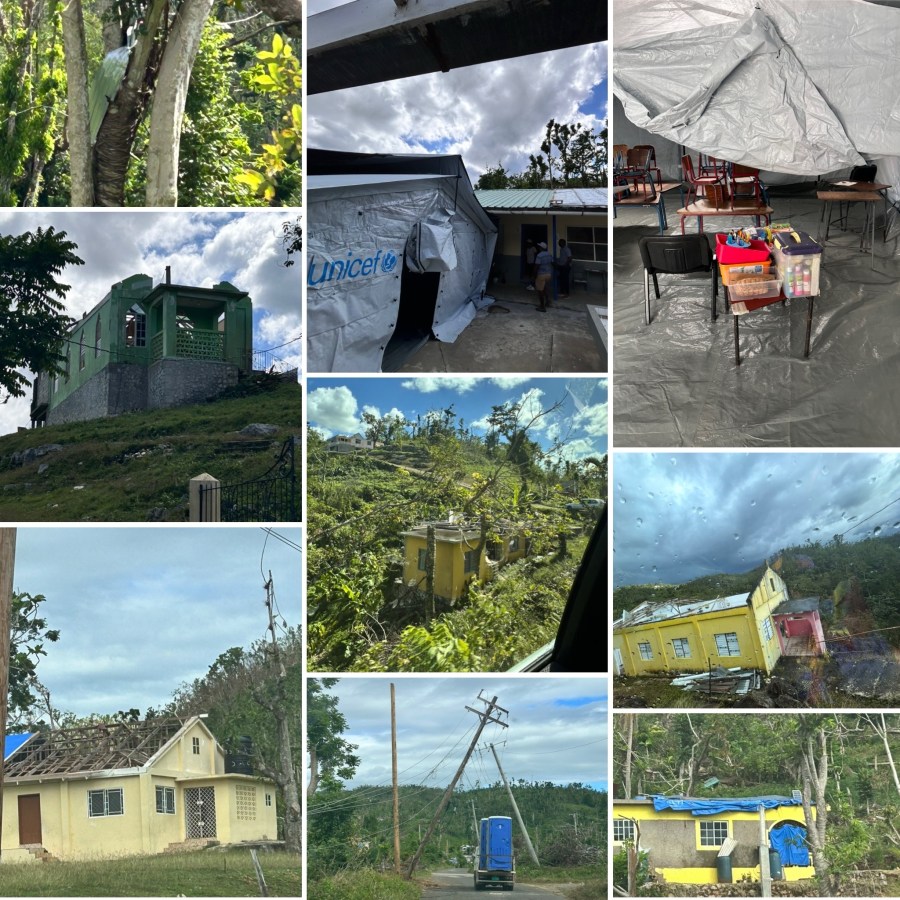
But, the reminders came fast. Downed light poles. Roofless houses, churches, schools, hospitals, infirmaries. Roads riddled with potholes that are now more like craters. The storm’s imprint cuts clearly through the green — twisted sheets of zincs wrapped around tress so tightly as if that was their natural home and trees precariously leaned to one side, an indication of the effects of sustained winds — all a physical reminder of what western Jamaica endured.
As hills and mountains passed by, what was most evident is that nature was already healing itself.
People tell me that the fresh greenery masks the havoc that stripped trees of bark and leaves and left slopes bare and brown.
What stood out just as much was the response.
People are already helping themselves and each other. Schools shifted to tents. Makeshift repairs are everywhere — zincs repurposed, tarpaulin stretched taut across roofs so that the landscape is dotted with blue. I said it out loud, and the CEO of the foundation I’m volunteering with agreed: she said soon after the hurricane, people were snatching zincs from wherever the wind had blown them to use to protect their homes.
In talking with people, amid the horror of having lived through Hurricane Melissa, what consistently emerged were stories of neighbors rallying around one another. In one case, someone gave a building to a shopkeeper who lost her entire business so she could start again. No waiting. No dramatics. Just movement. That’s the JamaiCAN spirit in action.
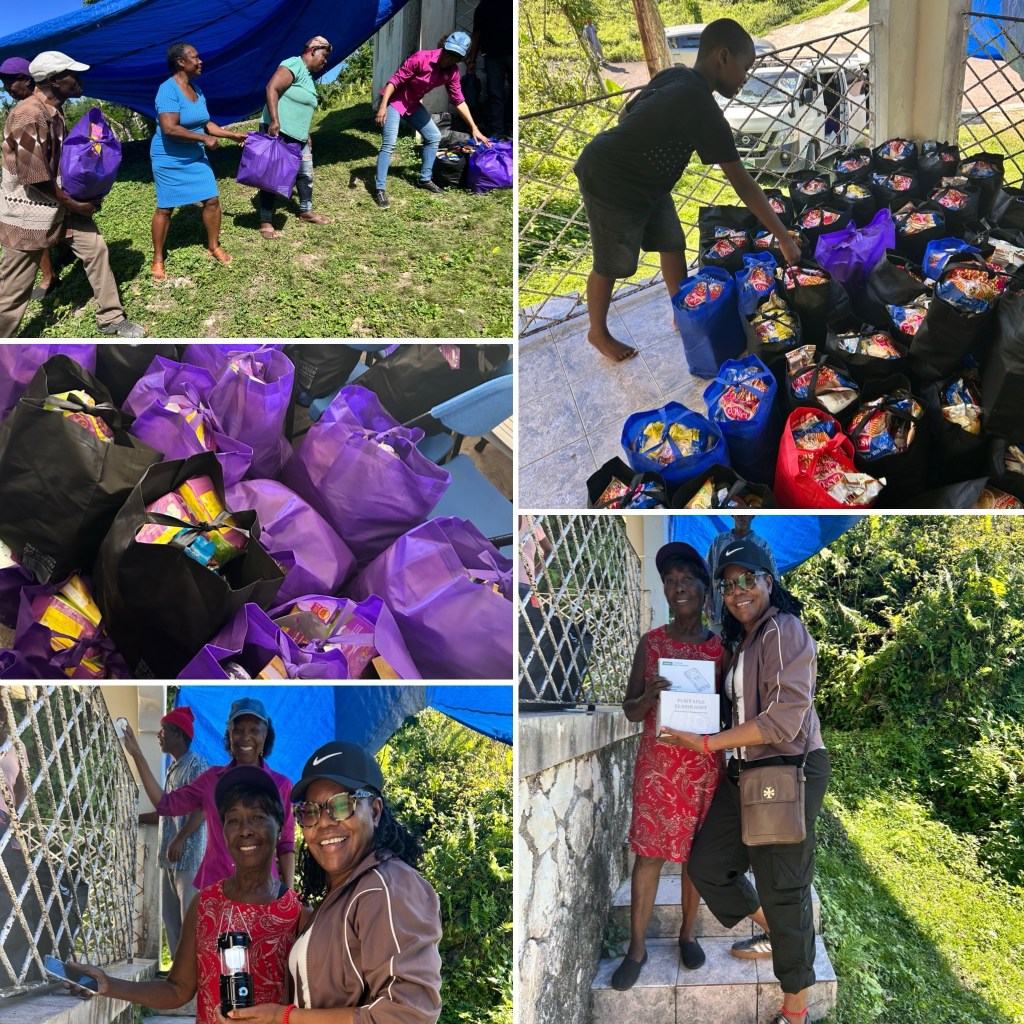
Hanover took us further into the hinterland. The drive was painstakingly slow. The hurricane had worsened the roads so severely and one shorter route was still submerged, appearing more like a dam from our view above. Our driver navigated potholes like a minefield as we followed a minivan bobbing and weaving its way through, carrying the more than 200 care packages we were to distribute to families as well as supplies for several small enterprises.
The needs are wide — from safe roofing materials and school supplies to infrastructure support, equipment for small businesses, and psychosocial care.
I chose to focus on schools and female-headed small enterprises, supporting both education and livelihoods while investing in people’s capacity and dignity. Based on advocacy efforts I was able to assist schools with books and, in one case, a tent mobilized through UNICEF that now serves as a gathering space after the school’s roof was completely ripped off. With electricity still not restored, the solar-powered lanterns and power banks were well received.
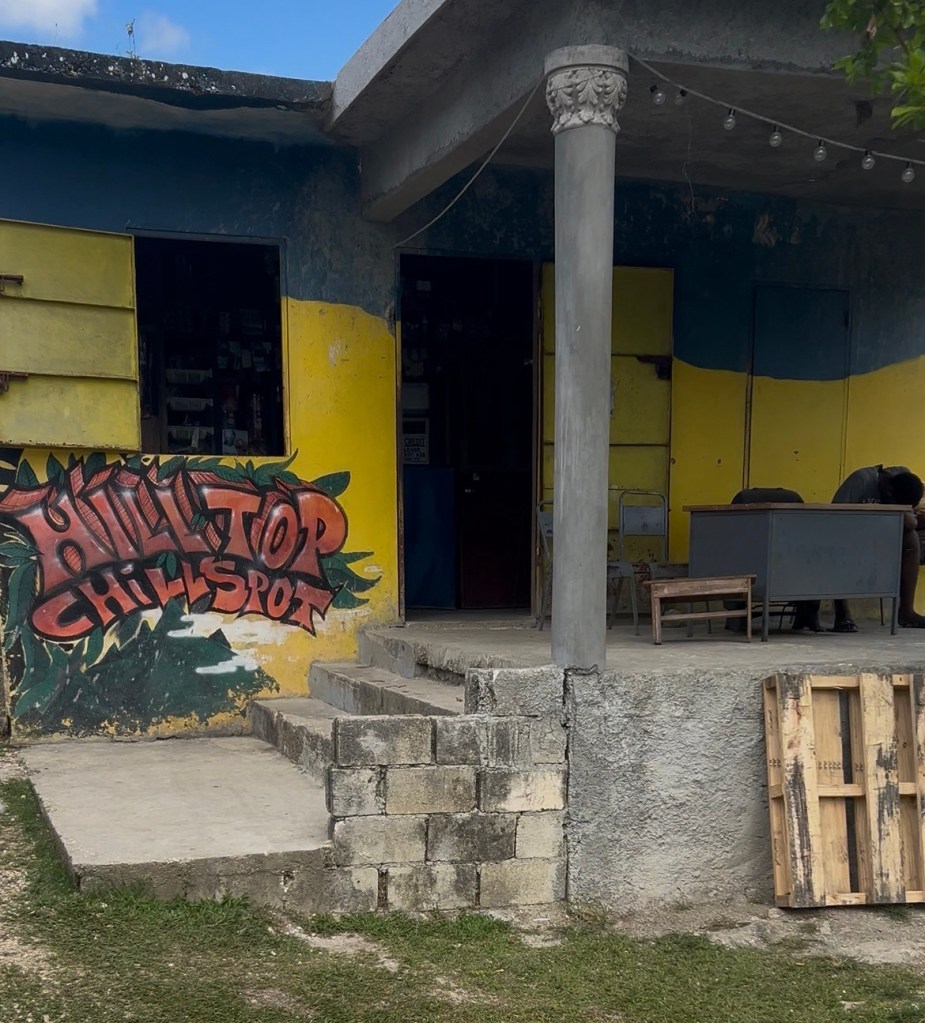
I was grateful to also be able to speak with people, offering a listening ear and psychological support. One that stood out was a single mother of three children in school who lost her home and everything in it. The only structure still standing is her small shop. Her shop served as a community meeting point—aptly called the “Hilltop Chill Spot”.
In fact, while World Central Kitchen was operating in the area, her shop served as the site where more than 250 meals were prepared and distributed each day. Now that WCK has moved on, the shop has the potential to continue as a community support hub with the right backing. Being part of the shift that allowed her — and another female shop owner — to look forward rather than backward was a privilege. Watching a flicker of hope brighten as practical support came into view is why getting here mattered. Seeing it firsthand matters.
But this isn’t just about Jamaica.
Hurricane Melissa joins a litany of climate-intensified storms that hit Small Island Developing States like ours with disproportionate force. These nations contribute the least to global emissions, yet face more frequent and severe hurricanes, rising seas, and shifting weather patterns that threaten agriculture, infrastructure, culture, and heritage—from livelihoods to historic sites and community roots. SIDS like Jamaica are on the front lines of this global challenge.
Cultural loss, heritage destruction, and community displacement are climate impacts that demand global responsibility. This isn’t a local issue — it’s an issue of climate justice.
Recovery will be long-term, and preparedness alone isn’t enough.
Infrastructural change is needed to build back not just what was lost, but what’s stronger, more resilient, and more equitable. This means supporting micro- and small enterprises — including those owned by women — to rebuild better and more sustainably. It also includes reskilling people in modern farming technologies, AI-driven resilience tools, construction practices that anticipate future climate realities, and ensuring meaningful community engagement at all stages.
Moving around the country, seeing firsthand and speaking with fellow Jamaicans, the national pledge kept coming back to mind and it stopped being just words. The pledge begins with the words “Before God and all mankind,” followed by lines expressing dedication of heart, mind, and body to the service of fellow citizens. Specifically:
Raised on this pledge, Jamaicans embody it. I saw it in action — a people committed to helping one another, rebuilding together.
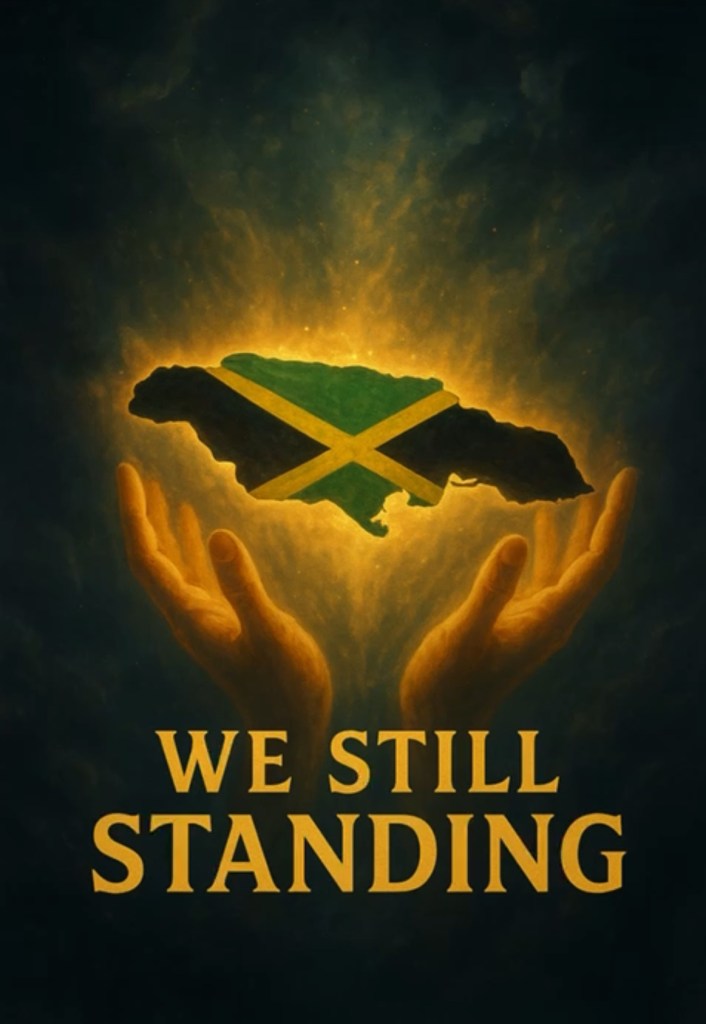
This article is not to imply that Jamaica isn’t carrying damage, but to show that it also carries resolve.
Jamaicans are resilient, yes, but resilience should not be mistaken for self-sufficiency. They are already rebuilding, but doing so with the same materials and methods risks repeating destruction. Resilience should be met with resources, systems, and sustained commitment — supporting communities, schools, churches and micro- and small enterprises, especially those led by women, to rebuild stronger and more sustainably. Small shops are often run by women and are the heartbeat of their communities: they provide income, social support, and gathering spaces, and their recovery is central to restoring both livelihoods and local life.
I’m here. I listened. I watched. I learned.
Being here allowed me to hold space for what was lost, to learn from what’s being rebuilt, and to bear witness to a country that refuses to yield — a people whose strength is matched only by their resolve to rise again.
If you’re able to support Jamaica’s recovery, the government has set up a site to coordinate all support coming to our beautiful island. We are grateful for all the countries, organizations, individuals, charities etc. that have come to our aid. We’re eternally grateful.
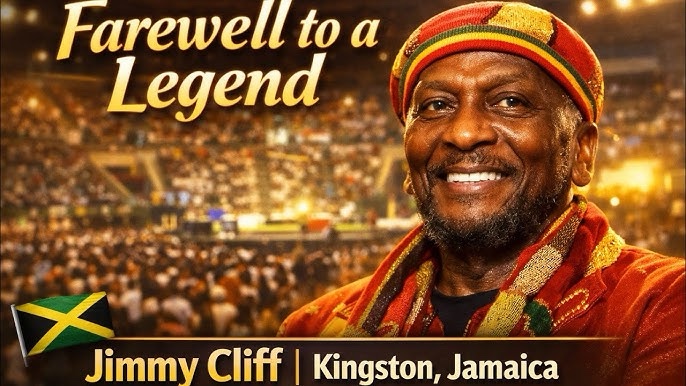
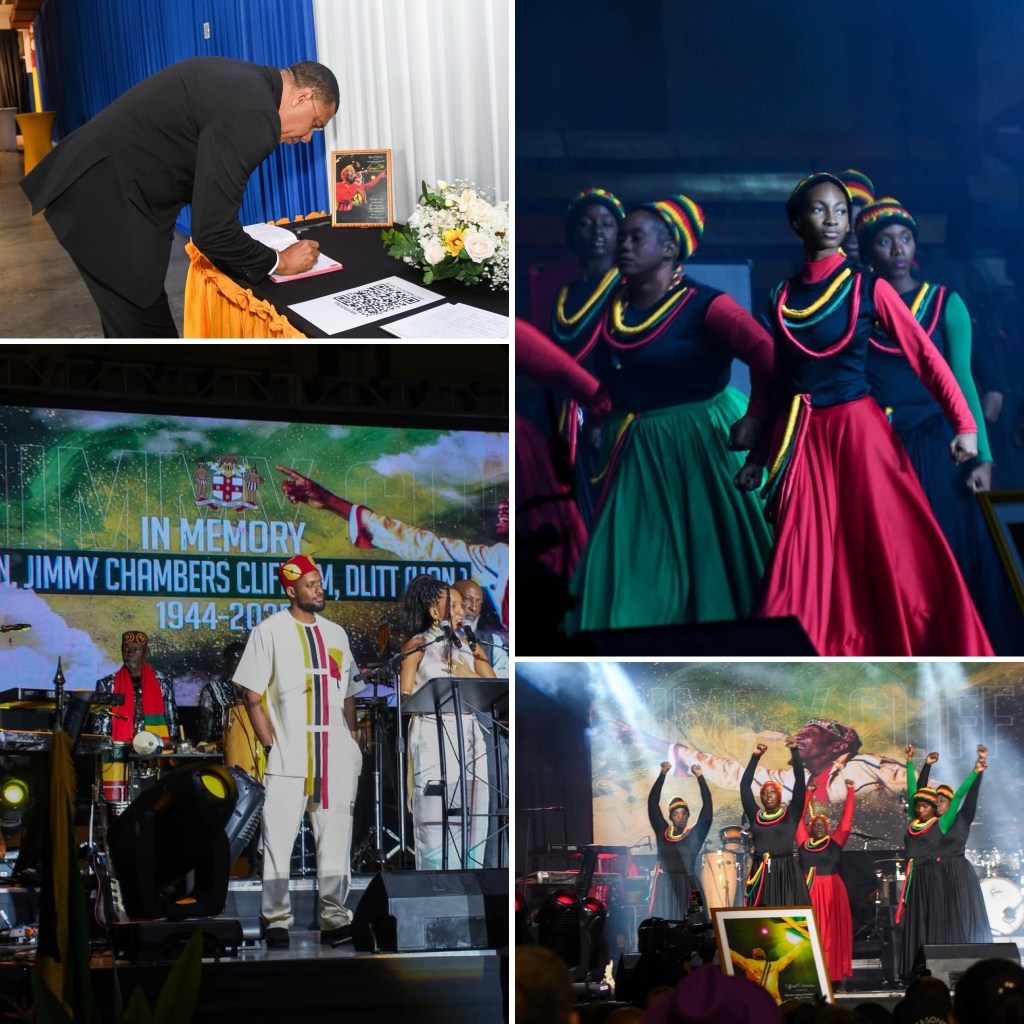
Beforeword: This spoken-word tribute celebrates the life and legacy of Jimmy Cliff, one of Jamaica’s most iconic voices. As a cento, it is crafted entirely from Cliff’s own lyrics but stitched together as both a celebration of his life and a rallying cry for hope and resilience for Jamaica’s recovery from Hurricane Melissa.
I can see clearly now the rain is gone, I can see all obstacles in my way. The dark clouds that had me blind, they’re gone I feel the sun returning to shine.
Take a look at the world, See the state it’s in today. I am sure you’ll agree We all could make it a better way, If we put our love together.
Man and woman, girl and boy, Let us try to give a helping hand— Lift each other up. Between the day you’re born and when you die, They never seem to hear even your cry. I’d rather be a free man in my grave, Than living as a puppet or a slave. The bigger they come, the harder they fall, one and all.
We still have—
Many rivers to cross, When you can’t seem to find the way over, Keep moving, as you travel along, your will keeps you alive
For— You can get it if you really want, If you try, try and try, try and try. You’ll succeed at last.
Afterword: I used 5 of his most popular and “truth-to-power” songs:
I Can See Clearly Now — A bright, optimistic anthem about overcoming obstacles and finally seeing hope after hard times.
The Harder They Come — A gritty, defiant song about struggle, resistance, and standing your ground against oppression. The movie, by the same name, brought reggae beyond Jamaica to a global audience.
Many Rivers to Cross — A deeply soulful reflection on hardship, loneliness, and the long journey toward freedom and peace.
You Can Get It If You Really Want — An encouraging, motivational tune about perseverance and believing in yourself despite setbacks.
Wonderful World, Beautiful People — A joyful celebration of love, unity, and the beauty of humanity set to infectious reggae grooves.
Rest in Peace & Power Jimmy Cliff. May your soul cross the river to its resting place.
2025 All Rights Reserved
Designed with Canva
Images by Pexels
There is a quiet, stubborn force that runs through the blood of Jamaicans.
It shows up in how we speak, move, and survive. It lives right there in the word JamaiCAN — a declaration, not a suggestion: we are a people wired for CAN.
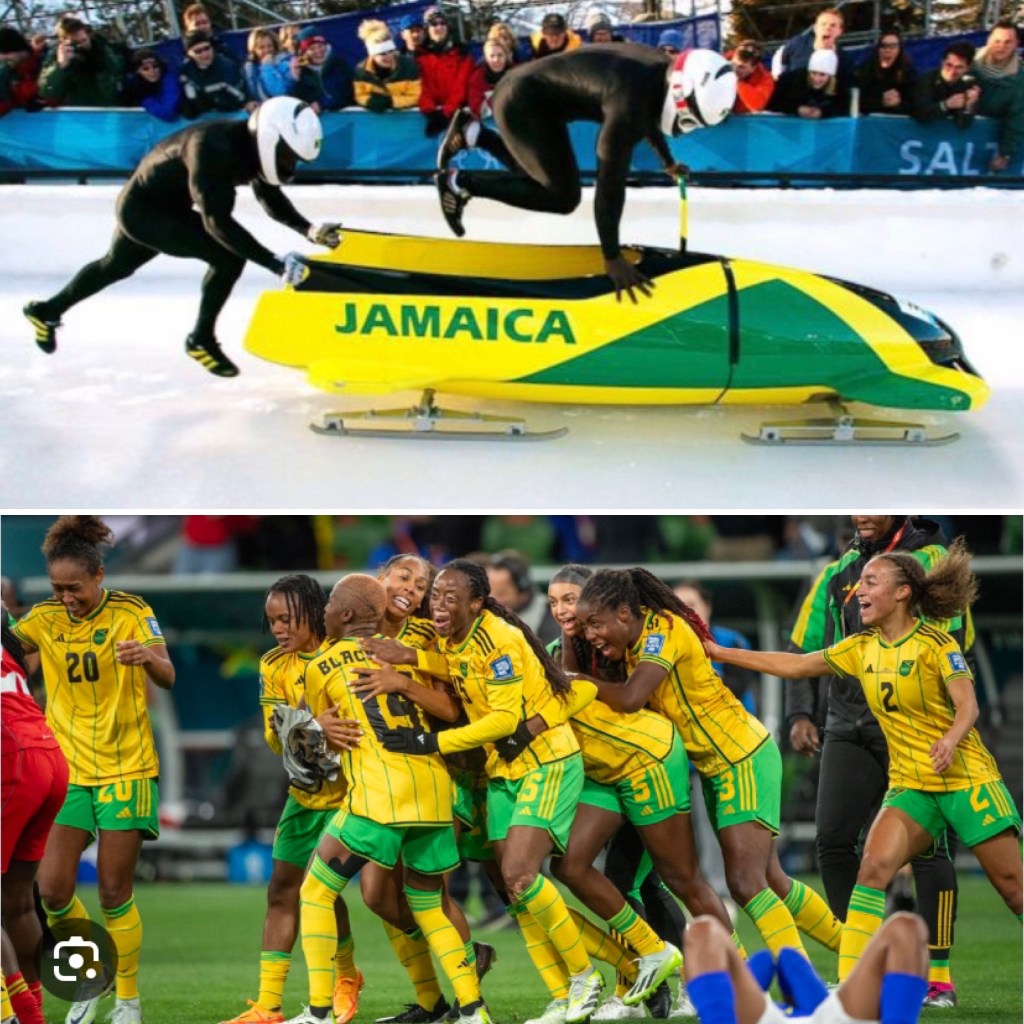
1988, four Jamaican men — Dudley Stokes, Devon Harris, Michael White, and Freddy Powell — took on the Winter Olympics in Calgary, Canada. Temperatures hovered around 14 °F (–10 °C), far colder than their tropical bodies were built for. Their bobsleigh crashed. They did not medal. But they stood. They walked off that ice and in true JamaiCAN spirit, they finished.
That story became the 1993 film “Cool Runnings”. Its theme song, Jimmy Cliff’s cover of “I Can See Clearly Now”, became the anthem of saying “yes” when the world expected “no”.
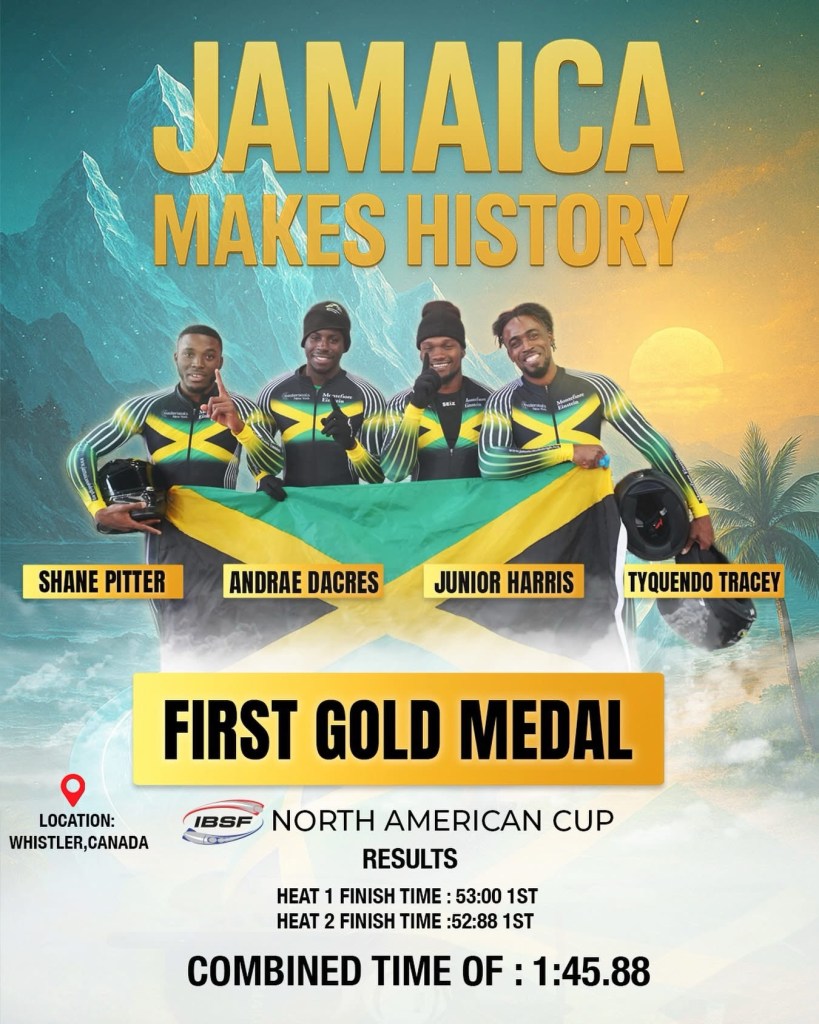
Decades later, on November 25, 2025, one day after Jimmy Cliff’s passing (may his soul Rest In Peace), the Jamaican 4-man bobsleigh team — Shane Pitter, Junior Harris, Andrae Dacres, and Tyquendo Tracey — made history!! They captured gold at an international bobsleigh competition in Whistler, Canada — Jamaica’s first.
I wonder if, as they hurtled down that icy track, they thought of home — battered and bruised from Hurricane Melissa?
I wonder if they vowed — not by kissing an egg like depicted in “Cool Runnings” — but on the lives of every Jamaican that this would be the year, this must be the time?
Whatever drove them, they delivered a victory when our country most needed a boost.
More than skill, dedication and precision was that indomitable yes we CAN spirit that took men from a tropical warm island onto an ice-cold track. And it is that same yes we CAN spirit that will rebuild Jamaica—one house, one school, one road at a time and keep hope alive.
Jimmy Cliff’s song, now part of our history, remains with us to remind us:
I can see clearly now the rain is gone. It’s gonna be a bright sunshiny day.
This is who we are. This is what we do. We CAN rise again! We are JamaiCAN!
SUPPORT JAMAICA REBUILD
If you’re able to support Jamaica’s recovery, the government has set up a site to coordinate all support coming to our beautiful island. We are grateful for all the countries, organizations, individuals, charities etc. that have come to our aid. We’re eternally grateful.
I’ve been quiet here, not from lack of words, but because life shifted fast and hard. I recently relocated to Kenya for work — a major transition that has demanded my full attention, mind, and energy.
At the same time, my heart has been anchored back home, as I watched the devastation of Hurricane Melissa unfold across Jamaica. Many of you have shared kind words to the posts I managed to get out on the situation in Jamaica. Again, THANK YOU!
Holding both realities at once has been heavy. The emotional toll of uprooting, starting over in a new country, and witnessing so much loss in a place that shaped me has been A LOT. Some days I’ve felt stretched thin between responsibility and grief, between staying strong and needing rest.
I’ve taken this brief pause from this online space to steady myself and make space to process it all. Writing is never far from me, even when I’m quiet, and I’ll be back here soon with new stories, new reflections, and the same commitment to honesty and hope. I’ve got so much to share including from being on the ground in Jamaica, watch this space!
Thank you for your prayers and your steady presence here.
Quiet roots take hold Storms pass, tired hearts still rise Rest, to bloom again
If you’re able to support Jamaica’s recovery, the government has set up a site to coordinate all support coming to our beautiful island. We are grateful for all the countries, organizations, individuals, charities etc. that have come to our aid. We’re eternally grateful.
October 28, 2025, Melissa roll een— category 5 a true Goliath, full a noise an’ might breeze a tear dun tree sea a climb ova hill she come wid a hundred-eighty-five mile a hour win’ pressure low like she mean fi mash up everyting
But she never know bout Jah-mek-yah dat Ja-mai-ca is more dan a place pan a map it’s a pulse, a community, a people weh she couldn’t stop an when she roar she wake up all a wi worldwide from Bronx to London tide
She never know wi bigga dan har storm— dat when wi unite, wi turn grief inna form an’ show di worl’ weh it really mean to be JamaiCAN
Wi aguh pick up di piece dem— bit by bit, brick by brick fram yard to lane, from mountain to sea Melissa wake up all a we an’ we aguh move togedda like one family
From di likkle one dem a sweep di yard to di elder a patch roof wid nail an’ hamma every han’ pon deck every heart a beat— yeh man, wi still deh yah
Di breeze try fi ben’ wi di rain nuh try fi drown wi but wi—wi aguh build back betta from storm an’ rain wi aguh sing again louda dan di soun’ a pain but resilience nuh mean we fi walk alone so sah even di mightiest tree need support jus’ like we
So yeh, wi proud— but pride cyan pour concrete Yeh, wi strong— but strent still need sleep fe keep Even tallawah need a han’ fi lif’ when troubles come heavy an’ penetrate deep
Wi likkle—but wi tallawah Wi batta—but wi beautiful still Wi shaken—but wi nuh bruk Wi hurt—but wi a guh ‘eal
Fram Black River to deep inna St. James Parish wi aguh rise again like mawnin’ sun pan Blue Mountain hill, we cherish wi not jus’ survivin’, but wi revivin’— wid one heart, one love, one will
So when di worl’ look pon wi mek we tell dem clear an’ true fram de diaspora to de yawd crew T’ough we batta an’ bruise We are JamaiCAN— so we CAN rise again Stronga. Betta. Jamaica!💚🖤💛
Afterword: Why I Write in Patois
I was intentional in using patois to write this tribute poem because some pain refuses translation. The pain of watching the land that shaped you being whipped out of shape by forces beyond human control can’t live comfortably in borrowed language. It has to be spoken in the tongue that raised you, the voice that knows your cadence, your memory, your silence.
Patois understands my inner being. It carries the weight, the humor, the ache, the defiance. It translates not just what happened, but how it felt. It connects me to every other Jamaican—whether in the diaspora or at home—as we collectively felt the trauma inflicted on our homeland and our people. When I speak in patois, I am not performing culture — I am returning home. To my people. To my roots. To the land that made me.
Some grief is only fluent in the language of home.
SUPPORT JAMAICA REBUILD
If you’re able to support Jamaica’s recovery, the government has set up a site to coordinate all support coming to our beautiful island. We are grateful for all the countries, organizations, individuals, charities etc. that have come to our aid. We’re eternally grateful.
🇯🇲 Now the storm has passed, leaving behind a trail of devastation unlike anything Jamaica has seen in decades.
🇯🇲 Over the past three days, I’ve ridden waves of emotion watching the destruction of my homeland unfold in real time.
🇯🇲 There’s something about Jamaica—something magnetic—that makes even those not born there feel an unexplainable pull to it, a sense of home. Many have reached out to check in, and that solidarity has meant a great deal.
🇯🇲 What we’re experiencing is a collective trauma—felt both on the island and across the diaspora. Yet amid the heartbreak, what stands out most is the indomitable spirit of Jamaicans: people with machetes and chainsaws clearing fallen trees so aid can reach cut-off communities; others pushing ambulances through mud where roads no longer exist, determined that care be delivered.
🇯🇲 As I witness these acts of courage and compassion, I hear the first part of our National Pledge echoing:
🇯🇲 That is Jamaica—tallawah*, unbreakable, with grit and grace in equal measure. We are moving through grief and loss, we are doing so together, yet even the strongest hearts need lifting. Strength without support is not sustainable. And, the burden of recovery cannot rest solely on the shoulders of those who are suffering.
🇯🇲 For those asking how to help—every possible humanitarian need exists right now. Follow your heart in giving, but give responsibly. Make sure your support flows through credible channels that truly reach those most in need (the government of Jamaica established a site to ensure coordination of support: https://supportjamaica.gov.jm).
🇯🇲 Through it all, we will rise and rebuild—Jamaica strong.
🇯🇲 To my fellow Jamaicans and friends of Jamaica—may we keep showing up for each other, wherever we are in the world.
Credit: Jamaica Observer
*Tallawah is a Jamaican Patois word that means strong, fearless, or strong-willed, and it’s often used to describe someone who is not to be underestimated. It captures a sense of resilience and power, especially when used in the proverb “Wi likkle but wi tallawah”, which means “We are small, but we are strong.”
SUPPORT JAMAICA REBUILD
If you’re able to support Jamaica’s recovery, the government has set up a site to coordinate all support coming to our beautiful island. We are grateful for all the countries, organizations, individuals, charities etc. that have come to our aid. We’re eternally grateful.
Beforeword: Hurricane Melissa is inching toward Jamaica. Jamaica often feels larger than life — bold in color, rich in sound, unbreakable in spirit. But right now our island feels really really small. Vulnerable. Exposed beneath the vast expanse of this storm, a reminder just how fragile we are, floating out here in the Caribbean Sea. Climate change has turned the balance we once took for granted into these unprecedented storms. This is my prayer — for Jamaica, for our people — it’s linked to our national anthem. It’s also a prayer for the planet we all share.
Eternal Father, bless our land, Guard us firmly with Thy hand — From the storm, protect this night, Respond to our cry with all Thy might. Melissa creeps across the deep, Slow and heavy — no rest, no sleep.
Our little island, tallawah, proud, Feels small beneath this swelling cloud. Swirling spirals, fierce and loud, Thunder speaks — the heavens bowed. O God of storm and stillness, heed, Cover our homes, our lives—indeed.
Keep us free from evil powers, Be our light through these dark hours. We still believe in mercy’s flame, We call upon Your holy name. No roof can stand this raging test, No road can outrun so much of rain’s unrest. And if the power fails us at night, We’ll hum our hope by candlelight.
For we’ve seen dawn break disaster’s chain, From wild Gilbert to Ivan’s reign. We’ve seen joy rise after pain — O spare us, Lord, from loss again. Let mercy move swifter than storm’s form, Let peace command winds to deform.
And when the tempest’s fury’s through, Let rainbows tell what You can do: You kept us — a symbol like Noah’s dove, As You always do — Jah-mek-yah, land we love.
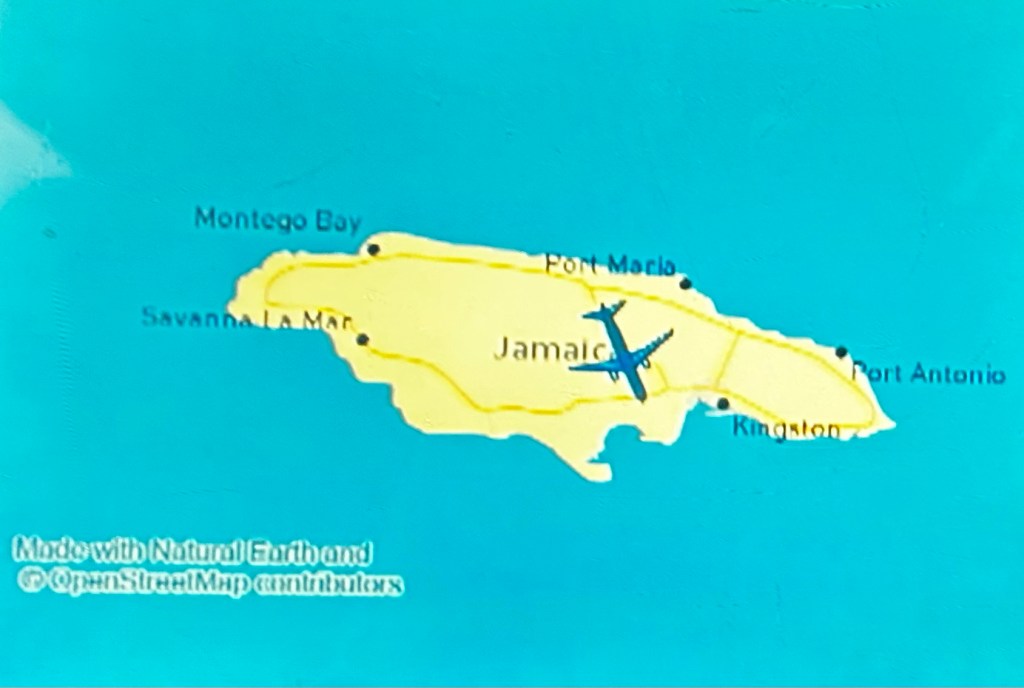
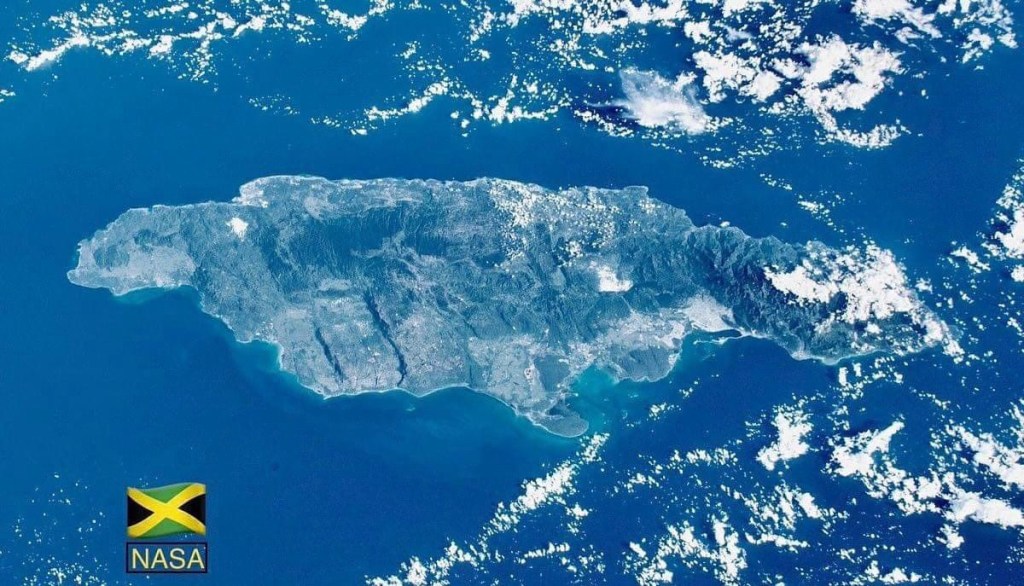
Jamaica is approximately 4,411 square miles. It is the third-largest island in the Caribbean, after Cuba and Hispaniola, and boasts three international airports located in Kingston, Montego Bay, and Ocho Rios.
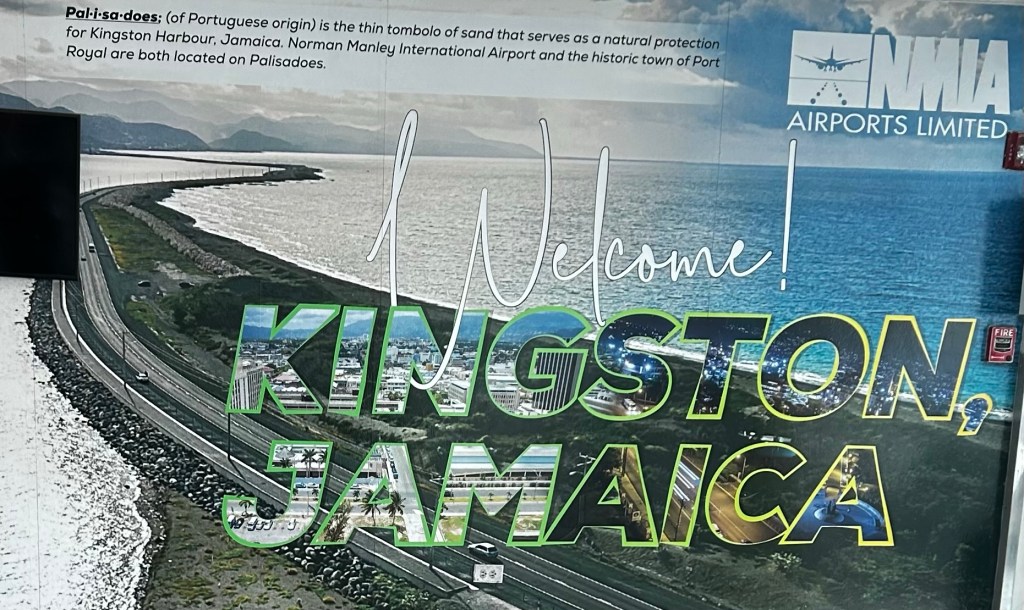
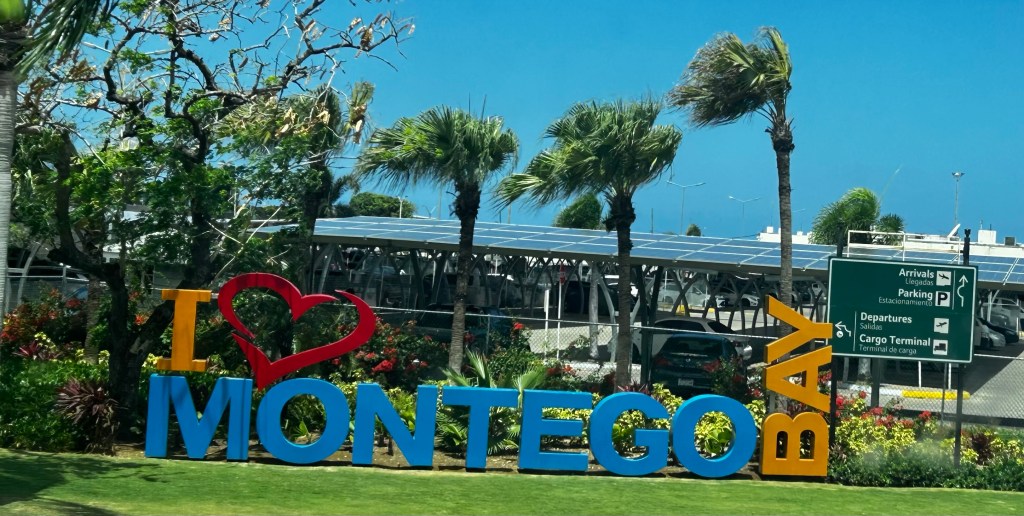
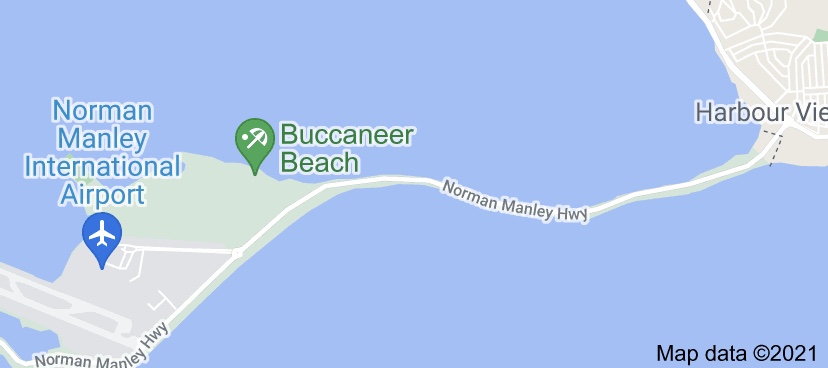
On this return trip, I arrived through Kingston’s Norman Manley International Airport and departed from Sangster International in Montego Bay, bookending my journey with two of Jamaica’s vibrant gateways.
Join me on a reflective journey across the island, as I retrace the steps of my birthMONTH adventure—a soulful reconnection with places that have shaped my story. From the cultural heartbeat of Kingston (Jamaica’s capital), the scenic charm of St. Andrew (Bull Bay and Gordon Town), the coastal delights of St. Ann (Ocho Rios), to the resort elegance of St. James (Montego Bay), this was more than travel—it was a homecoming.
There is just something about flying into Jamaica.
The moment the plane touches down, that unmistakable wave of nostalgia and warmth that only comes with landing back in Jamaica washes over you!
It’s a unique kind of homecoming that stirs in the heart. A reconnection with history, with food, with friends, with wellness, and with memories tucked away awaiting that moment to be rekindled.
First stop on this journey? The beloved Devon House—a Kingston gem that merges elegance with island flavor.
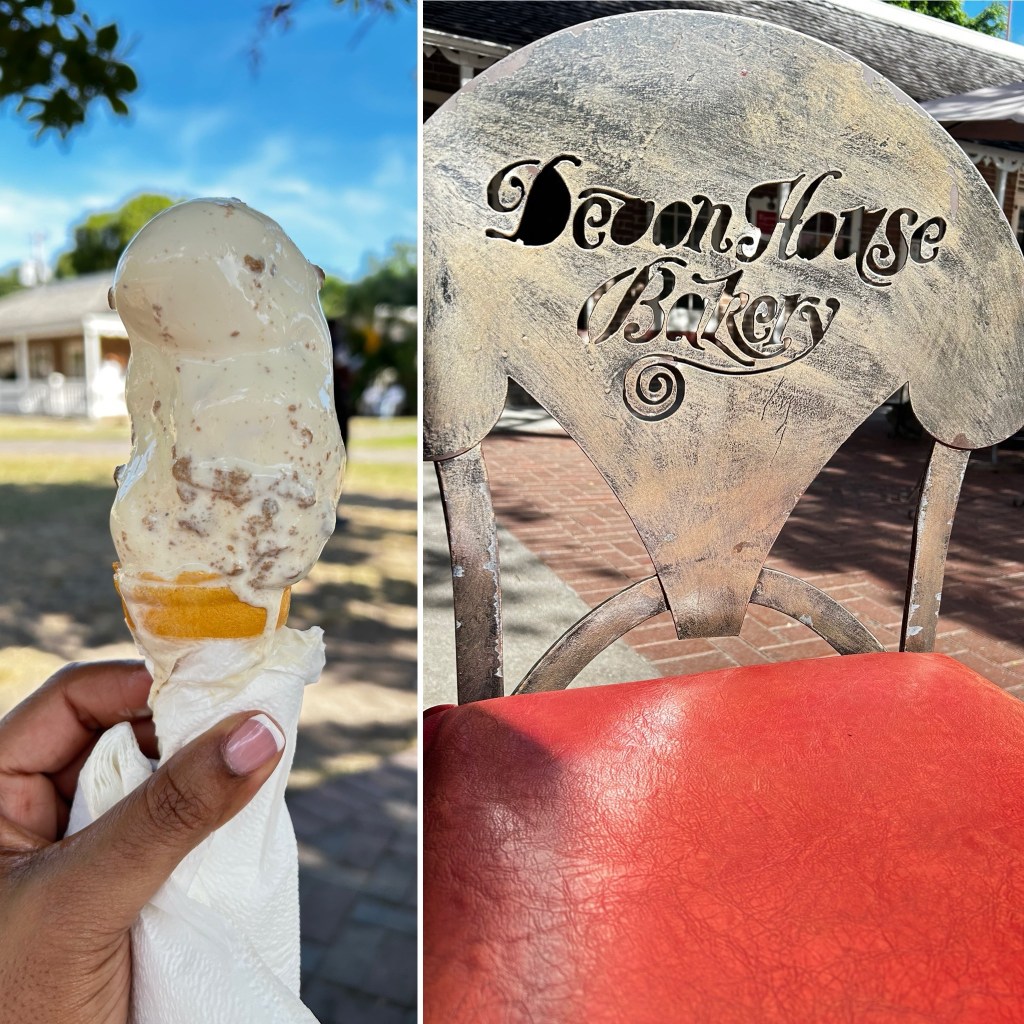
Built in 1881 by George Stiebel, Jamaica’s first Black millionaire, the estate is a proud symbol of Black excellence and ambition. Today, it’s a lush escape where the city comes to exhale. Under the canopy of mango trees you’ll often see families sprawled on picnic blankets, couples sharing ice cream cones, and children running free across the lawn.
Of course, I had to pay homage to their famous ice cream.
Their slogan, “I scream for Devon House Ice Cream,” is no lie—I was screaming for more after one scoop of Gingerific. Creamy, cool, and spiced just right, it was the perfect treat in the tropical heat. You’ll also enjoy the Devon House Bakery—the curry goat patty? Pure perfection.
The estate also features a number of charming eateries and local boutiques, making it a must-see whether you’re a first-time visitor or lifelong islander.
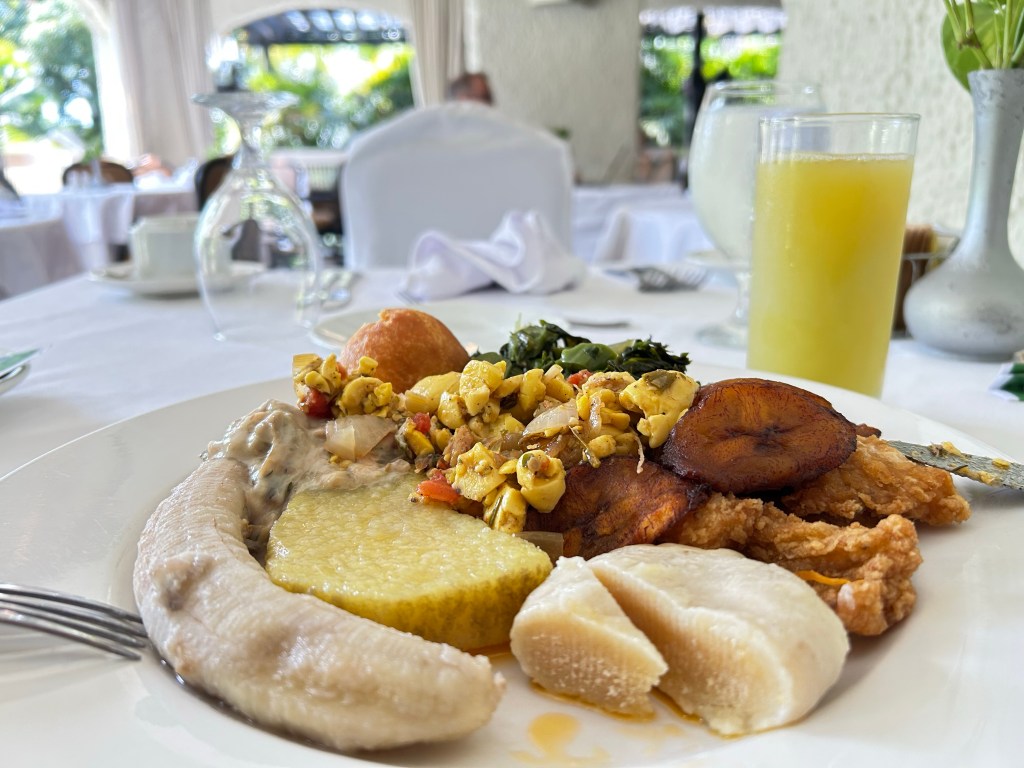
There are a number of exquisite hotels to choose from across the island. In Kingston, I chose an old favorite! You can’t go wrong with the refined comforts of Terra Nova All-Suite Hotel, a colonial-style mansion turned boutique hotel tucked away in the heart of the city.
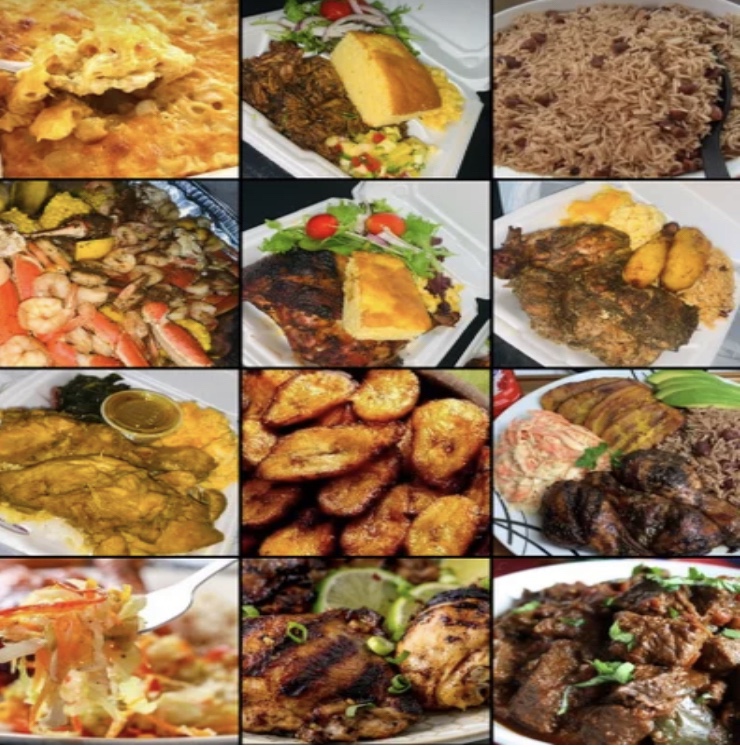
For over 20 years, their head chef has lovingly curated a breakfast buffet that’s nothing short of a culinary celebration. From ackee and saltfish to fried plantain, callaloo, and yam, every bite took me deeper into the soul of Jamaican cuisine.
Their Sunday brunch is also mouth-watering good!
The hotel’s ambiance is old-world elegance with a distinctly Jamaican twist—perfect for slow mornings and full plates.
To balance indulgence with self-care, there is Jencare Skin Farm, one of Kingston’s most revered spas. Jencare has been a sanctuary of beauty and wellness for decades.
From the moment you walk in, you will be enveloped in calm. Whether a soothing facial or therapeutic massage, your tension will melt away. Their signature skincare line and warm, professional staff are just part of what makes Jencare a beloved local treasure—a place where beauty rituals are both luxurious and healing.
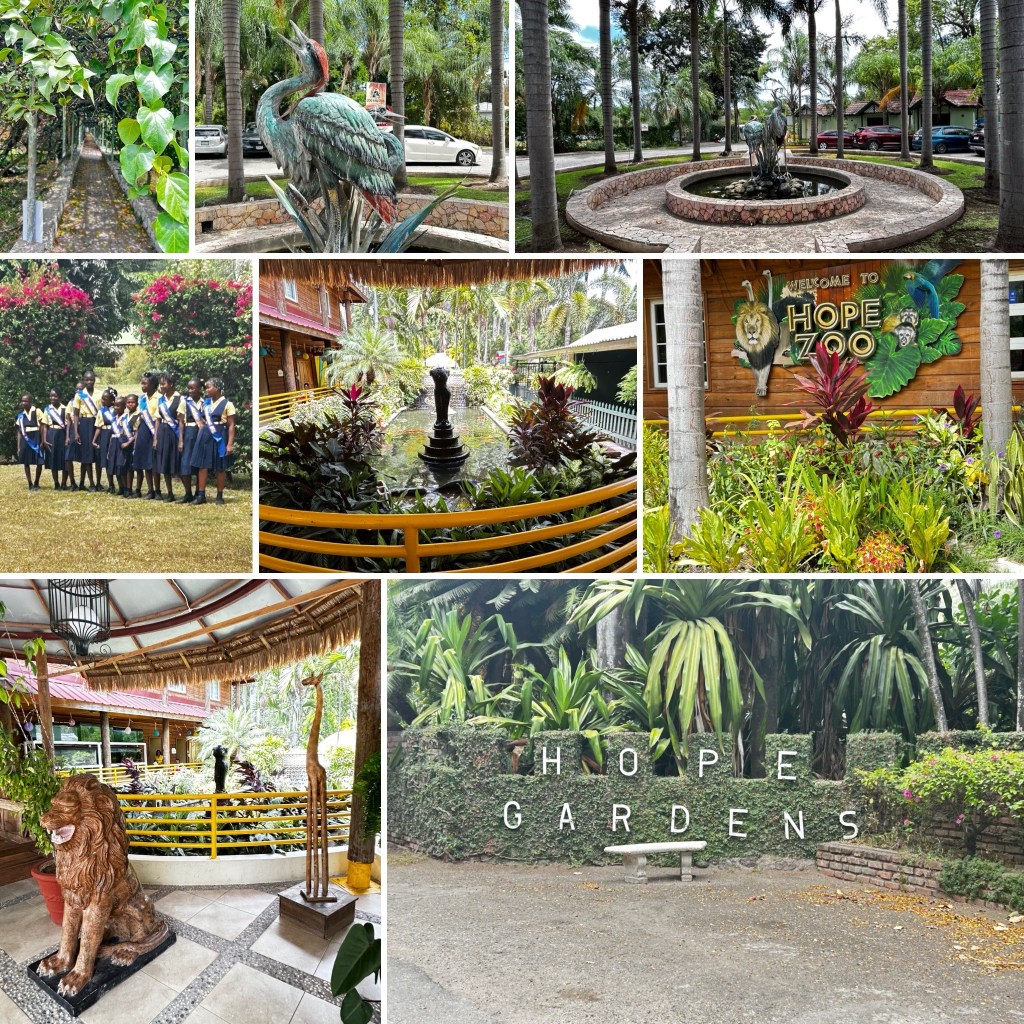
I also carved out time for a reflective visit to the now refurbished Hope Gardens and Zoo. Established in 1873, this 230 acres stand as the largest public green oasis in Kingston.
As a child, I ran through its paths with wide-eyed and carefree wonder, and walking them again brought a wave of sweet remembrance. The towering palms, vibrant flowers, and playful chatter of children made the gardens feel timeless. On the day I visited a group of school girls, who were winners in their school’s beauty contest, were visiting.
Among its many treasures is Poets’ Corner, a tranquil nook that honors the words and legacy of Jamaica’s renowned poets and literary minds.
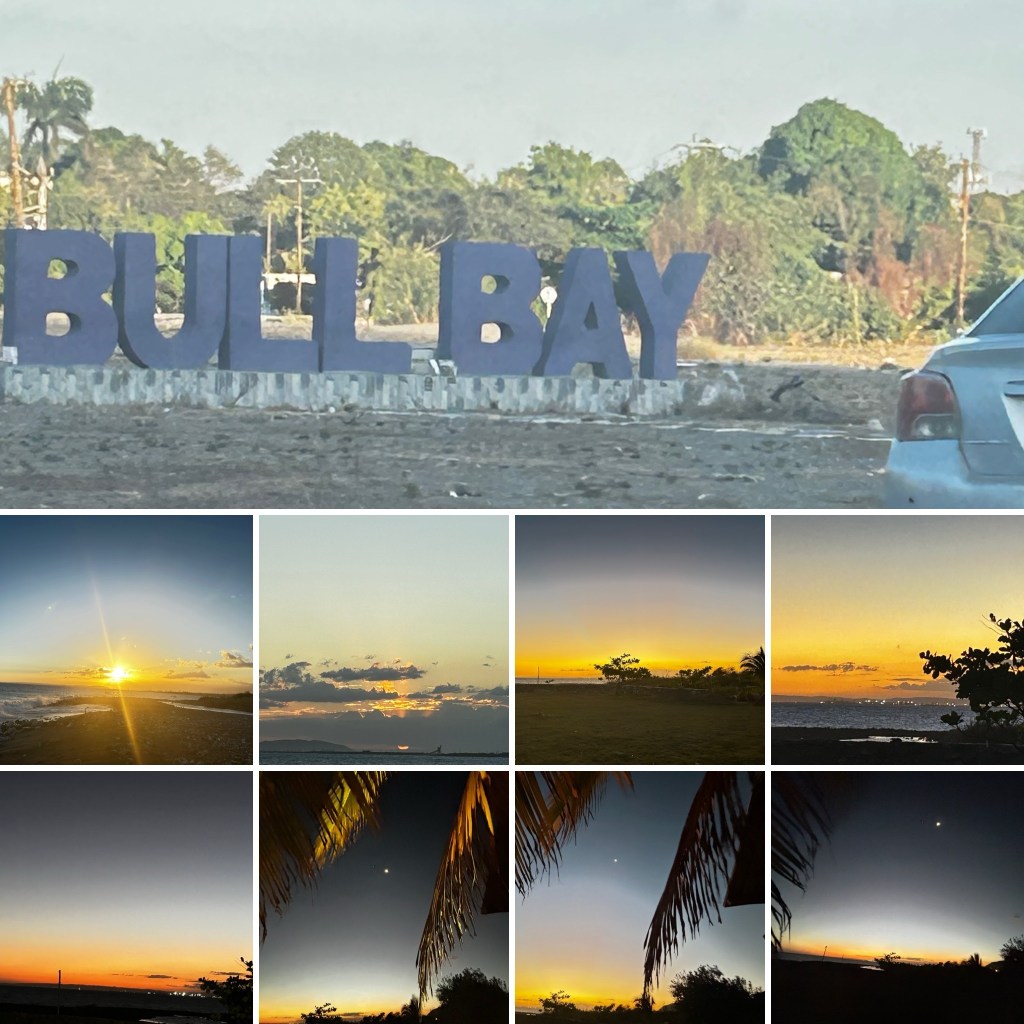
A Bull Bay Sunset
Bull Bay is nestled along the southeastern coast of Jamaica, just a short drive east of Kingston. The area is known for its surfing spots, laid-back vibe and rugged natural beauty.
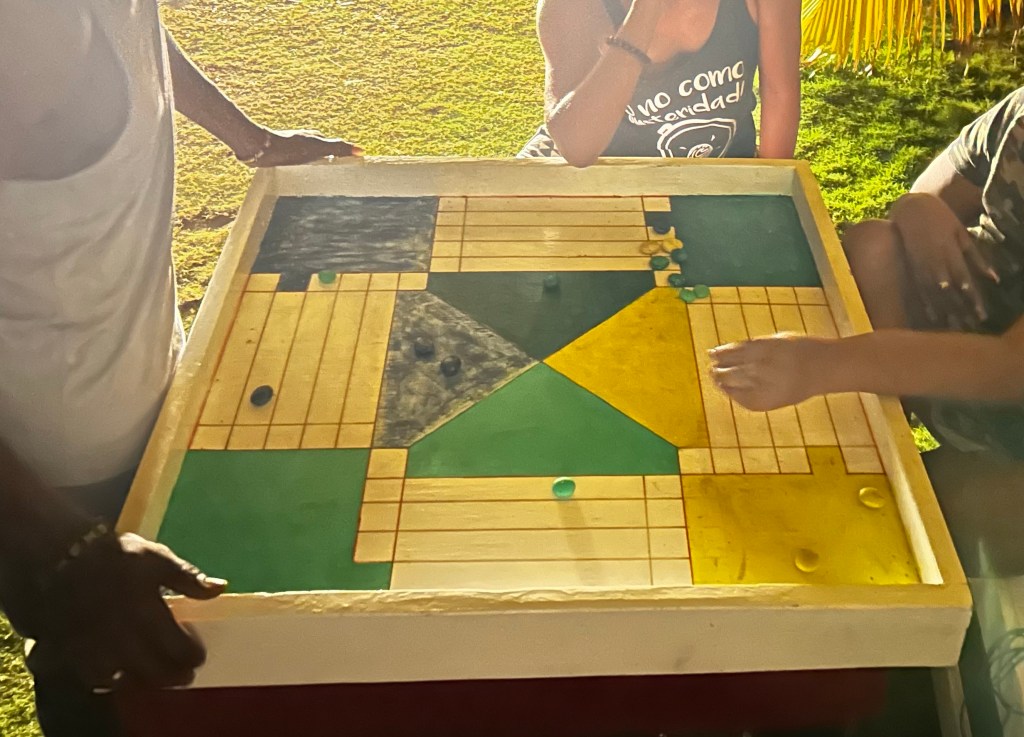
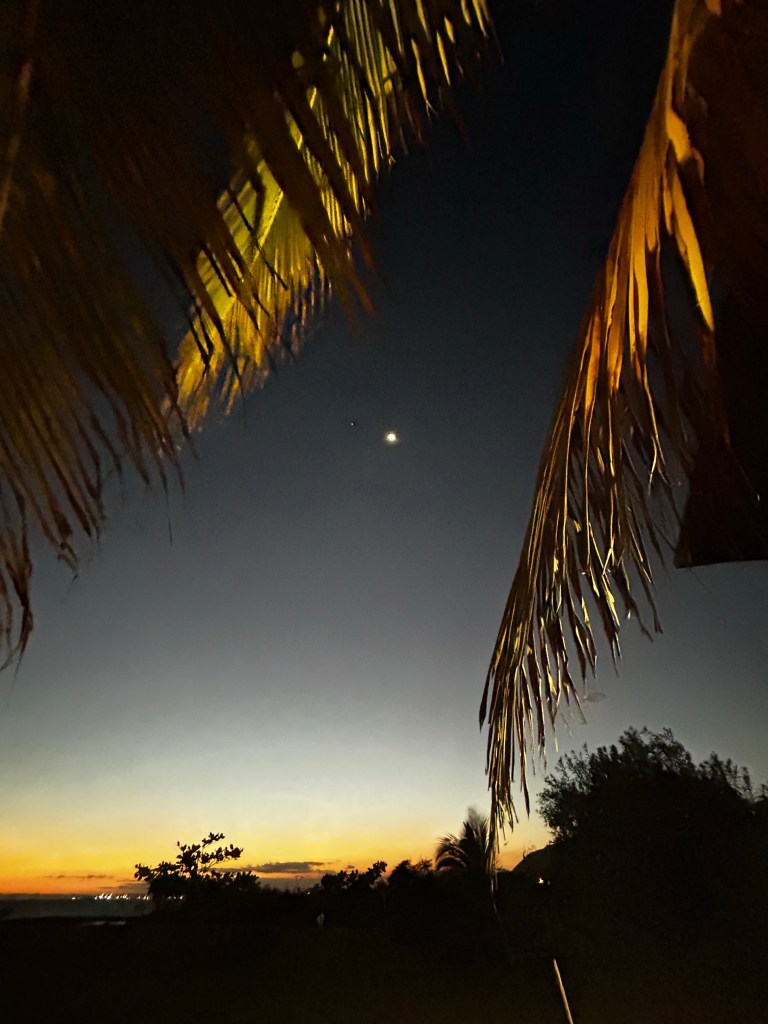
I had the pleasure of soaking in the beauty of the simultaneous setting of the sun and the rising of moon from a rustic Airbnb perched above the coastline. With life-long and new friends, we let the afternoon melt into evening—music playing softly, laughter echoing, and a competitive yet light-hearted game of Ludo unfolding on the table.
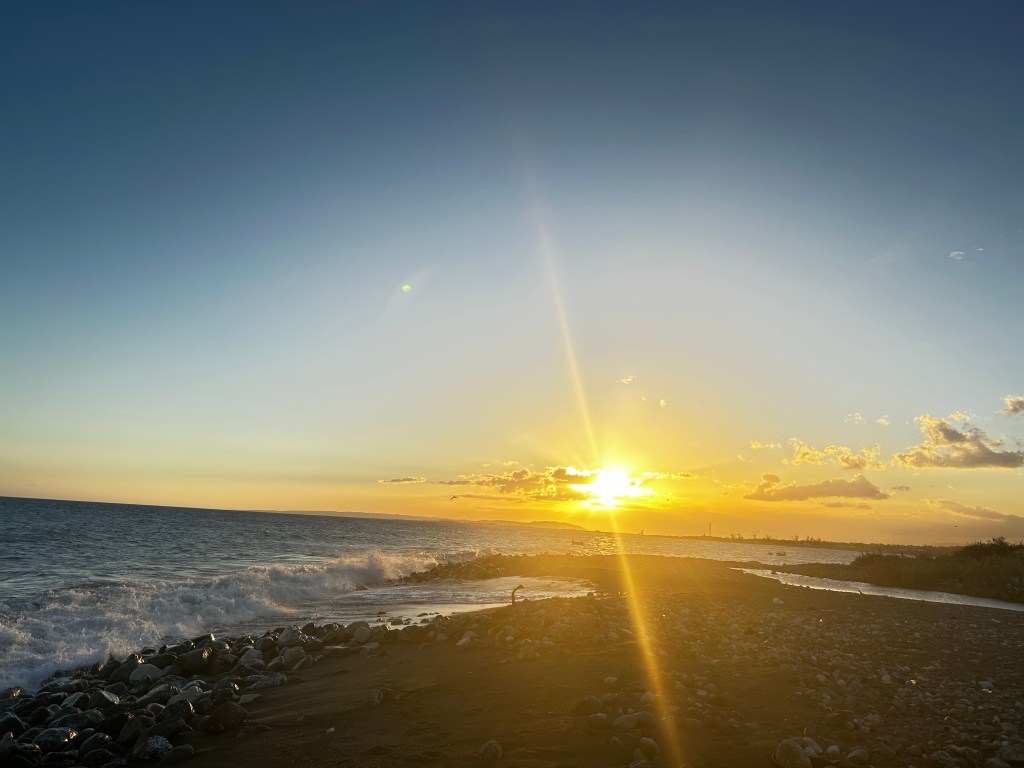
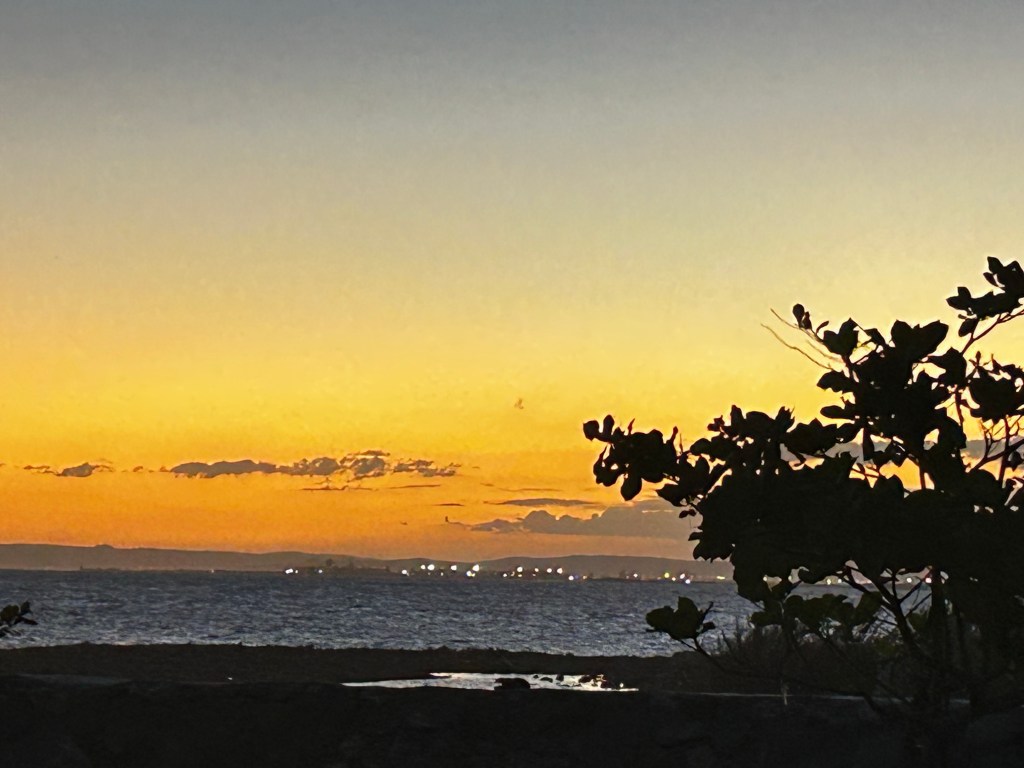
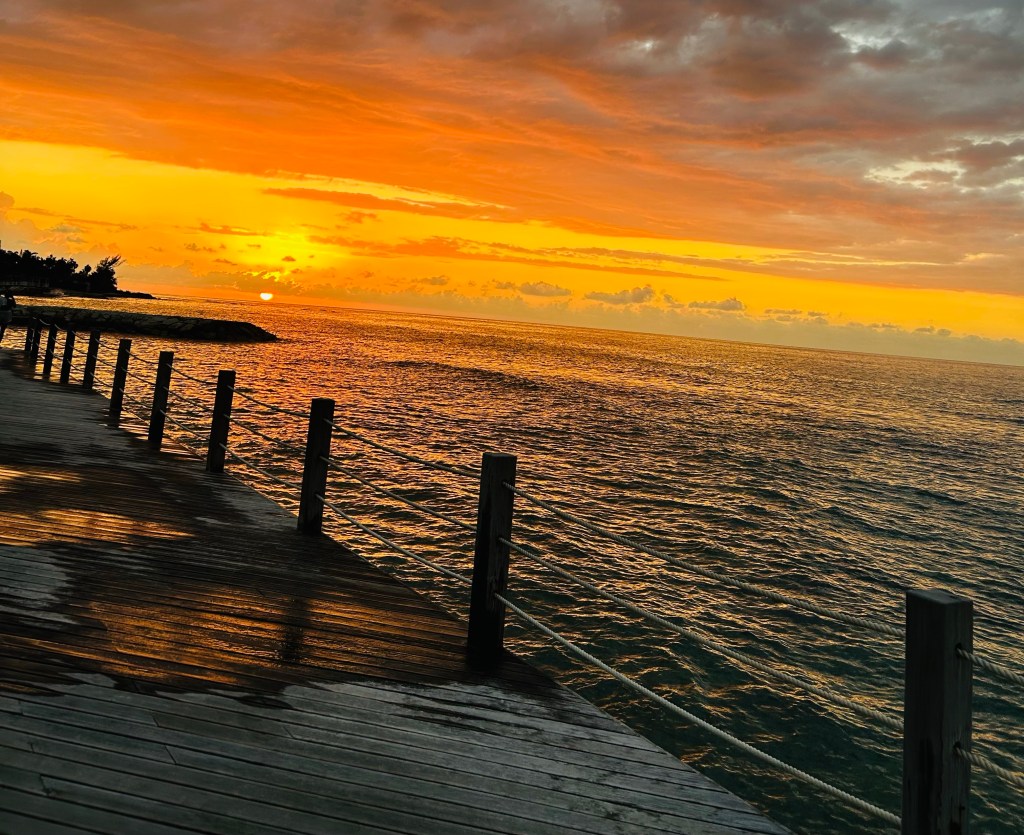
As the sky flamed orange and gold, the sea mirrored every hue, creating a view that felt both surreal and grounding. There, in the golden hush of sunset, surrounded by love, joy, and the lull of waves, I was reminded of the simple moments that make life truly unforgettable.
For more on the drama of Jamaica sunsets, click here!
Traversing From Kingston to Montego Bay
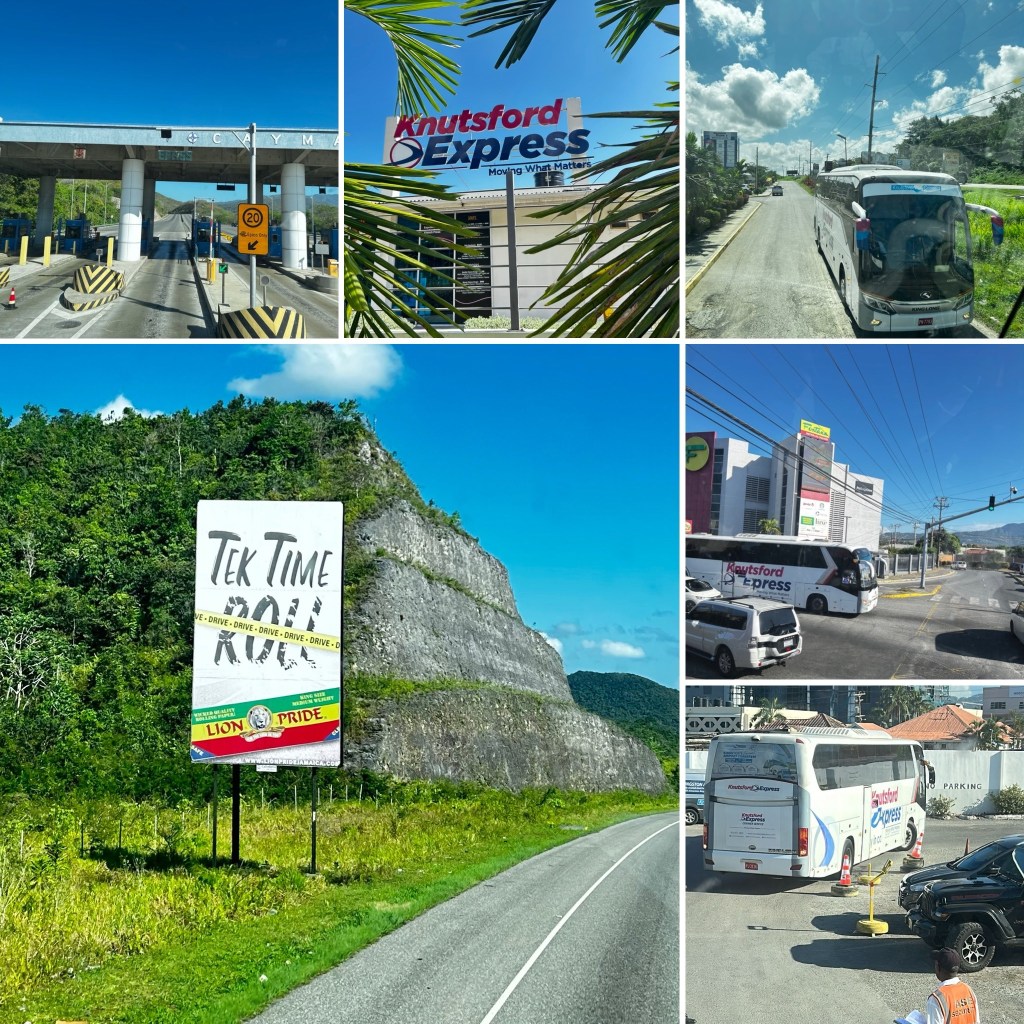
Traveling from one end of the island to the other is made easier with the new North-South Highway (a.k.a. Highway 2000).
If you want the most scenic travel across the island, climb aboard the Knutsford Express. This coach double decker bus service offers WiFi, AC, and spotless rest stops. The ride from Kingston to Montego Bay was scenic and smooth and only about three hours long. As the bus driver “tek time roll” (drove carefully) through winding roads, coastal views, and mountain backdrops, I watched the island shift and unfold.
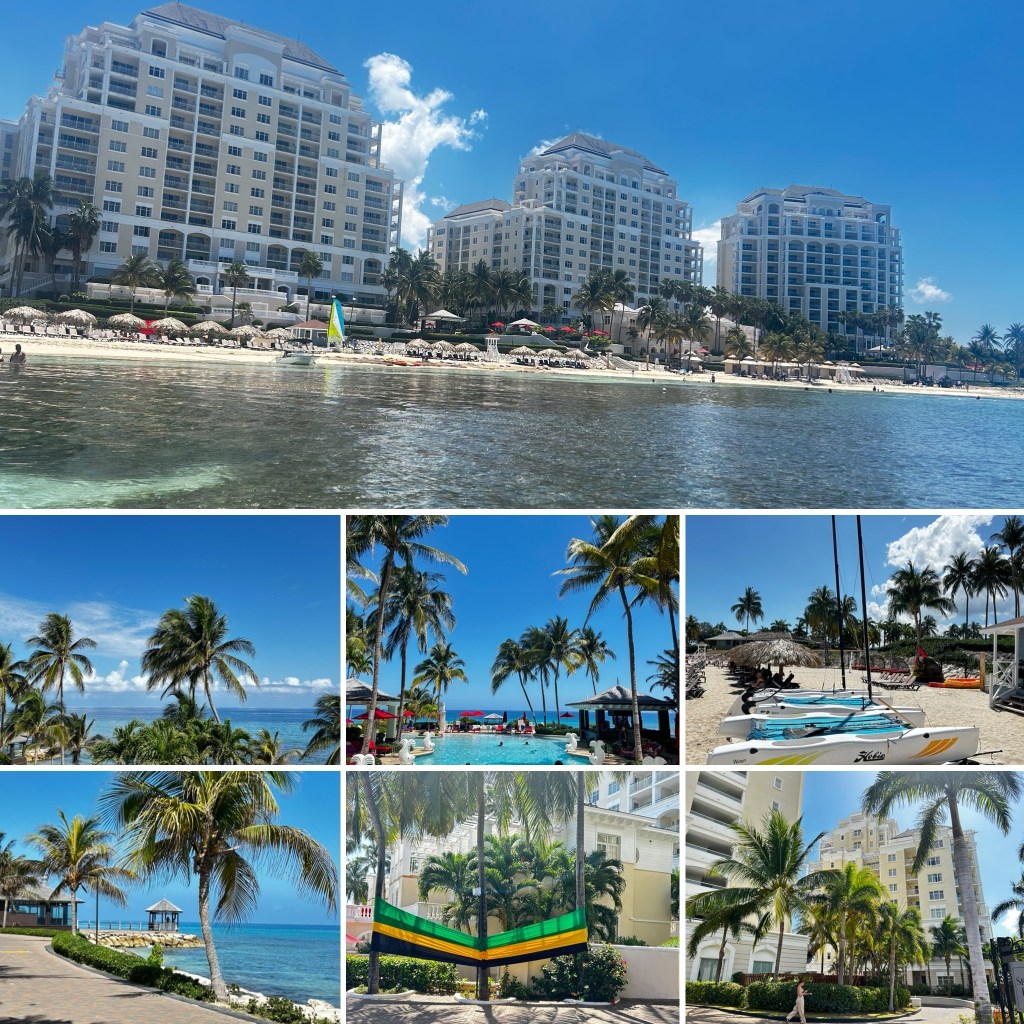
Montego Bay greeted me with glittering waters and slower rhythms balanced with water sports and oceanfront lounging at the luxurious Jewel Grande Resort and Spa.
There I met fellow birthday celebrants and a great majority of visitors who were returning for up to as many as five times.
Jamaica is truly a vibe!
A Foodie’s Delight.
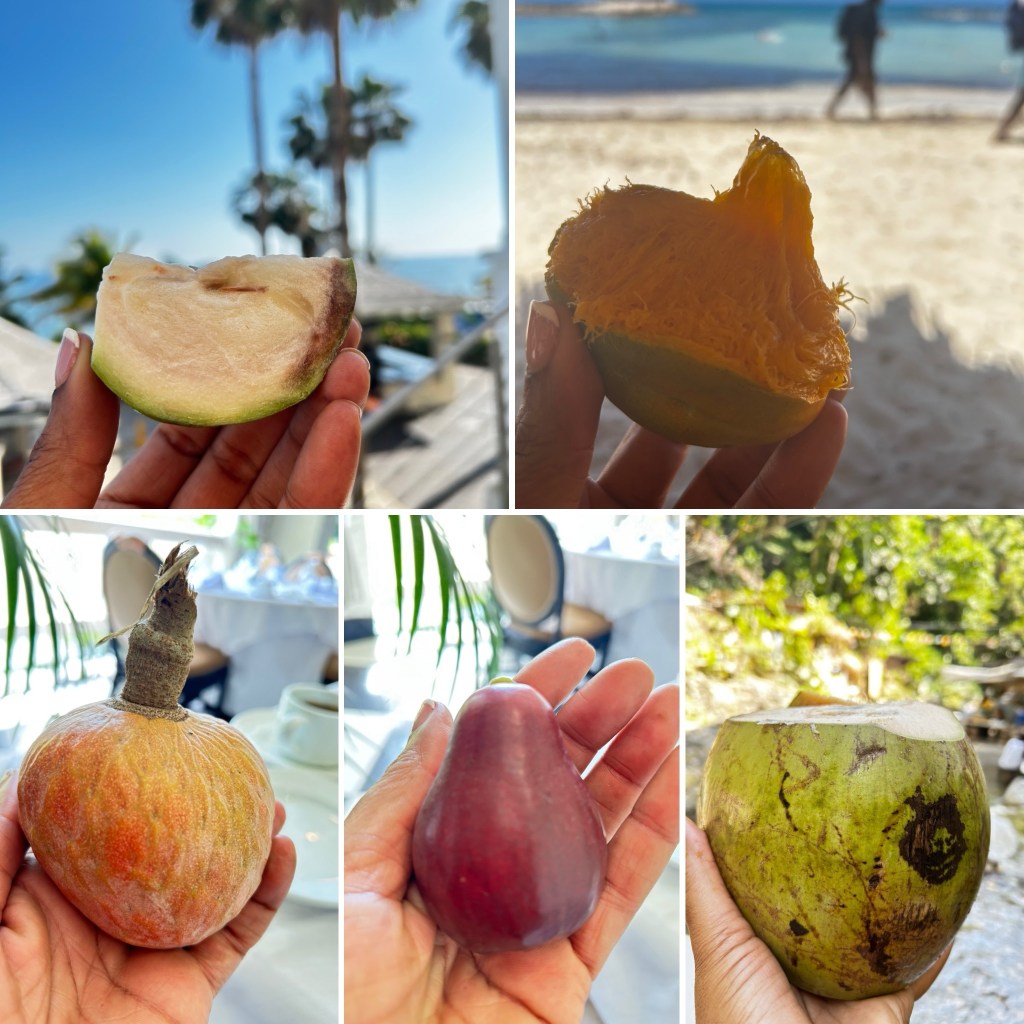
Jamaica’s fruit scene? Unmatched! Among those I feasted on were: otaheite apples, custard apples, mangoes, naseberries, papayas, pineapples, and juicy watermelon. And nothing cooled me off better than fresh coconut water, straight from the shell.
When it wasn’t coconut water in hand, it was a Ziggy Marley (similar in look to the Bob Marley, but without the spirited zing of alcohol).
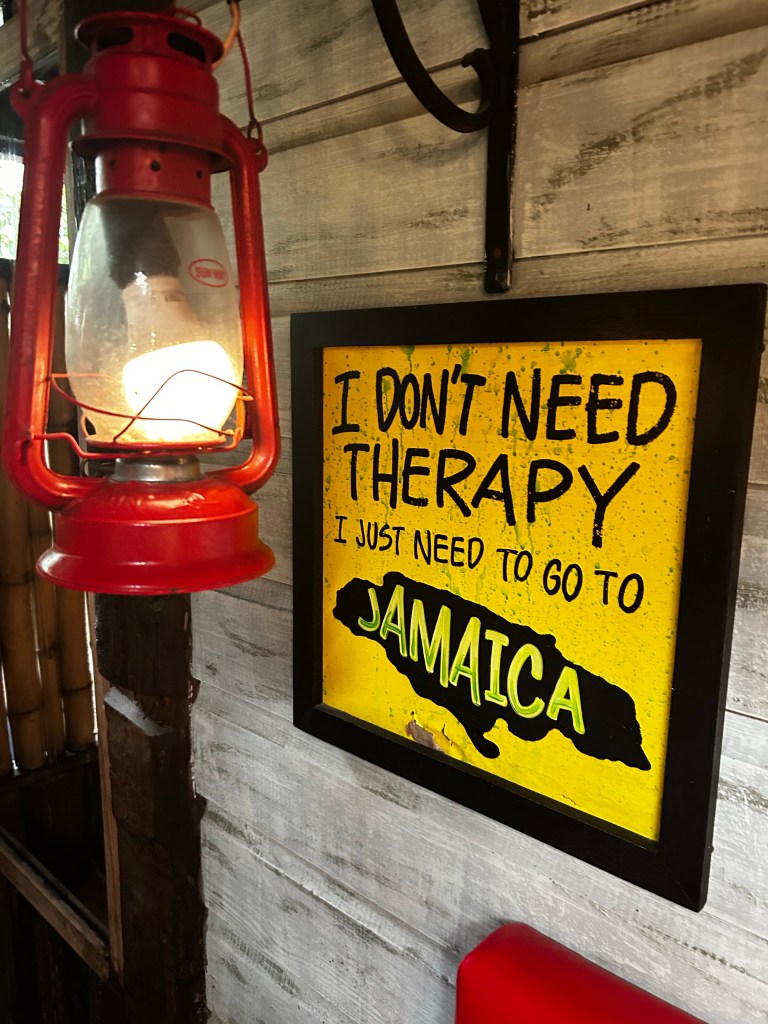
Jamaica is a gastronomy mecca! For some of the culinary delights that tantalized my palate, see these posts—click on links to Miss T’s Kitchen and Pretty Close.
Reconnecting With Friends
And perhaps the most soul-nourishing part of all—meeting up with childhood and long-time friends. This brought to life the Jamaican proverb: “Good friends better than pocket money.”
We caught up as if no time had passed, sharing laughter, stories, and reminders of who we’ve always been. Each meet up held the past and present side by side.
This trip reminded me that Jamaica is a land of beautiful contrasts.
It’s both rustic riverbanks and regal resorts; childhood nostalgia and grown-up indulgence; street-side sweetness and five-star finesse. It has a bit of everything for everyone.
I bid farewell to this beautiful island from Sangster International Airport, with a full heart.
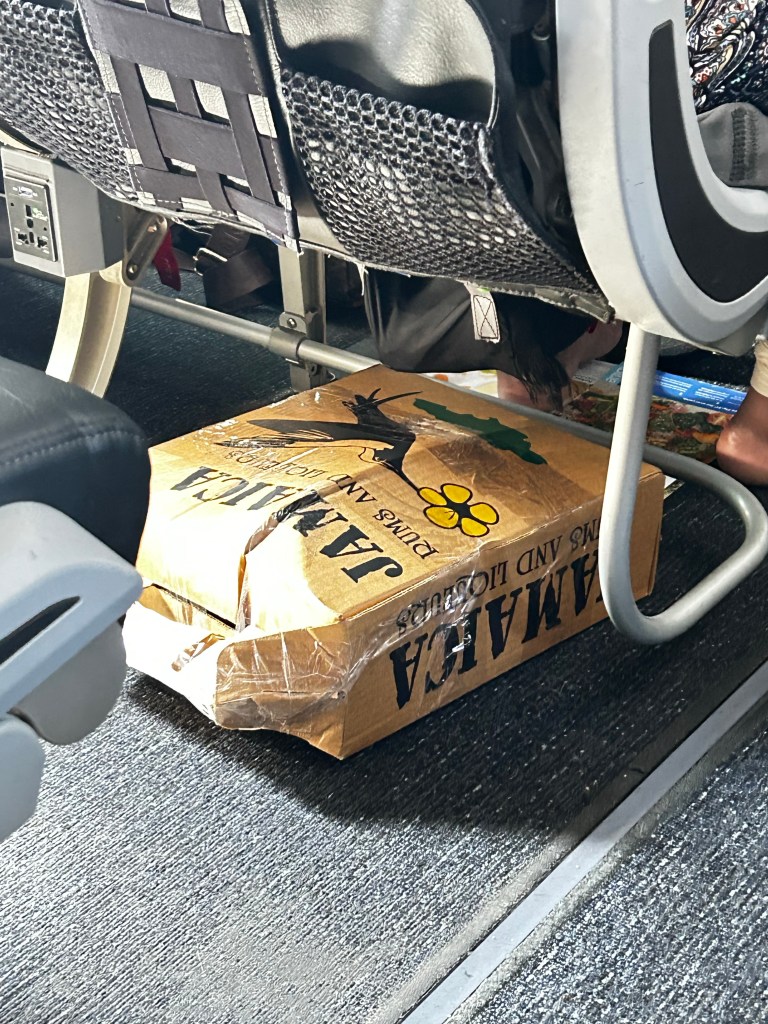
No flight from Jamaica is truly complete without spotting at least one box of the legendary Wray & Nephew White Overproof Rum tucked securely under a seat. On my flight, it was just across the aisle. I waited patiently for its devoted owner to rise, just so I could snap a clear shot of this cultural icon.
More than just a drink, this overproof rum carries the spirit of home—a staple in Jamaican households, not only for celebrations but for its traditional “remedies” too: dabbed on foreheads to ease headaches, or used in ancestral rituals and medicinal blends passed down through generations. It’s not just rum—it’s a ritual, a memory, a piece of home.
From Kingston’s heartbeat to Montego Bay’s glow, this island never stops revealing new ways to be enchanting.
Whether it’s your first visit or your fifteenth, Jamaica meets you where you are—and leaves you better than it found you.
So, as the Jamaica Tourist Board implores: “come to Jamaica and feel alright”.
Walk Good!
[This is Jamaica’s way of saying: Take care / Stay safe!]
2025 All Rights Reserved
All videos and images by me
It’s that time again—when I quench my wanderlust with my annual birthMONTH explorations. And this year, I chose to celebrate with a soulful return to the island of rhythm, roots, and radiance—Jamaica—a.k.a. Jah-mek-yah!
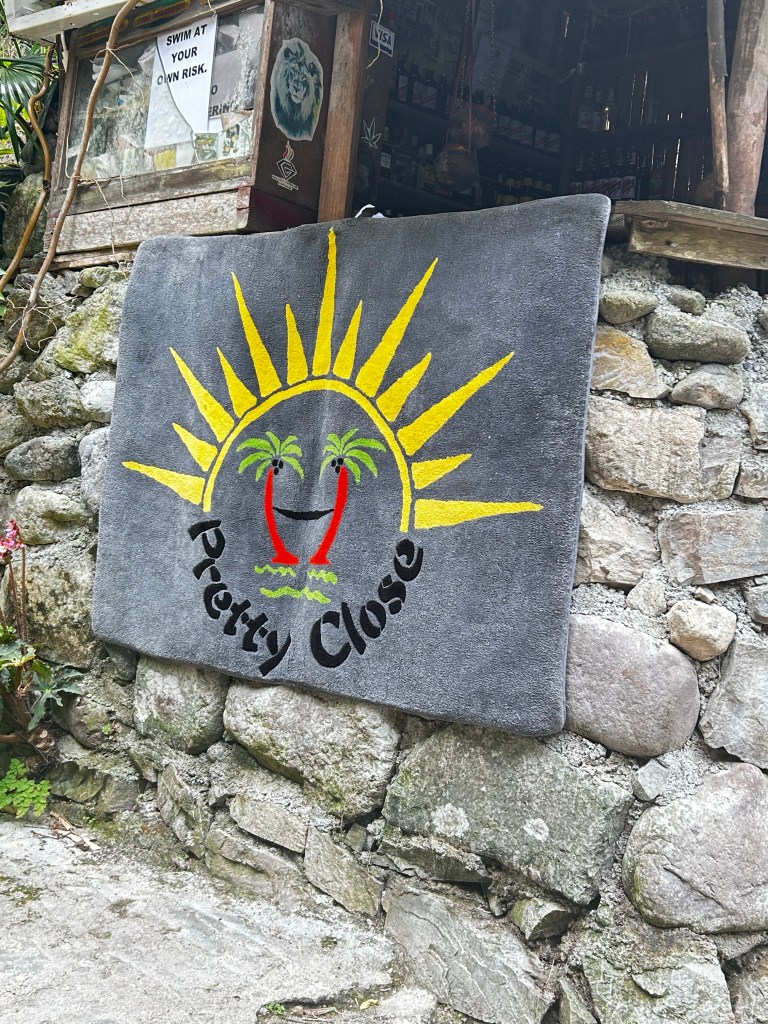
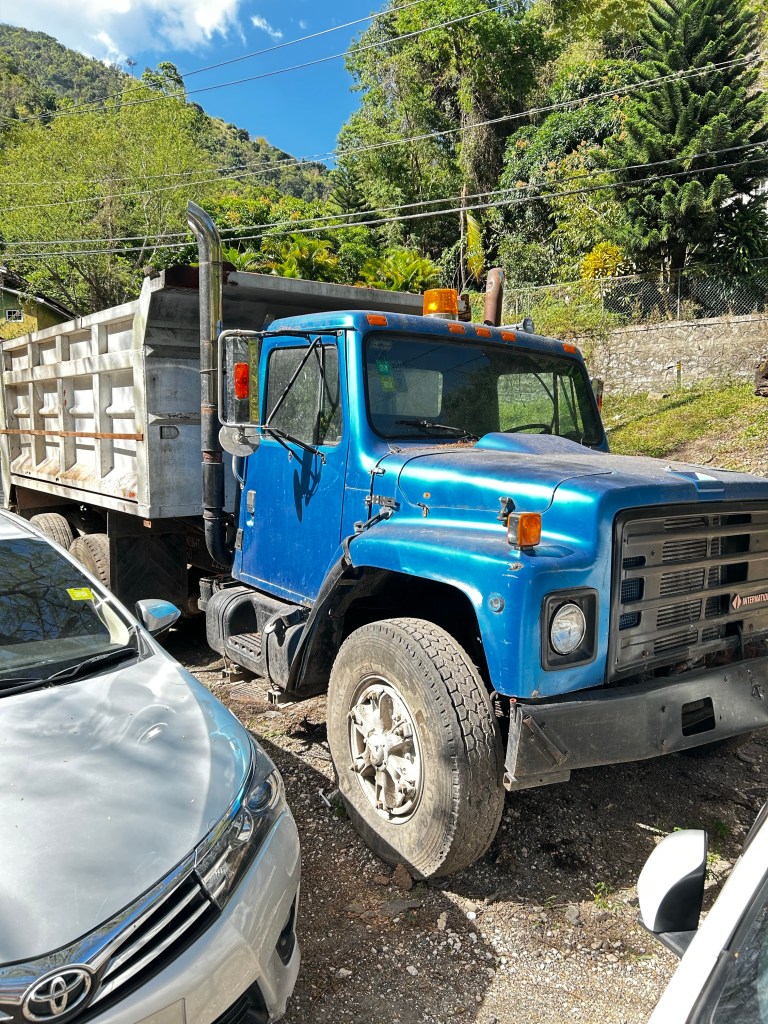
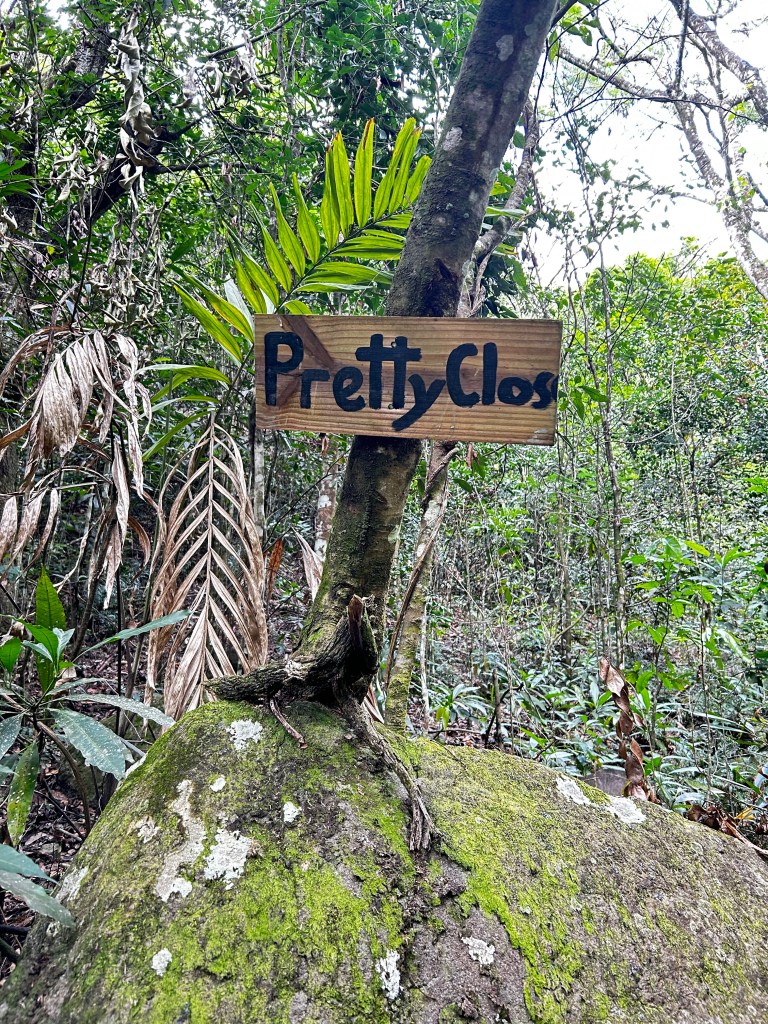
First, a hidden gem nestled in the cool hills of Gordon Town, in St. Andrew Parish—Pretty Close.
If you’re looking for a slice of authentic Jamaican magic—off the beaten path but full of soul—then welcome to the @prettyclose1876 experience.
With my sister and a dear friend, we made our way from Kingston, navigating the winding roads to Gordon Town—the birthplace of the legendary Miss Lou. It would take an entire post to do her justice, but suffice it to say she is the matriarch of Jamaican folklore, the cultural icon who lovingly gave voice and dignity to patois, Jamaica’s local language, and shared it with the world.
In the heart of the town square stands a statue in her honor, which is not only a powerful reminder of her legacy but used as a landmark in the directions given to find this hidden gem.
Directions are shared via WhatsApp—part of the rustic feel of this evolving Jamaican tourism product.
So this is the blue face truck!
This isn’t just a place to eat. It’s a full-on experience that feeds your body, your spirit, and your sense of adventure.
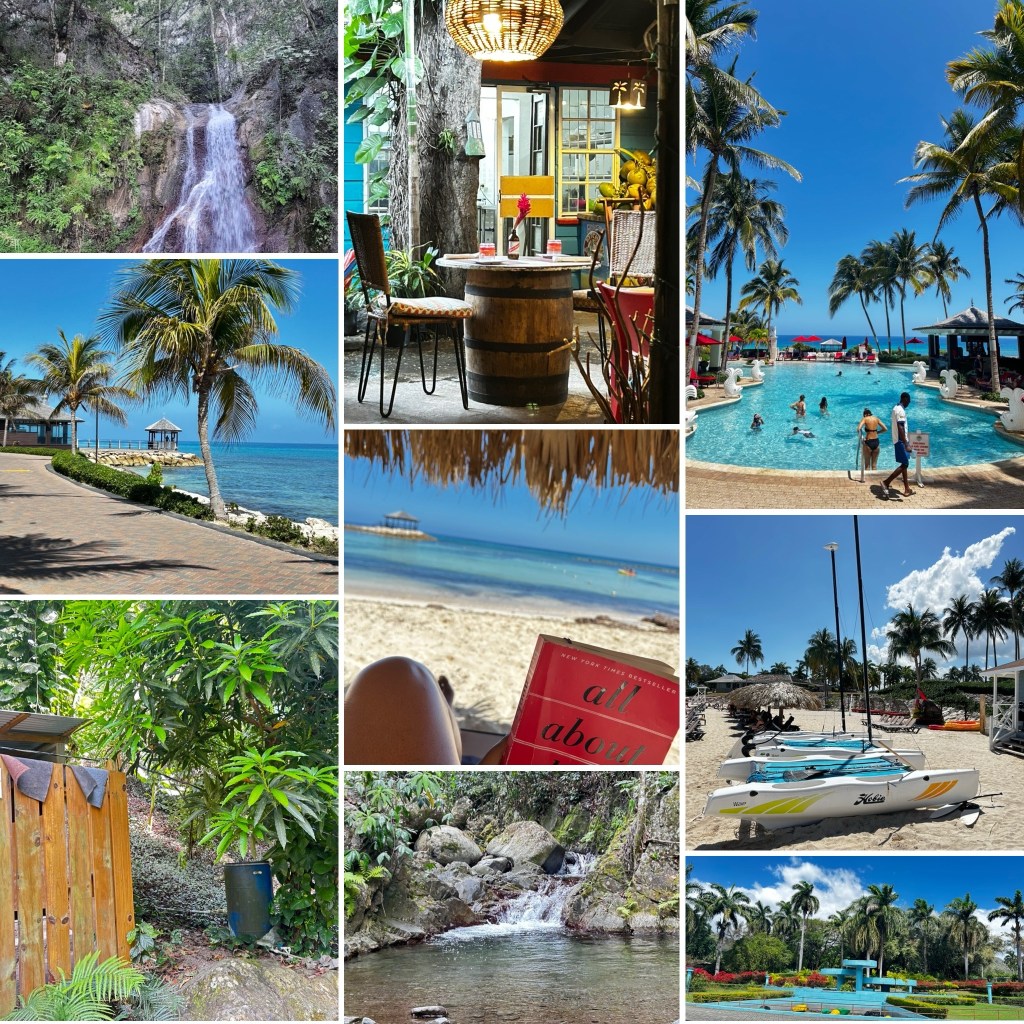
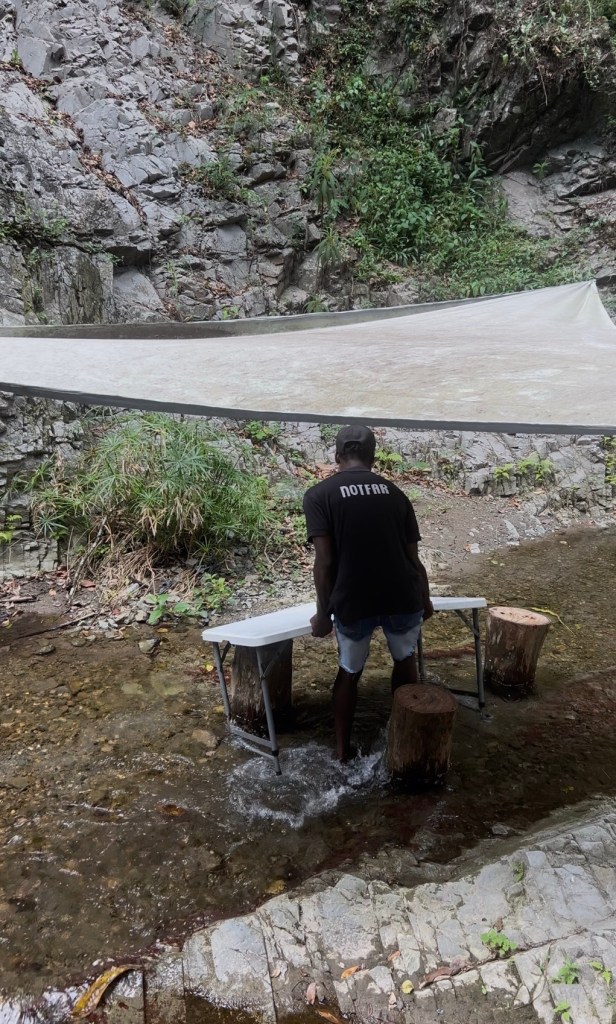
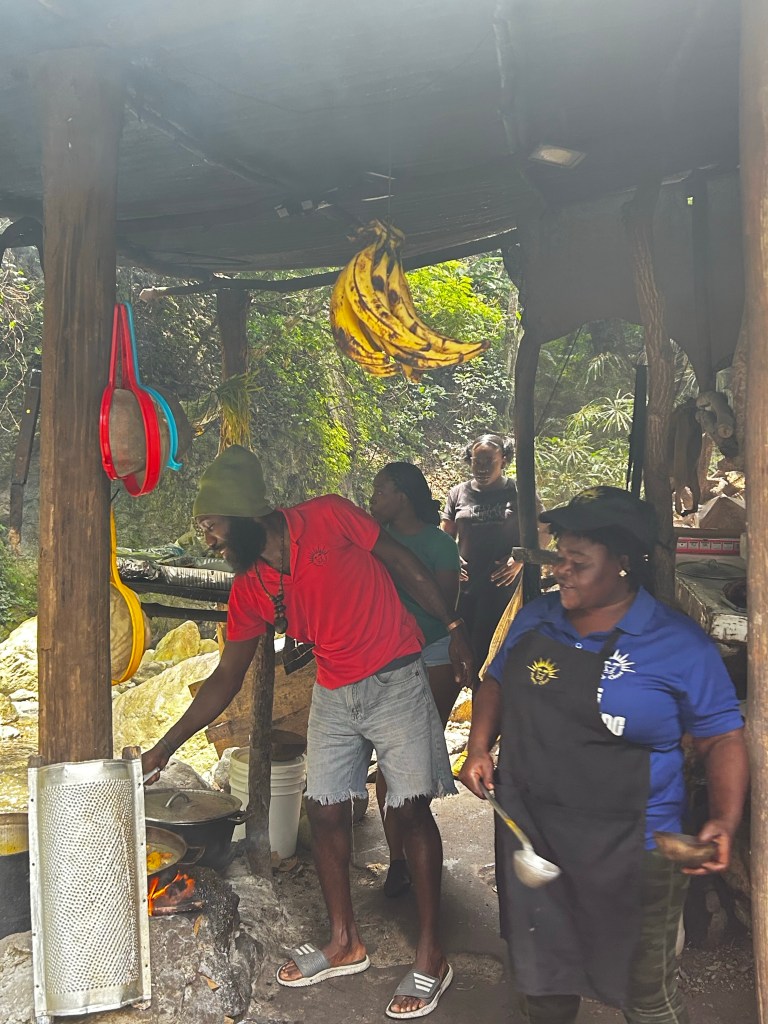
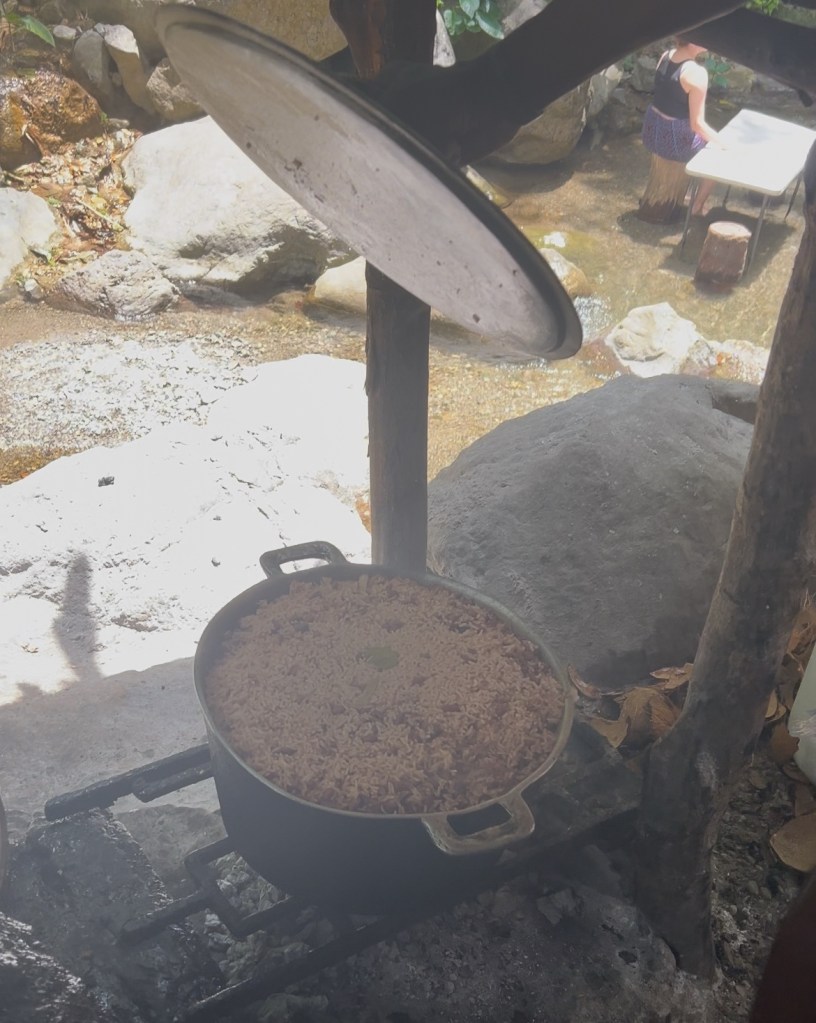
Imagine this: seated on tree trunks in the middle of a gently flowing river, your feet dipped in the cool water, a plate of steaming, home-cooked Jamaican food in front of you. That’s exactly how the day started—surrounded by nature, eating meals prepared right there by the river.
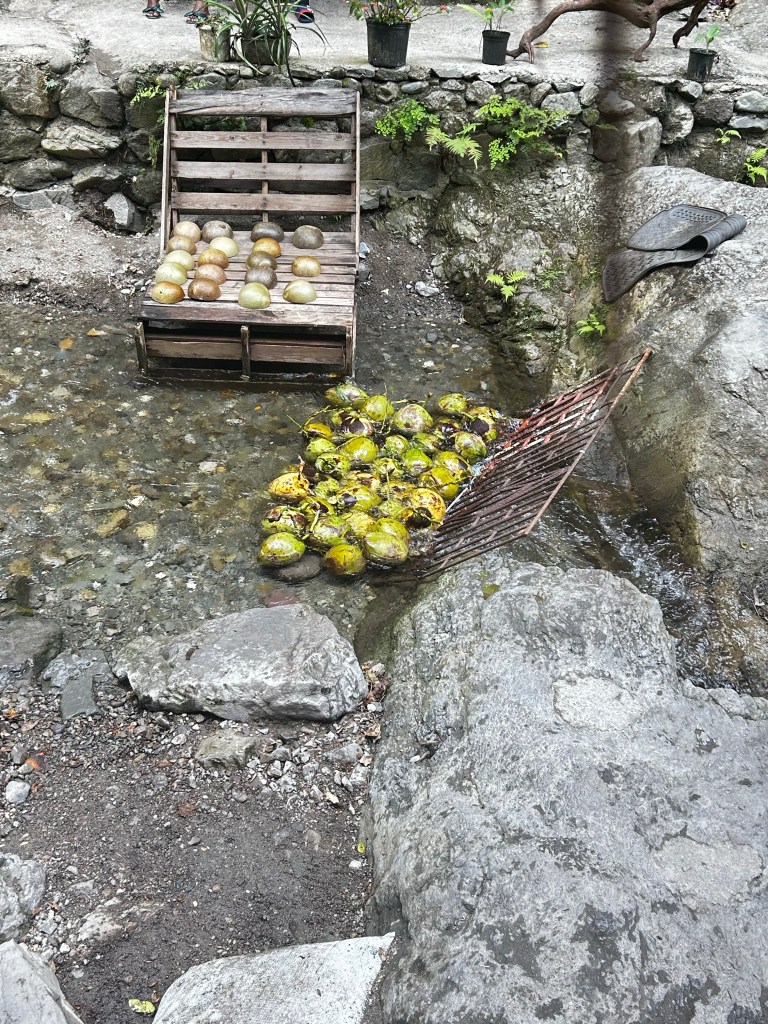
We started with a savory soup, sipped fresh coconut water—cooled in the river, laughed freely, and allowed the rhythm of the water and the food to set the pace.
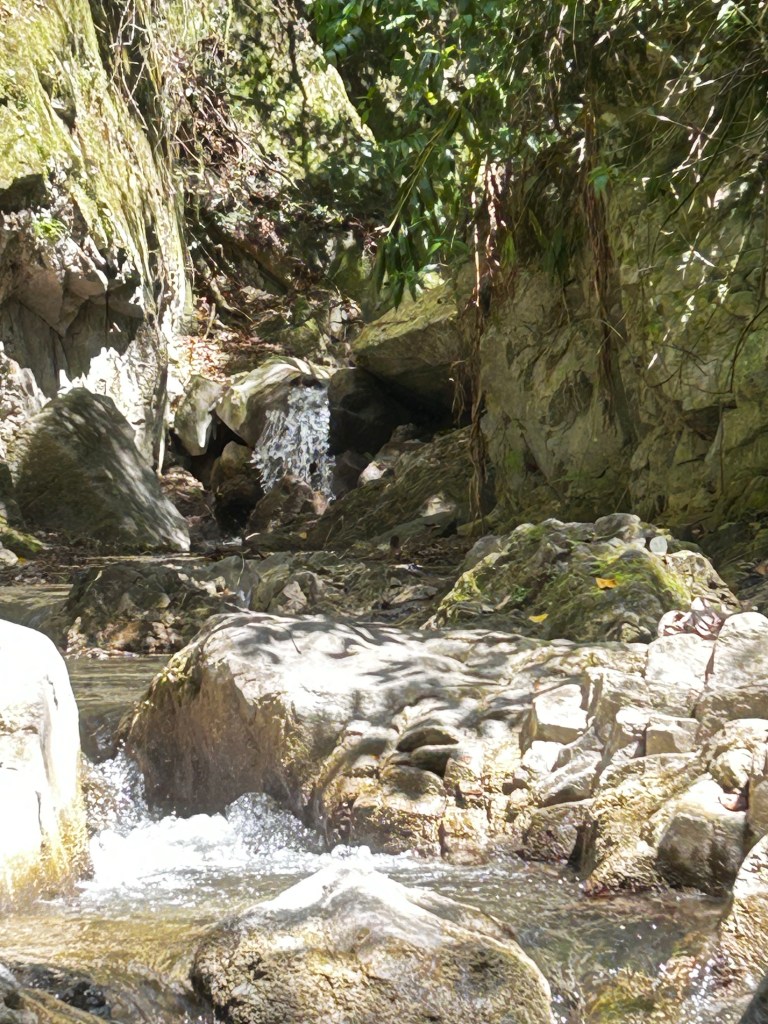
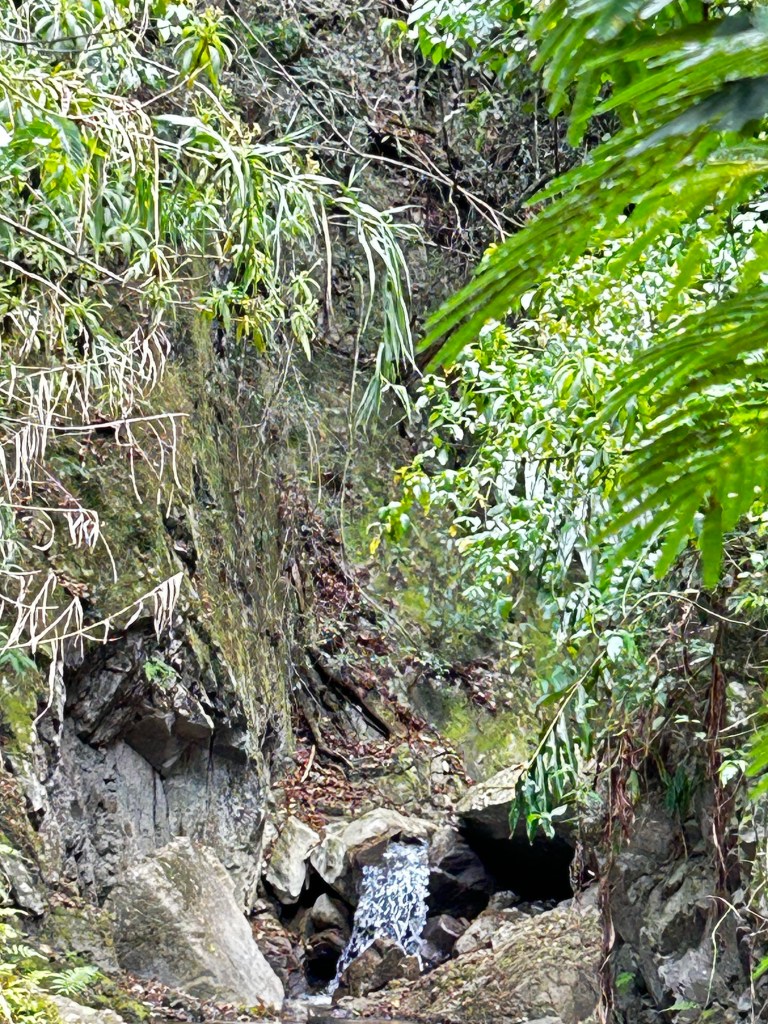
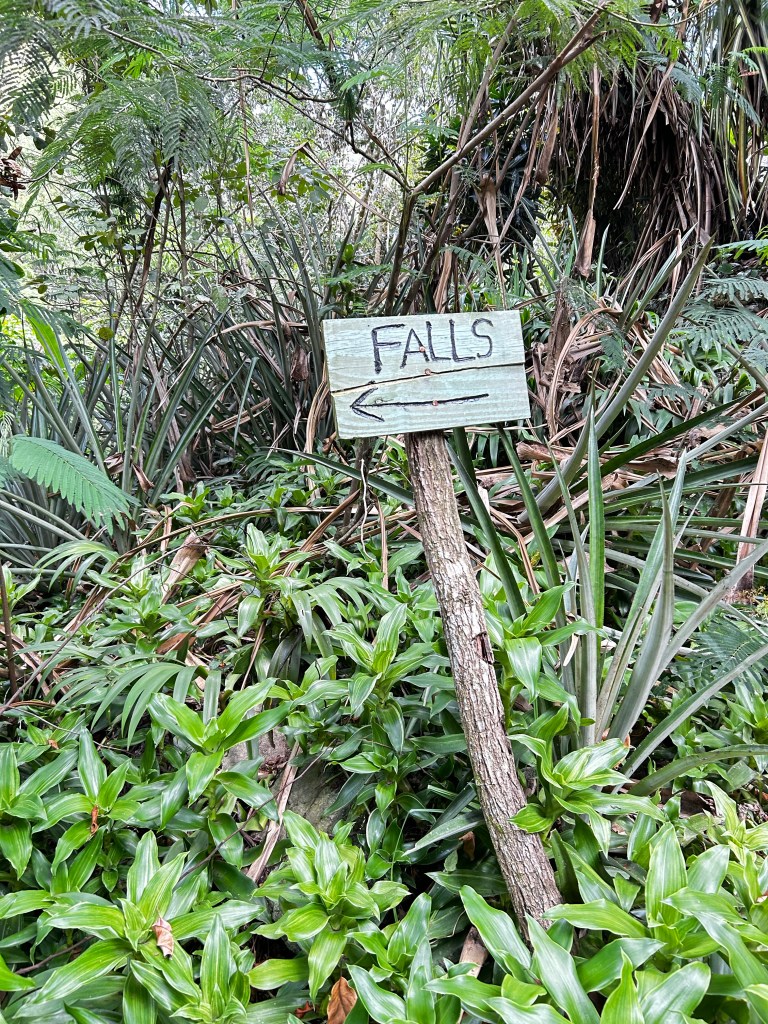
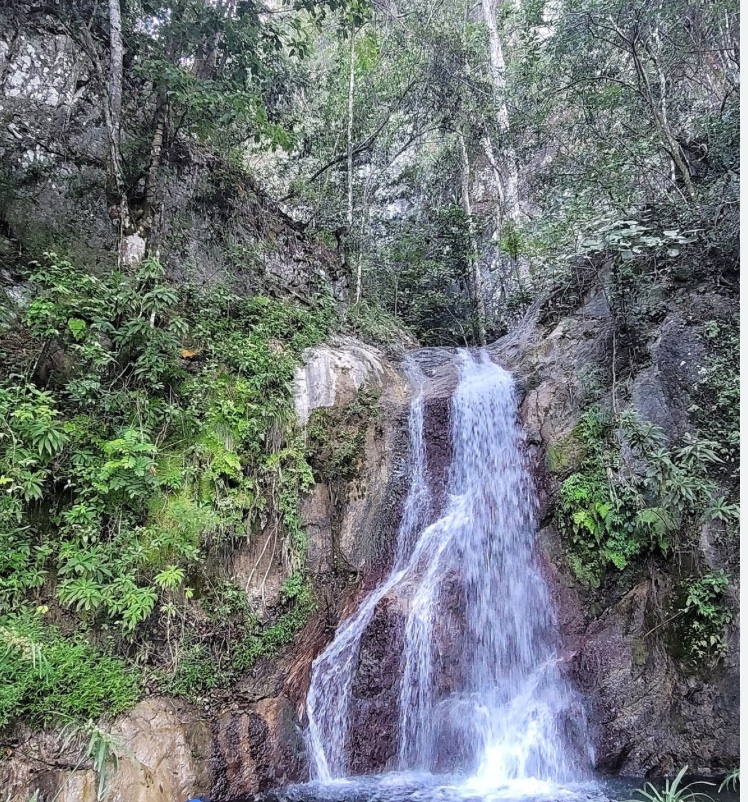
Then came a short, scenic hike to Orchid Falls, a tucked-away treasure that felt like stepping into a postcard.
After getting drenched by this cascading beauty and snapping a few pics, we headed back down the river and along it’s banks for round two: more laughter, more food, and more of that soul-deep feeling of contentment.
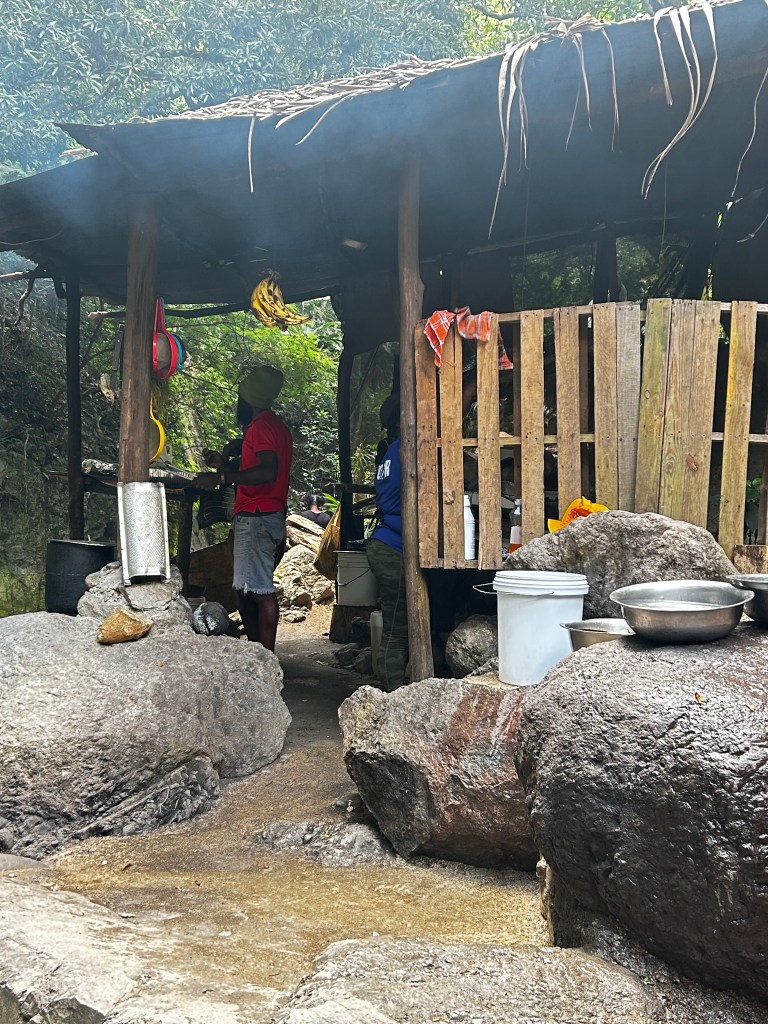
The real star of the show? Omar, the chef behind the flavors, who cooks like your favorite auntie or grandma—with love, depth, and serious skill.
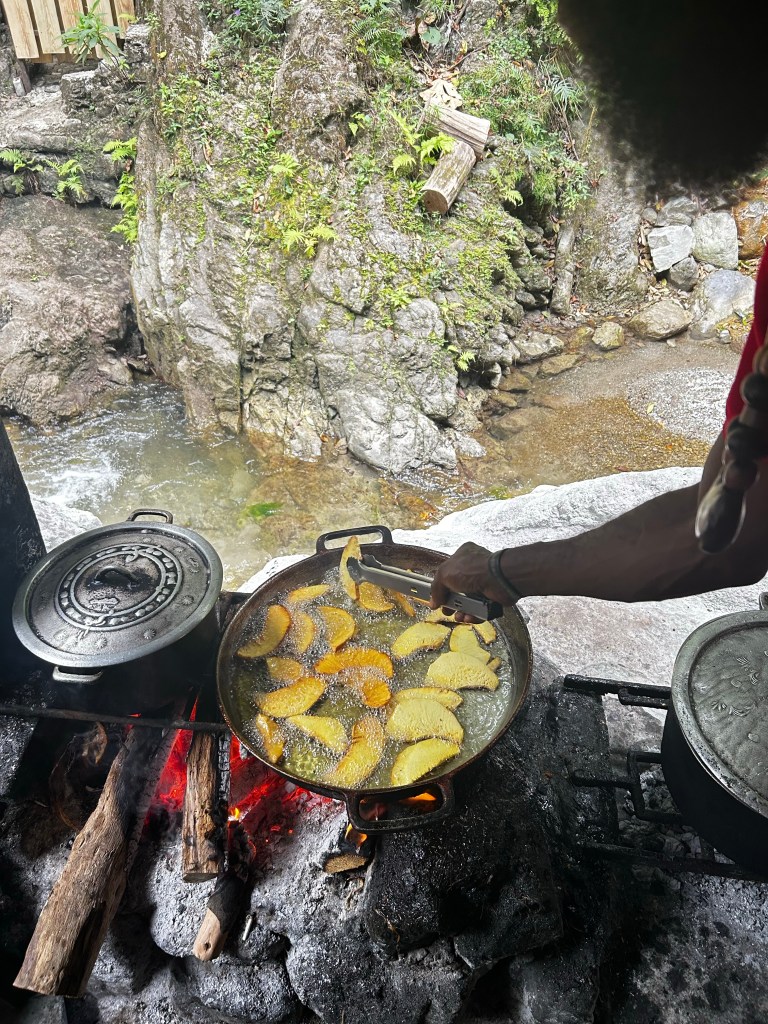
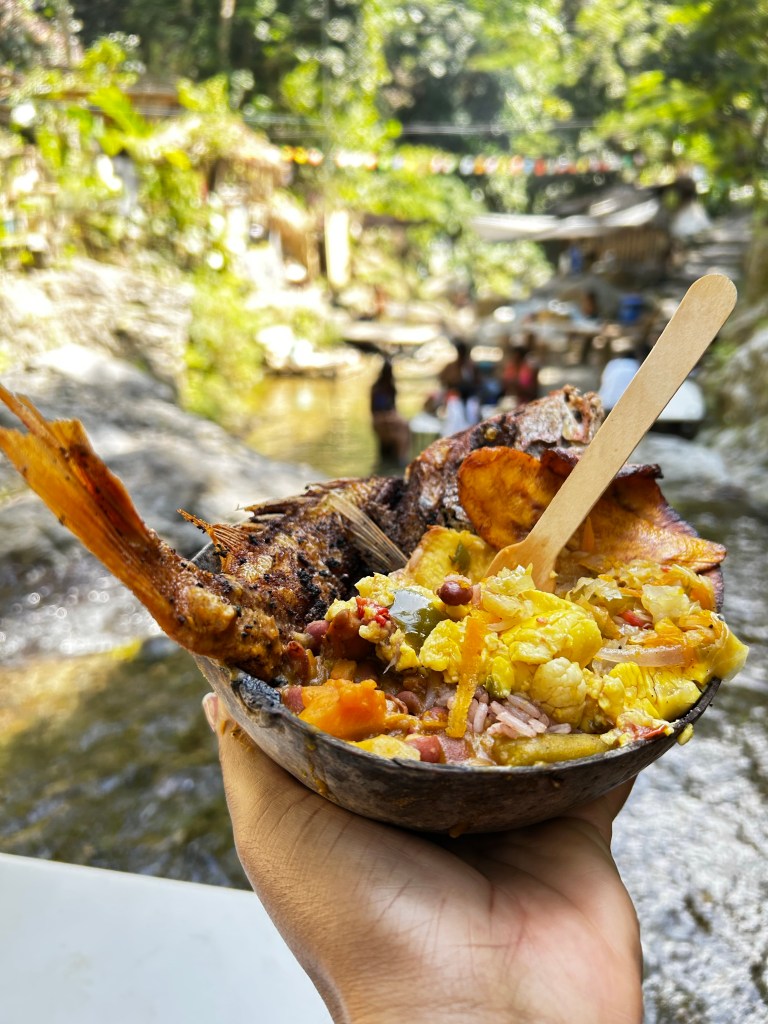
The cooking is done over an open wood fire, just like my grandma used to do back in the day. The pots are skillfully balanced on stones atop the wood fire. You can see the smoke wafting gently from the makeshift kitchen beside the river, carrying the earthy aroma of something special in the works. The smell of ital cooking is distinct—no salt, no butter—just the pure, unprocessed goodness of Mother Nature where the flavor is drawn from the land, the wood fire, and the love poured in.
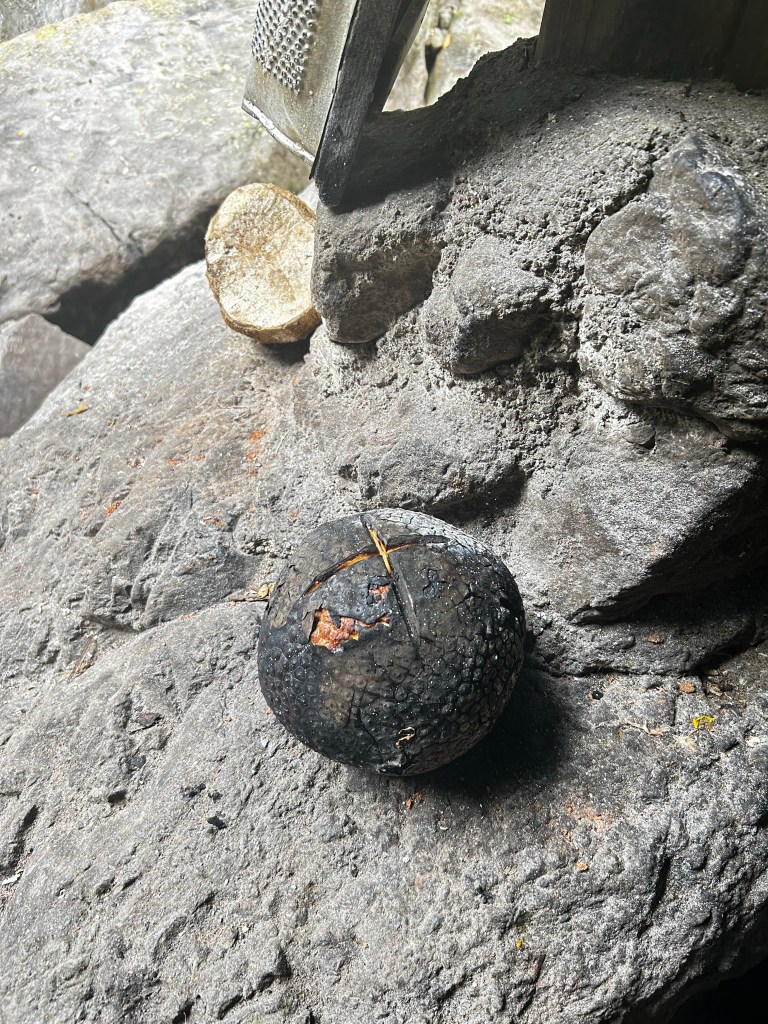
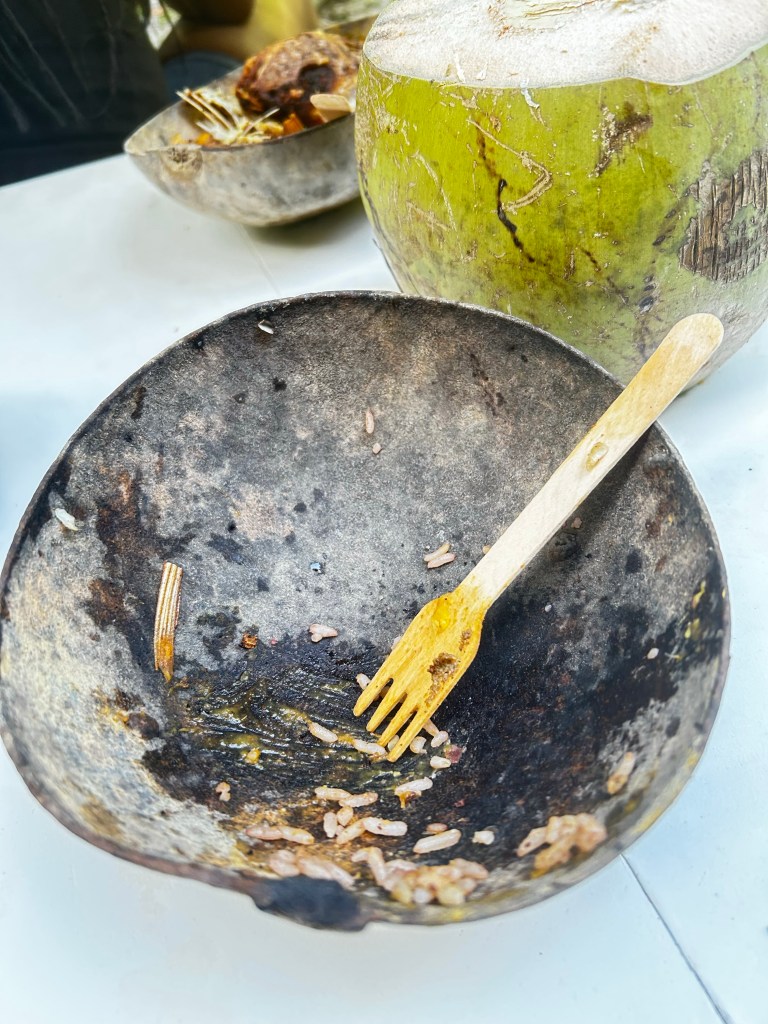
Every bite was a reminder of why Jamaican cuisine is world-renowned: bold, fresh, and absolutely unforgettable. Served in calabash bowls in keeping with the natural experience—it was good to the last bite.
Roasted breadfruitRice and peas The menu: fried fish, fried plantain, roasted breadfruit, rice and peas, ital stew
What I loved most is that it’s pretty close to / not far from Papine, a bustling metropolis, but it feels like a world away from the hustle and bustle of Kingston.
Pretty Close is a peaceful escape, rich with local charm and natural beauty.
If you ever find yourself in Jamaica, do yourself a favor and add Pretty Close to your itinerary. This spot is a must-visit. Period.
The experience of flying into Jamaica never gets old. There’s an indescribable feeling that washes over me between the pilot’s announcement of descent and the first glimpse of land.
My flight into Jamaica is always meticulously planned, starting with securing a window seat over the wing because where I sit on the plane matters, as you’ll soon see.
For most of the flight, I remain calm, occupying myself with a movie, a book, or some writing. However, once the pilot announces the descent, everything is set aside. My focus sharpens, ready to capture the moments leading up to our landing.
Pilot: “…we’ve just begun our initial descent….”
That’s my cue. iPhone in hand, eyes peeled, searching for the first sight of land.
There it is …
… Home sweet home.
By now, a myriad of emotions flood in, with excitement at the forefront. This is the feeling I experience every time I return home to Jamaica.
As the pilot continues the descent, I take more pictures.
However, I’m always ready to switch to video mode. And this is the moment: as the plane’s engine aligns with the sea, it feels as if we might land in the water …
… but then as if out of nowhere, land appears, and we glide in for the touch down.
As soon as the wheels hit the tarmac there’s a sound. It’s the vibration of clapping hands ricocheting throughout the cabin as we all burst into what seems like orchestrated applause and engage in exuberant chatter. That spontaneous ritual never gets old.
One other picture I always take is this one:
This is taken at the top of the ramp as I make my way to the arrival hall.
And in that moment my heart finds its rest at home.
Grateful for another safe landing and the time spent in beautiful Jamaica—Jah-mek-yah!
2024 All Rights Reserved
Created with Canva            Image Credit: Me
Beforeword: Rio Nuevo lends its name to the small village on Jamaica’s north coastline where the river enters the sea. This idyllic place was the historical ground for the largest battle which shifted Jamaica from Spanish to English control in 1658 during the horrid days of colonial rule. This poem is to the beauty of Rio Nuevo’s continuous flow into the sea like Jamaica’s continuous quest to fully shed colonial legacy.
Rio Nuevo where river and sea entwine in liquid whispers a lullaby sung cascade down trickles of longing from ancient hills in the quiet a liquid journey the river dreams endless yearning for the sea the current’s ebb and flow rhythmic dreams set sail finding solace in sea’s embrace
Rio Nuevo, where destinies lie in 1658, battles fought and won the English, the Spanish did defy Jamaica captured like pawn in colonial quest a hamlet of heritage, memories set sail today a village, quiet and quaint
Rio Nuevo, where the river dreams of the vast, open sea a liquid reverie each ripple tells a tale a journey traced in water’s embrace whispers to the waves of the vast, open sea from source to mouth, a liquid symphony played in nature’s stream dreams take flight the river yearns for the sea’s embrace river and sea, a gentle collide
Afterword: . Linking history to water’s ebb and flow and the reminder of river’s yearning to give herself to the sea as a kind of letting go—that we humans must also do. A letting go of painful past, not so as to forget but so that it lives on in us free of hate or negativity like the freedom in the vast open sea.
Jamaica, land of vibrant sunsets On this day, hearts beat as one Locally and overseas, a call resounds Let passion flow, unfurling like the reggae rhythms
Under the island’s embrace, a celebration stirs February 23, a day for national pride Every single Jamaican from all spheres of life Show the world the tapestry of our identity
Pride echoes through the Jamaican air Not just a day, but a heartbeat of culture Beat the drum of heritage loud Dance in step with the spirit of Jamaica
Raise the flag high, let it catch the breeze For in unity, a nation finds its strength Jamaica Day, a stage for stories untold An anthem of pride, echoing bold
Afterword: Since 2011, Jamaica Day is celebrated annually on the last Friday of February.
Step into the heartwarming world of my Jamaican childhood, where Sundays meant simple joys, sumptuous feasts, and the sweet allure of “Fudgie” and his magical ice cream.
As a child growing up in my beautiful homeland, Jamaica, one of the cherished highlights of my week was indulging in the sweet delight of ice cream on Sundays.
In those bygone days, life was uncomplicated, and our Sunday rituals were set in stone. The day would kick off with my mother’s early-morning culinary expedition, as fragrant spices swirled on the gentle morning breezes, teasing our senses with the promise of a delightful feast ahead.
After a hearty breakfast, it was time to tackle the obligatory household chores — everything from tidying up the house, sweeping the yard, and laboriously hand-washing laundry. However, one task I dreaded above all was when my mother had to wash my hair. My thick, coiled locks had a knack for coiling even tighter when wet, and the process of combing through them left me grimacing all the way through. But when mommy was through, my hair was neatly plaited and ready for the school week ahead.
Once all the chores were behind us and I had been bathed and dressed in my “Sunday clothes,” it was time to gather around the table for what we Jamaicans refer to as “Sunday dinner.”
“Sunday dinner” was no ordinary meal; it was the pinnacle of the week in every Jamaican household.
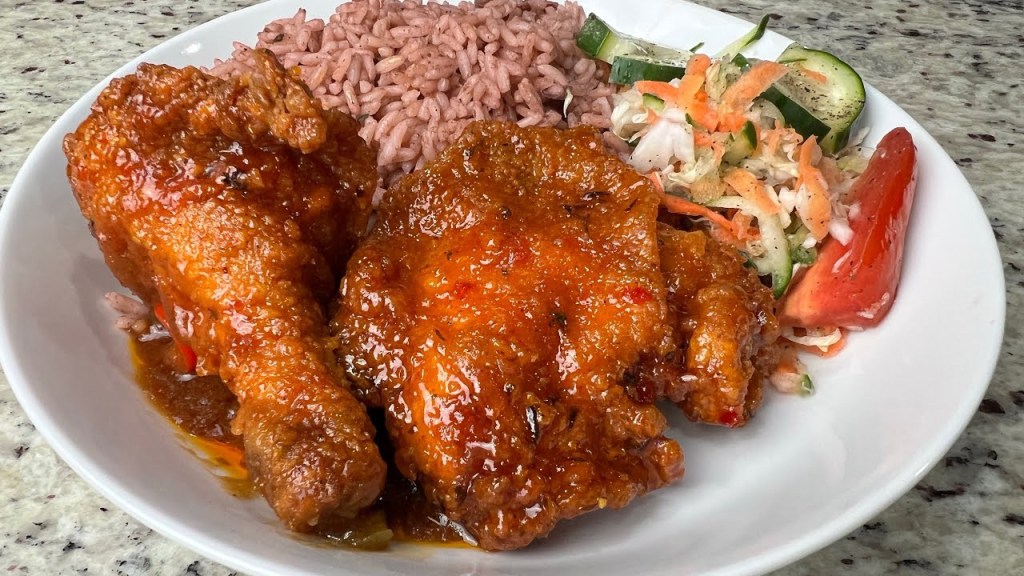
The traditional spread included a principal meat (typically chicken as the crowd favorite); a carbohydrate staple (rice and peas being an absolute must); a salad comprising crisp cabbage and grated carrots, adorned with cucumber and tomato wedges, drizzled with black pepper; a refreshing beverage (often freshly squeezed from carrots, soursop, or beets); and, last but certainly not least, dessert.
And oh, the dessert!
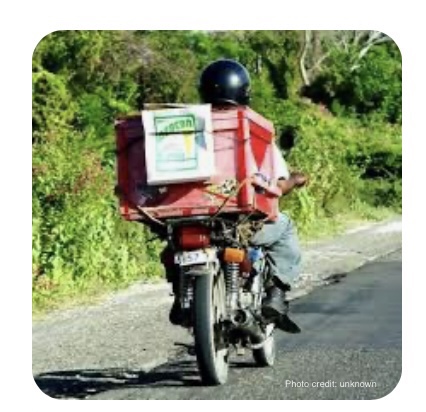
While savoring the flavors of our sumptuous meal, my ears were tuned to a singular sound and an unmistakable voice – the distant chime of the “ice cream man’s” motorbike horn. This unique sound carried for miles across our tranquil town, giving us just enough time to secure the coins from our parents and gather at our designated meeting spot.
Then came the voice, a melodic, resounding and repeated call: “Fudge! Ice cream! Nutty-buddy!”
This was the unmistakable voice of the “ice cream man,” affectionately known as “Fudgie,” pedaling his bike, vocally advertising the frozen treasures nestled within the insulated box on the back of his two-wheeler.
Fudge was essentially ice cream on a stick, while nutty-buddy was a delightful ice cream cone adorned with a generous sprinkling of nuts, and ice cream, usually grape nut, piled atop the iconic beacon cone.
By this point, my friends had also gathered their coins, dashing over from their homes across the neighborhood, all of us adorned in our Sunday clothes – the girls with meticulously plaited hair and the boys making sure they were equally well-groomed. We would encircle Fudgie, simultaneously clamoring for our chosen treats.
To this day, ice cream holds a special place in my heart as my all-time favorite dessert. Why? Because it transports me back to an era when life was uncomplicated, Sundays were enchanting, and I’m eternally nostalgic for the home that lives on vividly in my heart, just as it was when I was a child growing up in Jamaica.
She’s a mere 146 miles long and about 51 miles wide An island washed by the Caribbean Sea, a standout beauty tide-to-tide
She’s the jewel of the Caribbean, a little piece of paradise Let it be known, her impact on the world far outweighs her tiny size
First the Spanish then the English sought to colonize Her children—resistance fighters—battled for African heritage kept alive
Defiant—likkle but tallawah—refusing to be renamed She bears her indigenous name—Xaymaca—Jamaica, land reclaimed
Among first of the Caribbean isles to dismiss the colonial power Today she stands strong and proud, 61 years freedom tower
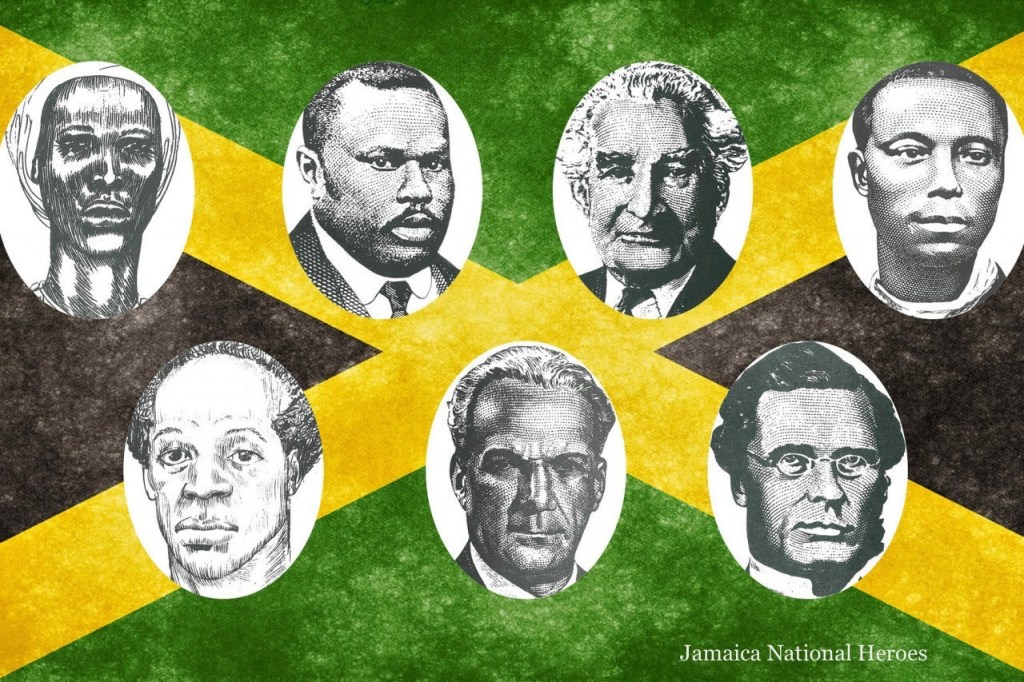
From freedom fighter, Nanny of the Maroons to pan-Africanist Marcus Garvey Her people fought always for independence as their inherent right to be
From food to music to athletics and innovations Best rest assured, if it’s irie, it’s got some Jamaican connections
The first tropical country at Winter Olympics with the Cool Runnings bobsled team She’s even the first English-speaking Caribbean country qualifier with her male and female soccer teams
In the world of track and field—this is where she simply “JAminates” Athletic superstars from Merlene Ottey to Usain Bolt—Olympics she dominates
She produces the world’s best coffee for drinking and even for singing Koffee, the only woman and youngest person Grammyawarded—what a Raptureshe is being
She razzle-dazzles taste buds with food, boonoonoonoos good And, finger-licking meat jerked spicy-hot on wood
Her rich musical heritage from mento to dancehall She hails chart toppers from Bob Marley to Millie Small
She will not be outdone in serving rum or giving praises Guinness World Record holder—most bars per square mile right along with the most churches
In the sphere of innovation, there’s much to emphasize She’s influenced nation building in those ten times her “likkle” size
In the Western Hemisphere, she built the first iron bridge and railroad And the AT&T telephone system, from her technology they borrowed
Her flag bears no common color with those in the American flag She speaks a rhythmic dialect, tribute to African heritage she brags
In only 61 years her legacy she stamped everywhere ‘Cause no matter where you roam, the black-green-and-gold will be there
For high privilege and responsibility of independence reigned For nationhood, on this her 61st year, we give thanks for freedom gained
Happy 61st Independence to me likkle-big country—JAH-mek-yah 🇯🇲 Jamaica
2023 All rights reserved
Music: Bob Marley and the Wailers
This post is influenced by this image for the “What do you see” challenge hosted by Sadje; and for Sheryl’s Your Daily Word prompt, today’s word is portend [Photo credit: Tumisu @Pixabay]
“Wickedest city on earth”, so was called the Port
Port Royal, on the Palisadoes a mere 15 miles from the center of Kingston, Jamaica
Jamaica, where back in the 17th century t’was home to the real pirates of the Caribbean—a haven
Haven to a den of buccaneers, privateers, slavers and prostitutes
Prostitutes who flavored brothels, taverns, and drinking halls
Halls of debauchery frequented by the biggest names from the age of piracy, including Calico
Calico Jack, when the black cat crossed his path knew it portended a disaster which later unfolded that fateful day in June
June 7, 1692 to be exact
Exact at 11:43 a.m. (so told by time frozen on a watch), that the earth would quake
Quake at a 7.5 magnitude
Magnitude-measured disaster so horrible, many said it was God’s
God’s hand of vengeance
Vengeance on a wicked city
City of folly, for it had been built on sand
Sand foundations that liquefied when the quake shook
Shook the earth so vehemently it sucked whole buildings, roads and people straight into the ground
Ground sucked down to the bottom of the sea
Sea that in turn churned up a tsunami
Tsunami that crashed over walls—33 acres of the city disappeared
Disappeared beneath the sea—taking 2,000 souls, and later another 3,000 perished from the population
Population of a city that had been cut in half, some say through retribution
Retribution? I do not know but 5,000 souls— transformed to letters
After-word:Port Royal—often considered the Pompeii of the sea—was designated a UNESCO Heritage Site in 1999. Today, it’s a small coastal village and bears no resemblance to the city of sin it once had been. It is hoped that a revitalization of the ruins will inspire eco-tourism and an increase in the small city’s revenue — perhaps restoring it to the wealthy glory it once knew in the 17th-century.
Thank you for journeying along on this historical recount, told through loop poetry, of my paradise home—Jamaica.
This blog, titled "Empowering Leadership: Building a Harmonious Partnership Between School Management and Principals," explores the essential factors that foster a strong and effective relationship between school management and principals. Drawing on historical context, philosophical principles, Indian legal frameworks, and mythological analogies, the blog offers insights into creating a balanced dynamic where principals are empowered yet accountable. It provides practical strategies for ensuring the administrative, academic, and financial health of educational institutions through clear communication, shared vision, and mutual respect.



























 Poems & More