Beforeword: I recently traveled home to Canada and visited Vancouver, British Columbia. The trip was epic. I intended to publish it as one seamless feature with subheadings. But it turned out to be quite substantive. Instead it is presented in three parts but written as a single story. You’re invited to read all three as the seamless feature it’s intended to be.
Start here 👉Part I: Vancouver—Where Nature Takes Centre Stage
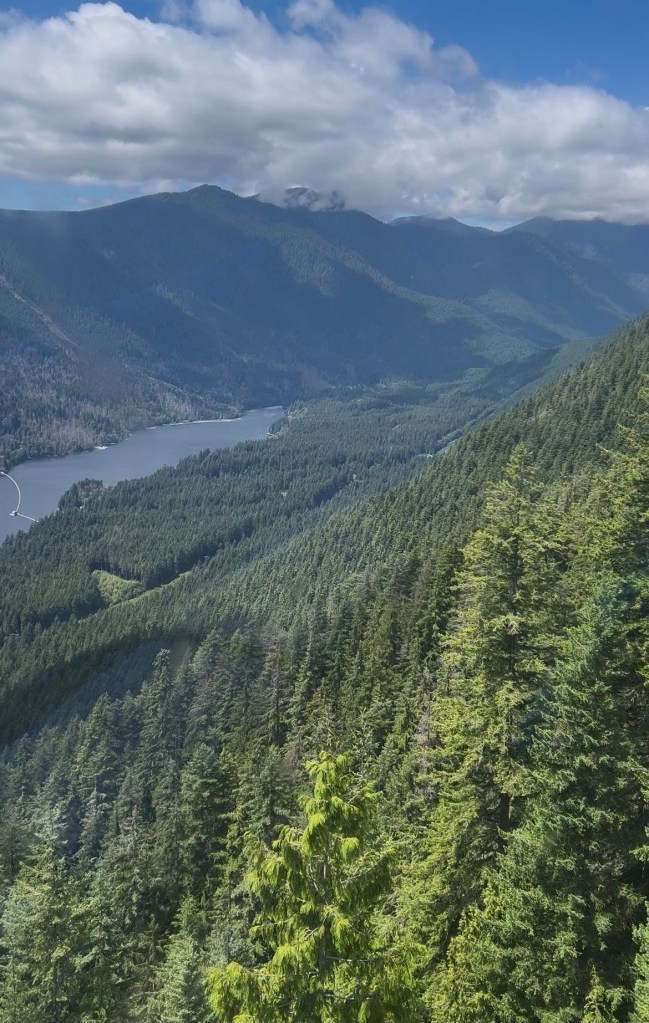
Leaving downtown behind, I discovered another side of Vancouver.
The city impresses with its waterfront, neighbourhoods and skyline, but crossing Burrard Inlet into North Vancouver reveals why British Columbia is consistently ranked among the most beautiful places in the world.
To explore it, I once again stepped away from the conventional tourist route. Instead of boarding a hop-on, hop-off bus, I joined a small group sightseeing tour. It turned out to be one of the best decisions of the trip. The smaller vehicle created a more intimate experience, allowed our guide the flexibility to tailor the day to our interests and reached places larger coaches simply couldn’t.
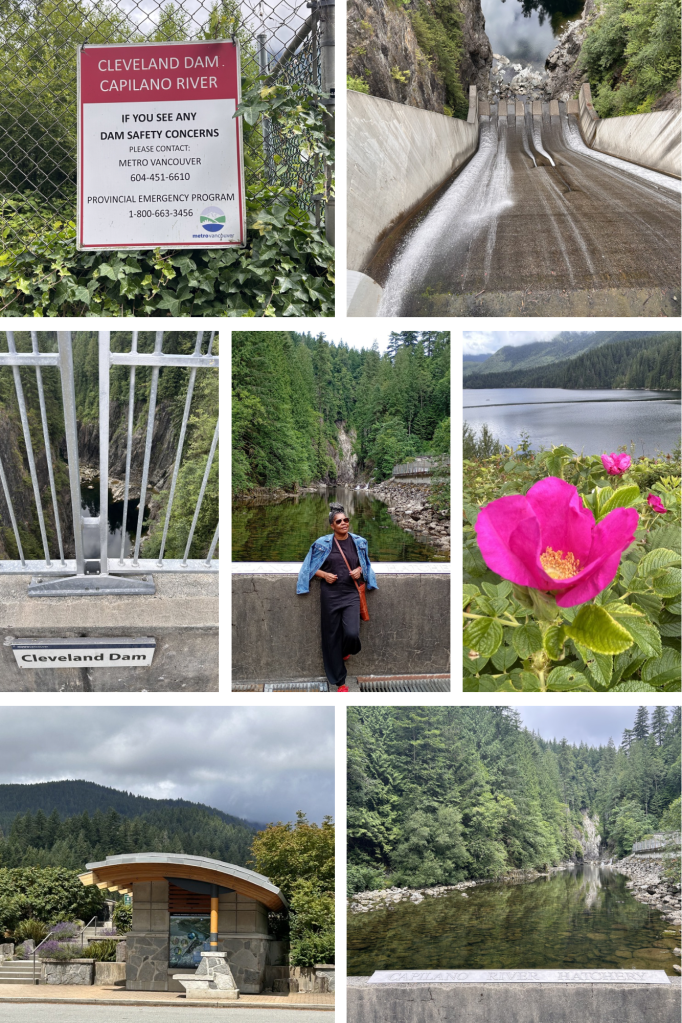
Our first stop was Cleveland Dam.
Standing 300 feet high, the massive concrete structure stretches across the Capilano River, creating one of Metro Vancouver’s three protected drinking water reservoirs. Every day, this reservoir helps provide clean drinking water to nearly one million residents.
Yet for all its engineering significance, what struck me most was its serenity.
The water was impossibly still, acting like glass reflecting the surrounding mountains. Surrounded by towering evergreens the cool mountain air carries the scent of cedar and fir complemented by the fragrant roses. The stillness, the silence and the flavor in the air said more than words ever could.
Crossing the nearby Lions Gate Bridge added another chapter to Vancouver’s story.
Completed in 1938, the suspension bridge connects downtown Vancouver with the North Shore, toll free. Named after the twin mountain peaks known as The Lions, the bridge has become one of Vancouver’s defining landmarks.
If the airport introduced me to British Columbia’s relationship with nature, North Vancouver immersed me in it.
This started with the Capilano Suspension Bridge Park.
Stretching 450 feet across the Capilano River and suspended 230 feet above the canyon floor, the bridge has been welcoming adventurous visitors since 1889.
Adventure, however, was not the word running through my mind.
Terror might be more accurate.
With my heart beat racing and knees buckling, I timidly stepped onto the swaying bridge. My tour guide encouraged me to pause for a photograph.
I convinced my shaking legs to stay still enough for the photo, and even managed to let go off of the railings long enough for it.
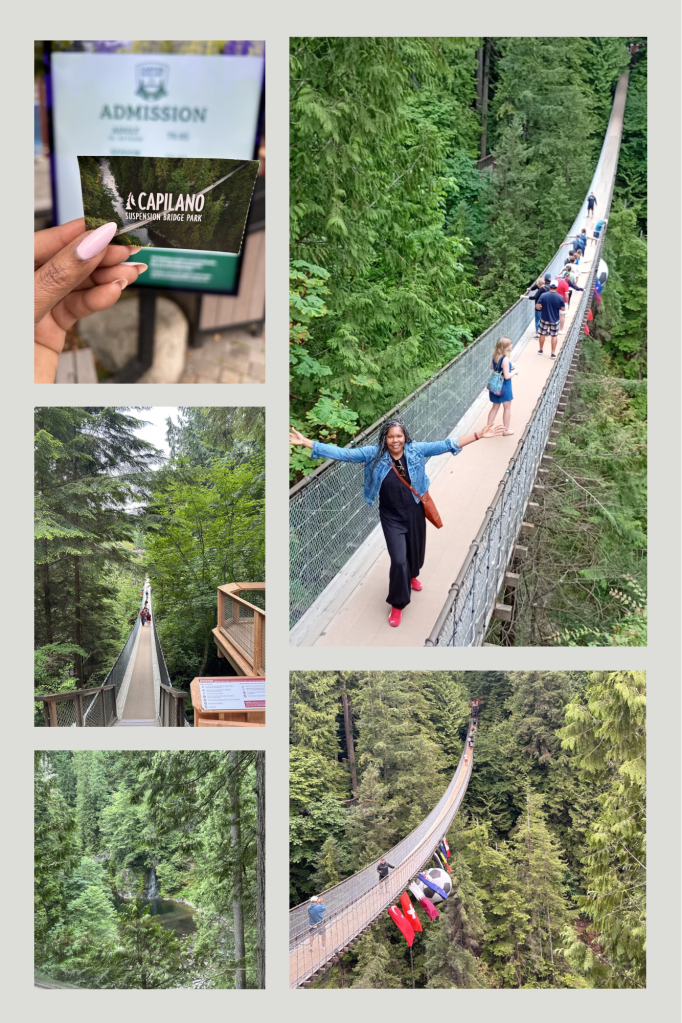
Hand over hand, wobbly step by wobbly step, I made my way across, alternating between looking straight ahead and stealing nervous glances through the gaps at the rushing Capilano River far below.
Once safely on the other side, I could pay attention to the surrounding Douglas firs and western red cedars—many hundreds of years old—towering over us. It made me think of how much more we need to protect nature.
Now back on solid ground I rewarded myself with a much-needed pause at the historic Cliff House Restaurant before browsing the Trading Post gift shop. My nerves had settled just enough for me to convince myself that perhaps I was becoming braver.
Or perhaps I had simply forgotten how frightening the next attractions looked from the ground.
Floating through a forest
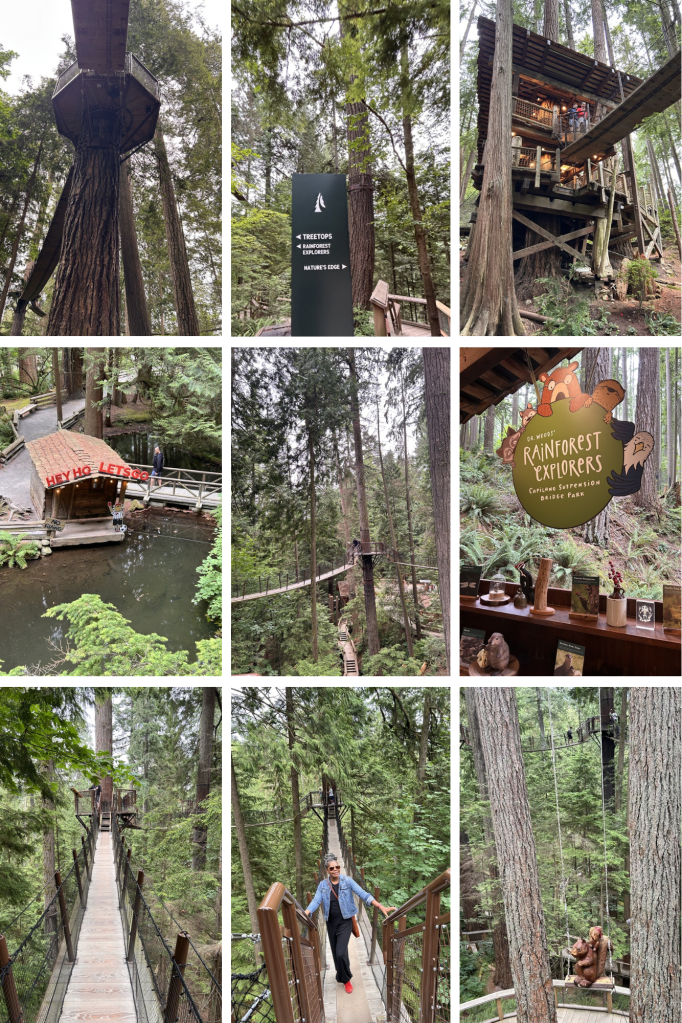
The Treetops Adventure invited visitors to walk among the forest canopy itself. Seven suspension bridges linked towering Douglas firs high above the forest floor, offering a perspective usually reserved for the birds. It felt like I was floating through a forest.
Walking on the danger side
Then came the Cliffwalk.
If the suspension bridge had tested my courage, the Cliffwalk demanded even more.
I descended down the narrow walkway that hugs the granite cliff face, with sections extending out over the canyon on steel supports and glass panels. Once again, it became a slow procession of careful footsteps, tightly gripping the handrails. Every now and then, I reminded myself to stop gripping the railing quite so tightly and simply breathe.
The reward was worth every anxious step.
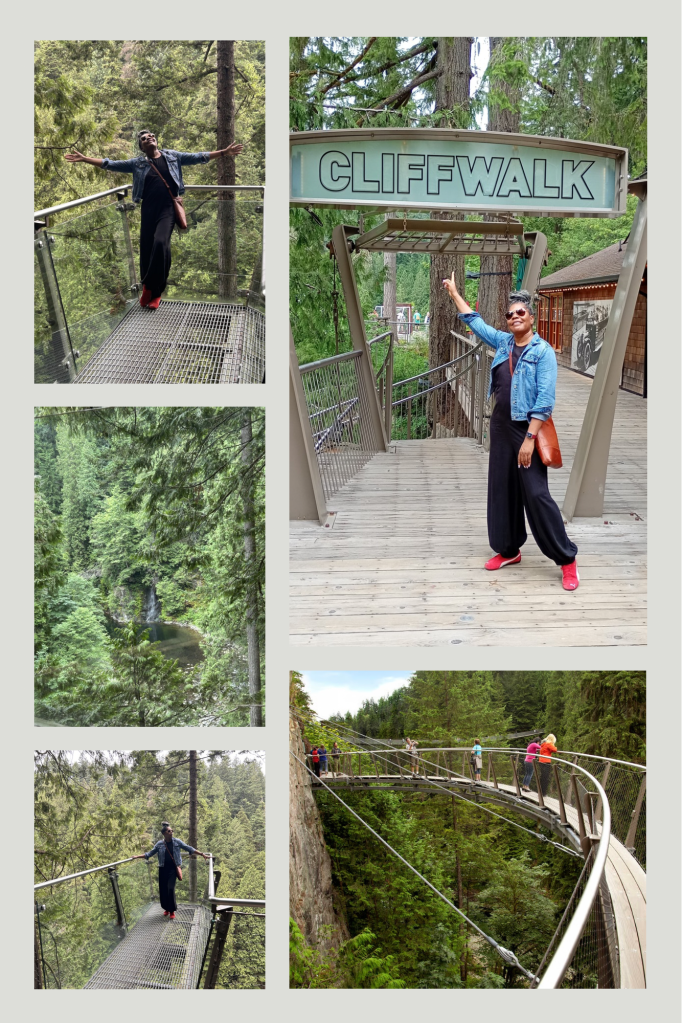
I survived and I have the certificate to prove it!!!
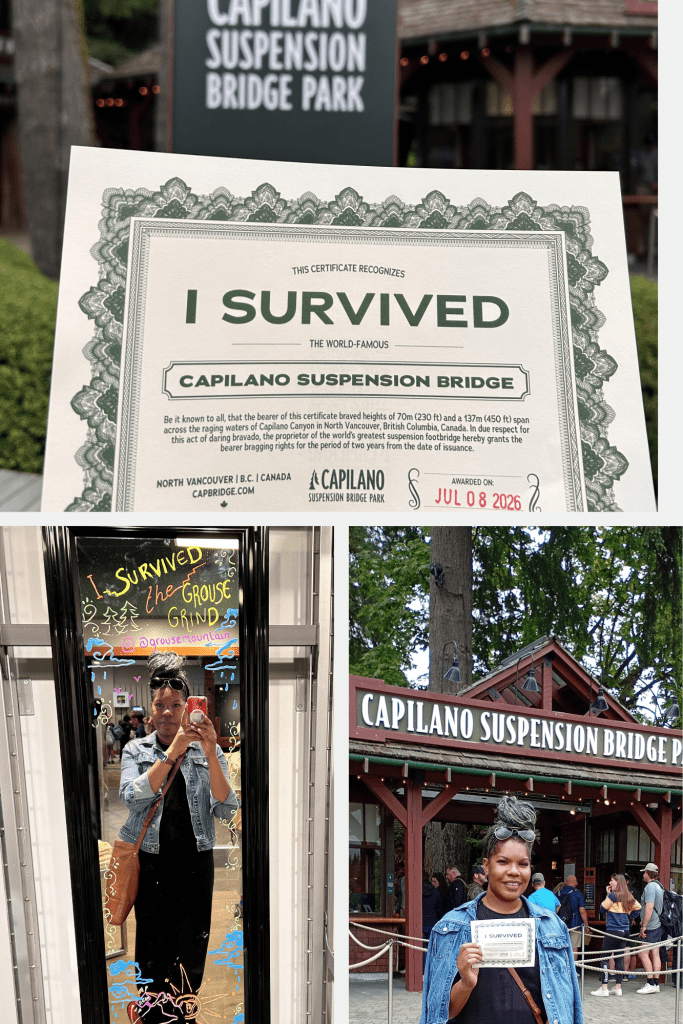
Our journey continued to the Capilano Salmon Hatchery.
Each year, thousands of salmon return to these waters after spending years in the Pacific Ocean, swimming upstream to the very place where their lives began. Watching them battle powerful currents to complete one of nature’s greatest migration offered a lesson in perseverance while highlighting the conservation work that helps sustain British Columbia’s salmon populations for future generations.
Just when I thought the day could not possibly become more memorable, our guide smiled and announced our final destination.
Grouse Mountain!
Known as the Peak of Vancouver, Grouse Mountain rises approximately 4,100 feet above sea level. The ascent aboard the Skyride was an attraction in itself.
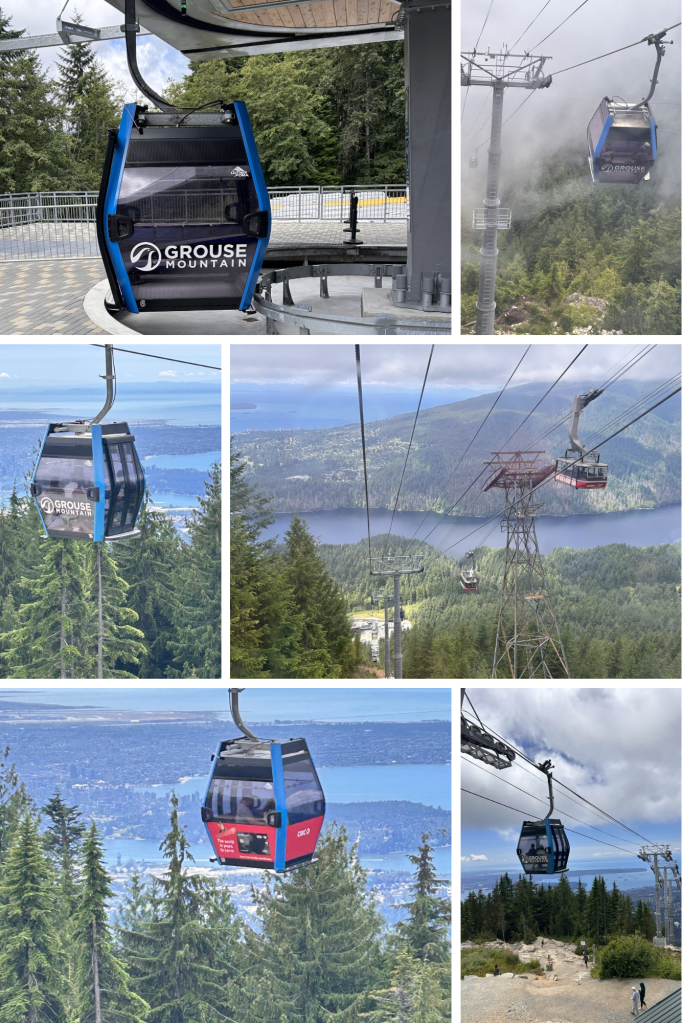
As the gondola climbed steadily above the forest, the city shrank beneath us until glass towers gave way to an endless landscape of mountains, islands and ocean.
Standing at the summit, I understood why Vancouver consistently appears on lists of the world’s most liveable cities. Few places offer such extraordinary wilderness only minutes from downtown.
Yet, surprisingly, it wasn’t the panoramic views that became my favourite memory.
Up close and personal with grizzly bears
For the first time in my life, I came face to face with grizzly bears!
Grinder and Coola, two orphaned grizzlies rescued as cubs and therefore can no longer survive in the wild, now live in a protected mountainside habitat where they attract visitors from around the world.
Seeing them was unlike anything I had expected.
Photographs simply do not prepare you for their sheer scale. Watching these magnificent animals move with surprising grace despite their immense size was both humbling and deeply moving. There is something about standing only metres away from one of North America’s most iconic creatures that commands complete respect.
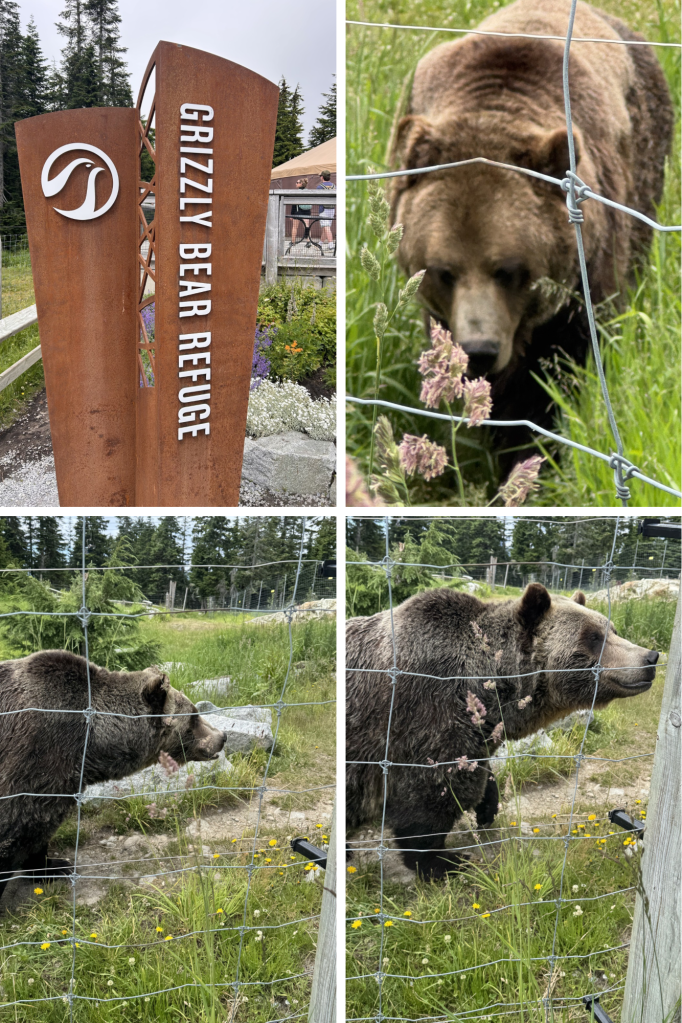
Lumberjacks, axe throwing and more…
The mountain itself buzzed with life.
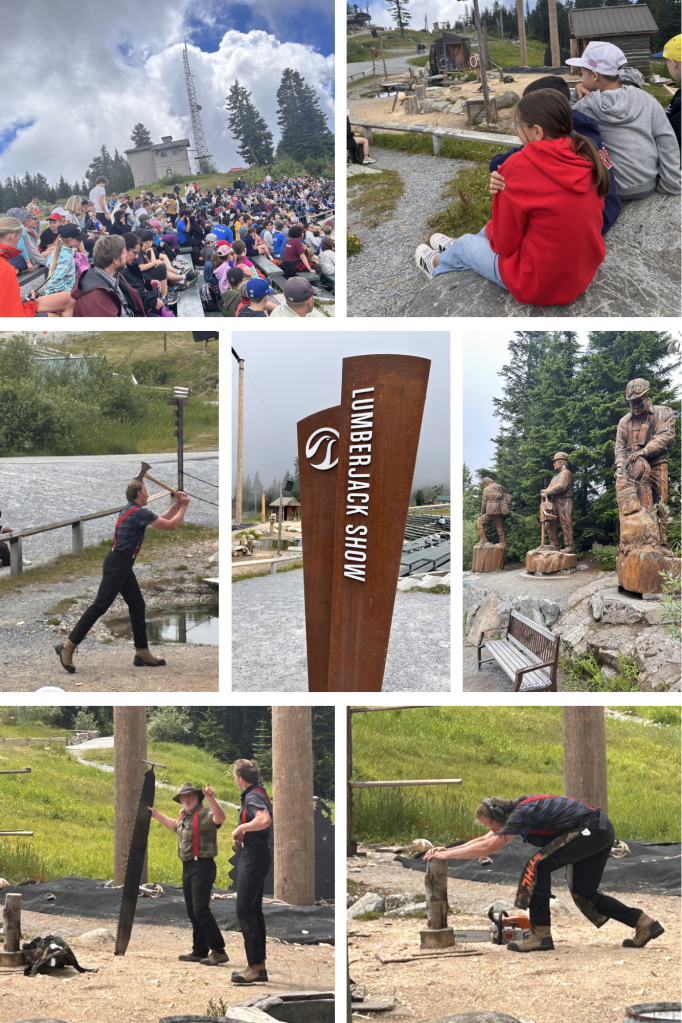
Summer camp children raced between activities, their laughter and chatter echoing before gradually settling into attentive silence as everyone gathered for one of Grouse Mountain’s famous lumberjack shows.
Equal parts entertainment and history lesson, the show celebrated British Columbia’s logging heritage with axe throwing, tree climbing and feats of strength, all woven together with stories about the province’s early pioneers and the forests that shaped its economy.
By the end of the afternoon, I realised Grouse Mountain offers far more than spectacular views.
It is where wildlife conservation, outdoor adventure, education and British Columbia’s history come together in one unforgettable experience.
As we descended back towards the city, Vancouver’s skyline reappeared in the distance.
Only now, I saw it differently.
It was no longer simply a beautiful city.
It was a city that had learned to live alongside the wilderness that surrounds it rather than trying to conquer it.
What awaited me in the city was electric!
Read about it here 👉Part III: When the World Came to Vancouver
2026 All Rights Reserved
Like what you see? To never miss a post click HERE👈 to subscribe & follow the blog. There’s more HERE👈 and on Spillwords, the Writers Club, Facebook & Bluesky.
In creative solidarity, Dee💡 Only WordPress.com members can hit the “Like” button, but everyone’s welcome to share their thoughts in the comments. Thanks!


 Poems & More
Leave a comment