Beforeword: I recently traveled home to Canada and visited Vancouver, British Columbia. The trip was epic. I intended to publish it as one seamless feature with subheadings. But it turned out to be quite substantive. Instead it is presented in three parts but written as a single story. You’re invited to read all three as the seamless feature it’s intended to be.
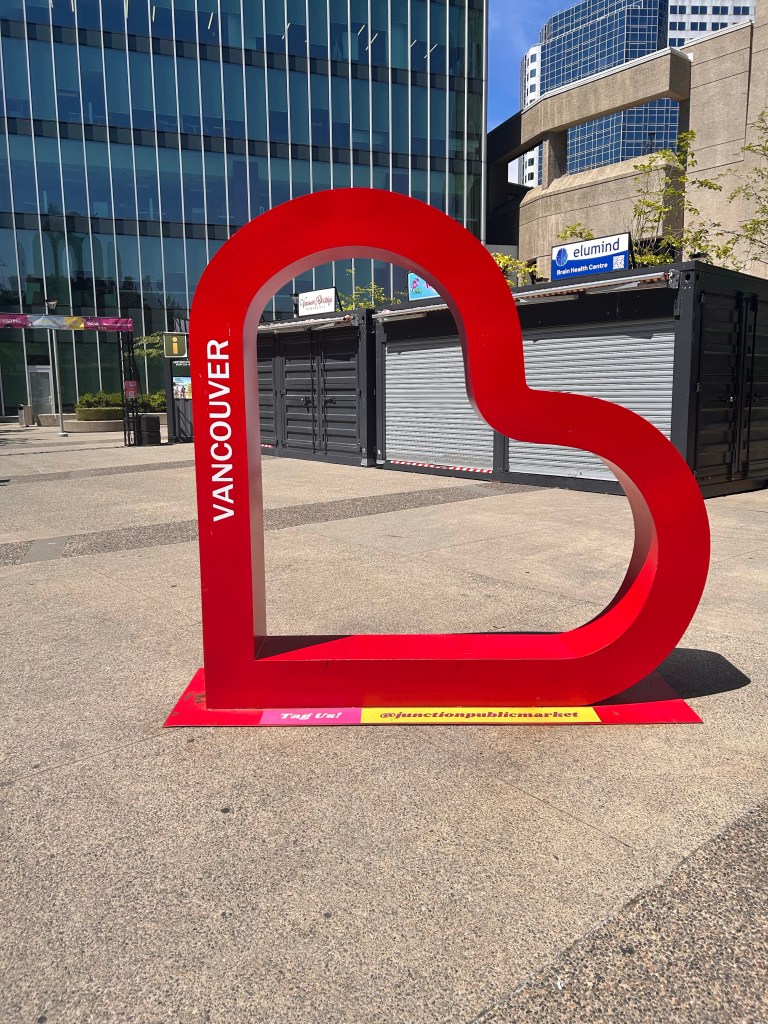
Traveling Home As a Tourist
Home, for me, is in Ontario.
Year after year, whenever I return from living or working overseas, that’s where I go—to reconnect with family and friends, to recharge, and to remind myself where my Canadian story began.
But Canada—the world’s second-largest country stretching nearly 5,500 kilometres from the Atlantic to the Pacific—is as vast in its landscapes as it is in its cultures. To confine my Canadian experience to one province would be to miss the many personalities, topographies and experiences that make this country unique.
So, on this homecoming, I decided to experience Canada as a visitor would.
While I carved out time for loved ones in Ontario, I devoted the rest of my journey to discovering another corner of the country—British Columbia.
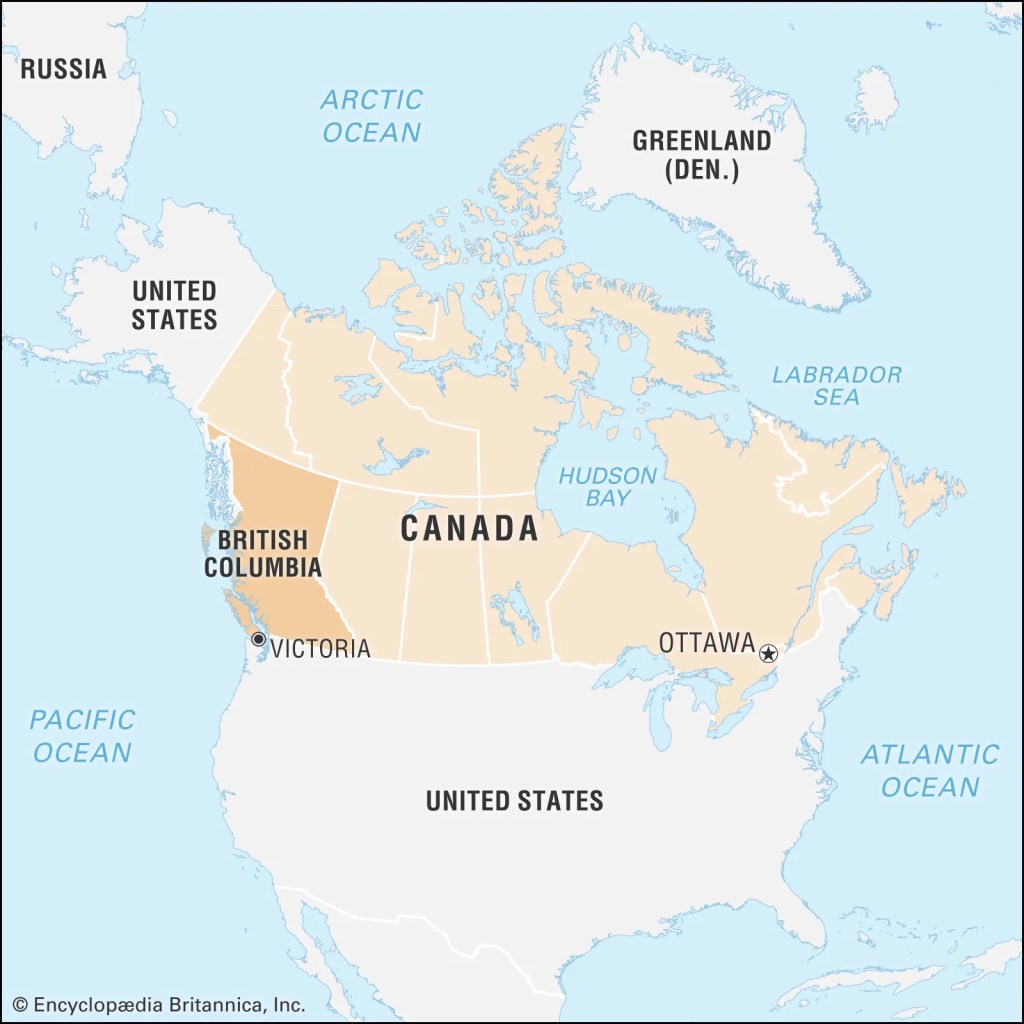
Ontario and British Columbia are often spoken of in the same breath as Canada’s two powerhouse provinces, but they couldn’t feel more different. Ontario is Canada’s political, financial and manufacturing heart. British Columbia is Canada’s Pacific gateway, where snow-capped mountains, temperate rainforests and the Pacific Ocean shape both the landscape and the lifestyle. If it’s said that the Great Lakes dominate the horizon in Ontario, then it’s the mountains for British Columbia.
An Airport That Introduces a Province
Arriving by air, Vancouver introduces itself before you even leave the airport.
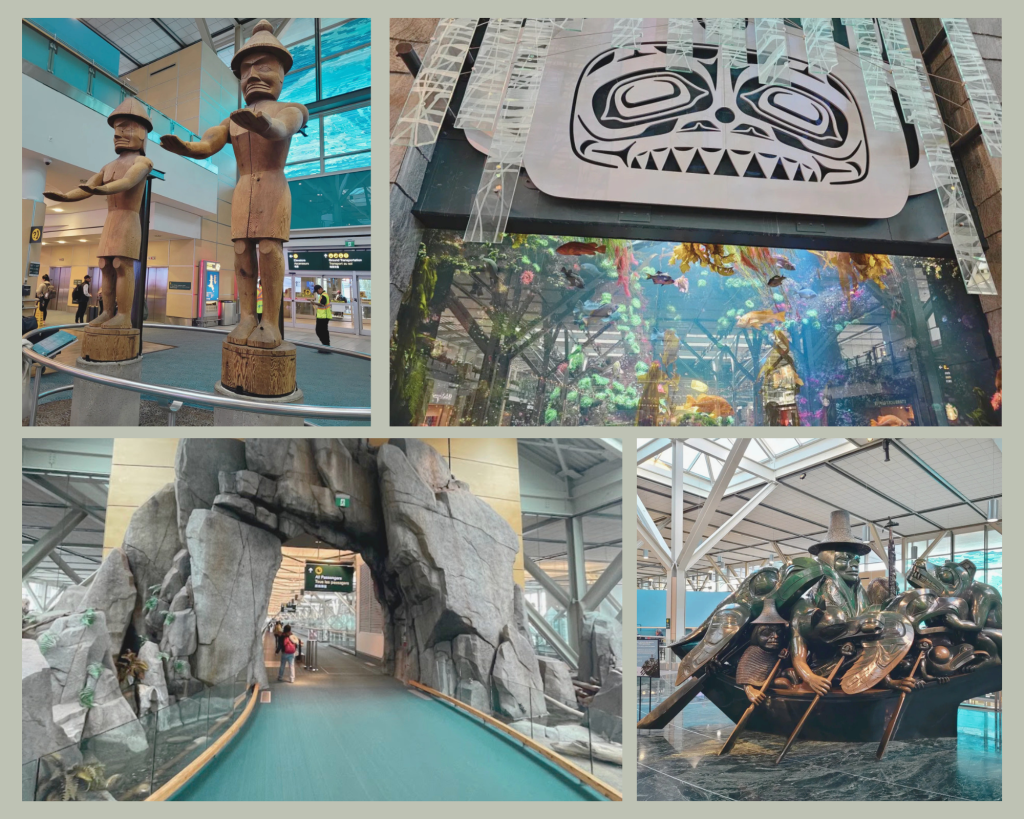
Unlike many international airports that greet travellers with luxury boutiques and endless advertising, Vancouver International Airport welcomes visitors with flowing water features, the soothing sounds of birds and rushing streams, and striking Indigenous carvings and artwork.
Long before I checked into my hotel, I already felt immersed in the spirit of British Columbia. As the days unfolded, I realised those first impressions weren’t simply clever airport design; they were reflection of Vancouver itself. This assertion is of importance because most of British Columbia is still unceded First Nations land.
FIFA Buzz
The city was also buzzing with FIFA World Cup 2026 vibes. Banners fluttered from lamp posts. Giant football displays appeared in public spaces. Volunteers in brightly coloured uniforms seemed to be everywhere. Vancouver was prepared to welcome the world.
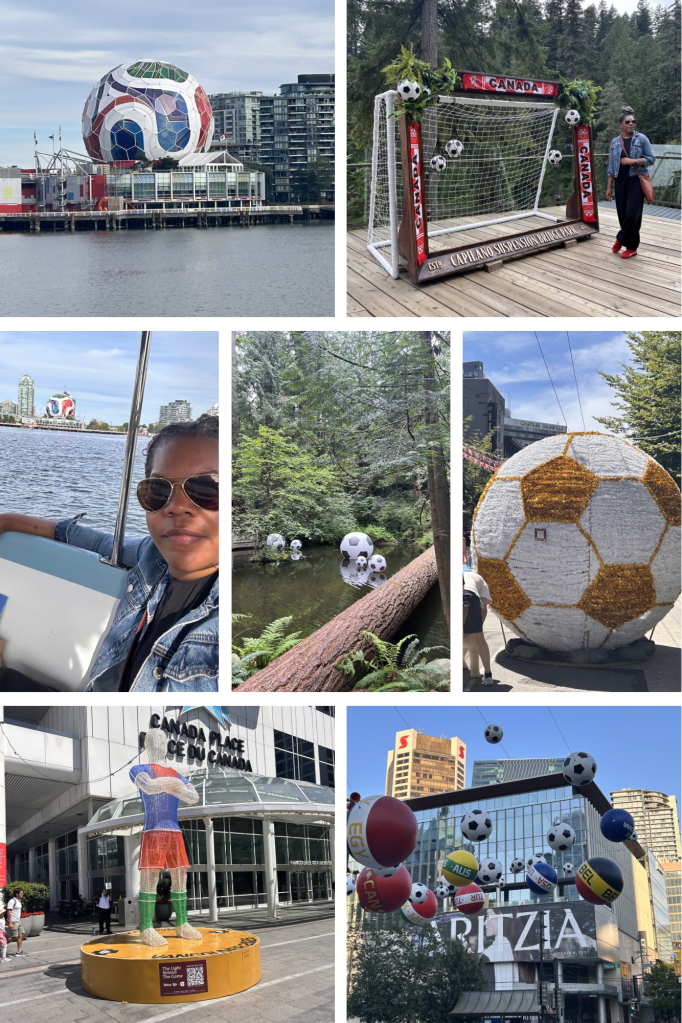
We’ll come back to that.
For now, let’s explore the city itself.
Although I had previously visited Vancouver Island, and the impressive Butchart Gardens, this was my first opportunity to spend meaningful time in British Columbia and the city of choice was Vancouver. It completed another chapter in my journey across Canada and quickly became clear why British Columbia consistently ranks among the country’s most admired destinations.
Mountains are the skyline. Dense forests tumble towards rivers. Glass towers don’t overshadow the landscape around them. Vancouver showed me that people, progress and preservation of nature can coexist healthily.
Stepping Back in Time
My exploration began in Gastown, Vancouver’s oldest neighbourhood, tucked into the northeastern corner of downtown.
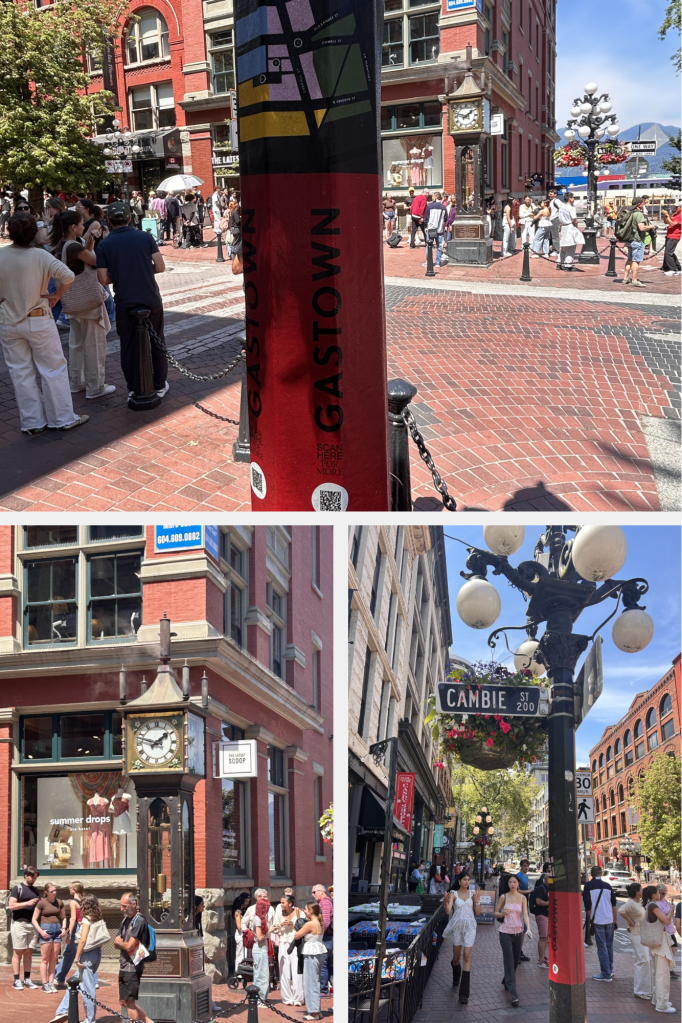
Walking its cobblestone streets feels like stepping into another era. Restored brick buildings house cafés, boutiques and galleries, while heritage lamp posts line streets that tell the story of the city’s earliest days.
The neighbourhood’s star attraction is undoubtedly the famous Steam Clock.
Every fifteen minutes, crowds gather beneath it, cameras at the ready, waiting for its familiar whistle and dramatic burst of steam. It lasts only moments, yet somehow manages to captivate everyone standing around it. In a city celebrated for innovation, one of its most photographed landmarks is delightfully old-fashioned.
Just a short walk away, Vancouver reveals another side of itself.
Canada Place: Vancouver’s Front Door
Standing on the waterfront at Canada Place, I was drawn to one of the city’s most recognizable architectural landmarks.
Its five brilliant white fabric sails billow above the harbour, designed to resemble ships under full sail—a fitting symbol for a city whose history and prosperity have long been tied to the Pacific Ocean.
Looking out across Burrard Inlet, seaplanes skimmed across the water while cargo ships and cruise liners waited in port.
On the day of my visit, a Disney Cruise Line ship was docked alongside Canada Place, its towering silhouette dwarfing everything around it. People sat watching the steady rhythm of harbour life unfold. Families gathered along the promenade to admire the vessel.
I overheard one mom explaining to her kids the scene built into the stern of the Disney Wonder—Donald is hard at work painting while his nephew mischievously reaches for the rope with a giant pair of scissors. You can almost imagine the splash that comes next. Leave it to Disney to turn the back of a cruise ship into a comedy. But I would have missed it had it not been for a little eavesdropping. So, of course, I zoomed in my trusty iPhone camera for a closer look and shot. Sometimes travel is enriched by overhearing someone else’s sense of wonder.
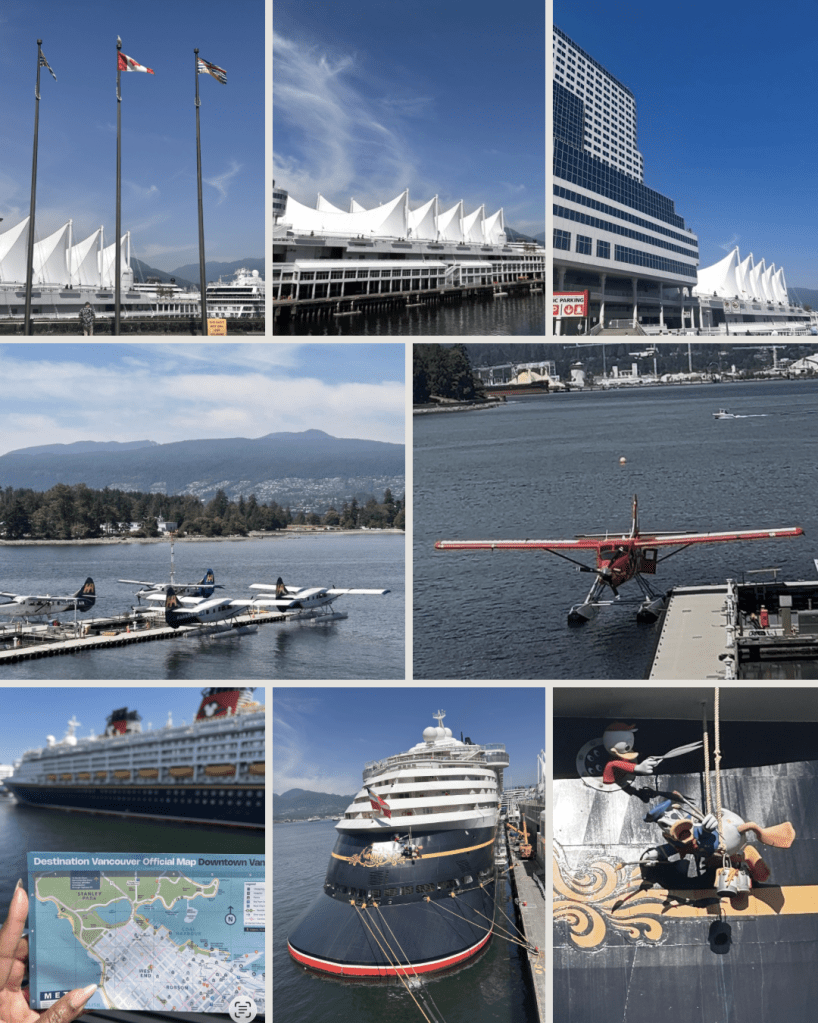
The harbor was a reminder that Vancouver is not only surrounded by spectacular scenery but also serves as one of North America’s great gateways to Alaska and the Pacific.
A Garden Saved for Next Time
One place I had hoped to visit was the Dr. Sun Yat-Sen Classical Chinese Garden.
Unfortunately, it was closed that day.
Even so, learning more about it only ensured it remains high on my list for a future visit. It was built in the style of a 15th-century Ming Dynasty scholar’s garden, and was the first authentic classical Chinese garden constructed outside China complete with limestone imported from Lake Tai.
Sometimes travel leaves you with unfinished chapters. This is one and definitely worth a return visit.
Where the City Meets the Sea
Instead of the garden, I made my way to Stanley Park.
The park is bordered by water on three sides, and feels like an urban oasis. I wandered along the famous Seawall—the world’s longest uninterrupted waterfront pathway, stretching nearly ten kilometres. Cyclists glided past. Runners were there too. Like me, visitors stopped every few minutes to photograph another postcard-perfect scene.
To one side stood Vancouver’s skyline.
To the other stretched Burrard Inlet and the Pacific Ocean beyond.
Few cities allow you to feel simultaneously immersed in nature and connected to downtown. Stanley Park allows Vancouver to do so effortlessly.
Magical Escape Within the City
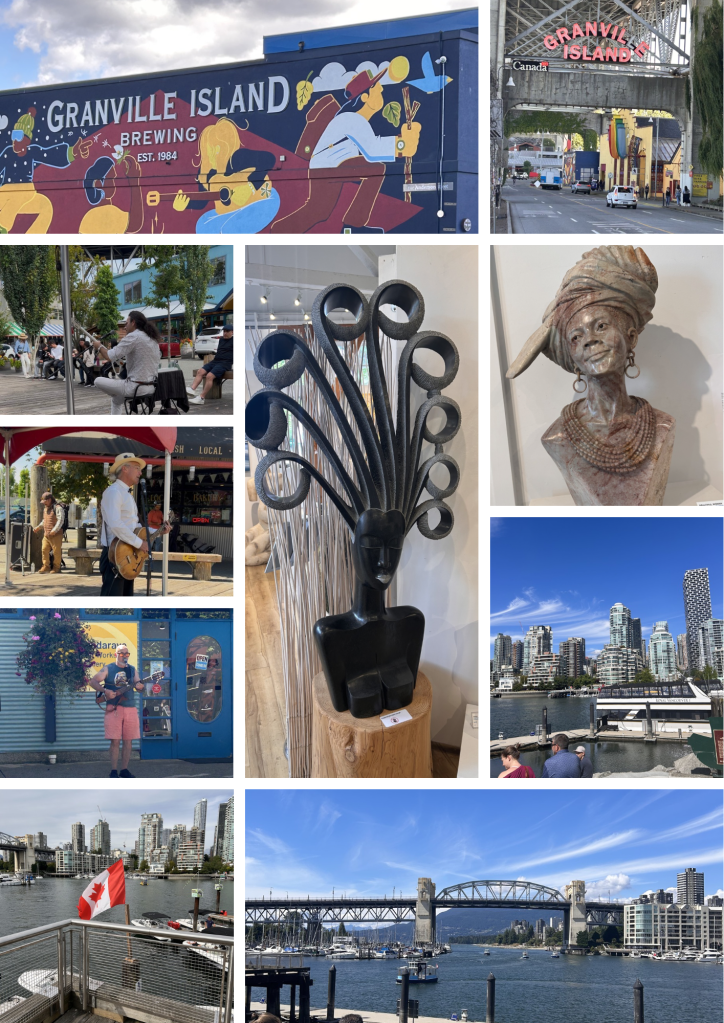
No visit to Vancouver would be complete without exploring Granville Island dubbed as a “magical escape within the city.” Live music. Art museums. Great restaurants. And the Public Market.
The Market was alive with colour and conversation. Fresh seafood and fruits. Buckets overflowed with flowers. Local cheeses, artisan breads, handcrafted chocolates and colourful produce competed for attention at every turn.
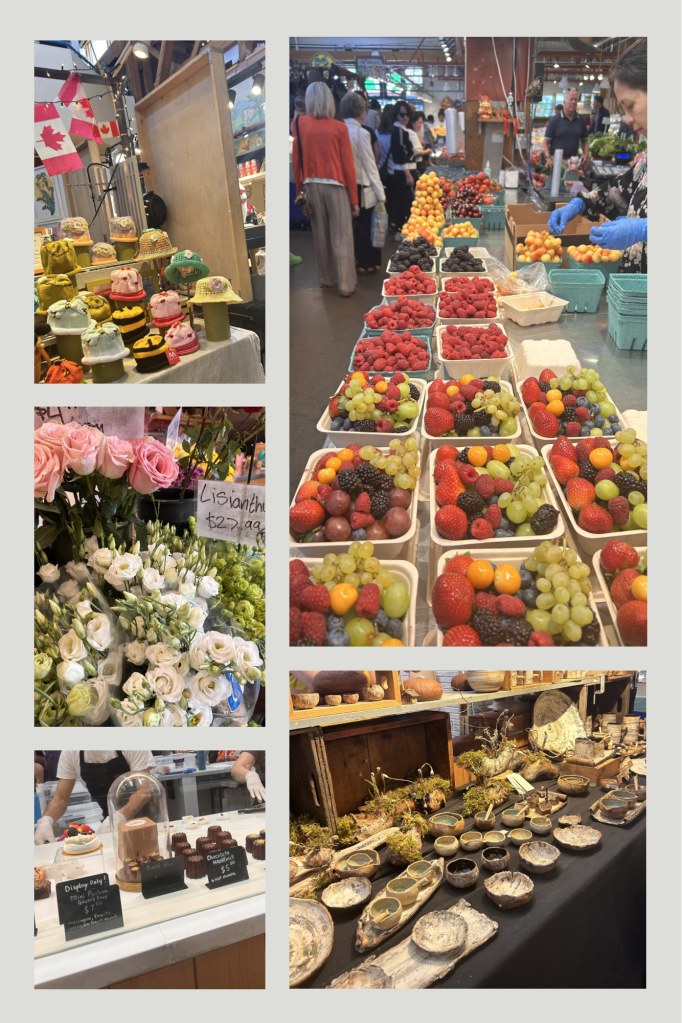
Then there was the queue.
One Doughnut Worth Waiting For
One stall attracted a line unlike any other.
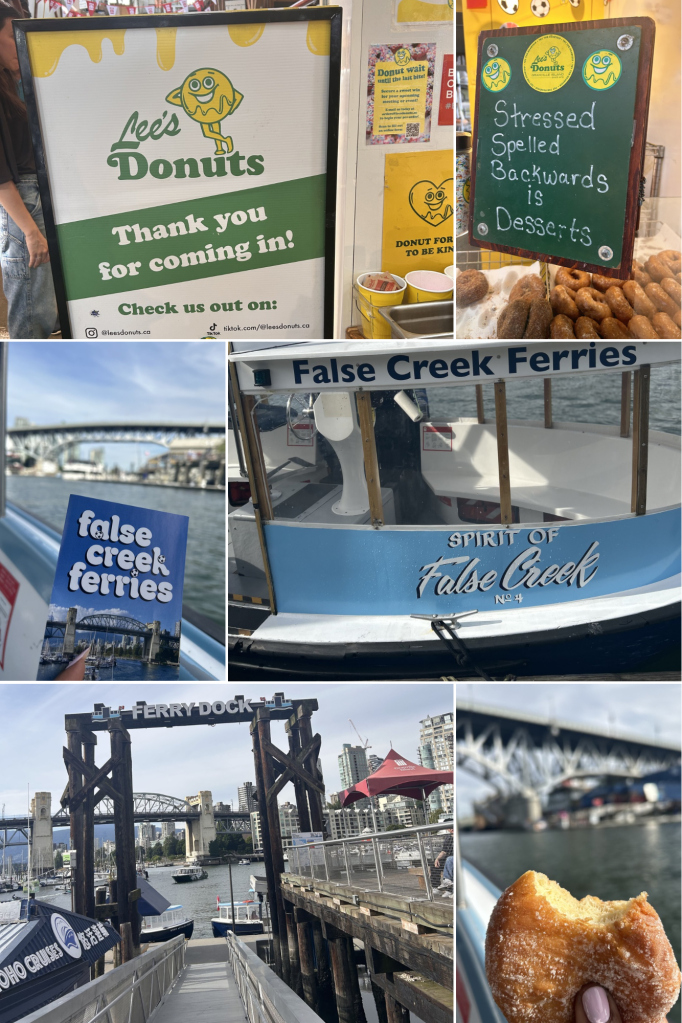
Lee’s Donuts.
While other vendors welcomed customers without delay, people patiently snaked through the market, waiting for what I was told are “Vancouver’s finest doughnuts.”
Naturally, curiosity got the better of me.
One bite explained everything.
Soft, fresh and wonderfully simple, it reminded me that sometimes long lines are worth the wait.
While I arrived Granville Island via road I left via water on the False Creek Ferry where I enjoyed a scenic ride and indulged on my jelly-filled donut.
I thought I had already seen the best of Vancouver. I couldn’t have been more wrong.
The city’s most spectacular landscapes still lay just beyond the skyline.
Read about it here 👉Part II: Vancouver—Beyond the Skyline
Followed by 👉Part III: When the World Came to Vancouver
2026 All Rights Reserved
Like what you see? To never miss a post click HERE👈 to subscribe & follow the blog. There’s more HERE👈 and on Spillwords, the Writers Club, Facebook & Bluesky.
In creative solidarity, Dee💡 Only WordPress.com members can hit the “Like” button, but everyone’s welcome to share their thoughts in the comments. Thanks!
 Poems & More
We did a quick stopover in Vancouver on the return leg of our Alaska cruise. I’ve always wanted to go back for a proper tour. Thanks for your vivid recap that is inching me closer to booking – always inspired by your travels!
LikeLiked by 1 person
My first time to Vancouver was also part of Alaska cruise. It was definitely worth the revisit!!!!! You’ll enjoy it when you get there. Glad you’re finding inspiration here!!! Cheers 👋🏾
LikeLike
Pingback: Travel Story: Vancouver Part II—Beyond the Skyline ©Dawn Minott – Poems & More
Wonderful to hear that you had a lovely time in Vancouver. How exciting to visit during all the excitement with FIFA. Looking forward to hearing more about your trip.
LikeLiked by 1 person
Thanks for stopping by Linda!!!
LikeLiked by 1 person
When I worked for Air Canada, I took the kids to Vancouver back in the 90’s when they were younger. We even when out to the west Edmonton mall for the day some time later. But yeah, Ontario is home – eh. By the way, do you know, Mike from Canada? 🤔😉
LikeLiked by 1 person
Oh you’re also in Ontario?! Cool. Mike from Canada eh!? 🫣😉
LikeLiked by 1 person
Arrived from JA in 76
LikeLiked by 1 person
That’s a long time!!! When were you last on JA?
LikeLike
We visited Vancouver briefly last summer on our way back from Alaska. We enjoyed the beach, the trails, and a horse drawn wagon ride. Thanks for sharing!
LikeLiked by 1 person
So lovely Lynn. Glad to know you had an enjoyable time. I also stopped in Vancouver island as a stop on the Alaska cruise. Thanks for stopping by 😉🙏🏽😉
LikeLiked by 1 person
Thanks for the tour Dawn. Vancouver looks like a beautiful and interesting city.
LikeLiked by 1 person
It really is, Brad!!!!
LikeLike
Pingback: Travel Story: Part III—When the World Came to Vancouver ©Dawn Minott – Poems & More