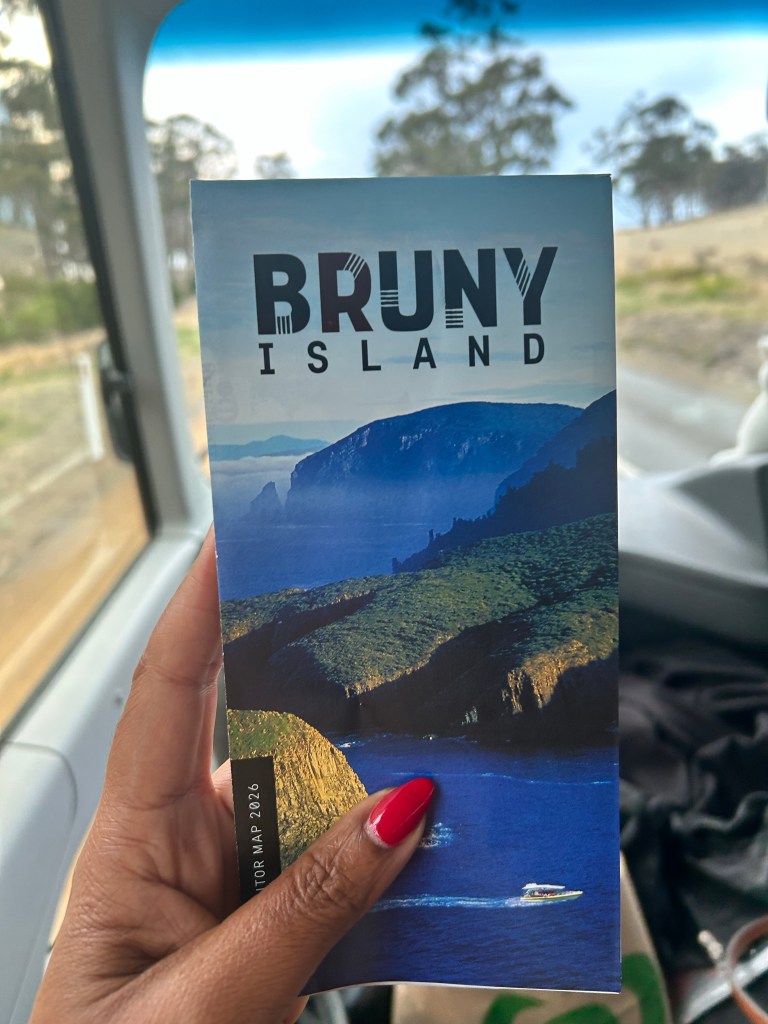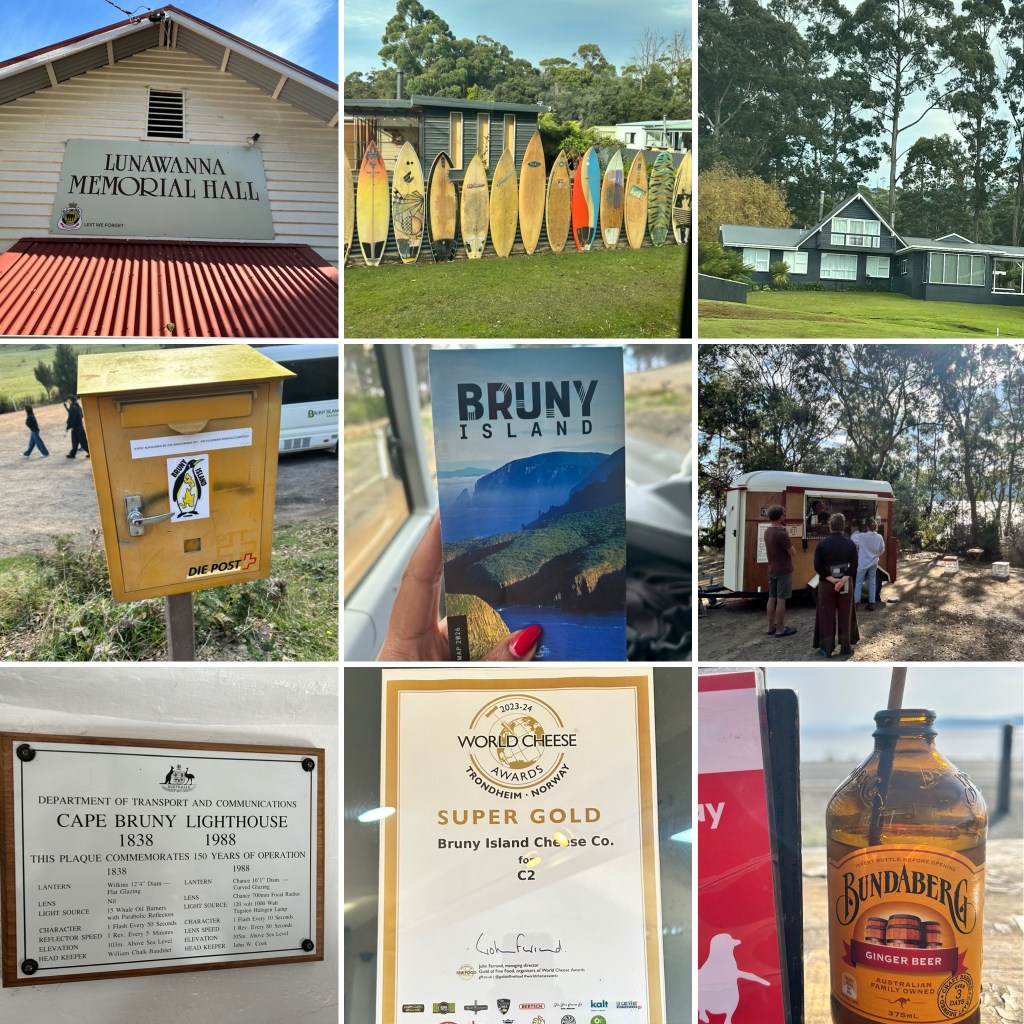
Travel Story: Australia—Absence & Acknowledgement ©Dawn Minott

Beforeword: Appreciating the beauty of what a country offers while still acknowledging its history and the injustices carried in its soil.
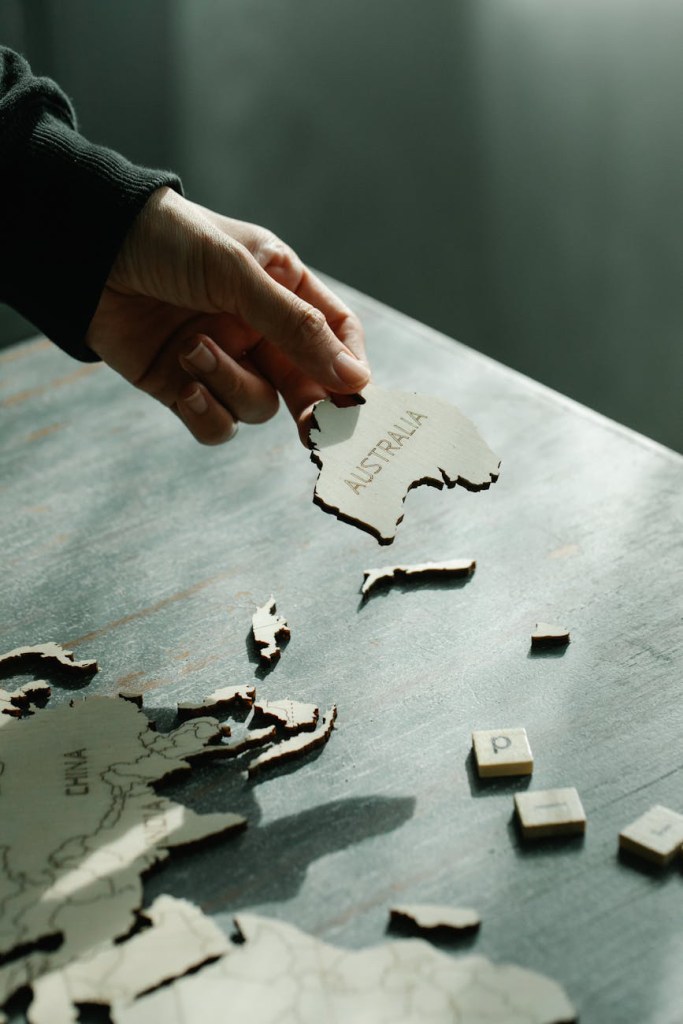
I’ve written quite a bit about my trip and visit to Australia. If you’ve read these posts — Tasmania, Bruny Island, Perth, Sydney, Melbourne — you may have noticed I made no mention of encounters with Aboriginal people.

Silence.

Unseen.

That wasn’t deliberate. It was unavoidable — I couldn’t write what I did not see or know how to name.

In all my experiences, in all the places I visited, I was struck by how little visible Aboriginal presence I encountered. I intentionally looked — on the streets, in the stores, in the everyday movements of public life.

That absence felt palpable.

And yet, what was very present was the Welcome to Country or Acknowledgement of Country— a statement recognizing the Traditional Custodians of the land. No meeting or public event started without it. It echoed across media, institutions, performances, and gatherings.

For Bruny Island, someone might say:

“I acknowledge the Nuenonne people of the South East Nation, Traditional Custodians of Bruny Island (Lunawanna-alonnah).”

Or in Melbourne:

“I acknowledge the Traditional Custodians of the land on which we gather today, the Wurundjeri Woi-wurrung people of the Kulin Nation.”

I appreciated the practice. I still do.

But I also wrestled with the tension of it. The tension that made me ask:

  • What does it mean for a people to be acknowledged in words while their presence felt so unseen?
  • How do you admire a country while also recognizing histories of displacement, dispossession, and attempted erasure?

Because appreciating a place and acknowledging injustice are not contradictions.

Australia gave me breathtaking coastlines, museums, architecture, wildlife, gardens, art, and moments that genuinely moved me. I stood in awe at the Sydney Opera House. I wandered through Tasmania’s quiet beauty. I watched kangaroos casually occupying golf courses as if they paid membership dues. Australia did not disappoint.

But admiration does not mean amnesia.

In the same way I expressed the duality of the 12 Apostles, that beauty and destruction often occupy the same landscape, the same is true of the absence-and-acknowledgment contradiction I observed in Australia.

And, nowhere did this sit more heavily with me than in the story of Truganini. It was relayed in pieces by the tour guide on my Bruny Island tour. My intrigue led me to research Truganini’s story.
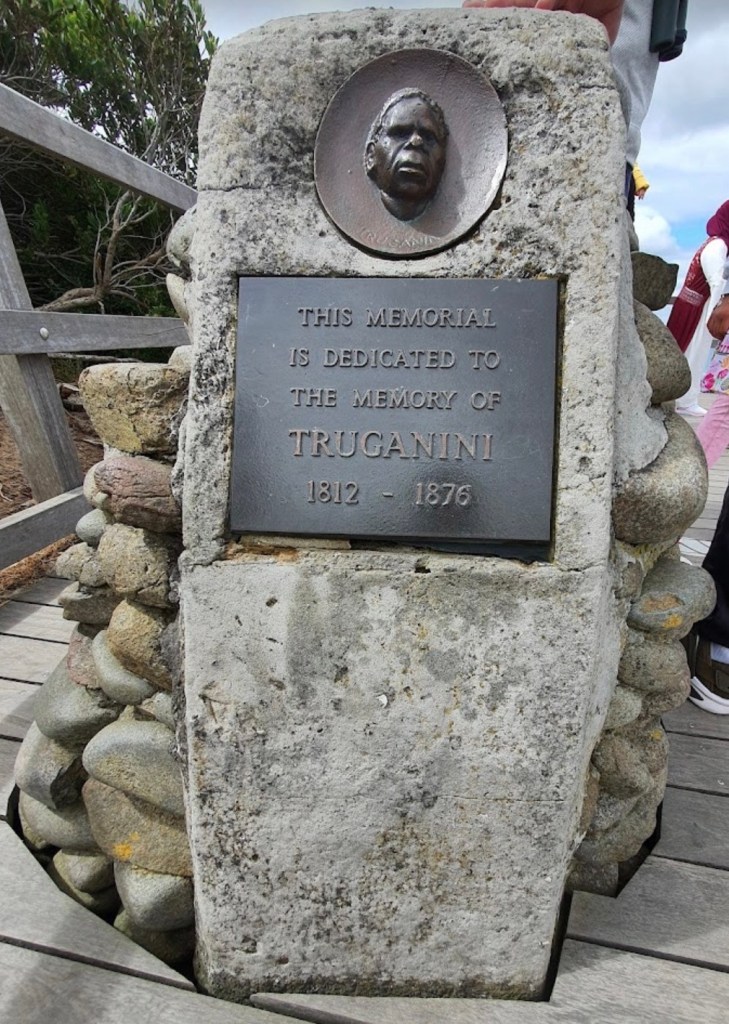
Born around 1812, Truganini was a Nuenonne woman from Bruny Island, often remembered as one of the last survivors of her people after colonization devastated Aboriginal communities in Tasmania. She lived through profound violence and displacement. Family members were killed. Land was taken. Her people were pushed to the margins of the very place that had sustained them for generations.

Before her death in 1876, Truganini made a simple but profound request: that her body be treated with dignity and not exploited after death. She feared being displayed as a curiosity.

Yet her wishes were ignored.

Her remains were exhibited publicly for decades in a museum — a final indignity after a lifetime marked by dispossession. It would take many years before her ashes were finally returned to the sea near her ancestral homeland, fulfilling, belatedly, the dignity she had requested all along.

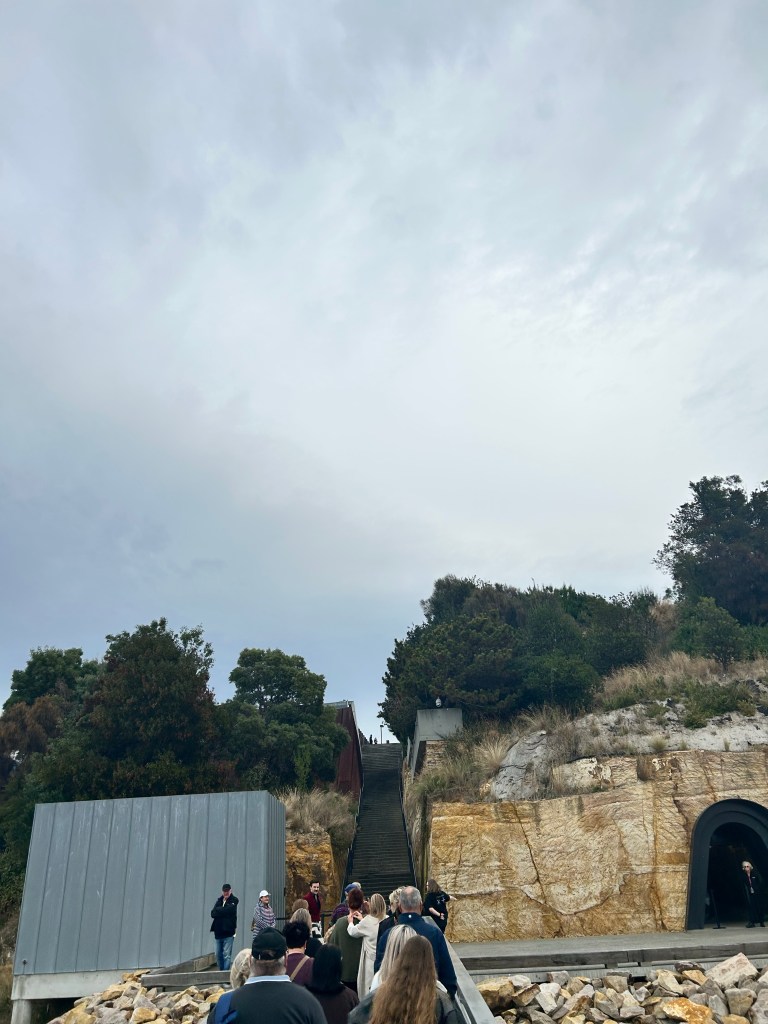
As part of my visit I took the 279-step climb to Truganini Lookout and for me, each step felt like a blow-by-blow walk into history.
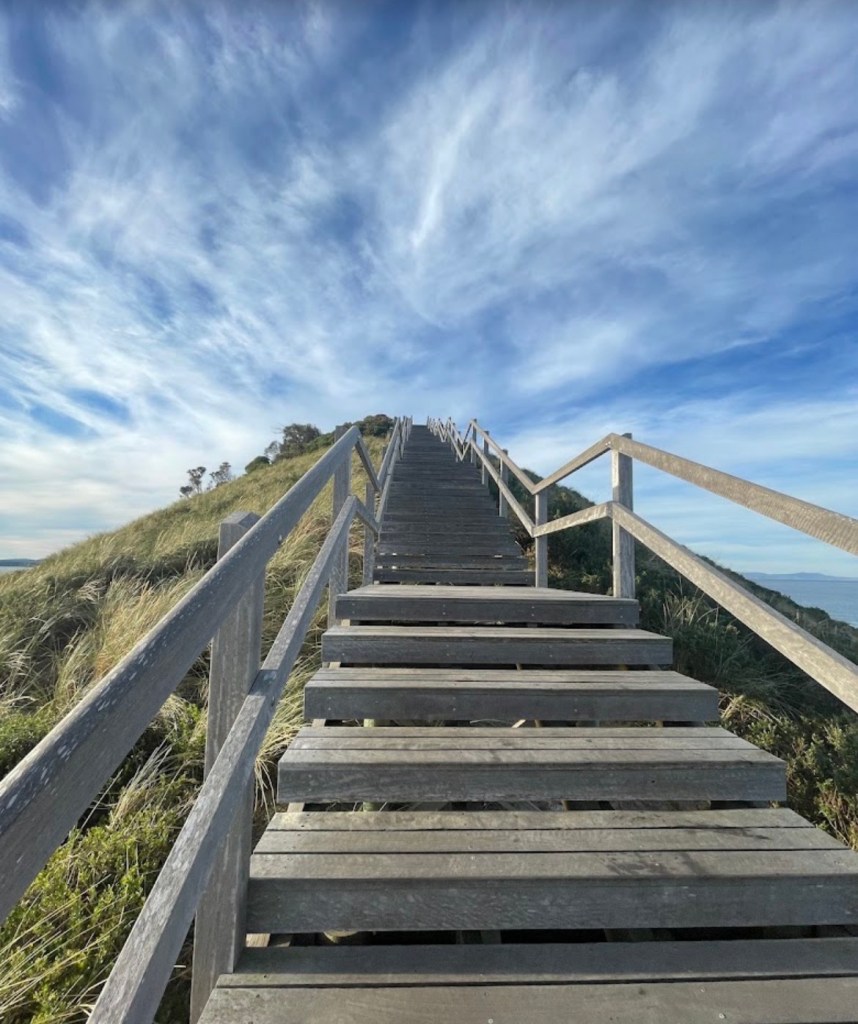
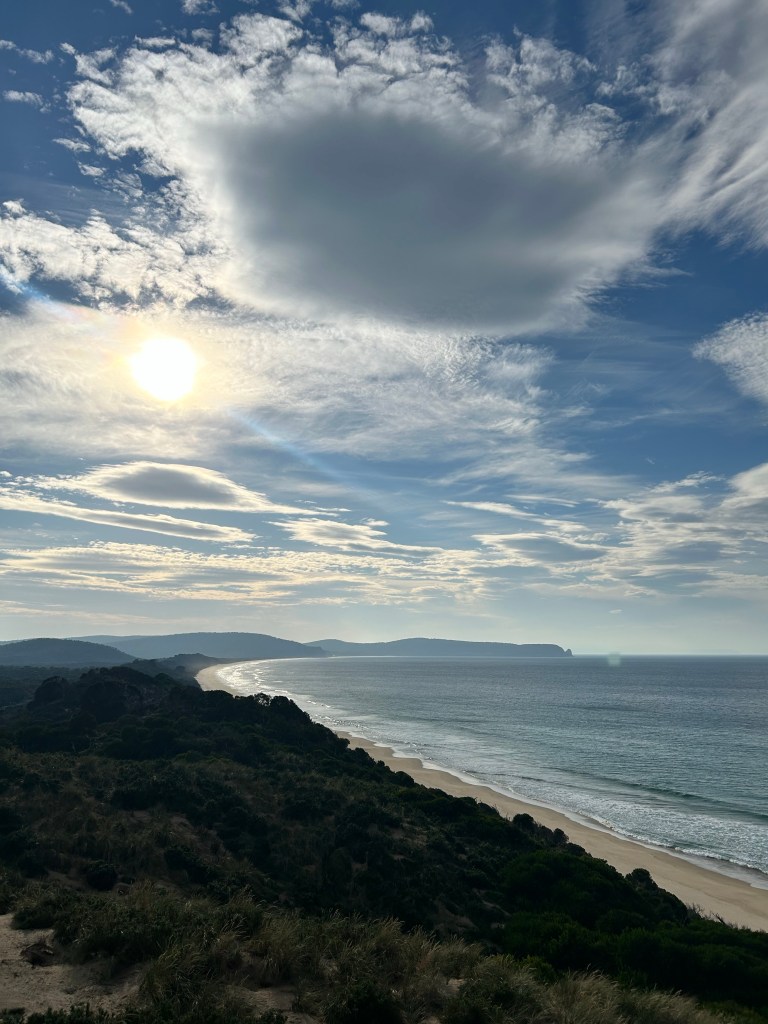
At the top, there is an unobstructed view of the island stretching out in both directions — narrow, windswept, exposed, held together by a thin strip of land. Beautiful. But grounding too. Because the name, Truganini Lookout, carries the story of a woman who fought for the survival and dignity of her people — the Palawa, the Aboriginal people of Lutruwita (Tasmania).
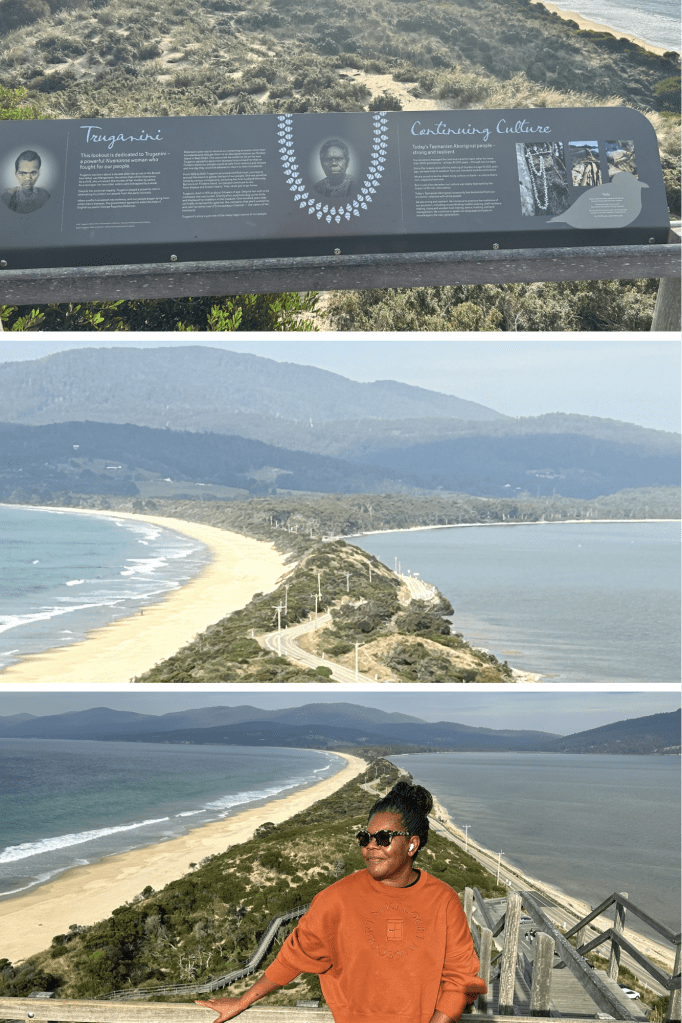
I did not know her full story before arriving, but something about it tugged on my heartstrings because it did not feel distant to me.

I am the product of both Jamaica and Canada, and both carry their own version of this ache.

In Jamaica, it is the near disappearance of the Taino people and the enduring legacy of Nanny and the Maroons, who fought fiercely for freedom, dignity, and the right to exist on their own terms. (See my post about Accompong.)

In Canada, it is the story of First Nations, Inuit, and Métis peoples — communities who survived displacement, cultural suppression, residential schools, and generations of policies designed to erase Indigenous identity.

In both countries, the story is not one of complete disappearance, but of remarkable survival.

What remains are the fragments and the continuities: names, memory, ancestry, language, stories, traditions, and a growing effort to recover what was lost, restore what was taken, and call people and places by their rightful names.

Standing on Bruny Island, I recognized the familiar—Different histories. Different peoples. Different continents. Yet the same enduring struggle to remember, reclaim, and remain.

Travel Reveals Strange Mirrors

When I travel I almost always visit the museums or historical sites, looking out for what mirrors my own history and experiences. Sometimes travel reveals strange mirrors — like familiar names in unfamiliar places.

Kingston.

A name I know as home in Jamaica also exists in Tasmania. And, of course, there is Kingston, Ontario, in Canada — another place woven into my story.

It made me pause, first from the feeling of familiarity which made me reach for my phone to capture this sign post:
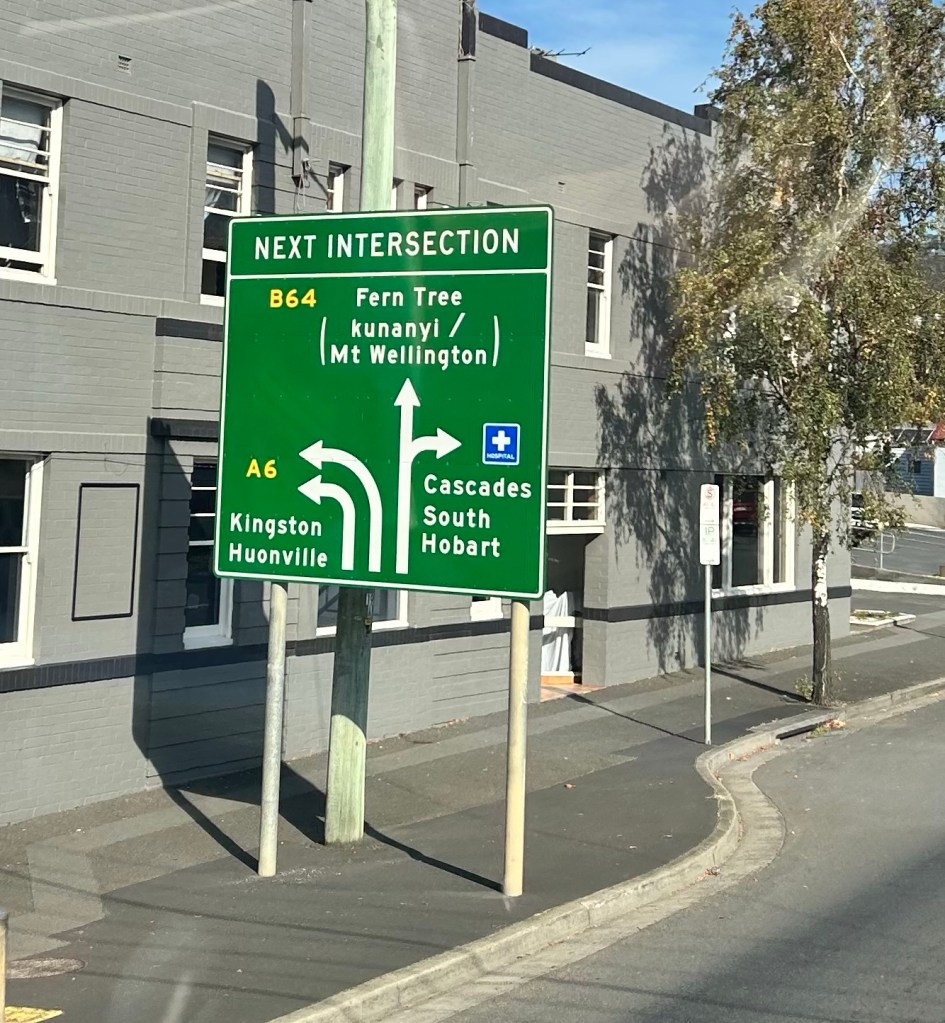
Three Kingstons. Three geographies. Three distinct histories shaped, in different ways, by the legacy of empire and colonization.

The connection is not in the name itself but in what it prompted me to consider: how places separated by oceans can carry stories that mimic one another. How histories of settlement, displacement, resistance, and survival often leave similar footprints on different shores.

As a Jamaican-Canadian standing on Australian soil, I found myself noticing these intersections everywhere. Not because the stories are identical, but because they ask similar questions about belonging, memory, identity, and whose stories get told.

Different continents. Different peoples.
Yet familiar sentiments shaped by similar patterns.

Talawah & Palawa

The other mirror showed up in two words, not as a shared meaning but a shared feeling.

Palawa is the name for Aboriginal Tasmanians and it echoed a word deeply familiar to me as a Jamaican— talawah.

In Jamaica, talawah describes something small but fierce. Resilient. Tough. Quietly powerful. The kind of strength that survives.

And somehow, standing in a place shaped by dispossession and endurance, the echo between Palawa and talawah stayed with me. Different histories. Different peoples. Yet something familiar in the story of survival.

Maybe that is why Bruny Island tugged at my heart more than I expected.

Because beneath all its beauty sat something recognizable: the ache of what colonization took and continues to take, the endurance of those who survive it, and the reminder that history matters.
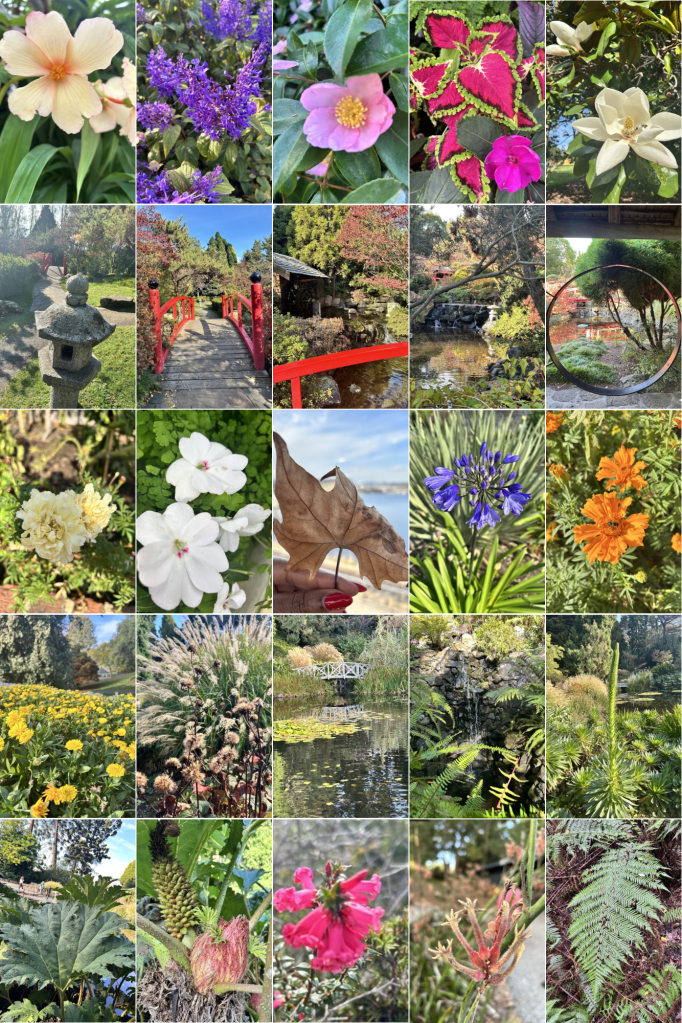
The beauty of Australia in flowers

Australia did not disappoint.

But neither was I oblivious.

I can appreciate the beauty of what a country offers while still acknowledging its history and the injustices carried in its soil.

Perhaps that, too, is a kind of acknowledgement of country.

2026 All Rights Reserved

Like what you see? To never miss a post click HERE👈 to subscribe & follow the blog. There’s more HERE👈 and on Spillwords, the Writers Club, Facebook & Bluesky.

💡 Only WordPress.com members can hit the “Like” button, but everyone’s welcome to share their thoughts in the comments. Thanks!
In creative solidarity, Dee

Travel Story: Australia—The Triple A Experience ©Dawn Minott

Beforeword: Oceania had been on my travel list though I was not entirely sure what version of it I would encounter. It turned out to be Australia and New Zealand. This is the travel story of Australia.

Australia—where landscapes shift dramatically from coast to coast, cities each have their own vibe, and nature’s offerings are next level—is the only country that is also a continent. Besides the geography, what stood out most for me was the range of offerings: Gastronomy. Museums. Art. Music. Architecture. Wildlife. Vastness. 

It was the “Triple A Experience”  of Art, Awe and Architecture!

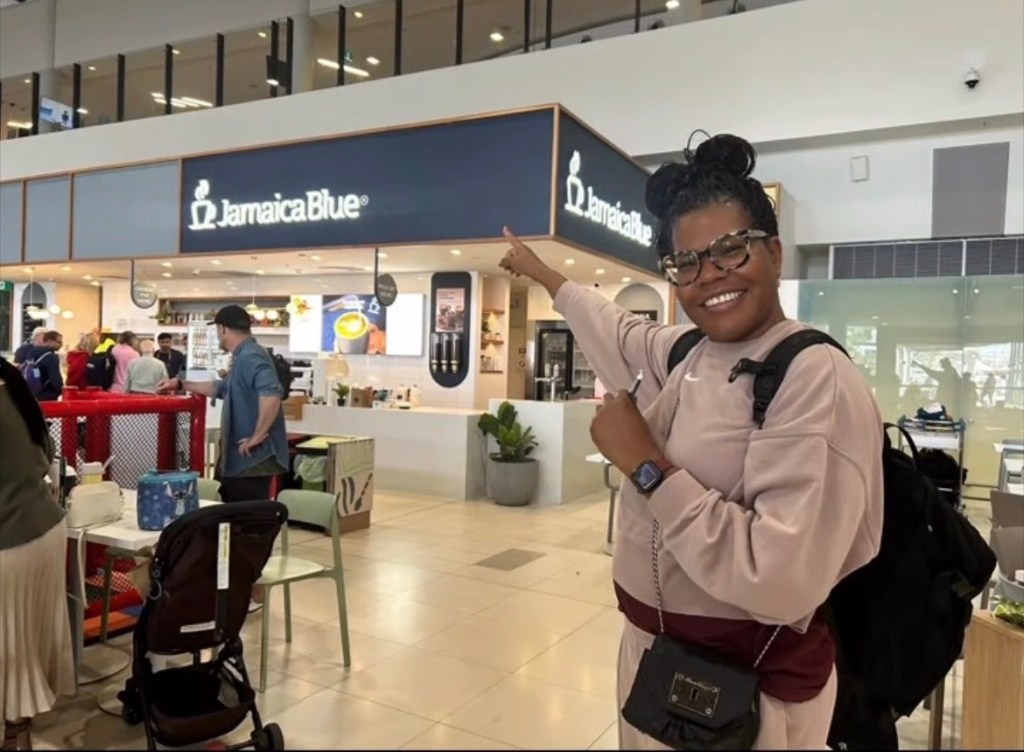
I flew in and out of Perth—so it was just a pass through. What I encountered on my transit however was a piece of my island home, Jamaica—JamaicaBlue coffee—and made the pass through more meaningful.

Tasmania and Brune Island on the other hand,  stole a part of my heart in ways I have written about separately. What remained of this Australian story unfolded through Sydney and Melbourne.

Sydney

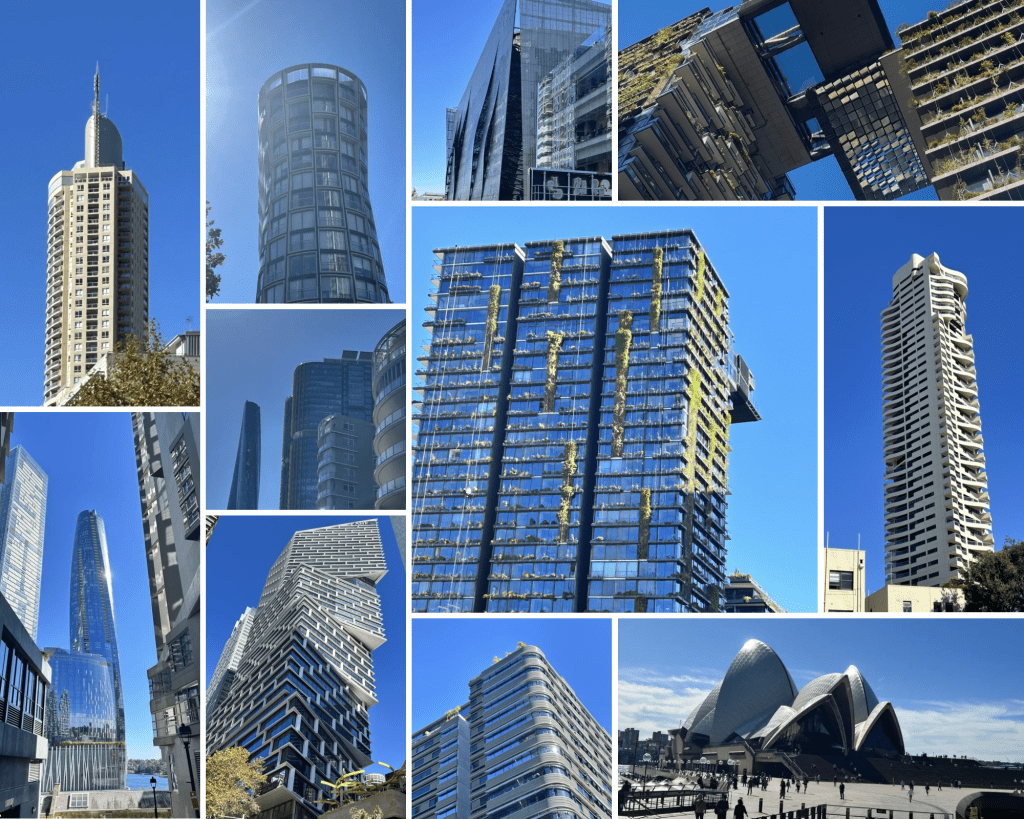
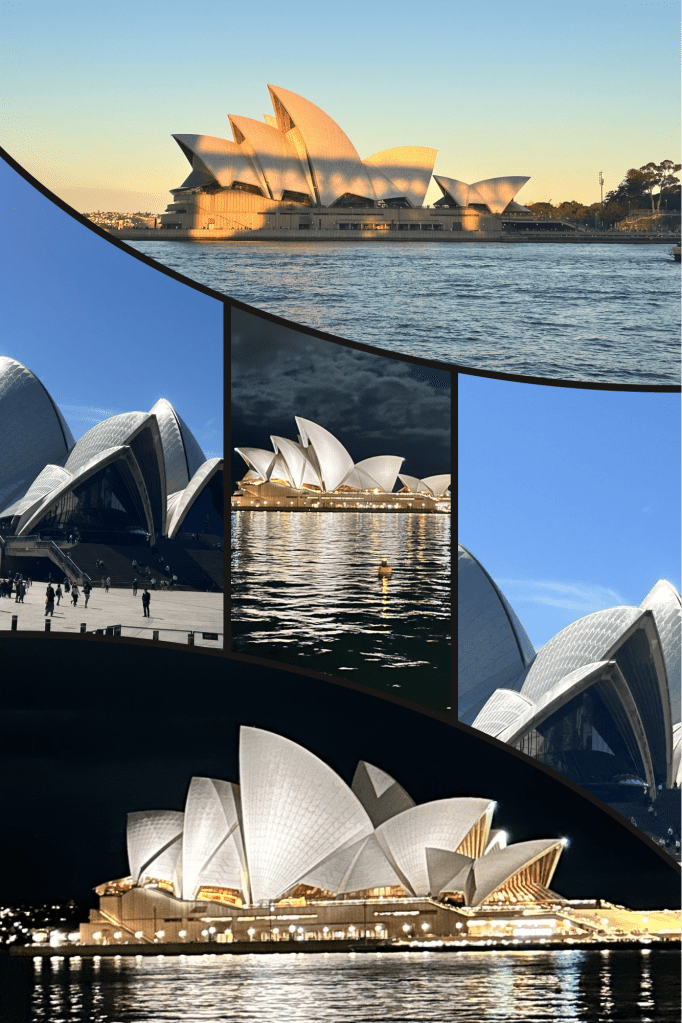
Sydney is built around one of the world’s most beautiful natural harbours decorated with crisscrossing ferries, the Harbour Bridge that stretches confidently across the water, and a captivating  skyline including the Opera House—the central piece of my Sydney visit.

The Sydney Opera House

Perched on Bennelong Point, surrounded almost entirely by water, the Opera House is one of those architectural wonders I’ve  long admired, especially when it’s lit up for New Year’s Eve. Seeing it in person was different—bigger, more textured, more alive. Its sail-like shells against the surrounding water gives the entire structure a sense of movement.

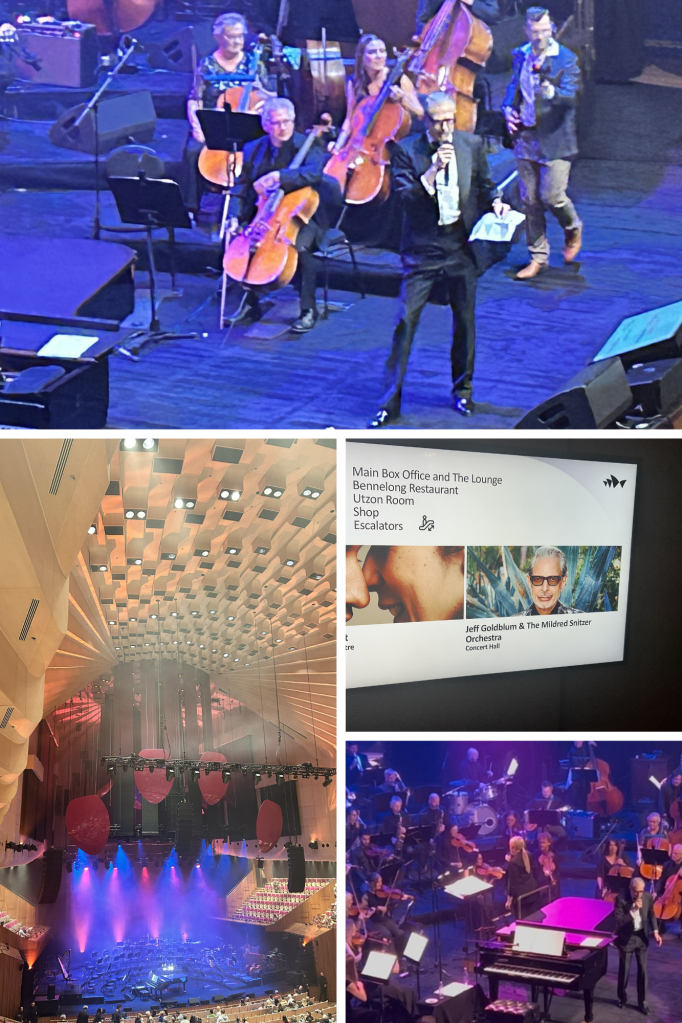
There were no operas showing while I was there, which initially felt like a missed opportunity. But as the arts gods would have it, Jeff Goldblum was performing jazz for the first time in Australia, in Sydney, with a 50+ orchestra, for only two nights—and wait for it—those exact nights aligned with my stay in Sydney.

There I was, inside the iconic Sydney Opera House.

And it was jazz!

The show itself was spectacular. 

The acoustics inside the Opera House? Phenomenal.

Paint me satisfied and hang me in a museum. The artist in me felt fully curated.

In my post about Tasmania I shared that: Aussies rock!  This is how Aussie kindness showed up in Sydney:

Less than 48 hours before my trip, a friend had connected me to her friend in Sydney. I expected perhaps a quick conversation and a few recommendations. Instead, I got that and more.

Not only did she suggest places to visit, but we met for lunch. Conversation flowed so effortlessly you would think we had known each other for years. Turns out she is Kenyan and has lived in Sydney for nearly 30 years.

And yes — I am now up to my second new friend in Australia. [I chronicled the first friendship-making experience here.]

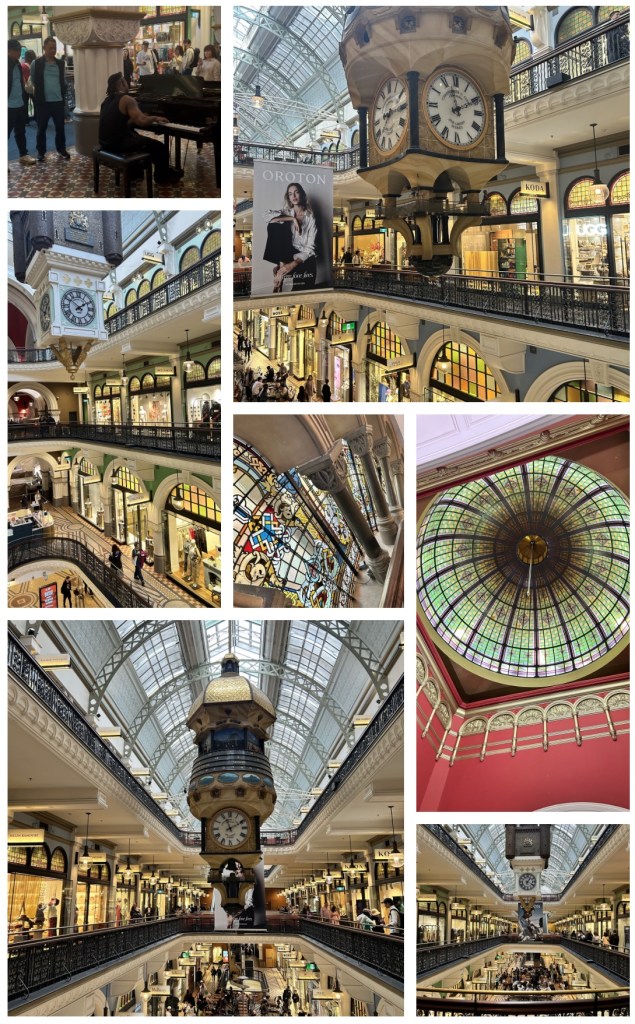
At her recommendation, I visited the Queen Victoria Building.

A stunning Romanesque architectural gem that feels more like an art boutique than a shopping centre. Ornate details. Stained glass. Elegant arches. And as if the architectural beauty alone was not enough, a pianist ignited  the space with music adding yet another layer of artistic expression.

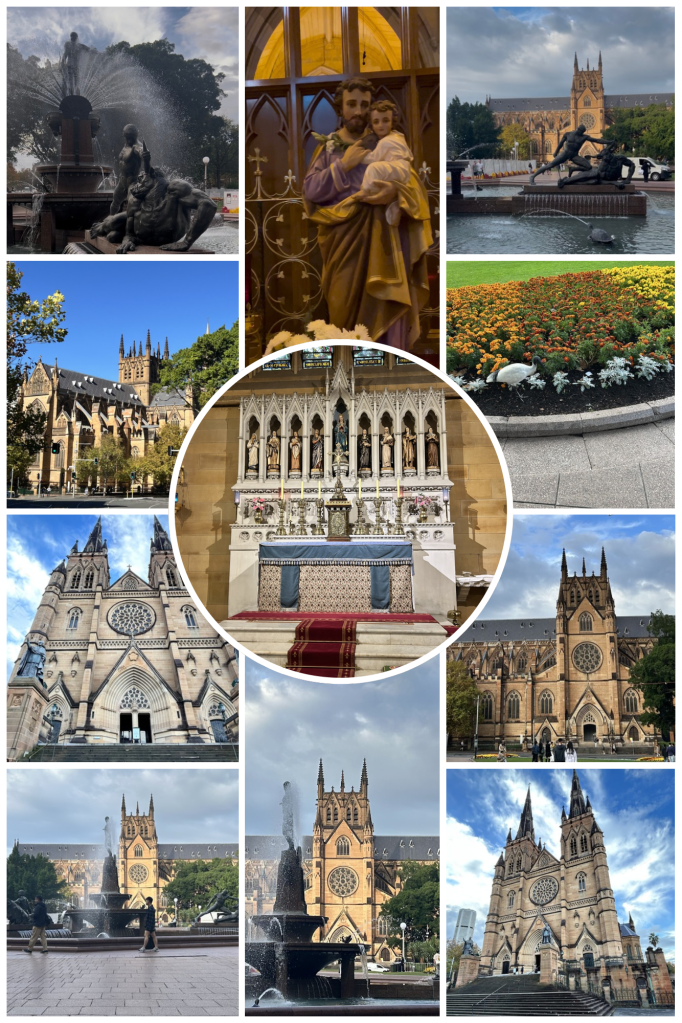
At St. Mary’s Cathedral, I sat for a while.

To listen as the organ was being played. 

To quietly pray.

To simply be still.

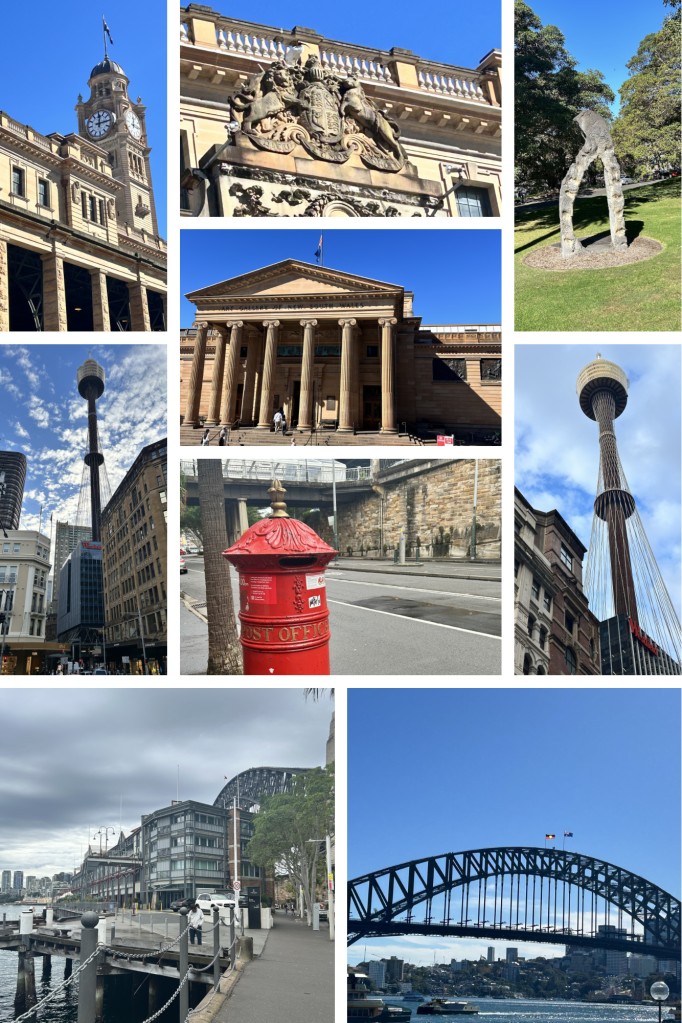
Nearby, Hyde Park offered breathing room in the middle of the city with water moving through the Greek-mythology inspired Archibald Memorial Fountain.  

St. Mary’s Cathedral, Hyde Park, Archibald Memorial Fountain

Then there was Kings Cross neighbourhood. Once known for its nightlife and bohemian spirit, I could see that its edgier past is softening  with cafés, leafy streets, and beautiful old buildings now spread throughout the neighborhood. 

For places I could not fully explore, I learned from a distance aboard the hop-on-hop-off bus, listening to snippets of history while passing landmarks like Sydney Tower and Central Station’s clock tower — affectionately known as “the working man’s watch.” 

Beautiful Sydney

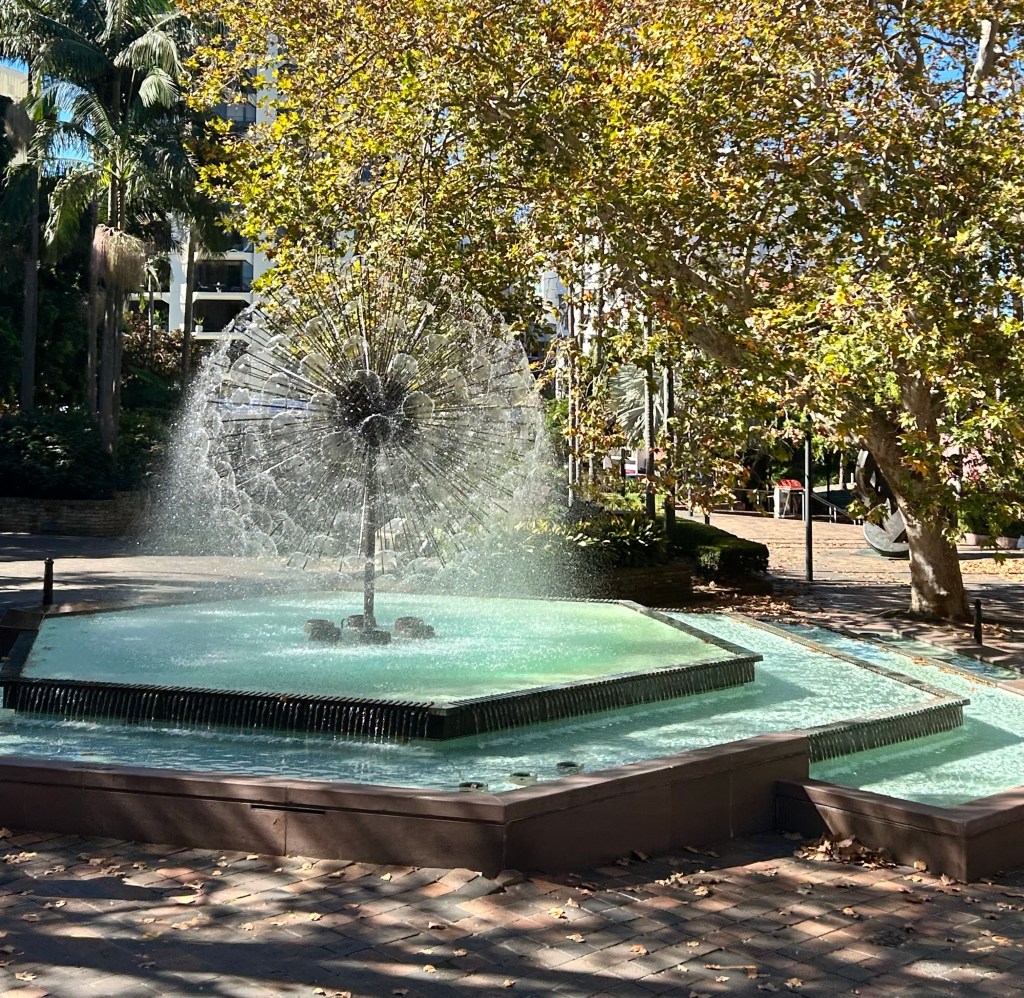
And then there was El Alamein Fountain in Fitzroy Garden which is one of Sydney’s most iconic fountains.

El Alamein Fountain

It looks almost like a giant dandelion or burst of water suspended in air. It was designed in the 1960s as a memorial to Australian soldiers who fought in the Battle of El Alamein in Egypt during World War II.

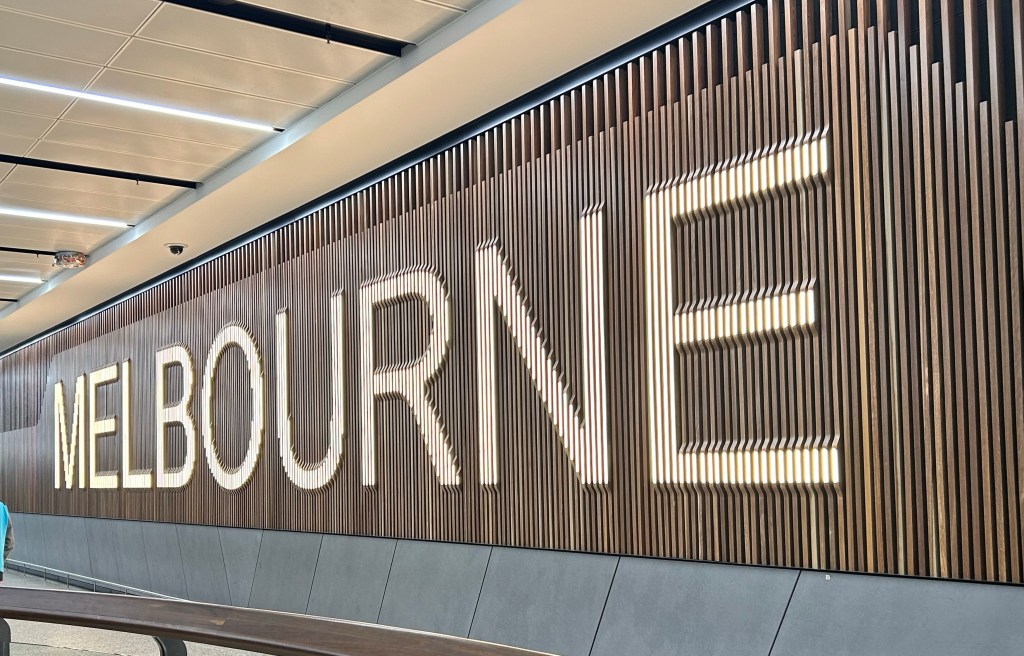
Melbourne

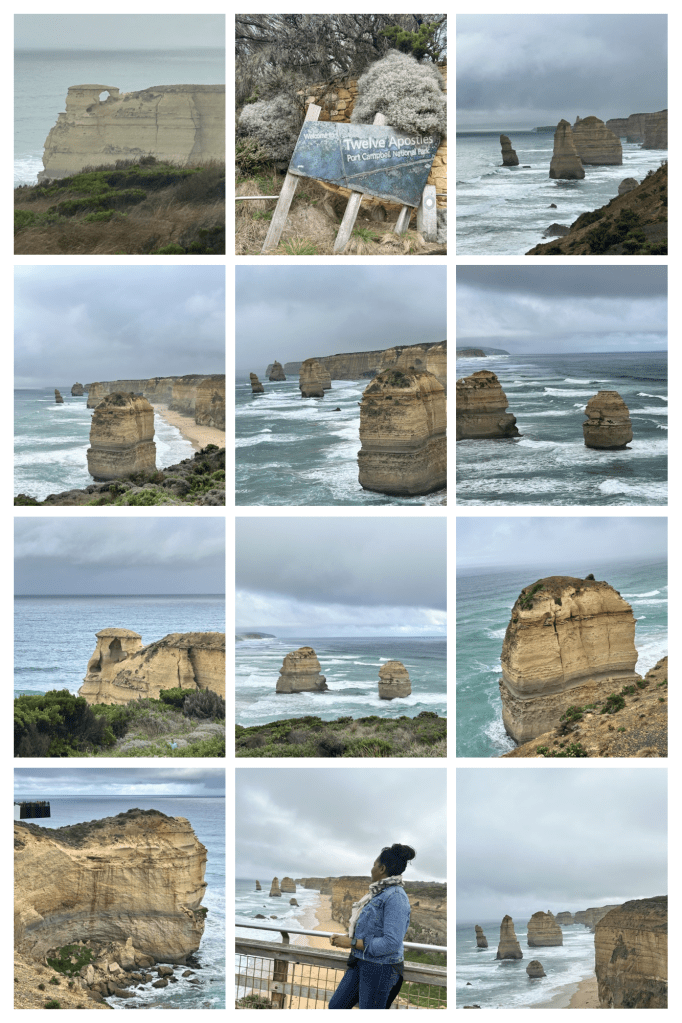
For Melbourne, the Great Ocean Road and the Twelve Apostles were my choice of must do things. 

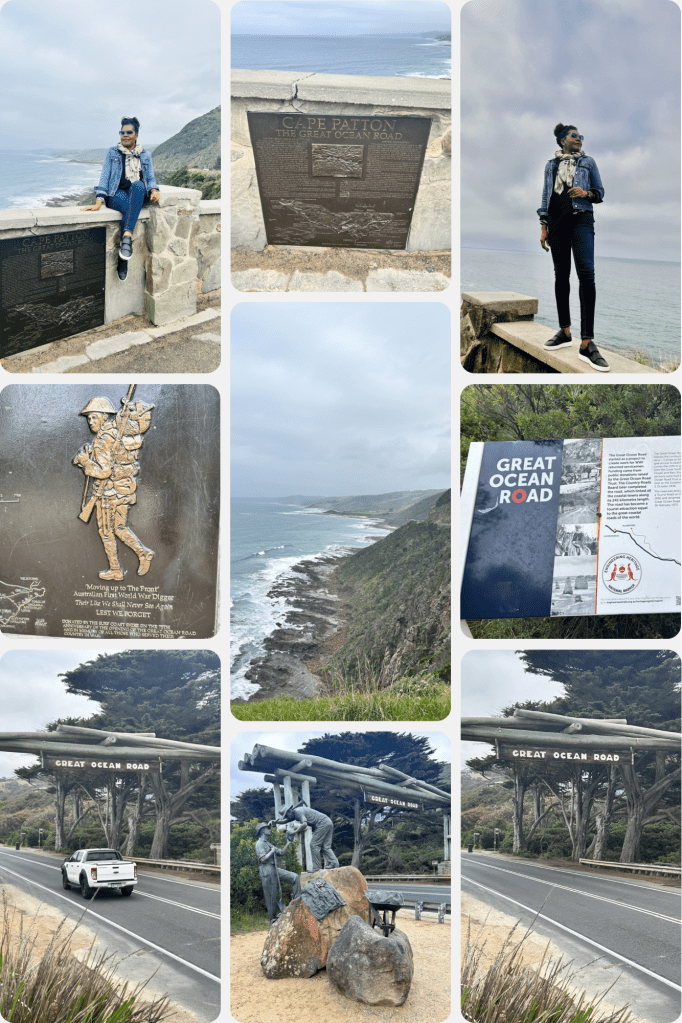
The Great Ocean Road drive was breathtaking — dramatic cliffs, what seemed like endless coastline, and amazing  views. And to think that it was hewed out of cliffside terrain by returning soldiers after World War I. 

Built between 1919 and 1932, it was originally conceived as a memorial to those who died in the war—and remains the world’s largest war memorial.

What makes it even more striking is that it was constructed by hand, cut into rock and dense coastal landscape under difficult conditions, with sections completed by the very veterans it was meant to honour.

One stop was the Memorial Arch which marks the official start of the Great Ocean Road. It carries the words honoring the returned servicemen who worked on the road’s construction. Cars pass beneath it as a quiet reminder that this scenic route is also a war memorial.

One lookout point, Cape Patton, stood out because the road lifts high above the coastline.

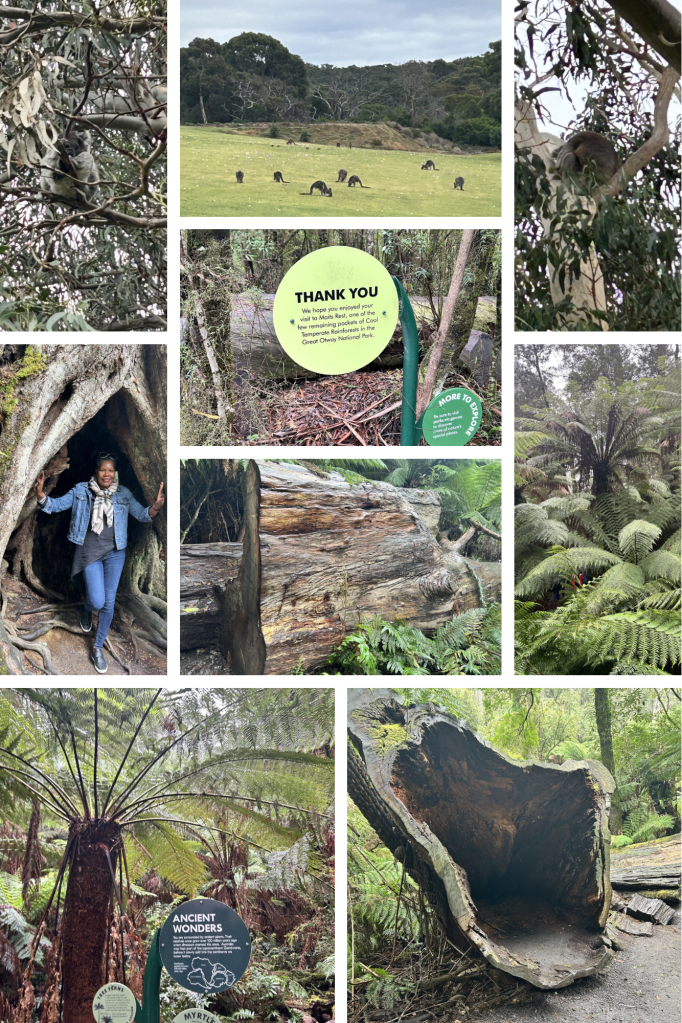
Another stop was at Maits Rest—the quiet rainforest in the Otway Ranges. We walked along a boardwalk that winds through dense ancient forest, where tree ferns stretch upward and massive myrtle beech trees with trunks so massive I fitted inside them. 

We also passed through sections like Kennett River, known for koala sightings in the eucalyptus tree. Kennett River stood out because it bears my uncle’s name (though a different spelling) and I did see koalas lazing in eucalyptus trees! 

Earlier in the trip the driver also took us to the Anglesea Golf Club. It’s famous for its resident population of kangaroos—often seen casually grazing across the fairways as though they own the place. Humans coexisting with the wild.

Maits Rest, Kennett River, Anglesea Golf Club

The journey toward the Twelve Apostles felt like an unfolding tale of nature’s contradictions. On one hand, the breathtaking beauty it created — wave after wave, century after century of erosion sculpting towering limestone formations that rise dramatically from the Southern Ocean. And on the other, the quiet reminder that the very forces that created them — wind, salt, and relentless waves — continue to reshape them. Some stand weather-worn. Others have already disappeared into the sea.

The Apostles are no longer twelve. Those that remain feel like the final punctuation marks of that tale still being written by the coast.

Standing there was a reminder of nature’s power and that its beauty, too, can erode.

Architecture

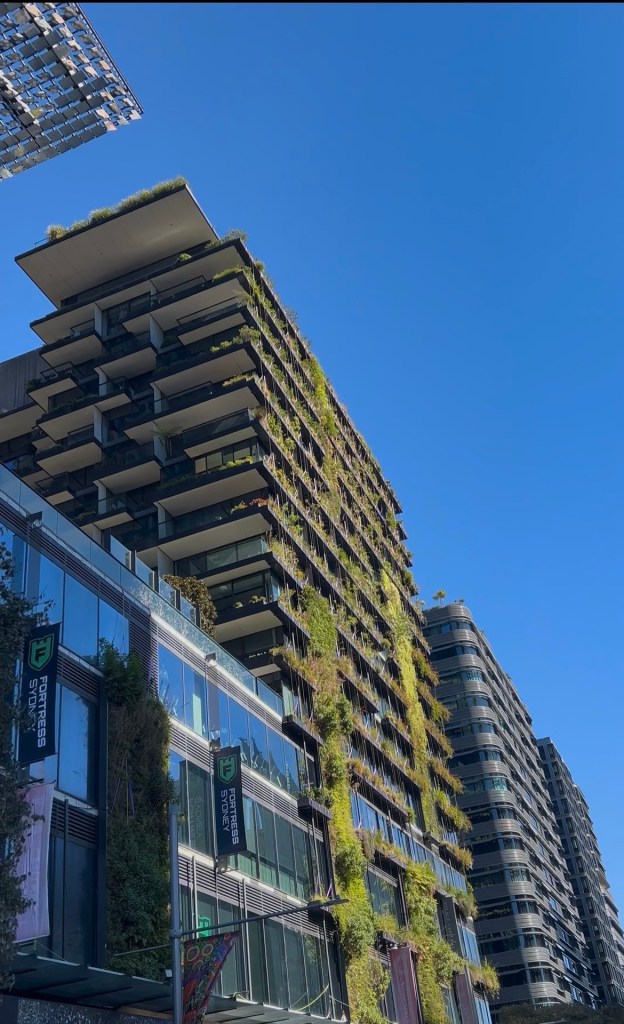
Finally, the architecture in Australia repeatedly caught my attention. Buildings of different periods and styles existing side by side — historic facades meeting contemporary design.

One building covered in a vertical garden particularly stayed with me. Living architecture.

I could not help thinking how much I would have loved to use some of these buildings as muse for my interior design studies.

Australia did not disappoint.

What it offered in museums, art, music, and architecture, it matched with exceptional food and unforgettable experiences.

But perhaps the greatest gift of the journey was the unexpected friendships I formed along the way.

Thank you Australia!

2026 All Rights Reserved

Like what you see? To never miss a post click HERE👈 to subscribe & follow the blog. There’s more HERE👈 and on Spillwords, the Writers Club, Facebook & Bluesky.

💡 Only WordPress.com members can hit the “Like” button, but everyone’s welcome to share their thoughts in the comments. Thanks!
In creative solidarity, Dee

Travel Story: Tasmania—the part of the itinerary that almost wasn’t ©Dawn Minott

Beforeword: the Oceania quest. I am on a personal quest to travel to all seven continents. With Australia and New Zealand now under my belt, only one continent remains: Antarctica. It also means I’ve had the privilege of living in or having spent significant time in 54 countries.

This Australian journey took me through Melbourne, Tasmania, and Sydney.

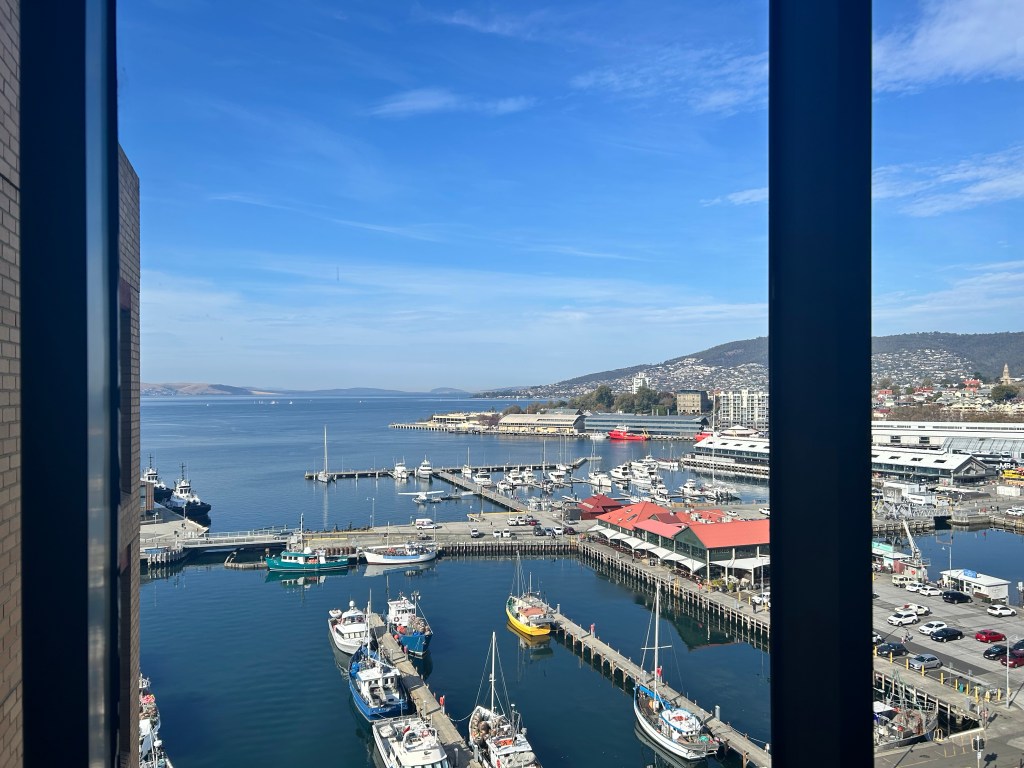
View from my hotel room

This post is about Tasmania

Tasmania caught me by surprise.

It was not on my radar at all for this trip. In talking with an Aussie friend before departure, she strongly suggested I add “Tas” to the itinerary. The good thing is that although the recommendation came only days before I left, I had not yet booked my internal flights. Soon the tickets were secured, days reshuffled, and Tasmania quietly inserted itself into the Oceania quest.

I am glad it did.

I already shared separately about Bruny Island because it deserved a post of its own. What follows is the rest of my Tasmanian experience.

Tasmania is south of mainland Australia, separated by the Bass Strait. It is Australia’s island state — rugged, windswept, and lush. Compared to the bustle of Sydney and Melbourne, Tasmania felt almost intimate.

And this is how it started.

Hobart & Tasmanian Symphony Orchestra

I arrived late evening in Hobart, the capital city, at the Hotel Grand Chancellor Hobart. As I checked in, a pianist was playing lovely instrumental music in the lobby and everyone seemed unusually dressed up. I noticed it but thought little of it beyond wanting to hear more of the music.

I quickly freshened up and returned downstairs finding a seat at the end of the bar. I settled onto a stool, opened the Notes app on my trusty iPhone, and started writing.

A few minutes later:

“Excuse me,” a gentleman said. “Are you waiting for someone?”

I looked up from my phone. Smiled

“No, I’m not.”

“Are you going to the concert?”

“What concert? I don’t know, I only just arrived.”

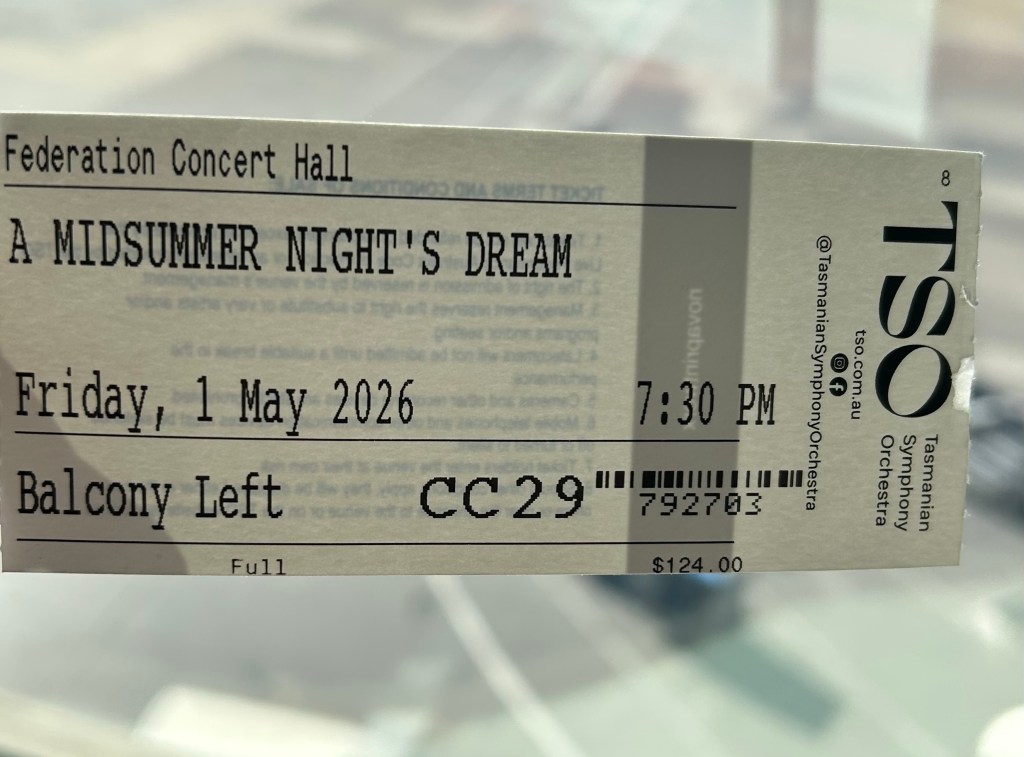
“There’s a classical concert upstairs at the Federation Concert Hall.”

Sidebar

At this point the puzzle pieces finally started connecting.

I had booked the hotel simply because Google said it was conveniently located for the things I wanted to see in Hobart. I had absolutely no idea it was attached to the Federation Concert Hall, home of the Tasmanian Symphony Orchestra.

Suddenly the pianist made sense. The elegantly dressed guests made sense. The crowded lobby made sense.

Back to the conversation.

“Would you like to attend?” he asked casually. “It’s just upstairs.”

Sidebar again

Now, one thing about solo travel: I always leave room for the unexpected. I usually lock in a few must-do experiences, then deliberately leave space for whatever surprises the trip decides to hand me. I’ve come to know that some  of the best moments in travel cannot be planned.

Back to the conversation.

“Sure,” I replied. “I love classical music. Where can I get a ticket?”

“Please allow me,” he said. “Let me see if I can get the seat beside me. Or any seat.”

Sidebar once again

I remember blinking in surprise and bringing my clasped hands up toward  my mouth, as I often do when I’m  filled with gratitude. 

“That’s very kind of you. Thank you.”

I have learned not to interrogate every unexpected kindness life offers. I gauge the  situations, always. Sometimes you simply receive the moment.

Off he went while I returned to my writing. He returned, sure enough pulling a ticket from his breast pocket to A Midsummer Night’s Dream. And yes — the seat beside him was available.

The concert was fabulous. The company was equally enjoyable.

And just like that, Tasmania opened itself to me through music, conversation, unexpected generosity and best of all—a new friend. 

The kindness only continued from there. I found Tasmanians — or “Tassies,” as I kept hearing — warm, courteous, and deeply proud of their island. They also pack a remarkable amount into their tourism experience for such a relatively small place.

Salamanca

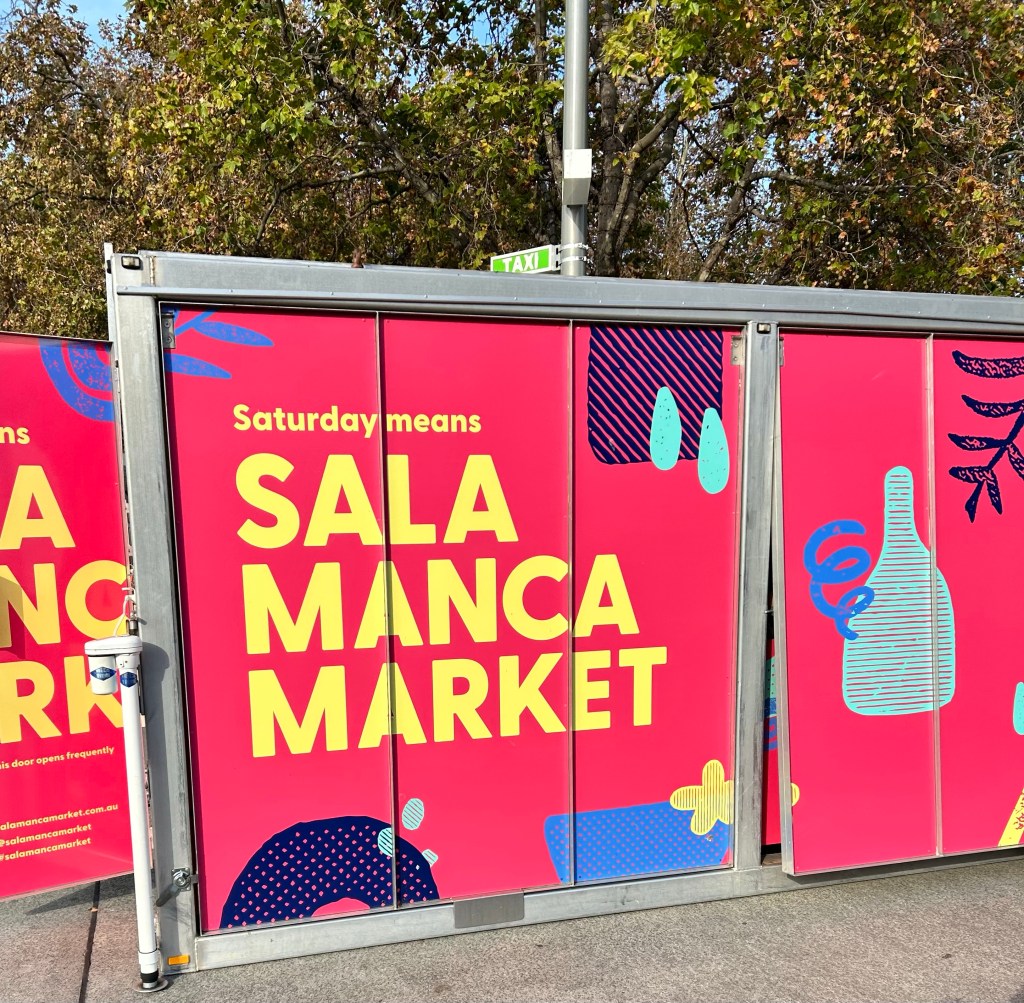
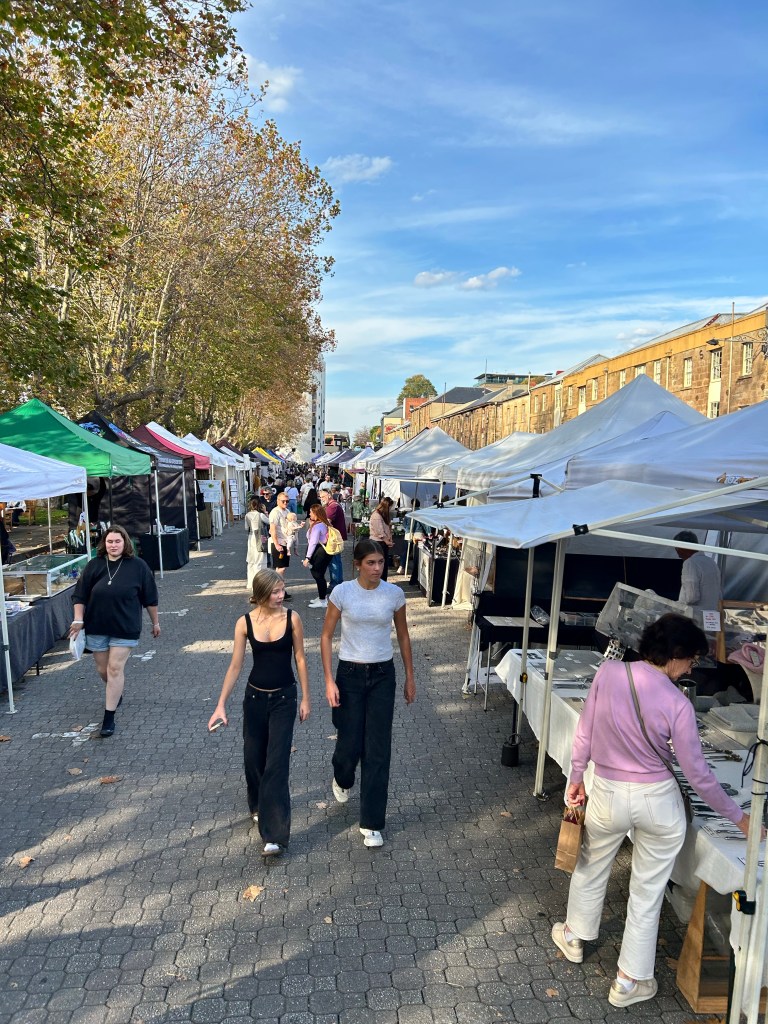
Salamanca Place quickly became one of my favourite areas in Hobart. Sandstone warehouses lining the street. Cafés spill onto sidewalks. Fish an’ chips and ice cream joints along the dock. Sailboats in the harbor. Art galleries sit tucked between restaurants and bookstores. And a grand market that takes place every weekend. There was a vendor for just about every thing—from wooden neckties, to clothing, trinkets, books, food. You name it, they had it. I was traveling with a backpack so having no extra space was the only reason I couldn’t shop. 

Botanical Gardens

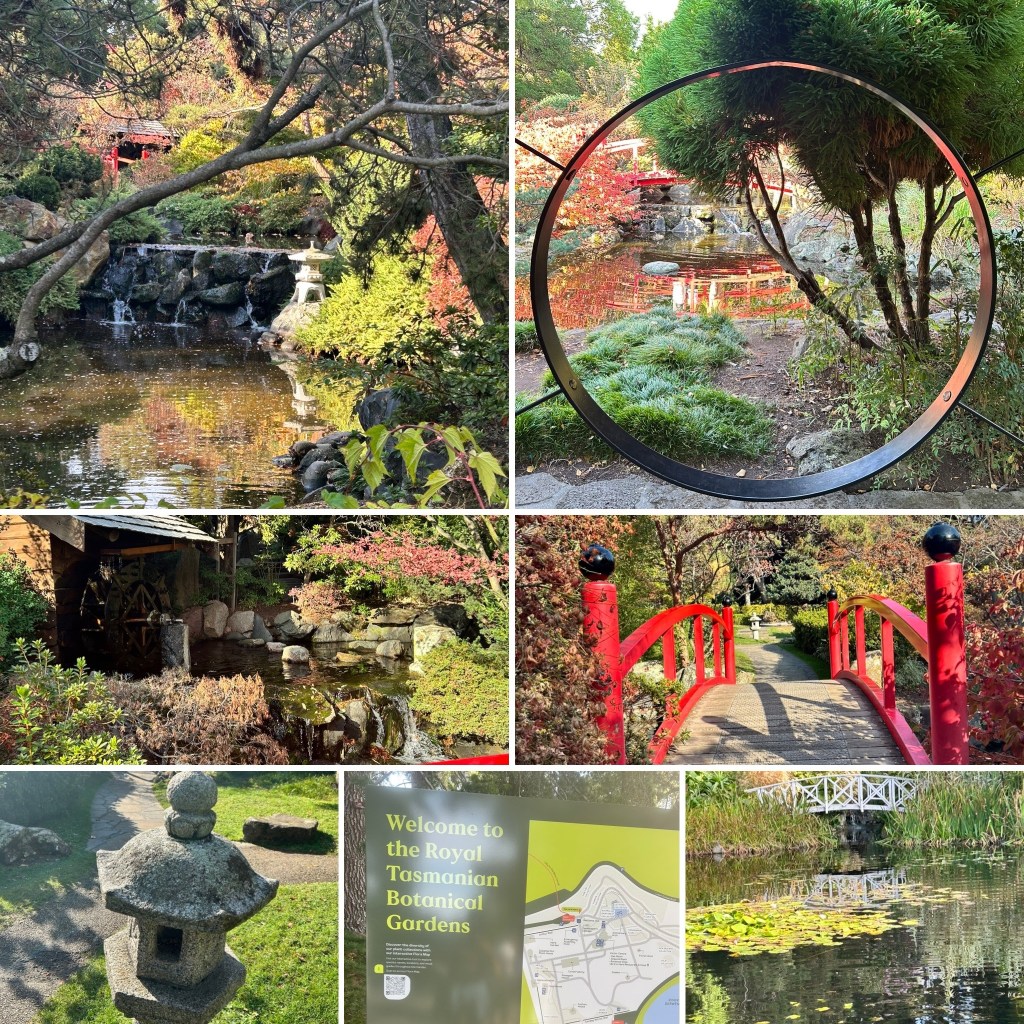
The Royal Tasmanian Botanical Gardens were another highlight. The grounds themselves are beautiful, but what stayed with me most was the Japanese garden.

There was a stillness there that was surreal and felt sacred. The curved bridges. The koi moving lazily through the water. The deliberate placement of stone and plant life. Everything invited pause. 

Travel can sometimes become consumption — ticking off landmarks, rushing toward the next thing. The Japanese garden interrupted that instinct. It asked me simply to sit for a while. So I did.

MONA

Then there was Museum of Old and New Art — MONA, owned by David Walsh who often speaks of if it as his “peacock feathers.”

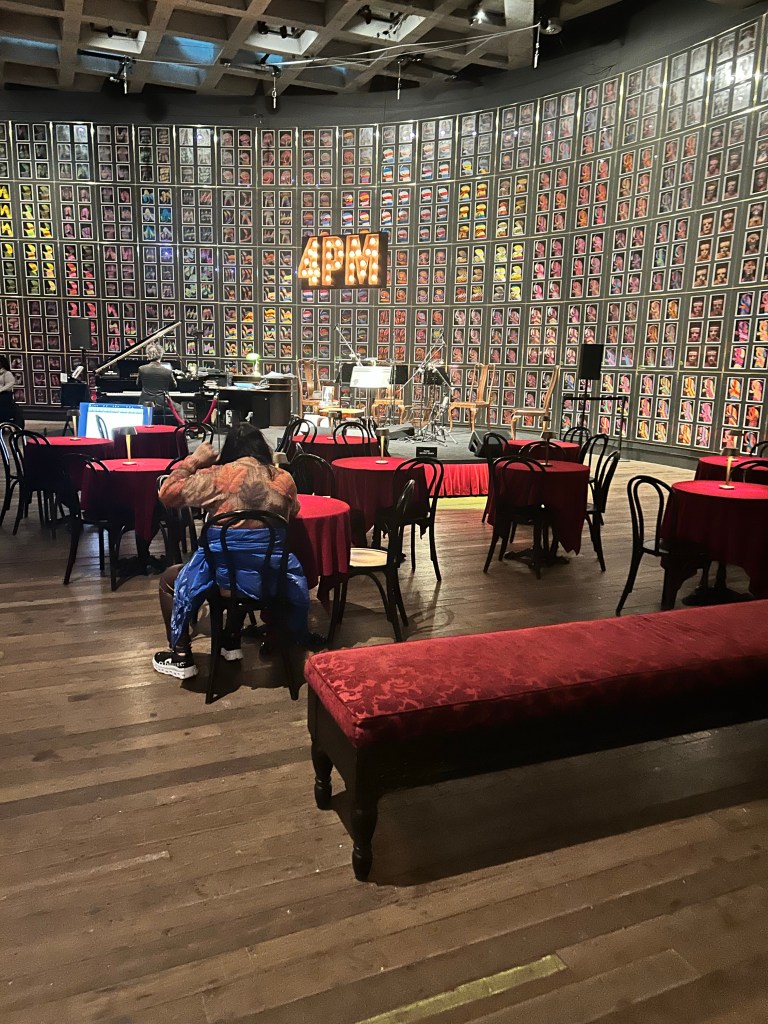
MONA is not the kind of museum you passively stroll through nodding politely at paintings. It invites you to pause with seatings arranged over plush carpets and sheepskin amongst the exhibits. It also provokes. Disturbs. Confuses. Amuses. Sometimes all at once.

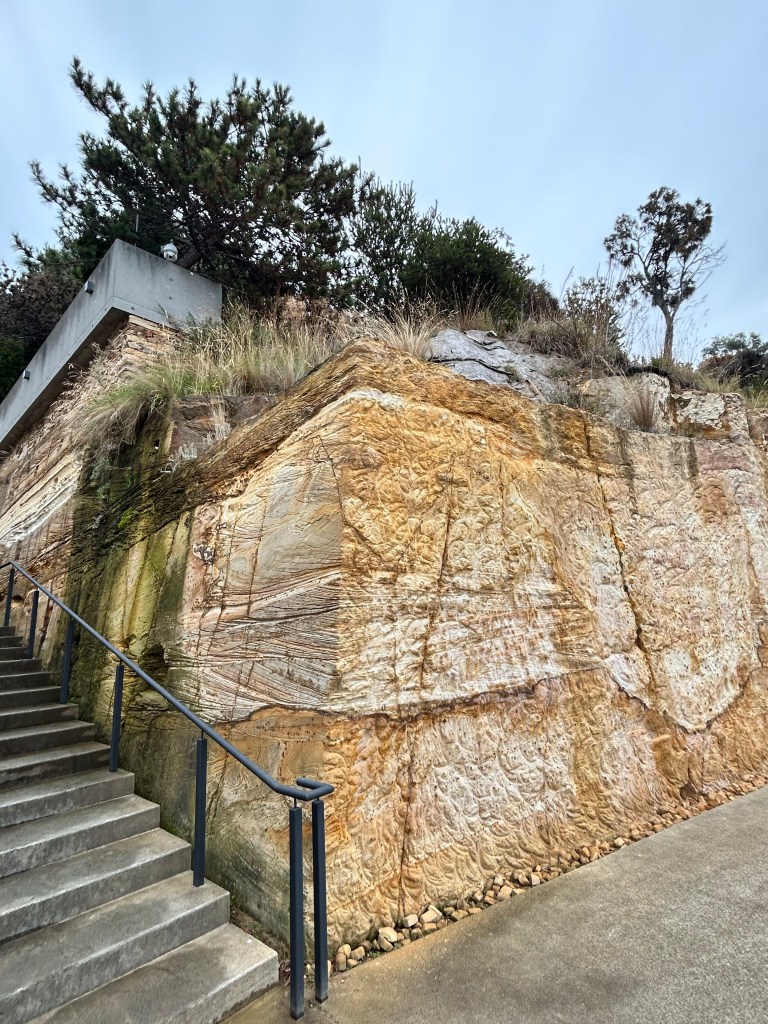
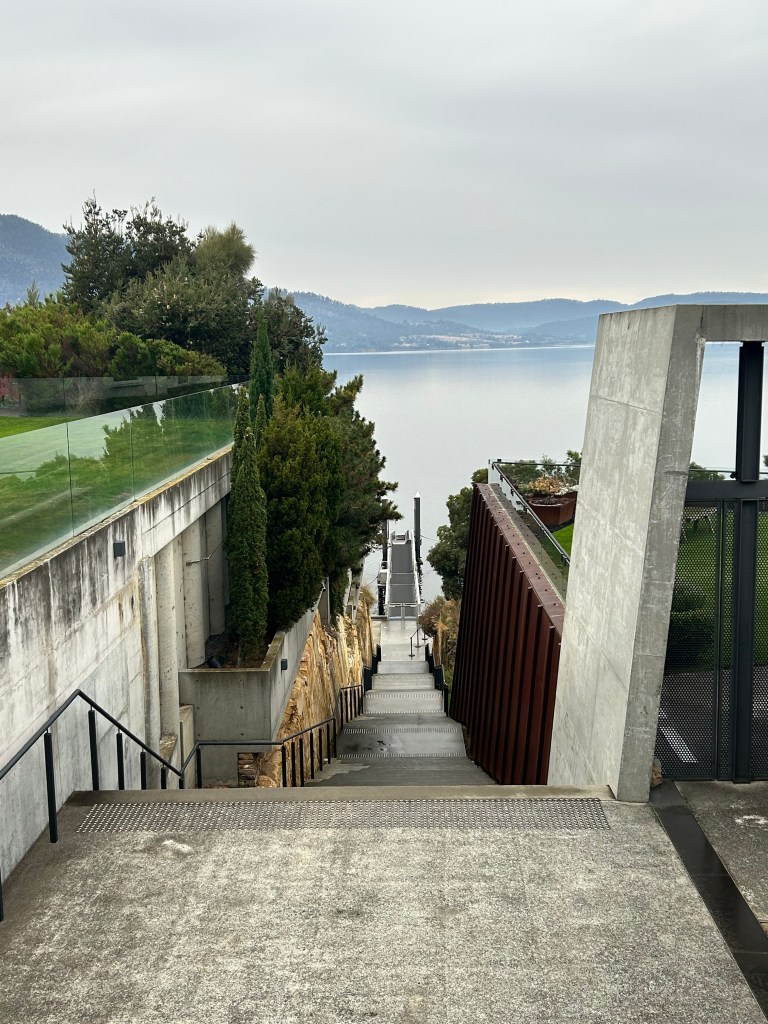
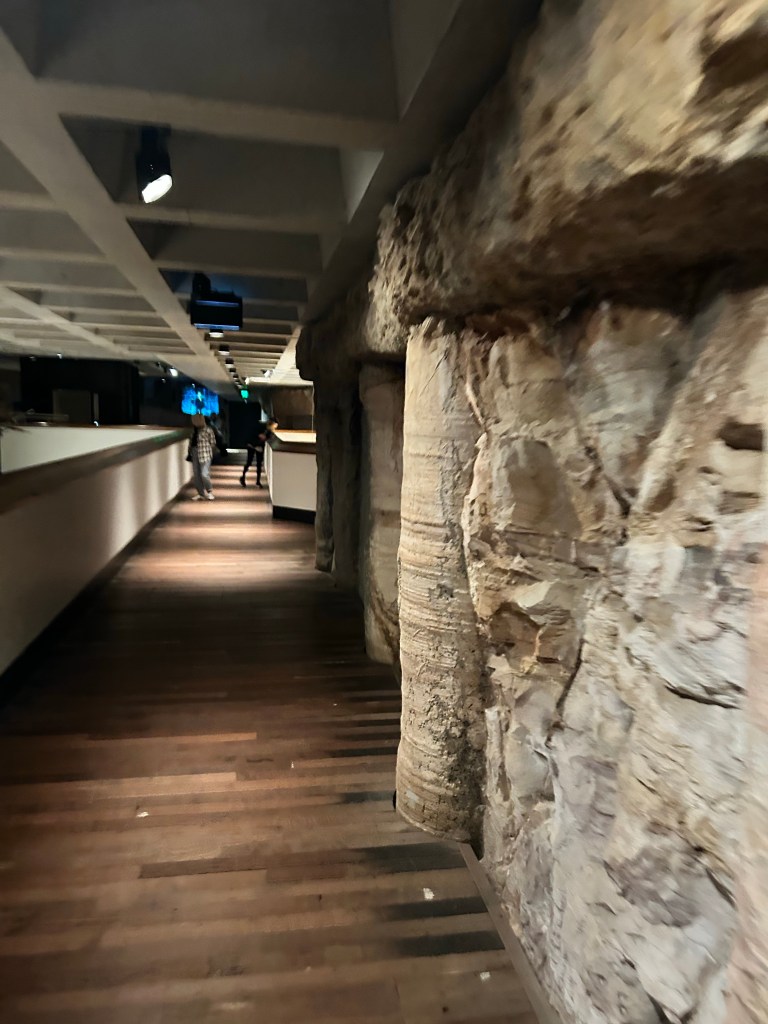
Built partly underground and carved into sandstone along the River Derwent, the museum itself already feels unconventional before you even encounter the exhibits. 

After the short ferry ride you walk up 99 stairs from the jetty, or through a tunnel, to enter. Once inside, the App is activated and every piece is described on it for you to read or listen to. You only need get close enough to a piece and it loads on the App. Really cool! 

Some installations made me laugh outright. Others made me uncomfortable. A few left me standing there wondering, “What exactly am I looking at?” And, “Why is this in a museum.?” And at others I sit or stand for a while in amazement. Others were the muse to unleash my creativity.

And perhaps that is the point.

MONA does not ask visitors merely to observe art. It asks you to react to it. 

To this point, the poem inspired by a piece of art in MONA got me the nomination of poet of the week on a WordPress blog site. 

Tomás Saraceno: A Thermodynamic Imaginary 

There’s so much more to share about  MONA but I’ll limit it to this final experience—the restaurant, Les Dîners de Faro. 

I knew the restaurant existed but because I’m hopelesss at directions I only kind-o’-sort-o planned on finding it. I found myself walking down a white passage way backlit with subtle green lighting. I figured it was an exhibit of some weird sort but it was more. That was the runway to the restaurant with art in its decor, food offerings and entertainment including a dancer meandering between tables balancing a light fixture on her head. You just can’t make this stuff up. 

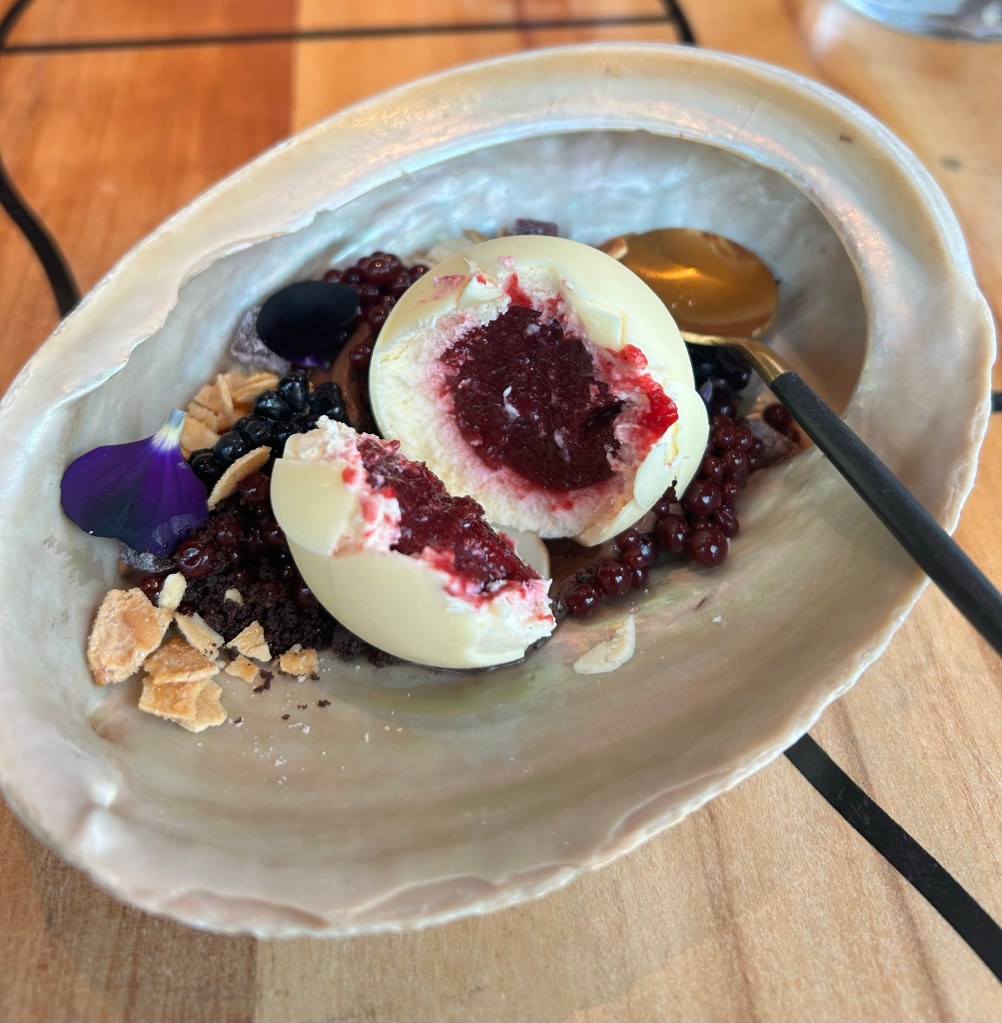
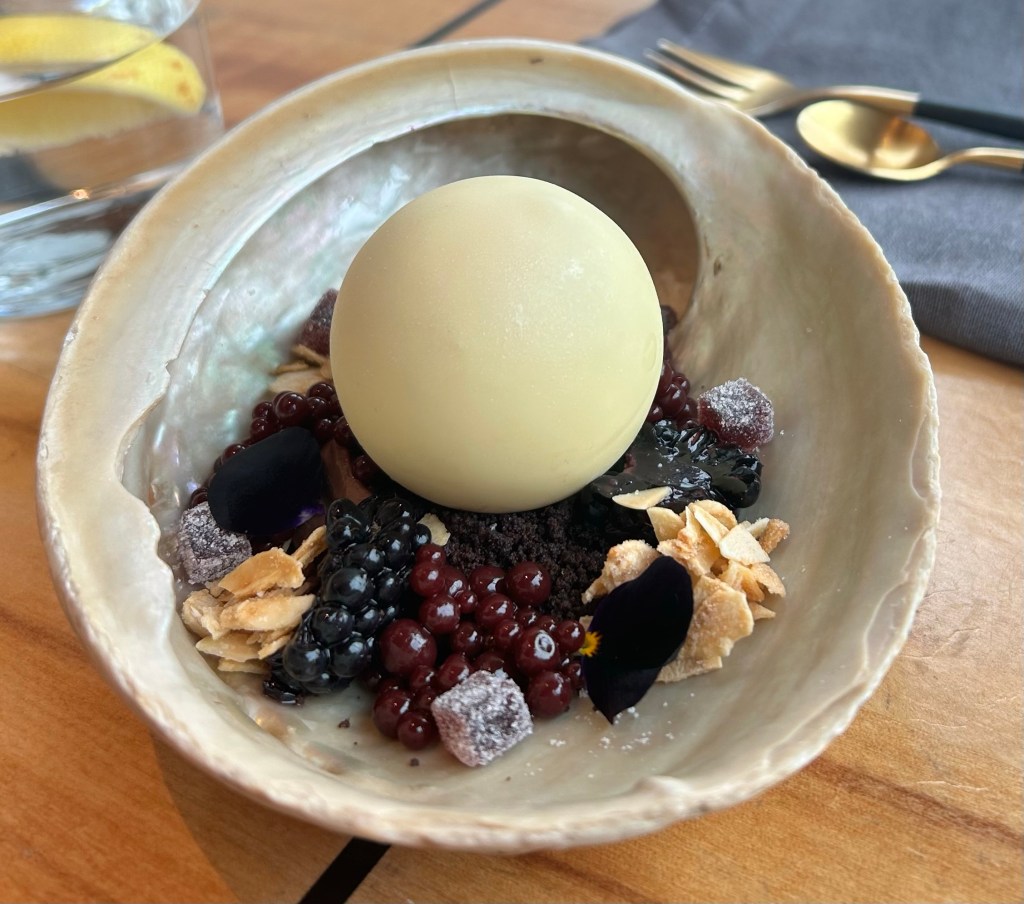
I went for the dessert because who wouldn’t want to eat: “Pearl Of the Unconscious Mind”.

Not to be outdone by the art in the museum,  the dessert was surrealist art in its own right.

It was a mascarpone and morello cherry pearl, draped by blackberry caviar, chocolate cream, toasted almonds, and red velvet cake served in a decorative shell.

The server took his time in explaining its contents. It played with the senses with different textures and tastes. It was decadent. 

What I appreciated most about MONA was: even when I did not fully “get” every exhibit, the experience remained memorable because it encouraged engagement, even touching, rather than passive viewing.

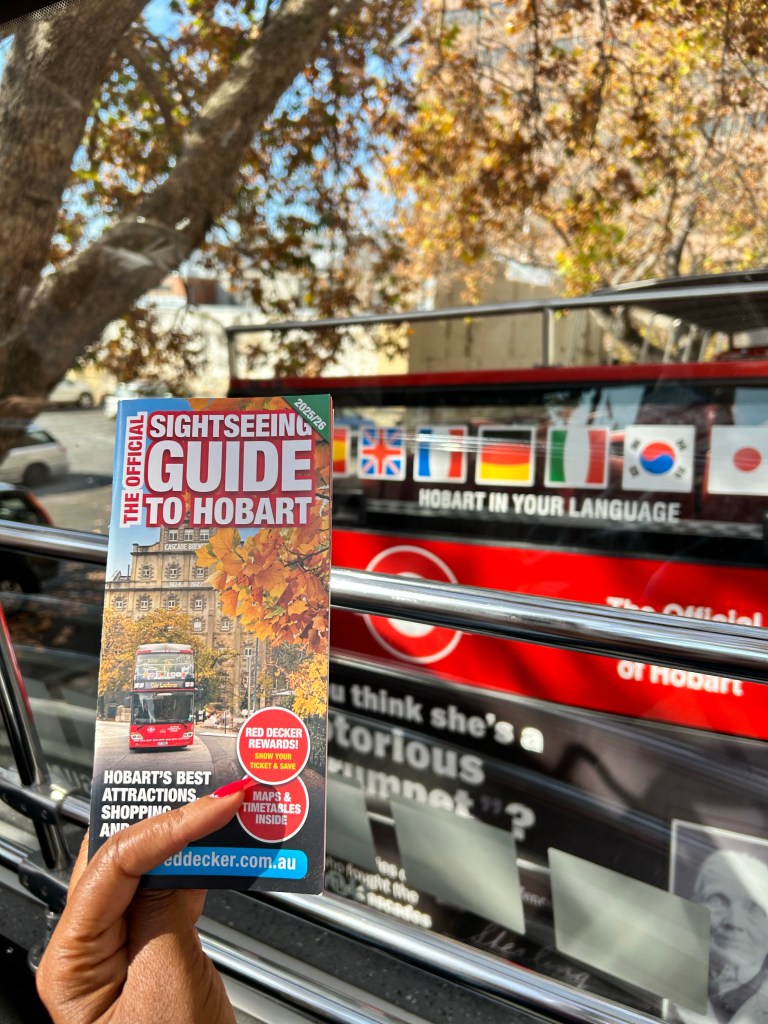
For places I couldn’t spend time exploring I learned a little from a distance on the hop-on-hop-off bus. 

I left Tasmania deeply satisfied — grateful that an almost last-minute decision became one of the richest parts of this journey.

Some places impress you with spectacle—neon lights, high rises, massive theatres. Tasmania did something gentler. It welcomed me, steadily unfolding its beauty through music, landscapes, gardens, conversations, and unexpected kindness.

Not bad for a destination that almost never made the itinerary, uh?!

2026 All Rights Reserved

Like what you see? To never miss a post click HERE👈 to subscribe & follow the blog. There’s more HERE👈 and on Spillwords, the Writers Club, Facebook & Bluesky.

💡 Only WordPress.com members can hit the “Like” button, but everyone’s welcome to share their thoughts in the comments. Thanks!
In creative solidarity, Dee

Travel Story: Bruny Island, Tasmania—a small place that stays with you ©Dawn Minott

Beforeword: This travel story reveals how I experienced Bruny Island, Tasmania. It the island doesn’t overwhelm. It doesn’t ask for attention. But if you give it, it stays with you.

I’m writing this post sitting on a tour bus that’s parked on a ferry that is transporting us back from Bruny Island to mainland Tasmania and I’m reflecting on the day that is now concluding. 

About Bruny Island

Bruny Island is set just off the southeast coast of Tasmania. A 30-minute drive south of the city, Hobart, to the ferry terminal followed by a short ferry ride and you’re there.

Geographically, it’s part of Australia, yet once you cross that stretch of water, you feel the shift—the most obvious is that the roads narrow. But, as the distance grows, so is the sense that you’ve stepped into a different rhythm altogether.

Start in tranquility

The morning started on a quiet beach.

Before a single “attraction” had been ticked off, the tranquility of the beach set the tone. 

Breakfast was oysters (hard pass for me), cheese, and bread. The cheeses were delicious including Bruny Island award-winning C2 hard cheese. The bread was decadent and that’s not an exaggeration. Freshly baked, still warm, stored in a used microwave turned breadbox set in the baker’s fence.

And guess who collected the bread?! Moi!!

You’re wondering how that happened, aren’t ya?! Well, the only seat on the bus where my legs fit comfortably was up front by the driver (tall girl problems) so I became his sidekick on the tour.

Someone on the tour surprised me with this video of me retrieving the bread from the microwave turned breadbox. 

Adventure in wild life and light house

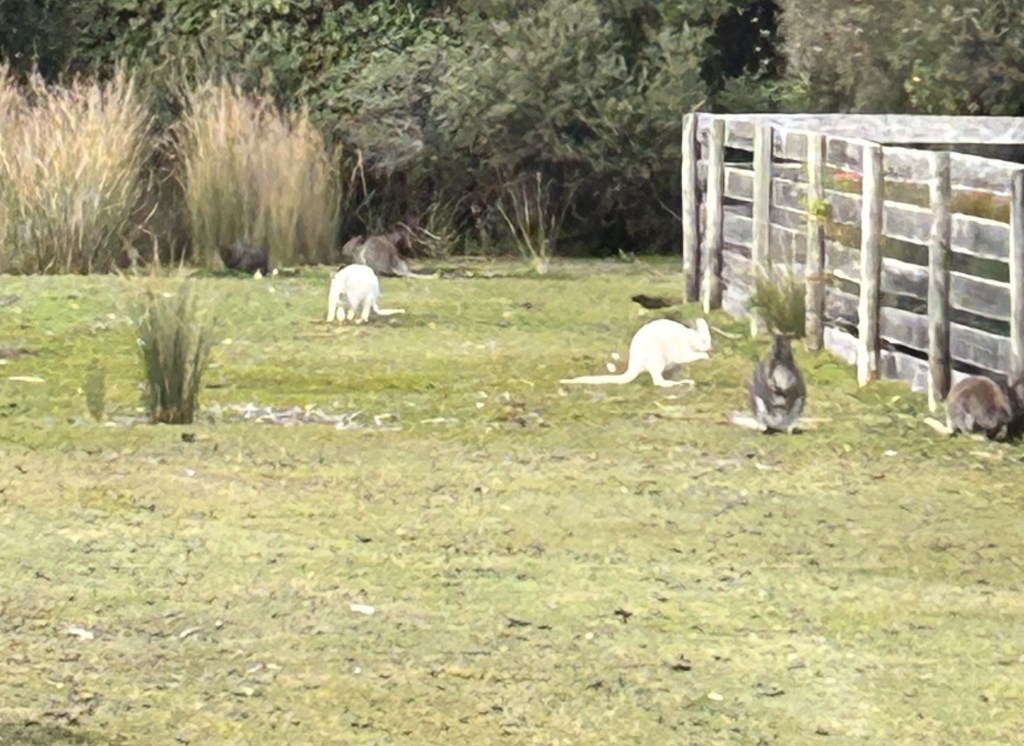
Next we made our way toward Adventure Bay. One adventure was scanning the landscape for a white wallaby. Albino. Rare. Not promised. Of course, this laidback island would not deliver on cue. You show up, you look, and if you’re lucky, you see. If not, you keep moving. And we saw—not one but four white wallabies. 

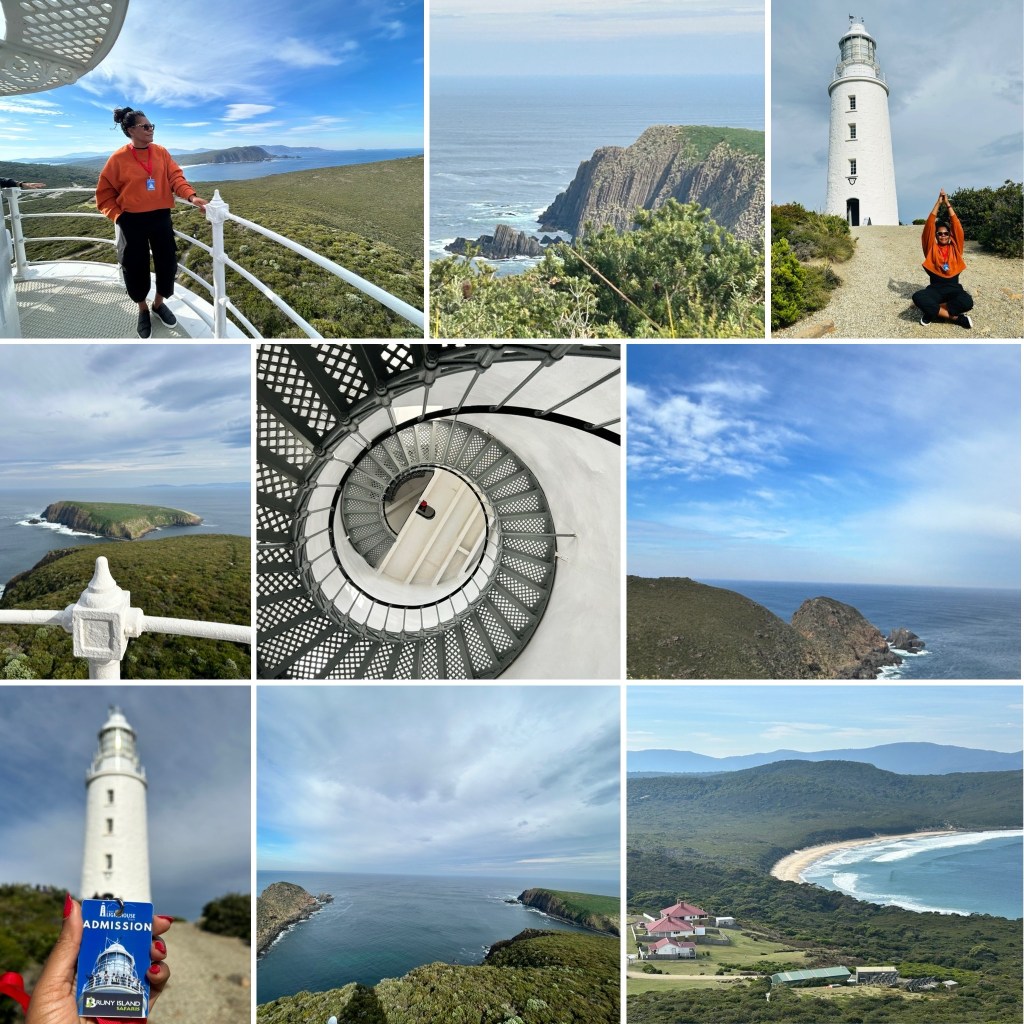
Further south, the road eventually gives way to one of the island’s most striking landmarks—Cape Bruny Lighthouse. Built in 1838, it is one of the oldest surviving lighthouses in Australia. Though no longer functional it stands watch where the Tasman Sea meets the fierce winds rolling up from the Southern Ocean.

We climbed about 70 steps up a narrow cast-iron spiral staircase that winds upward through the tower. At the top balcony, the reward was immediate—rugged cliffs and the wild southern coastline stretching in every direction to the horizon.

Lunch was at the quaint and small Hotel Bruny. The tour guide described the pink eye potatoes, that are native to Tas, as scrumptious so you know I ordered those as part of my lunch. The tour guide didn’t exaggerate.

Sweetness in small doses

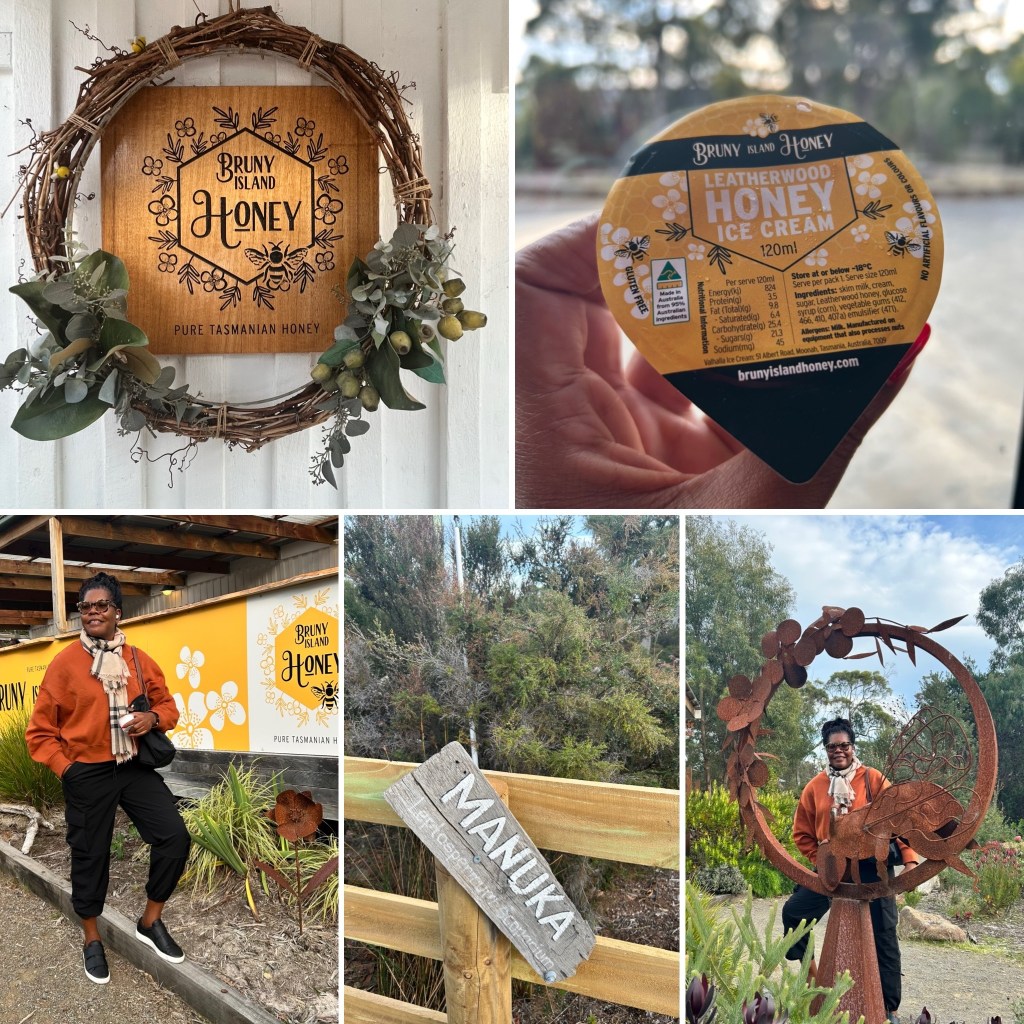
We were treated to sweetness in small doses. First at Bruny Island Honey then Bruny Island Chocolate Company. The honey ice cream left me craving more!

More goodies in unusual places

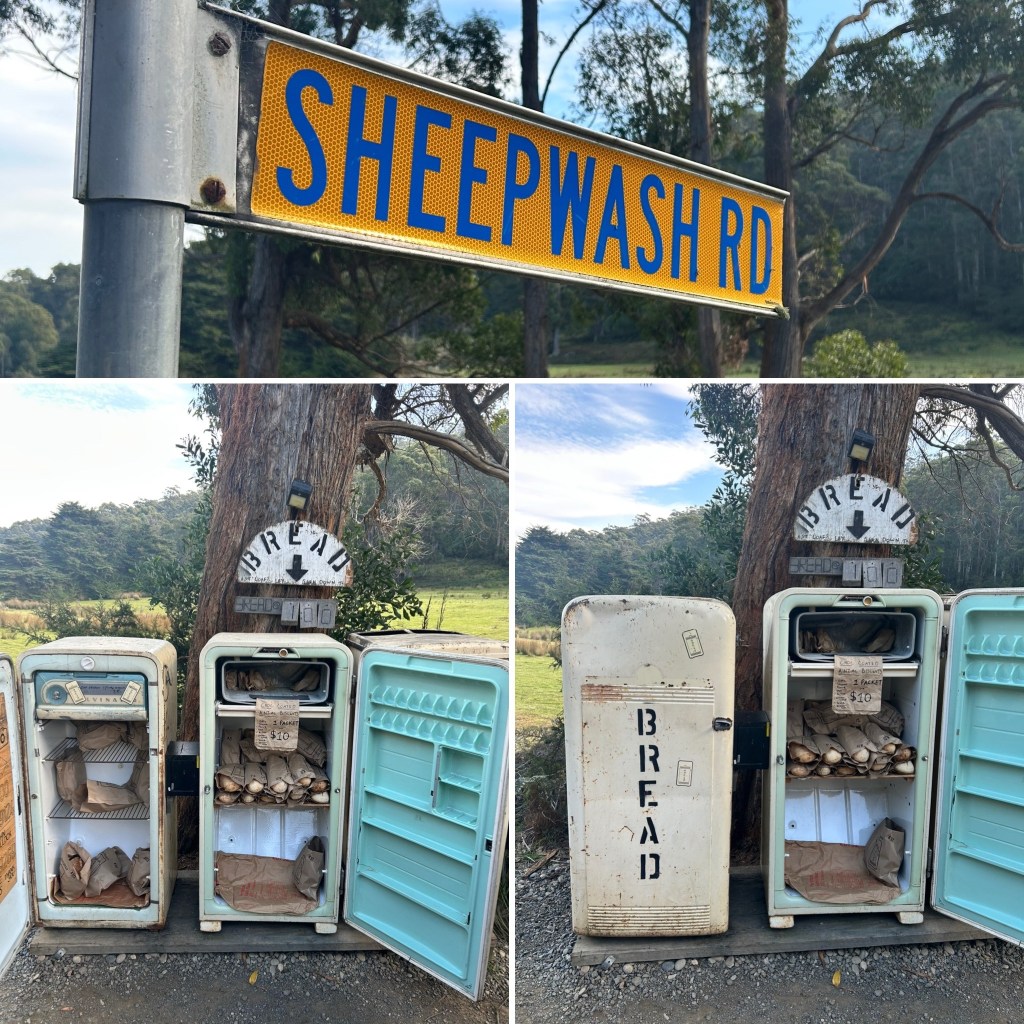
Somewhere between those stops—no sign announcing it, no marker alerting to pay attention, only a slight hint by the tour guide—then a set of three antiques refrigerators sitting by the roadside came into view at Sheepwash Road.

What was this? 

Inside, loaves of sourdough bread and cookies baked by John Bullock, aka the Bruny Baker. Not a shopfront. No one standing there. Just a small box for payment and an unspoken agreement: take what you need, leave what you owe.

That stayed with me for a while. That system only works because people choose to make it work. It depends on trust, not enforcement. If it works on Bruny island couldn’t it work elsewhere!?

That’s when the island started to make more sense.

As we continued, I realized how easy it would be to miss entire parts of Bruny if you weren’t paying attention. Again, I’m not exaggerating.

When I say if “don’t blink or you’ll miss it” had a physical form, it would be Bruny main town. I kid you not, the tour guide announced: “We’re entering the main town” and by the time I changed the phone from photo to video we are through the town and he wasn’t driving fast.

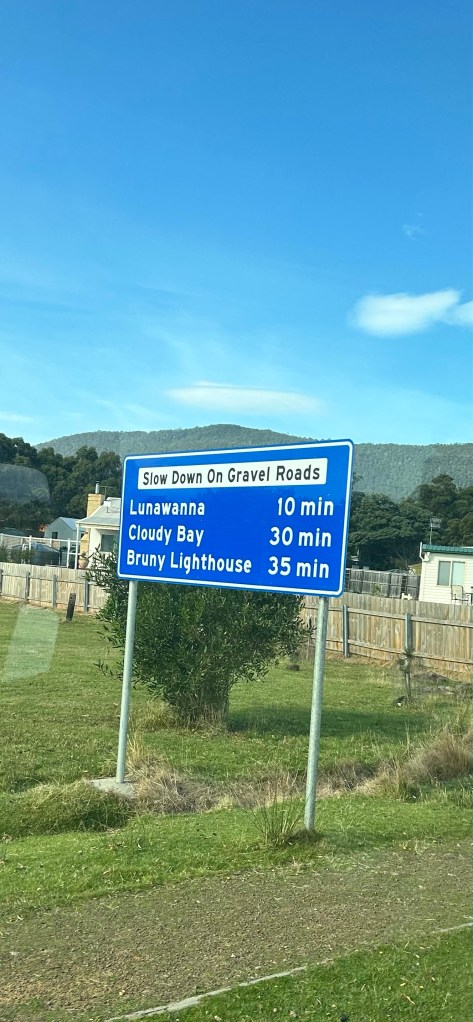
The Island truly moves on a different frequency. The way distances are marked reinforces it.

Road signs don’t tell you how far something is—they tell you how long it will take to get there. Time, not distance, is the measure that matters. 

And just like that you stop asking: “How far?” and start asking: “How long?”; and not in a “are-we-there-yet?” way but from an unaware shifting in your thinking. And somehow, that small change slows everything down.

279 steps to the top of Truganini Lookout

And then the day shifted again—a painful past

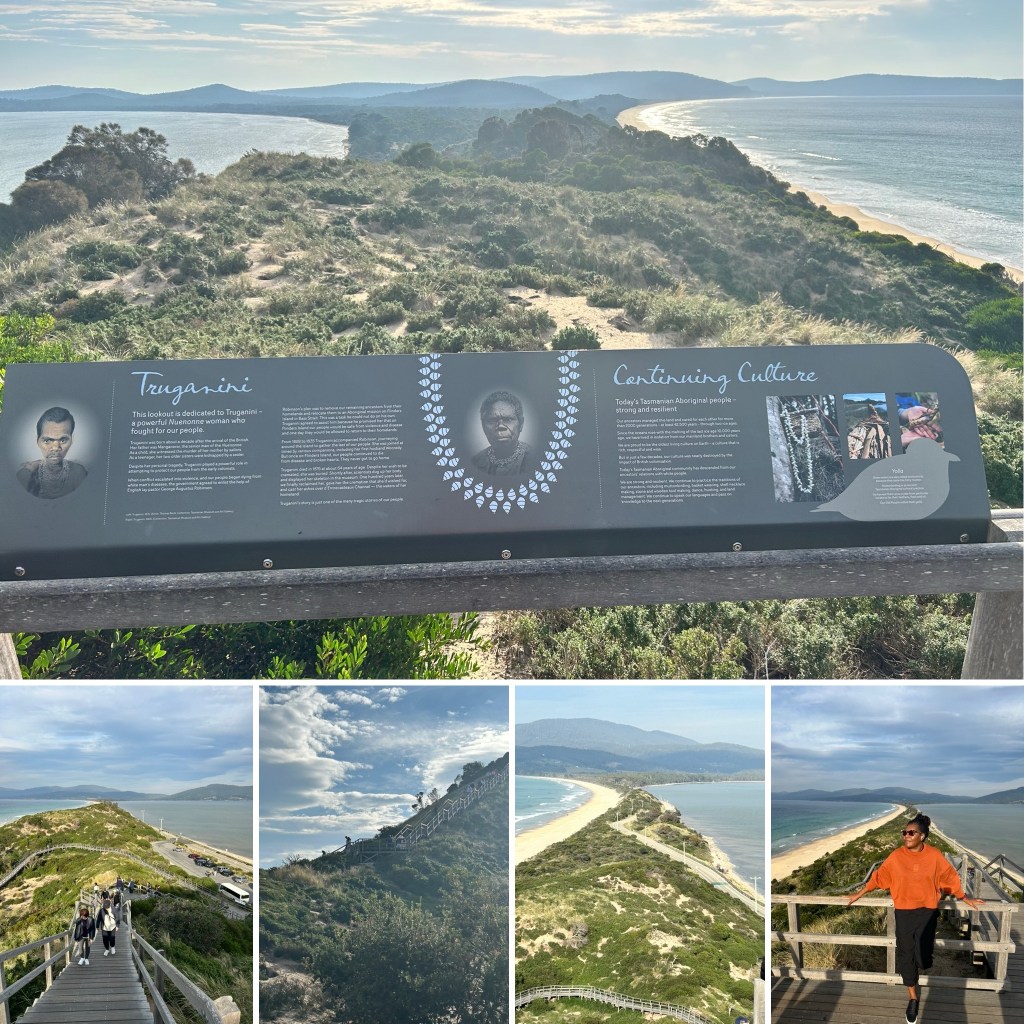
As the day was winding down the tour guide told the story of Truganini. By the time we got to Truganini Lookout climbing the 279 steps felt like a step-by-step walk back into history. 

Bruny is also known as Lunawanna, a name from the Aboriginal people of the island. And standing there at the Lookout, it’s impossible not to think about Truganini—her life, what it represented, and what was lost.

From the top you have an unobstructed view of the island stretching out before you in both directions, narrow and exposed, held together by a thin strip of land. It’s beautiful, but it’s also grounding. Because the name carries a history of a powerful woman who fought for the protection and freedom of her people—the Palawa people of Lutruwita (Tasmania).

I didn’t know her specific story but it tugged on my heart strings because it didn’t feel distant to me. 

Jamaica carries its own version of that story. The near disappearance of the Taino people. The powerful woman, Nanny, who also fought for the protection and freedom of her people. The fragments we continue to hold on to today (see my post about Accompong). And, the things we’re still trying to recover and name properly. Different geographies, same pattern.

By the end of the day, I realized Bruny hadn’t tried to overwhelm with highlights.

It had the feeling of: do one thing, do it properly, and don’t complicate it. So, you savor it.

It didn’t stack experiences on top of each other or rush me from one moment to the next. It gave me space—between places, between thoughts, between expectations.

And in that space, the details started to matter more:

  • A fridge on the side of the road.
  • Experiences that traveled across continents and found similar meaning.
  • A place so small you could miss it.
  • A lighthouse so imposing you can’t miss it.

Bruny doesn’t overwhelm. It doesn’t ask for attention. But if you give it, it stays with you.

2026 All Rights Reserved

Like what you see? To never miss a post click HERE👈 to subscribe & follow the blog. There’s more HERE👈 and on Spillwords, the Writers Club, Facebook & Bluesky.

💡 Only WordPress.com members can hit the “Like” button, but everyone’s welcome to share their thoughts in the comments. Thanks!
In creative solidarity, Dee

Aerocene: Breath of Life ©Dawn Minott

Tomás Saraceno: A Thermodynamic Imaginary

Beforeword; I had the privilege to visit Mona Museum, in Hobart, Tasmania, which is mostly underground. It has a playful vibe with old and new art. One new art is the muse for this piece—“Breath of Life.”

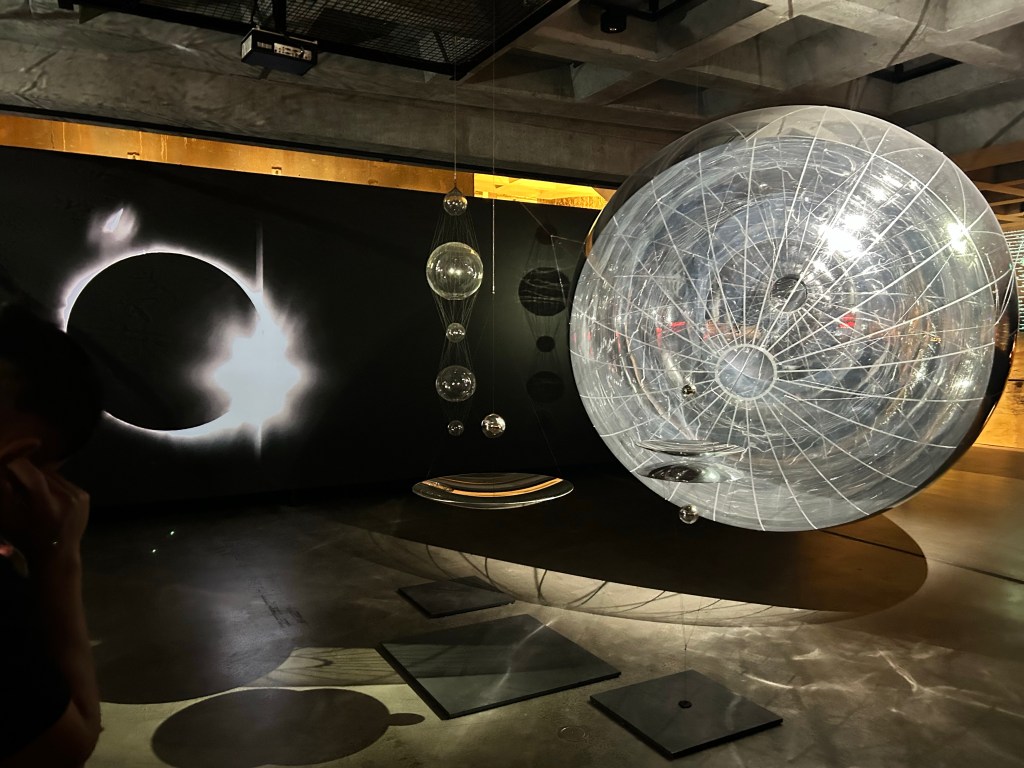
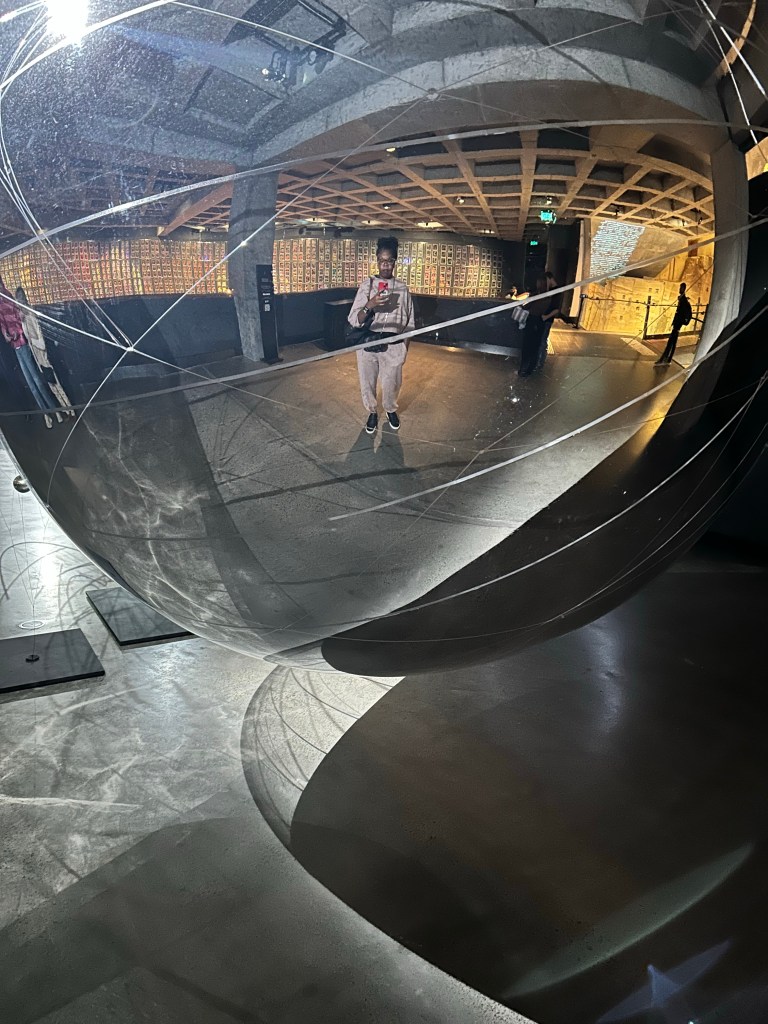
The art is a complex constellation by Tomás Saraceno called A Thermodynamic Imaginary captured, in part, in my photos below, including one that reflects the images of those observing it, emblematic of the intersection of art and life.

Saraceno’s fragile hand-blown aerial sculptures, mirror reflections, intersections and video projections ask you to imagine a new future: the Aerocene, ‘an era of the air’, a world of solar energy ‘free from carbon and extractivism’, where life and breath are attuned to Earth’s systems rather than at war with them and where anthropocentric entitlement has no place. This is my poetic rendition to this imagined world and in honor of the Palawa people of lutruwita (Tasmania), whose deep and enduring connection to Country—land, waters, skies, and spirit—continues to shape and sustain life.

Breath of Life

New life begins in Aerocene

Where gravity loosens its grip

Humans unlearn the weight of stay

No ownership, only orbit

No engines, only breath 

Lungs, rivers, wings

Everything inhales, exhales together

There are no borders here

Equity and equality quells 

The hands that clenched too tightly

Nothing is taken 

Because nothing is kept

Everything passed

Warm, bright, alive

Humans no longer extract, 

But at one with nature 

Maps dissolve

Humanity move as shifting kinships

Connecting as one breath

History is a shed skin


Afterword: Also contributing to this week’s W3 hosted by David. The Poet of the Week, Yvette, invites us to create a poem that explores a fictional world in 20 lines.

2026 All Rights Reserved

Like what you see? To never miss a post click HERE👈 to subscribe & follow the blog. There’s more HERE👈 and on Spillwords, the Writers Club, Facebook & Bluesky.

💡 Only WordPress.com members can hit the “Like” button, but everyone’s welcome to share their thoughts in the comments. Thanks!
In creative solidarity, Dee