

👆PLAY👆to listen as you read along
Tears have a voice.
Whether tears are as a consequence of joy or sorrow, they speak volumes—even more than words can say.
As I mentioned in last week’s Shabbat Shalom post, I was writing it from my own heart experience. What I didn’t say was that it was written with tears.
(You may read that post, “Shabbat Shalom: comma-but-God” 👉here.)
Yes, I do mean to say “with” tears.
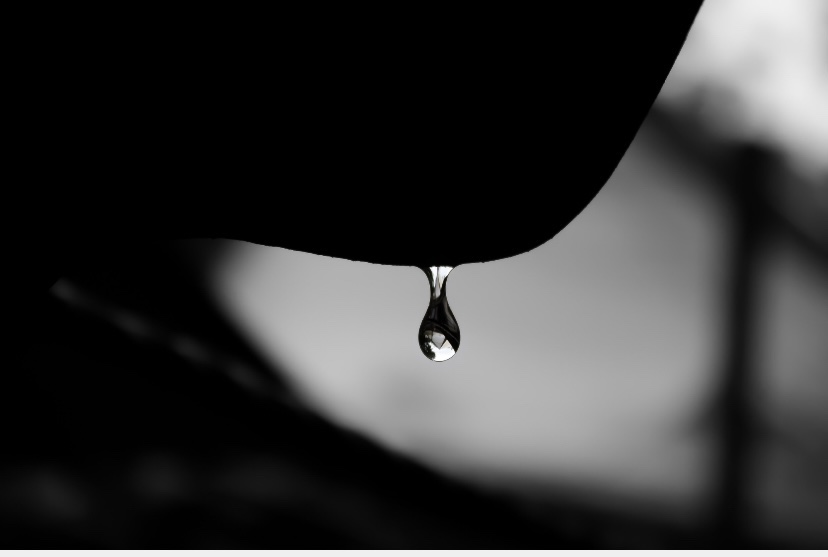
The many reactions that last week’s Shabbat Shalom post evoked is testimony to this—tears have the power to trigger human connection. And God uses tears to connect human experiences for healing and restoration.
Humans are the only species born totally incapable of helping ourselves. At birth and in the early stages of life we are vulnerable and physically unequipped to deal with anything on our own. Instead, we cry to signal our need for help.
As adults, we oft times face issues and problems that are beyond our ability to cope, at least temporarily. And, in those instances it’s as if we’re babies again. And, we cry. Emotional tears say: “I’m vulnerable. In this moment I’m beyond my own capacity to help myself. I need help. I need you.”
Tears have a voice.
The very essence of being human, is the ability to cry emotionally, and on the other hand being able to respond to the emotional tears of another.
In writing last week’s post with tears, though I didn’t say it, the tears actually spoke through. It triggered connection and generated the most deeply personal responses which came not only through the website but to me, personally, as SMSes and voice notes as well.
Before last week’s Shabbat Shalom post, I had written over 350 other posts on this blog. But never one written with tears.
So the reactions to this post made me realize that tears when shed from intense emotions, will not return empty, but will reap a harvest.
Tears have a harvest.

The Psalmist David says it this way—God collects our tears and bottles them.
David didn’t pull the concept of bottling tears from thin air. No. It was a tradition of his time and one which dates back to almost 3,000 years. A tear bottle, or a lachrymatory, (from the Latin lacrima, ‘tear’) is a small vessel in which mourners are said to have collected their tears.

Going back to the concept of God bottling our tears—as I mulled over all the responses from last week’s post, and contemplated on the reference to God bottling our tears, two object lessons stood out for me which I’d like to share with you today.
Lesson I: Tears cannot be collected from a distance.
God is deeply concerned about us. When we hurt, when we cry, He takes note of every hurt and collects and bottles every drop of tear. And I think it’s because our tears take our Father—our DaddyGod—back to the point of our deepest vulnerability. He sees us in a state of baby-like-ness which evokes that God-to-human connection, and He draws near.
Now, I don’t think God actually has a collection of bottles. But, what I think David was alluding to when he wrote this, was the remembrance of God. And in His recollection, God redistributes our tears to water the heart-soil of others who are hurting from a similar pain. And He then opens opportunities for us to share from our point of pain to the point of restoration in others.
Whether it be that He influences the mind of a blogger to write from her heart-pain or He directs a reader to share, starting a chain reaction of heart restoration—whatever it is, God uses tears to trigger the human-to-human connection.
Tears, in deed, cannot be collected from a distance.
Lesson II: Tears beget harvests.
The bottling process has one very clear objective. In the case of wine (which was the first example that came to mind), the objective of bottling is primarily to protect the wine from oxidation for as long as possible. In simple terms, oxidation is when oxygen combines with an element and changes its appearance.
The central theme in all the responses to last week’s Shabbat Shalom post was this: the message came at just the right time. Each person from a different experience, yet each connected to the post to the extent to which it spoke to their specific need.
No tear is lost. They are bottled—being protected by God from oxidation until it’s time for them to reap a harvest.
Every tear is a story—big, small, or in-between—that God takes note of and that He remembers. And He releases them on the wings of oxygen. Oxygen is the life-supporting component of air. When God releases your story, the process of oxidation changes the appearance of your story to mirror the need of the intended recipient. And in so doing, the tears of your one story can speak to the hurt of so many others. Why? Because tears beget harvests.
I believe that when tears “speak”, that’s God!
For us there is no way to number the myriad things that cause us to shed tears. Not so for God. He knows every cause and He is the cure.

Not only does God sing and dance over us in the upbeat times. But, because of the caring loving parent that He is, He keeps track of our downbeat times, and He finds creative ways to ensure our tears reap their harvest.
Reflection
Last week I wrote to you with tears from a “comma” moment—a pause at a juxtaposition between the angst I was feeling and the “but God” intervening that’s in the unfolding.
Having experienced how my tears spoke to and watered the heart-soul of so many others, today I write to you still from a “comma-but-God” life-place, but with these assurances from God:
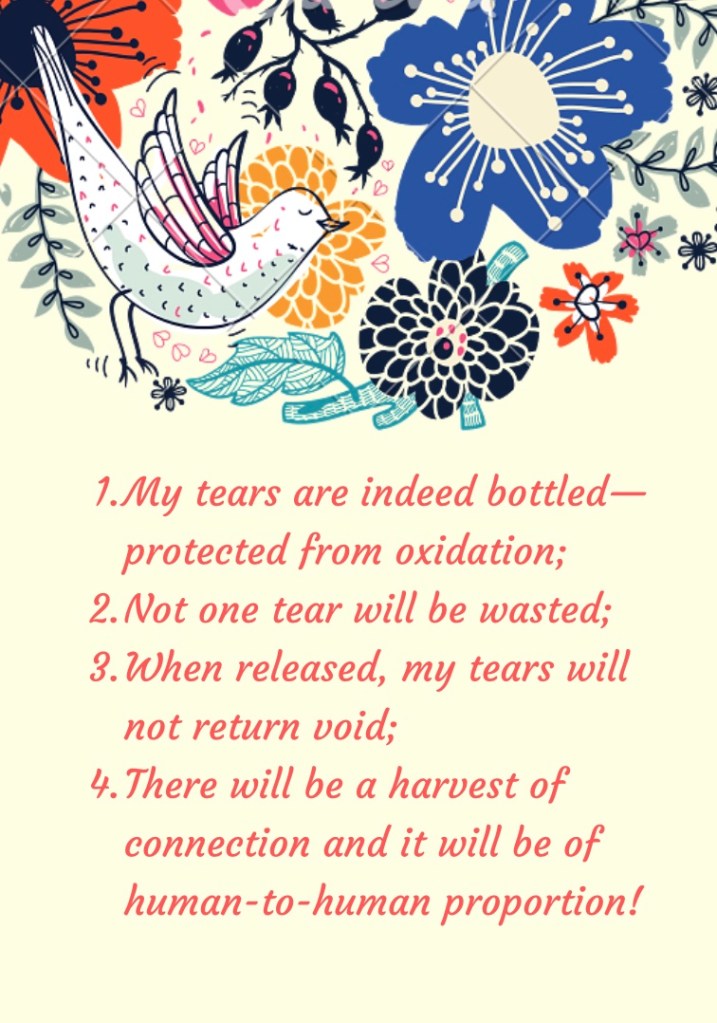
Shabbat Shalom. May you find your own assurances that God is intimately concerned with every aspect of your life. He’s equally involved in your joy-times as He is in your sorrow-times. It may be hard to see it sometimes, but trust that He extends His graciousness and compassion by intervening against the challenges of your life at just the right times.
When your tears speak from sorrow, hurt or pain—it doesn’t matter how big or small, how trivial or important—God listens and He wants to intervene. I hope you’ll let Him.
2021 All rights reserved ©createdbyDEEsign.com
Thank you for journeying along! First time to the site? Welcome!
You may start here👈 and for more subscribe to the blog here👈
In creative solidarity, Dee
 Poems & More