Beforeword: This Sabbath inspirational reflection highlights that living a life of faith is being comfortable in living in the space between what is and what could be.
Have you ever found yourself between a rock and a hard place? Feeling as if you’re trapped between two difficult circumstances with no obvious good option or feeling you must act under pressure and uncertainty?
There are moments in life that don’t come with certainty—only that questioning “maybe.”
He was there because an enemy nation had established a garrison blocking in Israel and holding them in fear. Jonathan took action unbeknownst to the King who had taken up a position of passivity under a pomegranate tree with his soldiers.
Because of the enemy’s blockade, the only options before Jonathan to break through were two cliffs. And as if that wasn’t challenging enough, one cliff face was thorny while the other was slippery.
On either side, there was a different kind of challenge. The path was not clear and there was no guaranteed outcome. Yet Jonathan took a decision to move forward anyway.
That’s the tension of a “maybe moment.”
Even when you’re walking in God’s will, it can still feel uncertain, unsteady and even sharp in some instances.
In the story of Jonathan there’s no record that God spoke beforehand to give reassurance or to lay out a roadmap. Yet Jonathan moved. Then God showed up.
Faith often lives in those “maybe” cliffs. Not the ones outside of us, but the ones within—fear, doubt, hesitation, the need for control.
Victory in those moments asks something uncomfortable of us: vulnerability. That is, the willingness to let go off of what hinders our faith so that we can step forward even without full clarity. To trust God when we have no proof or to move even when there are no guarantees.
It was after Jonathan moved that the way to victory was revealed.
That is where a life of faith is lived—in the space between what is and what could be.
Jonathan’s willingness to act, based on his trust in God, sparked the deliverance of his people.
So, if you find yourself in a “maybe”moment today—standing between slippery and thorny ground—don’t wait for certainty.
Trust God and step anyway.
Shabbat Shalom. May God’s peace be with you and guide you through thorny and slippery places.
Beforeword: I came across this young poet—Cherry Paul Ede’s—powerful rendition of Fragile Dogubo’s poem: “Gucci Cross” which I first posted in 2022. Reposting it now with the lyrics:
“I don’t know who needs to hear this, but Jesus was not crucified on a Gucci cross. He didn’t have on a crown of Versace thorns or Nike shoes on his feet when the nails pierced through. There was nothing bougie about Calvary. That old raggedy wooden cross wasn’t even befitting to hold the carpenter’s son, but there our God hung, held on by His love for us, by His love for all.
It wasn’t the red carpet affair for your favorite celebs. Matter of fact, the only paparazzi was an angry mob as a crowd of witnesses. Once upon a time, I thought the crucifixion was like the Grammys, an award show only for a self-righteous view. But the Bible didn’t mention an ovation – only wrongful accusation, hate speech and boos from fools. The King of Glory came through.
Jesus “felt every nail, felt every whiplash, every rib crack. It was for you that He embraced the pain.
Jesus was placed in the tomb, but then He showed up on the third day like, ‘I’m good, and you are, too’ — one with the Father, my blood makes you brand new. So what other proof do you need that God loves you?
So when the serpent comes to the ring – hissing, whispering deceitful accusations speaking in passive tongues. This is clapback season. Declare: fully my sins are forgiven.
I do not know who needs to hear this, but Jesus was not crucified on the Gucci cross. It doesn’t matter your age, gender, race or net worth – only that you have been made holy.”
I’m grateful for the old rugged cross and the blood that saves!
When a clay pot falls to the ground, breaking is inevitable.
The impact shatters what once was whole—jagged edges, scattered fragments, a loss of shape and function. Even if one dares to gather the pieces, attempts to put it back together often leave visible cracks—scars that speak louder than the former beauty. Scarred. Scarred for life. No longer fit for display. Discarding seems inevitable.
But what if that isn’t the end of the story?
Enter the ancient Japanese art of Kintsugi—the practice of repairing broken pottery with lacquer mixed with powdered gold.
Kintsugi doesn’t pretend the break never happened. It doesn’t hide the damage. Instead, it honors it, emphasizing the fractures, not to glorify the break, but to highlight the healing.
The gold-filled cracks become a testimony of endurance and transformation. The vessel, once discarded, is now more precious than before—made whole with beauty drawn from brokenness.
Psalm 147:3 says, “He heals the brokenhearted and binds up their wounds.”
God, the ultimate Kintsugi Artist, does not discard us when we break, when we shatter.
He does not hide our brokenness beneath shame or pretense. Instead, He gathers every piece—every break caused by sorrow or trauma—and binds them together with His grace, His mercy, His love. His healing doesn’t erase the wounds—it redeems them. The scars remain, but now they gleam with purpose.
Like Kintsugi, divine healing does not restore us to what we were before. It makes us stronger, more radiant, more whole in a new way—a living testimony of how God’s hands can turn brokenness into beauty.
So if you find yourself cracked, fragmented, or shattered, remember this: you are not ruined—you are ready. Ready to be remade by the One who sees your worth, even in pieces.
Hiraeth: “A deep homesickness; an intense form of longing or nostalgia; an unaccountable homesickness for a place you have never visited”.
Hiraeth!
Hiraeth! Something irretrievably lost, beckons
Beckons my soul from deep
Deep within, this unexplainable, unattainable longing
Longing—intense yearning, reminiscing for a place
A place I’ve never been but somehow
Somehow I know
I know it’s home
Home before I was born
Born into this displaced world
World of sickness and suffering and death
Death that’s foreign to my soul
Soul born to live
To live for forever
Forever, now irretrievably lost, so
So deep—it echoes, ricochets off the walls of my soul
My soul yearning for home, calling
Calling deep unto deep, the roar of Your waterfalls sweep
Sweep over me, the depth of my soul opens
Opens up and drinks, for I thirst
I thirst for Your presence Oh …
Oh God, like a deer panting
Panting for streams of waters I thirst
I thirst for You
You, Oh God, You are my home
After-word: How can you be homesick and nostalgic for a place you’ve never been? Because God built a desire for Himself in our souls—our very DNA yearns for Him. And the deep of our need inherently calls unto the deep of His fullness; and vice-a-versa, the deep of His fullness calls unto the deep of our need. Between our emptiness and God’s all-sufficiency there is a great divide and so deep calleth unto deep—our souls cry: hiraeth (Psalm 42:7).
Shabbat Shalom. May you find completeness in the deep mercy of God’s fullness.
When we are rested and spiritually renewed, we are more patient parents, more loving partners, more attentive friends, and overall kinder humans.
And, it’s possible to find this rest—through observing the weekly sabbath.
With sabbath, we get to pause and ground ourselves, to draw our families close, and to focus on what truly lasts—meaningful connection with each other and with our Creator. When we do this our souls get refreshed so we can share strength and love with those around us.
And this kind of rest isn’t just optional; it’s a core part of how we were designed. Yeah, sabbath rest is hardwired into our very DNA by the One who formed us.
What is sabbath?
When God made the Sabbath, He did so by ceasing His work. Sabbath was God’s crowning act of creation. Simply by resting, God established the very first Sabbath—a sacred pause that has echoed through every generation since. Sabbath is rest and fellowship and worship.
So how do we enjoy the sabbath?
First, throw out any ideas of sabbath being a checklist of rules or empty rituals. Think of it instead as a joyful gift—a glimpse of heaven on earth—crafted to bring us delight, restoration, and peace.
Second? Throw out any ideas of sabbath being a rigid duty. Rather think of it as a gracious invitation. An invitation to adopt a weekly rhythm that stands in stark contrast to the world’s restless striving, and instead aligns our hearts with the rest God lovingly planned for us.
As this sabbath begins, may you hear and accept the invitation to:
Find your rhythm.
Take time to step back from the chaos.
Replenish your spirit.
Spend meaningful time with your loved ones.
Spend meaningful time with yourself.
Remember the One who calls you to rest.
Spend meaningful time with God.
Shabbat shalom.
Sharing one of the best, modern day explanation of why practicing a weekly Sabbath is so good for us:
Have you turned on the news lately and felt your heart sink?
So many nations are caught in conflict. So much suffering.
Wars. Armed conflicts. Border shifts. Political power plays that dominate the global stage while diplomacy falters.
From Gaza to Ukraine, Israel to Iran, Haiti to Myanmar—the world trembles under the weight of violence, displacement, and fear.
We watch, we grieve, and sometimes we wonder if peace is even possible.
Our world is breathtaking in its design, created to be our home, a dwelling place, but now burdened by unrest and devastation.
And creation itself feels it.
It’s groaning —manifested in unpredictable weather patterns, unparalleled natural disasters.
The apostle Paul wrote about this. This is what he said:
“We know that the whole creation has been groaning as in the pains of childbirth [and not just in his time, but] right up to the present time.”
—Romans 8:22 (NIV)
Paul didn’t ignore the chaos. He traced it back to a deeper reality: that is—the world groans because things are not as God originally intended—caused by what the Bible defines as sin.
But thankfully Paul didn’t stop at groaning. He pointed to glory:
“But thank God! He gives us victory over sin and death through our Lord Jesus Christ.”
—1 Corinthians 15:57 (NLT)
Yes, the world groans—but it also waits.
Waits for redemption.
Waits for peace that no summit or ceasefire alone can secure.
Waits for the Prince of Peace who promises to make all things new.
As this Sabbath unfolds, may your soul find refuge in that promise.
May you find rest in the hope that even when nations shake, God’s love remains unshaken and unshakeable.
Before there was a tick or a tock, before there was time, before there was a present-past-future continuum, before there was coming or going, before there was where or when, before there was this or that, the ageless One who always IS–was.
Before there was a beginning, before there was “it” to create, before there was a first day, before the rising of the sun or the setting of the same. Before there was a moon illuminating the night skies, before there was a star in the cosmos’ replies, before there was anyone to acknowledge Him as God—God was.
The God referred to here is the omniscient One, the auspicious One, the everlasting One, the One who has all power. This all-sufficient God is known by many names. Some cultures refer to Him as the El Shaddai or the Adonai. Others know Him as the Prince of Peace. He is the everlasting One.
The One who sits on the circle of the earth so that heaven is His throne and earth His footstool (Isaiah 66:1). This God is omnipresent. He is not subject to dates, or space, or geographic locations. This God, who is high but sees below, is the One who rules and overrules. He is the One who sets up leaders and takes them down. He is the Ruler not elected nor selected, the One not put in, and therefore can’t be taken out. He is the unimpeachable One.
Such is the power and majesty of God. He is the subject of countless debates, the inspiration behind many of the world’s religions, and the source of strength and hope for billions of people worldwide. Whether we understand Him fully or not, one thing remains clear: before there was anything—God was.
And so, as we journey through life, we must remember the eternal nature of God. He was before all things and will continue to exist beyond all things. No matter what changes we may face in our lives, God remains constant—He was, He is, and He will always be.
Understanding this concept can give us a certain degree of comfort and security. Knowing that there is a higher power who has been there since the beginning of time, who is all-powerful, and who will continue to exist, is indeed reassuring. It can help us face the uncertainties of life, knowing that we are not alone, that there is a God who is in control.
The concept of God I’ve described in this blog is indeed profound and awe-inspiring. It encourages us to ponder upon the divine, to seek understanding, and to strive to connect with this eternal being.
Shabbat Shalom.
Whether or not you believe in God, I believe you’ll find contemplating His nature as the Eternal One to be a thought-provoking exercise. I pray it leads you to personal growth and spiritual development.
Afterword: this blog inspired the poem, “God Was”.
Question: How does one identify someone who is a Christian or Christ-like?
Answer: By their “fruit”/action.
Yes, just as you can identify a tree by its fruit, so you can identify people by their actions.
Saint Matthew 7:20, New Living Translation
A Christian is one whose life is governed by the Spirit of God.
In Galatians 5:22-23, the Bible talks about the “fruit of the Spirit,” which is inclusive of: love, joy, peace, patience, gentleness, faith, meekness, and self-control. Think of this “fruit” like an orange—it’s one fruit with many different parts.
Just like the pegs on an orange aren’t all the same size, our character traits, or “pegs,” can also vary.
As a believer in God, I’m given the “fruit” of the Holy Spirit to shape my character, but sometimes certain traits might be smaller. I might struggle with impatience, lack of self-control, or unkindness. However, I’m still a child of God—a Christian.
What this means is that I need help to strengthen these smaller “pegs.” I can’t do it alone; I need the Divine Gardner, God, to build me up. He reminds me that becoming more like Him is a daily journey, and it requires complete dependence on Him.
Yes, there will be times when I stumble, but God acknowledges this too. He says that a righteous person may fall seven times, but the key is that they rise again (Proverbs 24:16).
God is always there to pick us up and help us strengthen the underdeveloped traits of our character, just like a caring gardener tending to a tree.
Shabbat Shalom! May you find peace in knowing that falling short does not mean you’re no longer a child of God, it means He’s still working on your character to be like His. The Christian journey is a process, one that is guided by the Word of God as laid out in the Bible.
Selah! This may be the most mysterious word in the Bible. It appears at the end of verses primarily in the books of Psalms and Habakkuk. There’s no one definition but all may be summed up to be interpreted as: “stop and listen”, or “pause and consider”, or “contemplate, reflect and praise”. The operative word in these definitions—though only implicit—is silence.
Abba Father, I pause before You in the silence of quietness
I calm all around me and within that which would distract from the tranquility of peacefulness
I slow the racing of my thoughts and pause to dwell upon Your kindness
I settle my heart in contemplative wonder of creation’s vastness
Abba Father, I pause so I may feel You in the gentleness of the breeze
To reflect on You in the stillness of the billowing clouds
To behold Your greatness in the expanse of the oceans
And praise You from the gratefulness in my being
Abba Father, I pause in this moment, to embrace the silence
Like what you see? To never miss a post click HERE👈 to subscribe & follow the blog. I love hearing from you, so remember to “like” & comment. For more content start HERE👈
The place, Mount Moriah The time, the darkest of night The request was made The decision has been taken Separated, alone, he wrestled At dawn the journey began One heartbreaking step before the other Only begotten son in tow Three days he trods a beaten path up the mountain
The place, Mount Moriah The time, the darkest of night In the sheepfold, huddled together Except for one lamb Separated, alone, he wandered At dawn the journey began One unsure-footed step before the other Blindly he trods an unknown path, through thickets, up the mountain
Part II
The stones of the altar have been stacked The sticks and brambles have been laid The stony place of sacrifice cushioned, made ready to receive The sacrificial instrument has been sharpened The binding cords have been secured The fire stones have been selected The sacrifice has surrendered, submitted, bounded, mounted The knife raised in shaking hands in space suspended …
The thickets have grown thicker Sticks and brambles blurred his path Directed by a force unknown He stumbled forward up the backside of Moriah mountain To a place where the stones of an altar have been stacked Where a sacrifice has surrendered, submitted, bounded, mounted Where the sacrificial instrument raised in shaking hands, in space suspended Caught in the thicket, he’s suspended …
In that moment of dual suspension A voice thundered: “Touch not your only begotten son Look over yonder, there, see A sacrificial lamb caught in the thicket for thee”
Part III
The place, Mount Golgatha The time, the darkest of days The decision has been taken Separated, forsaken, alone He wrestled At dawn the journey began One back-breaking step before the other Sacrificial instrument in tow Dutifully he stumbled forward up Calvary’s mountain Where a cross has been stacked Where the sacrificial tools have been sharpened Where the sacrifice has surrendered, submitted, bounded, mounted To be nailed-up upon a cross, in space, He too, suspended …
When the voice of heaven thundered: “It is finished” And a terrified voice confessed: “Truly He was the only begotten Son of God” To be placed in a grave, three days enshroud
Part IV
Two only begotten sons But only One begotten Son of God
Two went up the mountain But only One went up Calvary’s Mountain
Two lambs But only One Lamb slain from the world’s foundation
Jesus—the Son of God, the Sacrificial Lamb
After-word: This epic poem is a parallelism of the Abrahamic and the Messianic sacrifice experiences. Abraham’s would-be sacrifice of Isaac was a foreshadow of the crucifixion of Christ. The sacrifice of Christ was a symbolism of high sabbaths (John 19:31)as the complete story of salvation—that is, the work of Christ beginning with His death on the cross as the Passover Lamb and to end at His second coming.
2023 All Rights Reserved
Like what you see? To never miss a post click HERE👈 to subscribe & follow the blog. I love hearing from you, so remember to “like” & comment. For more content start HERE👈
Before-word: Life is line upon line of experiences grouped together like stanzas, arranged like verses in a script // expressed with voice, diction, sound, rhythm, meter // understood through figures of speech, symbolism, allegory, imagery // structured in syntax and scheme // with strong, accurate, interesting words deliberately chosen to give meaning to life — LIFE LIVED IN POETRY.
From the source of spiritual cosmology Conceived in rhythmic movements Birthed through pulsing, pushing Punctuated by intermittent pain and joy Life
Life Giving meaning to the ineffable Obscured in allusions Developed in plots Composed in stanzas Live
Live In fragmented syntax of challenges and victories Linguistic coding lyrics of uninhibited joy with unimaginable sorrow Alliteration of life’s idioms of transformation Reciting poignant epigrams of wondrous elocution Live life
Live life In metres to know and be known Evolving through spiritual healing Resolutely declaimed: live in the everlasting now Climaxing in all that was created
Like what you see? To never miss a post click HERE👈 to subscribe & follow the blog. I love hearing from you, so remember to “like” & comment. For more content start HERE👈
And I will add unto thy days fifteen years; and I will deliver thee and this city out of the hand of the king of Assyria; and I will defend this city for mine own sake, and for my servant David’s sake.
This verse pertains to Hezekiah. Hezekiah was a king over ancient Israel. He was king David’s great-great- great-great-great-great-great-great-great-great-great-great grandson.
By the time Hezekiah assumed the throne as king, 13 kings had already reigned for a period of 294 years. In other words, David was dead for almost 300 years. However, when Hezekiah was sick unto death and the Assyrian army was about to invade his kingdom, he prayed to God for good health and deliverance. God responded by adding 15 additional healthy years to Hezekiah and gave him victory over the invading forces. [This whole saga can be read in the Bible, in the 20th chapter of the book of 2nd Kings.]
What resonated with me when I read this was God’s emphasis that He acted not only for His sake, BUT for David’s sake as well.
You may recall, I wrote a bit about David in a previous post and how God testified of David that his heart was like God’s heart. Yes, David had a special relationship with God. But this story goes beyond that to show that God not only treasures relationships, but that He recalls them and will even extend the benefits of those relationships to descendants for years to come.
So when I read the text that started this post I was absolutely fascinated! You may not see immediately why, so let me paint a picture of how my imagination envisioned what transpired when I read this text.
Go with me on your mind’s eye:
The prophet had just delivered the news to Hezekiah that he was about to die and departed from the bedroom of the King.
Hezekiah immediately falls prostrate at his bedside beseeching God for healing and deliverance. His prayer is one of billions ascending to the throne of God, but when Hezekiah’s prayer reached God’s ears it immediately triggered the memory of God who recalled David.
God recalled a man whose heart resembled His; a man who worshipped Him with such reckless abandon and intensity that there was leftover worship, praise, love and adoration stored up in heaven.
And immediately God pulled down on David’s blessings stored up for almost 300 years and credited it to his offspring removed by 12 generations!
How do I know it was immediate? Because so instant was the response, it came between the time the prophet left Hezekiah and reached the courtyard. God instructed him to return to Hezekiah with the counter message of good health and deliverance.
This ability to call down credit from blessings stored up in heaven by an ancestor is not just Bible-relevant.
Have you ever felt like you’re blessed in ways you don’t deserve, partly ‘cause you didn’t pray for it or request it but it seemed to land on you in just the right way at just the right time?! It happens so seamlessly that unless you’re cognizant of being in a state of gratitude, you may just miss it and instead chalk it up to ‘just life’.
For me, Hezekiah’s experience mirrors my mom and me. You see, long before I knew how to pray I had a prayer-warrior interceding on my behalf, storing up blessings in heavenly places that when needed God could redeem by claiming: “for the sake of Agnes, my servant”.
I never take it for granted when my mom says: “I’m praying for you” or “I pray for you every day” because I know—as confirmed by the Bible—God can move on my behalf based on the stored up prayers my mom deposited on my behalf. And not only my mom because I come from a lineage of people who love God and I believe the blessings they have stored up have been sustained over generations. For in the same way there are generational curses and traumas, there are generational blessings.
Shabbat Shalom! Don’t forget to remember—God doesn’t forget. And He’ll bestow blessings on you that’s been stored up at the request of others on your behalf.
Like what you see? To never miss a post click HERE👈 to subscribe & follow the blog. I love hearing from you, so remember to “like” & comment. For more content start HERE👈
Shabbat Shalom everyone. Last week started a “Dear God” post—“how do I know”. I think the first step to knowing is being in a frame of mind to listen and to hear and that comes from a state of gratitude. Today is another “Dear God” post and it’s a simple prayer of gratitude.
First, a throwback to the welcome post of this blog where I shared why this site is called “createdbydeesign”. I genuinely believe that EVERY creative insight and EVERY word I’ve strung together to form EVERY art that I have ever written or formed, have been offsprings of God’s creativity.
God is the source of all creativity and all art. And it’s from His creation and creative wonders that I draw inspiration.
I mean, it can’t get more obvious than ART being smack dab in the middle of eARTh.
God could have made earth black and white and we’d have never known. That would be truly bland. Can you imagine earth without art, that would just be “eh”.
Who but a genius artist could think of, design, then create extraordinary flowers that look exactly like animals, aliens, humans, fairies and other strange creatures.
Naked Man OrchidSwaddled BabiesHappy AlienIce Cream TulipMonkey Face OrchidLaughing Bumblebee OrchidDuck OrchidFlame LilyMoth OrchidDancing GirlsBallerina OrchidNature is indeed created-by-design!
Dear God.
Thank You for channeling in us a bit of Your poetic-artistic creativity. Thank You for the art unfolded in majestic mountains, breathtaking meadows, massive oceans, boundless skies and splendiferous birds, flowers and faunas. I am grateful.
Amen
Shabbat Shalom. May you find peace, rest and bliss in the creative wonders of nature that lead you to a state of gratitude.
Like what you see? To never miss a post click HERE👈 to subscribe & follow the blog. I love hearing from you, so remember to “like” & comment. For more content start HERE👈
Not every opportunity is a blessing. Not every open door is for us to walk through. Not every closed door is a missed opportunity.
When we come to know, understand and accept that our lives are not a game of luck and chances but rather the accumulation of decisions and choices, then we want to be careful, thoughtful and prayerful about the decisions and choices we make.
Amen!
Shabbat Shalom! May you be observant and discerning of the circumstances of your life, and be open to hear God’s leading and be willing to follow.
Like what you see? To never miss a post click HERE👈 to subscribe & follow the blog. I love hearing from you, so remember to “like” & comment. For more content start HERE👈
God initiated it! Shabbat Shalom: It’s Worship Time!
God initiated the Sabbath and He also initiated worship!
Sabbath is for rest and it’s also for worship. And worship takes place wherever, whenever and how-ever like while:
Watching the sun go down, but not before it colors the clouds an autumn orange and the river a golden glimmering tint.
Standing on the bank of the river transfixed, in awe of all creation bustling around me.
Hearing geese honking, hissing and cackling as they waddle up and down the shore, till they fly off to their resting place for the night. Or,
Seeing a father and son skipping stones on the river; and a small child running around his mom as the cutest little Pomeranian chases him, tugging excitedly against the restraint of his leash.
In these moments while I’m standing by the river experiencing life around me by observing laughter, familial chatter and play, and expressions of love it all directs my heart to God. In essence, God revealed Himself—and I worshipped.
The word “worship” itself is not in the Bible but there’s evidence of worship from Genesis through to Revelation. How do we know this? By knowing how worship is defined and seeking reference to that definition in the Bible.
Worship comes from two Old English words: weorth, which means “worth,” and scipe or ship, which means something like shape or quality such as the -ship in friendship that denotes the quality of being a friend. Worth-ship then is the quality of having worth or of being worthy.
On the banks of the river as I ascribed and attributed all that I observed to God and in saying/in knowing that God is worthy—in that moment, I worshipped. Or as the Bible puts it—I praised God.
Worship that expresses the heart
I didn’t speak. I didn’t lift my hands. I didn’t bow, prostrate myself or even close my eyes for there is a worship that expresses the heart.
There is also a worship that involves the mind. And a worship that involves the body. There is a worship that is giving praise upward. And a worship that is receiving instructions from above. And there a worship that carries out instructions in the world around us. And above all, God initiates it!
So, God initiates worship and He does this by first revealing Himself.
Let’s think about it. God is beyond our scope of understanding. So how can we know His worth much less declare it, unless He reveals Himself to us?!
It’s when I see God revealed in His awe-inspiring-make-everything-from-nothing GREATNESS, His all-might-almighty-to-save POWER, His don’t-want-anything-in-return-kind-o’ LOVE, His flawless-perfect CHARACTER—then, and only then, do I begin to understand His worthiness.
This stands to reason then that the better I know what God declares about Himself is the better that I can declare His worth and the better I can truly worship.
Worship is therefore my response to God’s initiation in revealing Himself and I declare Him worthy—I worship—with and from my entire being—my heart, my mind, my soul, my strength—and with and in sincerity.
This is how Jesus explains it. He says:
… true worshipers will worship the Father in spirit and truth, for they are the kind of worshipers the Father seeks. God is spirit, and His worshipers must worship in spirit and in truth.
John 4:23-24
In essence, what was Jesus was saying? The most essential attribute of worship is sincerity. The externals do not matter if the heart isn’t right. If our attitude is wrong then we can sing the right songs, quote the right scriptures, even hold our hands in just the right way but it would mean nothing to God. For if our heart isn’t in it, it isn’t really worship.
And so God reveals Himself first—for He always takes the first step—He’s the initiator-God. Then He goes seeking to find worshippers—those who respond to His revelation of Himself by declaring His worthiness.
There is so much to say about worship than just one post won’t do. So join me next week as we dive more into the wherever, whenever and how-ever of worship.
Shabbat Shalom. May you find the joy in knowing the God who ceaselessly reveals Himself to you, and may your response to His initiation of revelation be one of worship.
Did you know that there are only three recorded times in the Bible that God used His fingers to write?
Yes! Once when He wrote the Ten Commandments as standard of righteousness on two tablets of stone (Exodus 31:18). The second time was when He pronounced a message of judgment on King Belshazzar by writing on a wall (Daniel 5:5).
In both of these instances He wrote on concreted matter—stone and wall—signifying permanence.
The third time God wrote with His fingers is fascinating and quite intriguing to me and so it’s the focus of today’s Shabbat Shalom post.
Picture this—they were in the throes of lovemaking when community leaders broke into the privacy of the room. Astonished, they hastily separated their bodies from each other.
She was barely able to cover up her before they dragged her from the bed. As they pulled her from the room she grabbed her outerwear and clumsily covered her body. The last she saw of her lover, he was already dressed and melding into the crowd of angry men.
Hair unkempt. Clothing dangling untidily. Afraid to look up, she kept her head downcast, her eyes fixed on the sandaled-feet before her. Ears deafened by the angry mob.
This is one of the stories recorded in the Bible and referred to as the woman caught in the act of adultery (John 7:53-8:11). This story appears in only one of the four Gospels—the book of Saint John. Though there has been much debate about its authorship and its authenticity as part of the life story of Christ, I find it to be one of the best examples showing how grace and mercy coalesced with judgement and justice.
My intrigued with this story is first because it showed that Jesus was intolerant of ‘isms’ like male chauvinism and sexism. Being “caught in the act” implies that both the woman and the man were present. However, it was the woman alone who was brought before Jesus for condemnation even though the Law of Moses stipulated that both the man and the woman should be put to death (Leviticus 20:10).
The intent of these men therefore was not for true justice but rather to entrap Jesus—would He apply the law of Moses and called for her stoning and in so doing break the Roman law?
But, Jesus is such a smooth operator though. He doesn’t say one word out loud. Instead, He looks them knowingly in the eye, He stoops down to the ground and He began to speak with fingerprints in the sand.
Let’s hear the story through the woman’s voice as I captured it poetically:
The second thing that intrigued me about this story is the fact that Jesus wrote in the sand.
So, what is intriguing you may ask?
That, inscriptions in sand are not meant to be permanent.
This story outlines the beauty of salvation that not only will God show up in the messiness of our sins, but He’ll acknowledge them in sand—tiny particles that are easily scattered and dissipated. And just like when sand is scattered, so are our confessed sins removed and dispersed as far as the east is from the west (Psalm 103:12).
This story also reinforces that Jesus does not encourage sin, but that He’s equally and unequivocally clear in the depth of His love for sinners. This is why He first seeks to heal our hearts and the proclivities that drive us to sin, then He calls us to turn away from a life of sinning while He silences those who stand in judgement and condemnation.
Shabbat Shalom.
What accusers have you encountered? Who’ve marred your name or brought you shame? Who’ve dragged you before a disciplinary board? Expecting condemnation to settle the score? Can you see Jesus stooping, getting down to your level? Hear Him say: My child, go now, your sins are forgiven Then with rejoicing you too will say: No accusers Lord to see None left here but You and me
Today’s Shabbat Shalom post focuses on prayer and the rationale for prayer from my own experiences in praying.
The one thing most of us are taught as children is to pray. Who remembers:
Now I lay me down to sleep, I pray the Lord my soul to keep. If I should die before I wake, I pray the Lord my soul to take.
And before too long we recited that prayer each night before bed. Or other similar ritual prayers at the appropriate time, like before we eat.
For health and strength and daily food we praise thy name, Oh Lord.
Is prayer then a ritual, an obligation or an activity?
The more I think on prayer and why I pray, the more I’ve come to realize that my prayers are really but fragments of my heart.
Like when I awake from sleeping, open my eyes and I realize I’m alive—the fragment of gratitude from my heart escapes upon my lips: “thank you Father for waking me up”.
With all there is to say to God—
the thanksgiving, the praising, the adoration, the questioning …
the joy, the sorrow, the loss, the longing, the hurting …
the wonderings and what-ifs, the near-misses and could-have-been …
—my prayers are unending conversations taking place with
eyes-wide-open, eyes-tightly-closed …
standing-up, kneeling-down …
hands clasped or held high …
—my prayers are filled with emotions seen in
tears of joy or tears of sadness …
unending smiles and abandoned laughter …
sometimes loud and sometimes soft …
sometimes no words at all just groans and tears …
—my prayers transpire while I’m
folding laundry …
washing dishes …
walking …
jogging …
So, prayer then is not an activity or an obligation nor is it a ritual—it’s a way of being.
In prayer I find:
Surrender. To let go off of whatever is burdening me and this is spiritually, emotionally, mentally and physically healing and restorative.
Gratitude. To be in a state of thankfulness.
Reflection. To see myself as if looking in a mirror. For when I go before God, there’s no need to hide any part of me for He sees me in my all-ness. In prayer I safely bare my soul.
Relationship is the greatest benefit of praying. In being in constant communication with God, He becomes as real to me as my best-forever-friend.
So prayers are fragments of what my heart feels in that moment and I share it with my God.
There are things I’ve prayed for and the answers I want are not the ones I got and I’ve been hurt and disappointed. But after grappling with the “why” and the hurt and disappointment, I remember that I serve a God who loves and cares for me explicitly and that the objective of my prayer isn’t to change God. For as C.S. Lewis reminds us, prayer doesn’t change God. It changes me.
Shabbat Shalom. May the revelations of your heart be expressed in fragments of prayer.
It is no secret that I love poems. What is a poem? Is it words in painting, lyrics in songs, a medium for self-expression? Poem is far more than these. Poem is a “thing made”.
“Poem” comes from the Greek poíēma which means a “thing made”.
This begs the question: if poem is a thing made, what kind of thing is it?
The Bible has an answer!
God is the first poet! In the Bible, poíēma is used ONLY TWICE and both times in reference to the creative power of God.
First, when God created earth, referred to as “things that are made” in Romans 1:20. That phrase—“things that are made”—is translated from poíēma.
And second, in Ephesians 2:10 which speaks to the recreating of our hearts, referenced as “masterpiece”—and that word is also translated from poíēma.
So in essence, the thing made—poem—is God’s work of art both as Creator and Redeemer.I’d say poem is both the beginning of life—creation, and the re-creating of life—the redemption of humanity.
Going back to the initial question, if poem is a thing made, what kind of thing is it? The answer is in this poem:
From the source of spiritual cosmology Conceived in rhythmic movements Birthed through pulsing, pushing Punctuated by intermittent pain and joy Life Giving meaning to the ineffable Obscured in allusions Developed in plots Composed in stanzas Live In fragmented syntax of challenges and victories Linguistic coding lyrics of uninhibited joy with unimaginable sorrow Alliteration of life’s idioms of transformation Reciting poignant epigrams of wondrous elocution Live life In metres to know and be known Evolving through spiritual healing Resolutely declaimed: live in the everlasting now Climaxing in all that was created
Shabbat Shalom! God is the unparalleled Poet. And of all that He’s created, we are His workmanship, His masterpiece—we are His best poem.
Yes, I love David—the Psalmist, King of ancient Israel.
Yes, I love that David!
I grew to love David first because he was the “most real” person in the Bible to me—I could relate to him. Others messed up, but David’s life was the epitome of mess.
For example, David stole a man’s wife, Bathsheba. And more than that he had the man killed. This man, Uriah, was a loyal commanding soldier. After getting Uriah’s wife pregnant, David recalled Uriah from a war and tried to persuade him to sleep with his wife, Bathsheba, in order to secure a cover up. Not wanting to enjoy the pleasures of his wife while soldiers under his command were fighting on the battlefield, Uriah refused. So David gave Uriah a message to be delivered to the army general. The message was Uriah’s own death sentence—for him to be placed at the fiercest point of the battle—which Uriah himself unknowingly delivered. Now, that’s messed up!
But, the pattern of David’s life indicates that he learned lessons from his MESS. And from these MESSes he composed MESSages—most of them captured in the Book of Psalms in the Bible!
The second reason why I love David is because he was a connoisseur of words. In the composition of these messages in the Psalms, I admire the ways in which he creatively manipulated words to denote both their aesthetic and evocative meaning.
But above all that, my love for David stems from the reality that in spite of all the messes he got into, God could still testify that David was a man after his own heart (Acts 13:22).
And notice, God didn’t just say—speak, utter, articulate or express—it. God testified—He gave evidence, bore witness, swore, affirmed—it. Amazingly, God testified this not before David messed up, but after!
Why? To signify that having a heart like God’s heart does not mean a person will not make mistakes. Far from it. Rather, it’s about the way one responds when confronted with mistakes—that is, with humility and repentance.
For me, during my tumultuous-see-saw-like ways of journeying to know the heart of God and be in relationship with Him, I was very much encouraged by David.
Through David’s experiences I am reminded that God is not after perfection. He’s after my heart, and He’s always chasing after me. If He’s chasing, it means I’m running away from Him. In other words, I didn’t just come to God; I was drawn to Him by His everlasting love and loving kindness (Jeremiah 31:3). Yes, I submitted, but He first “drew me” into relationship with Him so my heart may, in time, look like His heart.
And what does such a heart look like?
It longs for the presence of God.
It desires an intimate fellowship with God.
It’s a heart that desires to know the ways of God and to walk in those ways.
It is willing to let go off of its own agenda/will for God’s good, pleasing and perfect will.
And, just like God testified of David, I now live in the anticipation of hearing God testify of me saying: “Dawn’s heart looks like My heart”. What a compliment!
Yeah, I wanna heart like God’s heart.
Shabbat Shalom. Maybe, like me, you’ve been on the run. The blessed assurance is that when you run, God chases. If you submit, God will abide and you’ll be changed. But it’s a change that you must want, it will not be forced upon you. God wants to testify of you, that you’re a man or a woman after His heart.
There are moments that are described as “happenstances” and others as “coincidences”, but I prefer to see these moments as God moments.
God moments mark the times when the ordinary of our lives is interrupted and interjected with the extraordinary.
God moments are moments that cannot be explained, or they are so perfectly orchestrated they are truly too good to be of man and must therefore be of God.
God moments come at whatever times—like punctuation marks in our lives—to separate the earthly from the heavenly, the mundane from the remarkable, and redirecting our reading of circumstances.
Like a (.) period: forcing us to stop and acknowledge that the normalcy and routine of our lives have been interrupted by the supernatural. Or,
Like a (,) comma: causing us to pause in contemplative wonderment at what has just transpired. Other times,
Like an (!) exclamation: that aha moment when we’re awed into speechlessness or wonderment. And then there are those times it’s
Like a (?) question mark: compelling us to query the depth and height of God’s love, measured in the magnitude of our capacity to stray in the face of His resolute determination to chase. And finally, God moments are
Like a (—) dash: betwixt and between the last dollar and an empty cupboard; an unexpected phone call from someone who says “you were on my mind” breaking through a lonely moment; or the simultaneous pairing of the perfect song with the bewilderment of your heart at just the moment you turn on the radio.
God moments happen wherever.
They may be while we are taking a walk, driving on the busy thoroughfares, relaxing, or flying in the boundless skies.
Wherever or whenever God moments occur, one thing is for certain, we are caught off guard.
But no, not so for God. These moments are all part of His design. And, He smiles a smile so big it lights up the circumstances of our lives as it directs or redirects us, and He relishes our astonishment at His interspersing humanity with snippets of the Divine.
God Shabbat. Yes, God rested. He showed us rest before he “commanded” it. In His rest there is power to be aware, to actively hope and to shift perspective to a new way of living.
And, He goes on to explain that He wants for us to work throughout the remaining 6 days, like He did when He created us, humans, and all that we’ve come to enjoy in the natural world around, above and beneath us. And when we’re complete with the tasks of those 6 days, then to rest purposefully like He did (Exodus 20:8-11).
When His creation was complete, God Shabbat/rested. In fact, the exact quote is God “rested the seventh day” (Exodus 20:11).
Not that He rested on the day, but that He rested theday.
In that kind of rest, there is power!
His work was complete, He paused to enjoy the beauty of His handiwork and to commune with His creation. I imagine Him chatting up a storm with Adam and Eve, exploring the bounties of this newly created world, and enjoying fellowship.
And this is why I love the Sabbath.
First, because it reminds me in a tangible way that God is creator.
Second, because I enjoy the freedom in focusing primarily on God and all He does for me. And,
Thirdly, because on a weekly basis I can rest with purpose—to actively and purposefully choose to remember, to take an active stance to refocus so I may better see and appreciate what God is doing in my life that might not be visible at first glance; and to recenter my life.
Throughout the week I’m pressed with work and though I spend time with God it’s not as dedicated as it is on Sabbath. And then, there’s just something about Sabbath rest.
Sabbath rest is more than refraining from work. It’s giving myself permission to enter into a mindset of completeness, to rest the day.
As my mom always tells me when I’m up late at night trying to meet one deadline or the other, “work is never done”, she’d say. But, on Sabbath, in coming to a sense of completeness—accepting that I’ve done all I can do for those 6 days—I shift my focus.
This means my focus is not on my goals, work deadlines, housework etc. All these are given a less important position in my mind and frees me up to simply enjoy what’s around me. To shift my focus to God and spending time with Him. It’s our weekly Daddy-daughter date. And I love meting up with my Daddy!
Shabbat Shalom. May you find the power in sabbath rest—a shift in perspective to a new way of being.
There are two stories in the Bible that intersect with such poignancy—it’s as if they collided—on the one hand quite moving and on the other rather painful.
You may be familiar with this duology—the colliding of two lives where 12 intersects: a woman bleeding for 12 years and a child dying at 12 years.
This woman was bleeding for 12 years. We don’t know her name. In fact, she’s named in the Bible by her condition—“the woman with the issue of blood”. According to Mosaic Law, she was considered ceremonially unclean because of the incessant bleeding and therefore should not touch or be touched. This also meant that she was not able to worship at the Temple. [Leviticus 20:19-31]
This left her a social pariah of sorts—cast out from home and society, rejected, excluded, looked down upon, ignored—she hadn’t been touched in over 4,380 days. She didn’t belong. There was no one seeking help for her. Desperate to be brought back into the normalcy of society, she took matters into her own hands, spent all of her resources on physicians, but none could help her.
By the time Jesus showed up in her story her back was up against the proverbial wall. She was desperate. But she was courageous. It’s now or never. It’s faith or fear. It’s live or die for in Judaism, menstrual blood was seen as life lost, akin to death.
***
Over time snippets of news came her way—she heard about the miracles of Jesus. She heard He was in town. She had a made-up mind and a strong-determined faith that if she could but touch the hem His garment—not Him, but His garment, not just His garment, but the hem—she’d be made whole.
But why the hem of His garment? Why so specific and intentional? What did this woman know?
Most scholars agree that the “hem” or “fringe” of His garment refers to the tzitzit or tassels worn by observant Jews. The tzitzit are specially knotted ritual fringes attached to the four corners of the tallit (prayer shawl) and tallit katan (everyday undergarment). The four fringes were designed to help Israel remember their covenants with God.
And that’s what she knew. If she could but touch the tzitzit she would connect to the covenant of God to His people. She would connect to heaven. So strong was this conviction that when she touched the tzitzit, power so intense left the body of Jesus, disrupted heaven, released instantaneous healing, jolted Jesus to a halt and from His mouth the words exclaimed: “Who touched my tzitzit!?”
***
When she showed up in Jesus’ story, He was on His way to see about a 12 year old girl who was very sick to the point of death. We don’t know her name either. The Bible named her by her belonging—she was Jairus’ daughter. Her father was wealthy and renown in society. She was still under the authority of her father. She had someone advocating and seeking help for her.
Being an only-child (of sorts) Himself, and also face-to-face with His own impending death, I believe this made Jesus even more resolute in His commitment to help the child.
But, when power left His body, everything stopped!
He stopped moving.
The crowd stopped pressing.
Blood stopped flowing.
And, in the time He sought to identify the one who touched Him with such heaven-released-power faith, life stops flowing—Jairus’ daughter dies.
***
In the stillness of the moment, a woman disentangles herself from the crowd to own the touch.
You see, in times past Jesus initiated touch and people were healed. However, in this case she touched.
She reversed the transmittal of power, she took it!
Servants of Jairus disrupted the silence with a pronouncement on the other daughter—she is now dead!
For 12 years this woman was losing her life-source. Her faith-action caused Jesus to stop, and in so doing the life of a 12-year-old girl ebbed away.
Life met death.
The twelve-years-life/twelve-years-death anomaly played over and over in my mind until I caught a glimpse of what God’s heart was communicating to mine. It was in this one word:
daughter.
Daughter. Be still my heart. For I imagine Jesus looking her square in the eyes—something no one has done for 12 years, and certainly not her own father—and He calls her “daughter”! He gives her belonging.
This was the ONLY time recorded in all of scripture where Jesus bestowed this endearing term—daughter—on any woman.
Her touch healed her body but His PDA (public display of affection) healed her heart. Restored completely. Made whole.
Going back to Jairus’ daughter, when Jesus eventually showed up in the little girl’s story, He also restored her life.
This is the tale of two daughters restored, it’s fitting on the eve of Mother’s Day.
One daughter had an advocate-father fighting for her life. One daughter had a redeeming-Father reclaiming her life. But both daughters had a healing-Father who saved their lives and made them whole physically and emotionally.
Shabbat Shalom. Today, on the eve of Mother’s Day, I speak to women. My sisters, know this:
Though in many ways society seeks to devalue us because we are women, God is the defender of the downtrodden, the outcasts, the misfits. He’s advocate for the voiceless. He brings life to dead things and dead promises. He restores.
His delay is not His denial or indifference to the issues we face; nor is His silence neglect. He is biding His time, patiently waiting for just the right moment to intercede. His time is not always our time—in fact it may never be our time—and while He tarries, the promise may die. But that moment of ‘dead promise’ will give God a picture-perfect platform upon which to interject most efficaciously and restore you to the beloved and elevated place of daughter.
Shabbat Shalom. And now, after last week’s break, we are back to the 6th of the 7 redemptive names of God—Jehovah Raah.
This name of God is derived from what may be one of the best- and most-known lines in the Bible—the Lord is my Shepherd—penned by David in the 23rd Psalm.
Raah comes from the Hebraic word , Rô’eh which is translated “shepherd”. The translation can be extended to mean “friend” or “companion” from the word, “rea”. This is indicative of the intimacy God desires between Himself and His people.
In reading this Psalm I experienced a aha moment when I came face-to-face with the realization that whatever I believe God is, then I must believe in myself relative to the extent of that attribute. For instance, if I say He is my “Shepherd”; then, I must be assured that I am His “sheep” and to live in that assurance.
I was curious as to why David wrote this Psalm. The obvious reason is that David tended sheep so it makes good sense for him to use the analogy of sheep and shepherd. However, in researching the characteristics of a sheep, I saw clearly why this inspired David’s 23rd Psalm and also why God likened humanity to sheep (Isaiah 53:6).
In all that I learned about sheep, the most intriguing finding was this—a sheep can get stuck on its back. The term for this is “cast”. When this happens the sheep cannot right itself and could starve to death or become easy prey if not righted again. It’s no wonder sheep are so dependent on the shepherd.
Have you ever been “cast” down, in a rut or at a loss at wit’s-end crossroads and there is nothing you can do to right yourself?
I have. And, it was in one of these moments when God invited me to act on my faith in believing He is my Shepherd and as such to live in the assurance that I am His “sheep”.
It is in seeing myself as a “cast sheep” and being confident in the assurance that God is my “Shepherd”, and that He has the ability to right me that “A Sheep’s Look at the Shepherd’s Psalm” was conceptualized.
See you next week as we conclude this series, “What In God’s Name” with a look at the 7th redemptive names of God—Jehovah Shammah—the God who is There/Here.
We’re now at the midway point of this journey through the 7 redemptive names of God with Jehovah Tsidkenu.
The backstory of this name is different from the three we looked at previously. It’s ushered into the biblical narrative at a time when the children of ancient Israel were again in captivity and the promise of redemption came through a prophecy given to Jeremiah. And therein lies the name.
Behold, the days come, saith the LORD, that I will raise unto David a righteous Branch, and a King shall reign and prosper … and this is his name whereby he shall be called, the Lord Our Righteousness.
Jeremiah 23:5-6
Let’s start by considering the Hebraic root from which Jehovah-Tsidkenu draws its meaning—“tsedek.” From “tsedek” comes words such as “right”, “righteous”, “just”, “justify”, and “declare innocent”.
When coupled with the name “Jehovah,” it means that all God does is ever and only righteous and that He is the sole source of all that is righteous and good. And because His names are about the revelation of Himself to us, this name—Jehovah Tsidkenu—is to help us understand why He is our righteousness and why our own righteousness won’t do.
So, first, what is righteousness?
From human standards, righteousness is the quality of being morally true or justifiable. And it’s justification is aligned to the conformity of behavior regulated by laws or statues which, as we’ve seen in recent times, can be countermanded and superseded by “alternative truths”.
Whereas from a spiritual perspective, there’s a deeper meaning of righteousness that shifts the focus from human to be God-centric. That is, to be right in the eyes of God in our conscience (attitude), character (nature), and conduct (actions) based on God’s law. And most importantly, righteousness is the God-given quality imputed to us when we believe in Jesus.
Imputed! Whatdoes this mean?
When we believe in Christ, an amazing thing happens. The merit and worthiness of Christ’s blood takes away our sin and condemnation, and the merit and worthiness of His obedience is imputed to us for righteousness.
This means, when God looks at us it’s just as He sees Christ—as though Christ’s life is ours. And we are accepted, blessed, and rewarded as though all that Christ did was done by us—that is, those who believe in Him and accept His grace gift. This goes back to the principles of free will and “if-then. In this case, God initiates, offering His righteousness, IF we chose to accept and obey His commandments, statutes, and laws, THEN He fulfills.
This week, my brother shared this meme in our group chat that is quite fitting. It reads:
It made me chuckle but more so it caused me to think more about the specificity of imputation.
Adam represented all humanity; therefore when he sinned, we sinned representatively in him, and what he did was imputed to us.
Like the meme you may say I never agreed to the imputation. Indeed you didn’t. But, have you ever tried to do good and despite your best efforts evil some how shows up? You didn’t choose but by virtue of representation the evil that started in Adam shows up in the midst of your trying to do good.
And, we’re not the only ones to struggle with this. Paul, to whom a significant portion of the Bible is attributed, cried out in desperation “oh wretched man that I am” in realizing that sin dwells in him, thwarting his every effort to do good. “Who will deliver me”, he furthered beseeched. Then in gratitude acknowledged that in Jesus Christ is the antidote—the Lord our Righteousness. He said:
… not having mine own righteousness, … but that which is through the faith of Christ, the righteousness which is of God by faith:”
Philippians 3:9 KJV
The STANDOUTPOINT is this: It is by representation that we fell, and it is by the representative system that we rise.
This was the “it” that Abraham saw and it’s no wonder he rejoiced (we spoke on this in the last post👈).
Through Adam’s sin we were condemned to eternal death. However, through Jesus’ sacrifice the amazing and mysterious transfer took place:
Jesus was made to be the sin offering for humanity in order that we might become the righteousness of God in Him (2 Corinthians 5:21) and have access to eternal life.
But, because we are created with free will, we have to choose this gift of righteousness.
That was a humongous gamble to take wouldn’t you say? God knew our beginning, our in-between and our end yet Jesus became sin for us on the off-chance that we would accept the sacrifice and become God’s righteousness.
Shabbat Shalom
May you choose God and come to know Him as the God of our righteousness. As we journey to know Him, we may miss the mark from time to time. But, if we remain faithful in seeking after Him, in time our hearts will line up to His. And without even realizing the process, one day we’ll look at ourselves and ask: “When did I stop doing this thing and that thing?” That is when we’ll know and fully understand that we are now established in the righteousness of God.
This is part of a series of posts, “What in God’s Name”, exploring the 7 redemptive names of God. See you next week for Jehovah Nissi—the God who is our Banner.
But before we go I’d like to share another of my favorite songs—this one sung by Chris Brown about the power of the blood of Jesus to make him/us free to overcome sin. I leave you with his testimony song, “Mercy”.
Shabbat Shalom. This is part 2 of Jehovah Jireh. Part I is available here👈. Let’s get right into it.
… Abraham called the name of the place, The-Lord-Will-Provide; as it is said to this day, “In the Mount of the Lord it shall be provided.”
Genesis 22:14 NKJV
In part 1 we focused on the first part of Abraham’s declaration of this name of God—The Lord Will Provide, which in Hebrew is Jehovah Jireh. This post will be about the second part of the verse—“in the Mount of the Lord it shall be provided”—looking at which “mount” and what is the “it” to be provided.
As I’ve been doing with these explorations of God’s names, we’ll start with the backstory and apply relevance to our lives in the now.
This backstory of the “it” goes way back to the beginning!
You see, long before God made the covenant with Abraham, he first made it with Eve and Adam. God created humans with free will and the ability to use that free will to have a relationship with Him. When Eve and Adam succumbed to the devil’s temptation and deception, they went against what God commanded. In other words, they sinned as sin is the transgression of God’s law. (1 John 3:4) And that severed their relationship with God.
In fact, their very first act was to hide, to separate themselves from God. And God’s very first act was to seek. And He’s been on a seeking or grace mission ever since.
God covenanted with Eve and Adam that theirs and all humanity’s relationship with Him would be restored, bringing them again into harmony with divine will to enable them to obey God’s law. So He gave them this promise of grace which was also a direct rebuke to the devil while also putting the devil on notice.
This was God’s promise:
I will put enmity between thee and the woman, and between thy seed and her seed; it shall bruise thy head, and thou shalt bruise his heel.
Genesis 3:15
Time won’t allow for an in-depth review of this verse, but suffice it to say it was the Bible’s first mention of the covenant of grace that promised a Savior to enable humans to obey God’s law. And that the ratification would be through a sacrifice thus pointing to Jesus Christ who was to come in the fullness of time. In the interim a sacrificial system was put in place as a substitute.
Now we get to Abraham. By the time Abraham was born, just over 2,000 years later, what was started by Eve and Adam had proliferated widely and sin had taken over the hearts of the people so much so they had mostly forgotten the ways and law of God.
Abraham’s dad, for example, had forgotten the command to worship no other gods and was steeped in idolatry. But not Abraham. Abraham revered God. Unlike Eve and Adam who hid from God, when God called Abraham his response was: “Here I am”! (Genesis 22:1)
How did Abraham stay faithful to a God he’d not seen his father worship?
Back then, the ways of God—his laws/commandments—were passed on from one generation to the other through their oral traditions. So it’s quite plausible that Abraham heard some things. The point is, we don’t know what knowledge he had about the true God. But, what we do know is when God spoke to him about the promise of a Savior, in faith, Abraham believed.
In fact, Jesus Himself confirmed this. Jesus said,
… Abraham rejoiced as he looked forward to my coming. He saw it and was glad.
What Jesus was saying was this: when God interrupted the sacrifice of Isaac on Mount Moriah and provided a substitute ram, Abraham saw not only a provision for the immediate sacrifice but through faith he saw all the way to the provision of the ultimate sacrifice through Jesus.
So when Abraham followed his declaration of “Jehovah Jireh” with “in the Mount of the Lord it shall be provided”, he was referring to Golgotha—the place where Jesus was crucified, which many scholars believe to be the same as Moriah. And the “it” he referred to was the redemption from sin through the sacrificial gift of Jesus.
From “Old” to “New” Covenant
Now, let’s look specifically at this covenant that God made with Abraham. First, it’s important to point out that it was actually a renewal of the covenant first made to Eve and Adam. And what is that? The “it”—the redemption of all humanity through a Savior on condition of obedience through faith in Christ. This was the covenant renewed to Abraham, with a promise, and he accepted by faith that the Savior to fulfill or ratify the covenant would come through his lineage.
The actual wording of the promise to Abraham is this:
… in thee shall all families of the earth be blessed.
Genesis 12:3 KJV
Or as Adam Clarke expounded: “In thy posterity, in the Messiah, who shall spring from thee, shall all families of the earth be blessed”. We also saw that in last week’s post in the lineage litany.
When Jesus died He ratified the covenant and so it’s referred to as “new” but in essence it’s always been the “it”—theplan for bringing humanity back in relationship with God or into harmony with the divine will enabling them to obey God’s law.
God’s law has always been the basis of this covenant because without it there could be no sin.
I could go on and on because there’s so much to say; but let me wrap this up with three application points.
Application Point I: We hide, God seeks.
The theme of the everlasting promise told throughout the ages and that will continue to the end of time is this: God is on a ceaseless quest to draw your heart and mine back to Him. So much so God, as the Son, came to earth to die in order to redeem estranged sinners and to bring us back into an authentic personal relationship with Himself. I am so happy I accepted His call.
Is He calling you? If you are hiding God is seeking—He wants to be in relationship with you.
Application Point II: Don’t get it twisted, the blessing is not the promise.
The promise of the covenant renewed to Abraham came with blessings: land, a place to live, a son and numerous offspring. However, Abraham knew to distinguish between the blessing (his son) and the promise (God’s Son, our Savior). He was willing to give up his blessing in order to gain the promise and not just for himself but for “all families of the earth”. That includes you and I.
Are we holding on so tightly to something or someone God blessed us with when He wants to give us so much more if we let go—the promise, HIMSELF?!
Application Point III: In covenantal matters with God, a child of God canalways expect reciprocity.
In the last post I described the promises between God and His children as conditional based on a sequence of “if-then” actions. Though the covenant was ratified on Calvary through Jesus, the aim of the covenant is eternal—that “ALL families of the earth be blessed”. God is immutable. He says what He means and means what He says. So “all families” means all—those from Adam’s days, those from Abraham’s days, those today and those to come.
And, the “if-then” actions also remain—God initiates with a promise, IF we accept and obey His commandments, statutes, and laws, THEN He fulfills. And, we see this with Abraham. Of Abraham God said, he “obeyed My voice, and kept My charge, My commandments, My statutes, and My laws”. (Genesis 26:5) This will be the same measure for those who choose to accept the grace covenant and be God’s children.
Why? Because the covenant made between God and His people (first to Adam and Eve and renewed through Abraham) was based on a relationship of commitment and obedience.
Shabbat Shalom
We see that God reveals Himself as provider of both our physical and spiritual needs. He meets the physical needs of all humanity—as the Bible puts it, giving sunshine and rain to all regardless of their disposition toward God. (Matthew 5:45). Through the death of Jesus, He’s also made provision to meet the spiritual needs of all, but that must be a matter of choice on our part.
Personally, I cannot comprehend how Jesus could leave His sovereign position on the eternal throne of Deity to come to earth and die in order to redeem me. It’s mind boggling, to say the least. So I live in gratitude everyday because of this grace-gift.
You’ll recall last post I said Abraham’s call to sacrifice his son made me cringe. Yes, at the surface level the story is indeed cringe-worthy. But, when you go deeper, it’s a beautiful foreshadowing story of past-present-future colliding as I shared through an epic poem in a previous post: The Sacrifice.👈
May you come to know and choose the God who provides now and in the future for all your needs including the redemption from sin.
This is part of a series of posts, “What in God’s Name”, exploring the 7 redemptive names of God. See you next week for Jehovah Tsidkenu—the God who is our Righteousness.
Shabbat Shalom. Welcome to the third in the series on the 7 redemptive names of God—Jehovah-Jireh, the God who provides.
The first time we come across this name of God is in the story of Abraham as he carried out a rather strange command from God. At the end of that experience,
… Abraham called the name of the place, The-Lord-Will-Provide; as it is said to this day, “In the Mount of the Lord it shall be provided.”
Genesis 22:14 NKJV
There is much to unpack from this verse. So, for today’s post I’ll focus on the first part of the verse: “Abraham called the name of the place, The-Lord-Will-Provide”. And, next week we’ll look at the other part: “In the Mount of the Lord it shall be provided.”
Let’s go back, back to the backstory.
Here we see Abraham and Sarah well on in years, in their nineties to be exact and far beyond childbearing. Yet this is when the promised son, Isaac, was born. But before Isaac there was another son, Ishmael, borne to Abraham via Hagar, Sarah’s servant.
As inevitably happens when there is a “love” triangle, tension arose between Hagar and Sarah. Feeling unloved and mistreated, Hagar ran away. [The saga unfolds in Genesis 16.]
Pregnant and alone in the desert, feeling invisible, deserted and believing no one cared, that’s when a messenger from God comes to Hagar. He instructs her to return to Sarah, but not before assuring her that her descendants will be numerous. She was so buoyed up and overjoyed at the proclamation, this was her response:
“She gave this name to the Lord who spoke to her: ‘You are the God who sees me,’ for she said, ‘I have now seen the One who sees me.’” That is why the well was called Beer Lahai Roi”. [Beer Lahai Roi means well of the Living One who sees me.]
Thirteen years passed by and Sarah finally becomes pregnant and she gives birth to Isaac—the long awaited blessing of a son from whom “a great nation” would come. However, some thirteen or so years after the child was born God made a most unusual request of Abraham—he’s to sacrifice Isaac! What in God’s name!? God requesting a human sacrifice?!
I must admit, this is one of the stories in the Bible that causes me to cringe so much so it’s forced me to seek an understanding of it’s symbolic and foreshadowing qualities. (I’ll delve into that next week.)
No doubt the request was one that raised varying contradictions within Abraham on different fronts. Theologically—the sacrifice of humans was against what he knew of God. Relationally—he had to hide it from Sarah. And we know the negative effects of secrets on a marriage, don’t we?! Socially—with the death of his only heir, his bloodline would cease to exist and his social status would plummet. Emotionally—his faith contradicted his affections. His faith led him to believe God would resurrect Isaac (Hebrews 11: 17-19). But, no doubt the emotional toll was high because he actually went through all the actions to sacrifice his son to the point of raising the knife before God stopped him and provided a substitute in the form of a ram.
Going through this odyssey and its last-minute dramatic intercession by God, led Abraham to memorialize the place, Mount Moriah, with a symbolic name—The-Lord-Will-Provide from which is translated Jehovah-Jireh.
There are three points that stood out for me in the examination of this name of God that I’d like to share with you.
ONE: What we often deem as “mistakes” can be a part of God’s means to provide.
The root of Jireh is “to see”. The first time we see that name of God, “El Roi”, is with Hagar. (Genesis 16:13)
However, when compounded with Jehovah, Jireh means “to provide”.
So the name Jehovah Jireh connects both Hagar’s and Abraham’s experiences and encounters with God.
God not only sees us in the current state of our experiences, but into the future and He provides for both our immediate and future needs. For that’s what the verb “will” connotes—it is present and future tense.
TWO: Our act of letting go releases not only God’s provision, but enables God to know experientially how we feel about Him.
When God saw that Abraham would obey Him, even to the point of giving up what he held dearest, his only son, then God provided. You see, it’s an if-then relationship which God always initiates. He makes a request, if we comply then He will act, and His action is always a blessing.
After Abraham acted, God said something that is striking: “now I know that you fear me” (Genesis 22:12). It begs the question, if God knows all things, why did He say “now I know” after Abraham acted?
One of my favorite Bible teachers, Dr Tony Evans in his book, The Power of God’s Names, gave me a new insight into this verse. While God knows all things—actual and potential—He doesn’t necessarily know everything experientially. In essence, God was saying to Abraham, now I have experienced that you revere Me.
This is why the Bible says God inhabits our praise. According to Strong’s Concordance, inhabits is from the Hebraic word yashab, which means to “sit”, “remain”, or “dwell.” Think about it, the omnipresent God who can be everywhere at the same time sits/remains/dwells in a moment of time in order to experience our praise. From our praise it’s as if He responds with: now I know experientially that you love and adore Me, I will in turn reveal more of myself to you.
And, THREE: When God requests us to do something, delayed obedience and action is as good as disobedience. But when we obey, He blesses us abundantly above what we can even imagine.
When God spoke to Abraham about Isaac he obeyed and acted right away. God blessed him abundantly above just a promised son but that from his lineage the ultimate promised Son, Jesus Christ, would come.
How do we know this? Well, right after this traumatic and dramatic experience of the almost sacrifice, the Bible record goes straight into what reads like an anticlimax—it outlines Abraham’s lineage. “And … begat …” till we get to “And Bethuel begat Rebekah….” (Genesis 22:23 KJV).
And who’s Rebecca? She would become the beloved wife of Isaac.
And the lineage litany continues: “Abraham begat Isaac; and Isaac begat …” till we get to “And Jacob begat Joseph the husband of Mary, of whom was born Jesus, who is called Christ.” (Matthew 1:16 KJV) Not an anticlimax after all uh?!
Shabbat Shalom
May you come to know and experience Jehovah Jireh—the God who sees us, and uses what may seem like a mistake to bless us. Jehovah Jireh—the God who provides in the immediacy of our needs and those in the future. Jehovah Jireh—the God who enters into our experiences so much so He came as human to live the human experience from conception to birth to death.
Is it possible that our needs aren’t fully met because we are holding on so tightly to the small stuff (a son, in the case of Abraham) when God wants to bless us with the huge stuff (like a whole nation from which salvation to the entire world would come)?!
It’s depicted so fittingly in this cartoon. A little girl holds on to a tiny teddy bear which she clearly loves and can’t imagine parting with it while God is cajoling her to trust Him and let it go for He has something better in store. Do you think she did? Would you?
God is asking us: would you trust Me enough to surrender, to let go off of it/her/him/them/whatever so I may provide what you really need?!
The lyrics of one of my all-time favorite songs, aptly entitled “Jireh” (by Elevation Worship and Maverick City Music) is too perfectly aligned not to share it here. Enjoy!
See you next week for Part II of Jehovah Jireh, the God who provides.
Shabbat Shalom. Welcome to today’s exploration of the God who heals—Jehovah Rapha.
So, I’ll start by laying out the backstory then we’ll explore healing through poetry.
The very first time we come across this attribute of God is exactly 3 days after ancient Israel left the bondage of Egypt and were en route to the freedom land God promised them. Along the way they became thirsty and the first body of water they came upon turned out to be undrinkable. They murmured against their leader, Moses, he in turn cried out to God who led him to a tree that had transforming power. A branch from that tree dropped in the water miraculously turned it from bitter and undrinkable to sweet.
Just over a week prior the people had witnessed 10 different plagues fall all over Egypt as their leader, the Pharaoh, refused to submit to the authority of God as Almighty. The Pharaoh actually deemed himself to be god. God used the miracle of the water as a teachable moment and in so doing personally introduced Himself as healer. Referencing the plight of the Egyptians, this was His assurance to ancient Israel:
If you diligently heed the voice of the LORD your God and do what is right in His sight, give ear to His commandments and keep all His statues, I will put none of the diseases on you which I have brought on the Egyptians. For I am the LORD who HEALS you.
That assurance extends to this time and to us as well. And God knows, we sure are in need of healing.
The dictionary definition of healing is “the process of making or becoming sound or healthy again”. However, God as Healer/Jehovah Rapha takes healing a lot further. The Hebraic translation of Rapha means not only to “heal” but to “restore”, “cure” or “make whole”.
Now to poetry. One of the reasons why I like poetry as a form of creative expression is the therapeutic potential poems hold to heal.
In traumatic situations for instance, or even for the hardest things to talk about, relief is found when we can find the words to articulate what is being felt. And for this articulation, poetry has often been the ‘go to’ type of expressive writing, including for me. Why? Because in the expression of my own voicethrough composing a poetic piece, I feel its therapeutic power including for healing if that’s what is needed at the time.
In preparing for this post, I made a discovery. In Chinese, the word poem is composed of two characters — one meaning “word” and the other “temple”. And it’s no wonder that poetry lends itself so well to healing as it is the combination of the sacred and the word.
Now, I know that the Chinese character means just that, word—an element of speech or writing, but I’d like to extend that to the Biblical reference of word:
The Word [God] became flesh and made His dwelling among us.
And, this proposition of God as word is not at all farfetched because we also know that God’s healing or redemptive work comes from the Greek word “poiēma” (Ephesians 2:10) from which poem is derived. [You may read more on this here👈.]
The healing attribute of God is not only for restoration and cure, but it’s also for wholeness including from the effects of sin. However, God bringing us back to wholeness does not in any way exclude any part of our history or experiences; rather, it builds on it.
The Bible likens the process of God restoring humanity to a potter restoring clayware that’s been broken.
We know that broken clayware is often discarded or if efforts are made to put it back together, the cracks will be evident and the original beauty is therefore lost. It’s now scarred. No longer fit for display. But, in the Potter’s hand a broken pot, a.k.a. a broken human, restored does not mean unmarred—our history and experiences remain but they don’t dictate our lives.
Rather, it’s like God applying the Japanese repair technique, kintsugi. He treats both our breakage and repair as part of our history and experiences, rather than something to disguise, making us His masterpiece still fit for display.
[kintsugi meaning “golden seams” or “golden repair”]
That is what God’s healing does, it makes us more beautiful for having been broken.
And now, a “temple word”/ poem:
Shabbat Shalom. I leave you with the assurance of the God who heals not only sickness and infirmity, but spiritual fatigue, mental affliction, emotional suffering, anxiety and worry. And, He’s a God who embraces your brokenness and flaws as beauty. Jehovah Rapha, the God who heals.
See you next week for an exploration of Jehovah Jireh, the God who provides.
In our exploration of Jehovah, the God who reveals Himself unceasingly, last week we looked at the attribute of Peace/Jehovah Shalom👈 click to read
Thank you for journeying along. First time to the site? Welcome! Feel free to “like” or drop a comment, I love hearing from you.
Shabbat Shalom. Welcome to the first in the series exploring the 7 redemptive qualities God reveals about Himself through His names. [You may read the introductory post here: What In God’s Name?! ]. And in keeping with the theme of this category of posts, we’ll start with the attribute:
Jehovah Shalom—the Lord is Peace.
I thought one way to move the flow of today’s narration creatively, would be to describe the Biblical dialogue and action that take place in the Book of Judges 6-8 through “acts” and “scenes” using “rewind” and “flash forward” to set the context. I laid out the context because I think it helps in understanding this attribute of God not only as it pertains to ancient Israel but to us in 2022 as well.
ACT I, Scene 1
It’s around 1184 BC. The curtain opens on Gideon in a winepress threshing wheat. What in God’s name?! Threshing wheat in a winepress?! If ever there was an action to exemplify an oxymoron, this is it.
Threshing involves tossing wheat in the air to allow the wind to carry away the shaft. For this reason it’s usually done in wide-open spaces. A winepress, on the other hand, is the complete opposite—it’s an enclosed space used for crushing grapes.
Clearly a winepress is not a place for threshing but that’s where we meet Gideon in this scene of the story of ancient Israel. Why is he threshing in a winepress? And, who is Gideon? And what does he have to do with this attribute of God?
Rewind
For this we rewind. It’s going on 40 years and ancient Israel is enjoying peace and prosperity. Then, once again they turned their backs on God as their leader. As a result they are now under the tyranny of yet another oppressive regime, this time the Midianites who for 7 years plundered and ravaged the land leaving them in an impoverished and destitute state.
Afraid and desperate, they are now hiding in mountain clefts, caves and strongholds. And only then did they call out to God. He heard their cries and graciously responds, for God is never far away. But when rejected, God says:
I will go and return to my place till they acknowledge their offence, and seek my face: in their affliction they will seek me early.
Hosea 5:15
You see, God will never impose His will on us, but He’ll always find means and ways to win our hearts back to Him. That’s been His quest ever since Eve and Adam broke relationship.
ACT I, Scene 2
A prophet steps on this scene. He reminds ancient Israel that the condition they’re in is as a result of their turning against God and not giving Him exclusive devotion as the one true God.
Once the message was delivered, in comes the rescuer—Gideon. He’s to condemn their idolatry (he tears down the altar to the god the people served). He’s to call them back to worshipping the one true God (when they wanted to make Gideon king, he reminded them that Jehovah—the God who reveals Himself unceasingly—is their King). And, he’s to free the people (he leads an army of only 300 to defeat the mighty Midianites).
ACT I, Scene 3
Who is Gideon?!
Flash forward
By the end of his life Gideon was recorded as the greatest judge of ancient Israel, a mighty warrior, a strong leader (Judges 7:17). And so Paul inducted him in the Biblical “Hall of Faith”. (Hebrews 11:32-34)
It’s necessary to start with who Gideon is at the latter days of his life because it reinforces that though God meets us at the point of our need, He speaks over us what we will become for God calls those things which are not as though they are (Romans 4:17). So, when God shows up through an angel in Gideon’s story, He spoke to the character of Gideon that we only come to see at the end of the story:
Mighty warrior [the angel said], the Lord is with you.
Judges 6:12
“Mighty warrior”?! Yet another oxymoronic twist in this story to show that in times of crisis God does big things in unlikely ways using unlikely heroes.
At the point in his life when the angel showed up Gideon is anything but mighty or a warrior. He’s timid and afraid—remember the angel finds him in a winepress, hiding to thresh. He was prone to self-doubt with a somewhat flimsy self-esteem—he thinks he’s the least of the least because of his lineage. And, he lacks confidence and faith—in fact, he puts God to the test, not once but three times! But, Gideon was deeply empathetic with the state of his nation. Could this be why, in spite of (or was it because of) his flaws and weaknesses, God chose him?
When Gideon finally realized that he was in conversation with God through an angel he was sore afraid. The angel quickly assured him with:
Peace! Do not be afraid.
Judges 6:26
And now we get to what Gideon has to do with this attribute of God: Gideon responds to the angel’s pronouncement by building an altar in worship to God and ascribed to it this attribute of God—peace.
Jehovah Shalom is translated “the Lord is Peace”.
God’s peace is not just an absence of noise or strife. God’s peace is wholeness and harmony with God, with oneself and with others; and it’s of completion and fulfillment. Jehovah Shalom is ever-present. Therefore, His peace is an assurance that while we face situations of conflict, crisis or distress, He is able to give us calm and strength because peace is who He is!
ACT II, Scene Now-to-the-end-of-Time
It’s 2022. The scene mirrors the time of Gideon except the invading force is unseen, a virus, but its impact is every bit as devastating. And we, as a people, in many ways mirror ancient Israel.
There is immense fear, anxiety, depression and many many deaths. Measures such as lockdown curfews, self-isolation, social distancing and quarantine have affected our overall physical, mental, spiritual and social wellbeing. It’s as if we too are in hiding. Even churches—the places where we’ve congregated to “meet” with God, like at an altar—have had to change their operating modalities.
But the mission has not changed. If anything there’s greater urgency to bring hope and light in these desperate times of fear and worry. There is still a call for Gideon-like empathetic leaders to seize this time to reintroduce God, the God of peace, to a world that in many ways has turned away from Him giving their love, life and devotion to other gods such as money, careers, lovers, drugs, and just “stuff”.
The theme of the everlasting story told throughout the ages and that will continue to the end of time is this: God is on a ceaseless quest to draw your heart and mine back to Him by revealing Himself. For at the end of the day all He wants is to be back in relationship with us.
May you find peace in the midst of our current global crisis, in hearing God’s assurance:
Be not afraid. I am your Johovah Shalom, I am your God of peace.
God proved Himself not once, but thrice to Gideon then used him—as timid and faithless as he was—to redeem an entire nation. Am I Gideon-like? Are you?
God is doing a “new thing” (Isaiah 43:19), do you perceive it? Like with Gideon, God will not only be patient with us but the hard work will remain His, He just needs willing hands and hearts to serve. For instance, He’s making ways in the desert-ness of our current experiences such as the proliferation across the internet and media platforms of the good news about a God who is our peace. And a God who has but one desire and that is to reveal who He is and redeem us back to Himself.
See you next week when we explore another redemptive quality of God that is most pertinent for this time—Jehovah Rapha, the God who heals.
And now I leave you with this fittingly-beautiful song, “Still/Peace”, by one of my favorite groups, Hillsong.
I’m sure by now you’ve all heard of flurona. Yes, the year had hardly begun before the rare double infection of COVID and the flu was making headlines around the world—flurona!? And my reaction was: “what in God’s name, we don’t need another thing to deal with right now?!”
So I thought the expression, “what in God’s name”, a fitting title.
When someone uses that expression it’s usually to emphasize how angry, annoyed, or how surprised they are. However, I wanna put a spin on it (as I’m sure you’d expect if you’ve been following these posts for a while). I’d like to re-craft the expression to focus on what is IN God’s name that can get us through tumultuous times that triggers “what in God’s name?!” type of reactions.
First to recognize is that God’s identity is expansive. It is so vast, one title or name or descriptor is not sufficient to reveal to us the different parts of His character. However, whether it’s a descriptor of God as the God of peace or the God who provides, one element of His name remains constant—that is, He is Jehovah. So, today the focus will be on Jehovah.
Jehovah is translated as “The Existing One” and “Lord”. The chief meaning of Jehovah is derived from the Hebrew word Havah meaning “to be” or “to exist.” It also suggests “to become” or more specifically “to become known”. [Blue Letter Bible] I especially like this translation—“to become known”—because it denotes a God who reveals Himself unceasingly.
Ever since the relationship between God/the creator and human/the created was severed (started way back by Eve and Adam), God has been on a mission to bring us/me back into relationship with Him. One of the ways He’s sought to do this is by revealing Himself to us.
Much like the nature of God that cannot be fully described in just one name, writing about it cannot be contained in only one post. So, the focus of this and the next few Shabbat Shalom posts will be on 7 of the names of God.
I chose these 7 names because they best describe the redemptive qualities God is revealing of Himself. Qualities that I think can help us discern the “new thing” God is doing to help us through these very specific times that we’re in.
These 7 names will be the focus of upcoming posts. However, as I was preparing this week’s post in reflecting on Jehovah, two lessons were revealed that I’d like to share with you in concluding.
Lesson 1: If I desire to reveal me to myself, then I must first come to know who God is.
And in so doing I’ll be enabled to talk to myself differently about who I understand God to be in relation to who I see myself to be in Him. In the process, like beholding a mirror, I will see a revelation of His nature reflected in me as I’m changing.
Until we see and know ourselves as God sees and knows us, we will forever be seeking to find our needs and desires in someone else who sadly cannot fulfill those needs or desires. Get to know the God who is revealing Himself unceasingly, Jehovah, in order to know you! Because if we are to overcome the challenges without we must first conquer the challenges within.
Lesson 2: A caution not to confuse faith with “toxic positivity” or humanistic endeavors.
When we’re up against challenges, it is okay to not be okay. But, what is not okay is to sit in fear. The opposite of fear is faith. Exercising faith in God and in the power of the redemptive attributes of His character as we face challenges—such as worry, sickness, lack, neglect, confusion, condemnation or fear—shouldn’t be done in an attempt to take the challenges away, but rather to help us transform the way we relate to these challenges.
Shabbat Shalom
May you find peace in knowing Jehovah as the God who is unceasingly revealing Himself to you, and in the process may you find yourself and strengthen your faith.
See you next week as we embark on “what in God’s name?!” starting with a look at Jehovah Shalom, our God of peace.
Some times it feels unreal, but we’ve actually been hunkered down for almost two years. Can you believe it?!
Just about every aspect of our lives have been constrained and in some instances crippled by an infectious agent that is so small it requires a microscope to visualize it. Yet, here we are on the cusp of 2022 and this virus is still threateningly looming over us so much so the year hardly feels new.
The message in the cartoon below is fitting to get us started: “What will the new year bring us? 365 opportunities!”
I think this year, in particular, we will need to be very intentional about finding those opportunities.
Governments and private sector organizations, they’re seeking those opportunities to advance recovery efforts. We hear terms like “build back better” and “new normal”. On the personal level—be it physically, mentally, psychologically or socially—we too have had to find new ways of being and living.
God also had something to say about seeking new opportunities and new ways of being under difficult circumstances. Because, of course, nothing takes Him by surprise. So, over 2000 years ago He gave the prophet Isaiah a “new thing”—in other words a “new normal”—message for His children that is most fitting for this time.
He starts off with:
Behold [in other words, it’s as if God was saying come, see something especially remarkable and impressive], I am doing a new thing; NOW it springs forth, do you not perceive it? I will make a way in the wilderness and rivers in the desert.
What are the “new things” God is doing under this pandemic? What opportunities will God open up as pathways in the wilderness-like circumstances we will face as we traverse 2022? Will we have the insight into His will to be able to perceive it, and the will power to take ahold of those opportunities as they spring forth?
As I pondered these questions for myself, I reflected on the children of ancient Israel as they were journeying from the land of their bondage to the freedom land God promised them. They too were filled with trepidation about what the land holds.
In the same way God consoled ancient Israel, He also encourages us today. To them He spoke about the “land”, to us He’s speaking about the “year”.
The land/year you go to possess, it is a land/year of hills and valleys [meaning it won’t be smooth] and it drinks water of the rain of heavens [meaning it will be bountiful]. … The eyes of the Lord your God are always on it from the BEGINNING OF THE YEAR to the very END OF THE YEAR”.
God, in His wisdom, does not show us all that lies ahead, but He assures us that He has His eyes and hands on it all.
As we enter this new year, let us follow more courageously, more daringly, more faithfully His lead. And, as you do so I pray this blessing will be yours:
May there always be work for your hands to do;
May your purse always hold a coin or two;
May the sun always shine on your windowpane;
May a rainbow be certain to follow each rain;
May the hand of a friend always be near you;
May God fill your heart with gladness to cheer you.
~ Irish blessing
Shabbat Shalom
May you find peace in knowing our God has His eyes on where you will traverse from today, the beginning of the year, to the very end of the year.
And so my friends,
The LORD bless you and keep you;
The LORD make His face shine on you and be gracious to you;
The LORD turn His face toward you and give you peace [for the 365 days, 8760 hours, 525600 minutes, and 31536000 seconds of this new year].
For this Christmas Shabbat Shalom post, I’d like to talk a bit about “present”, but not the present that’s probably sitting under your tree.
We all know being human is complicated. There’s so much to navigate in living a holistic life. Bad things (and good things too) happen to all of us. Not one of us is exempt or immune. What makes all the difference isn’t what happens in our lives—‘cause face it, life happens with or without us—rather, it’s how we perceive and deal with what happens.
Often times the advice we get to address the “bad things” is to make peace with our past. And yes that is critically important to living holistically. However, it is equally essential to make peace with our present. We don’t hear that too often, do we?
Personally, when my present is working well, I find that the past is so much easier to confront and even to put behind me.
This however is not at all to say we won’t have setbacks, right?
Look, we’re humans. We all get triggered by powerful old feelings. What we can do in response is to reach for tools that can help us to successfully manage and deal with negative emotions. And most importantly, to not fall back to old scripts. I know, easier said than done.
The holidays are especially big triggers. So, I’d like to share a three-part tool recommended by David, the Psalmist, and I know it’s been successfully tested and tried by many many followers of Christ and of the Bible.
Before David recommended this tool, however, he first referenced the consequences of past behaviors like feelings of shame and guilt. And he did so only as an acknowledgment because with the next breath his admonition was to take action:
…commune with your own heart on your bed and be still”.
The first part of the tool: acknowledge (not ruminate) negative emotions.
It’s human. It’s all part of the journey. We make mistakes or we are the byproducts of other’s mistakes. We feel guilty, ashamed etc. Acknowledging is the first step to making peace with our present.
The second part of the tool: self-forgiveness.
To commune with your own heart is the process of separating who you are from the mistakes you’ve made. It’s an introspective examination done in a safe space. I think David deliberately said “on your bed” because
“True confession consists of telling our deed in such a way that our soul is changed in the telling of it.”
—Maude Petre (English Nun)
And where is the best place to have this level of confession than in an intimate space where you feel safe (like bed). Bed could be your literal bed, or the place from where you commune with God, or the sofa of a therapist if you choose that route. Wherever you choose it should be a space where you can feel safe to go through the process of forgiving yourself.
The third part of the tool: be still.
I think David’s “be still” call is to be present. To know that at every moment we are each doing the best we can based on the beliefs and knowledge we have at that moment. And, to enjoy the present.
And, also to be in a state of decisive intention to connect to the Power that is greater than us. To make a conscious decision to remove or modify external forces in full surrender to the Omnipresence of God in order to be ‘at-one-ment’ with Him.
External forces—even family, friends and jobs and emotions such as fear, doubt, anger or worry—these all impede our ability to be still. So you may want to take time away, for in the noise of it all we cannot hear the voice of God. Some people actually choose intentional and dedicated fasting and praying time for just this purpose.
Making peace with the present means being present.
And being present means we cannot only create new understandings of our world but we can also write new scripts to tell our life experiences in ways that don’t keep us stuck in “the story”.
Being present also means that we are better able to hear God. For when we listen right enough we hear God speak.
Listening right enough is necessary because God is not a firestorm-, hurricane- or earthquake-speaking God. No. He’s the God of stillness. He’s the God of voice. And His voice is precisely like ours so we can actually recognize when He speaks, just like Elijah did.
That Elijah-be-still-and-hear-God encounter is too well aligned to the purpose of this post for me not to include it in closing.
Here is God speaking directly to Elijah:
… Go forth, and stand upon the mount before the Lord. And, behold, the Lord passed by, and a great and strong wind rent the mountains, and brake in pieces the rocks before the Lord; but the Lord was not in the wind: and after the wind an earthquake; but the Lord was not in the earthquake:
And after the earthquake a fire; but the Lord was not in the fire: and after the fire a still small voice.
And it was so, when Elijah heard it, that he wrapped his face in his mantle and went out and stood in the entering in of the cave. And behold, there came a voice unto him and said, What doest thou here, Elijah?
Now, is it possible that God is seeking to have a be-still moment with you and also asking you: “what doest thou here?”
Shabbat Shalom! May you find peace in not living in “the story”—the way things should have been—but rather seeking to reconcile those experiences so you may live in the truth of who you are and to be at peace with your present. And may your response to God’s still-small-voice callout, “what doest thou here?”, be: “I’m waiting for you, God, for restoration in the present of now”.
You didn’t come here to master unconditional love. This is where you came from and where you’ll return.
You came here to learn personal love. Universal love. Messy love. Sweaty love. Crazy love. Whole love. Infused with divinity. Lived through the grace of stumbling. Demonstrated through the beauty of … messing up. Often.
You didn’t come here to be perfect, you are perfect just as you are.
You came here to be gorgeously human.
Flawed and fabulous.
And rising again into remembering.
Love in truth doesn’t need any adjectives. It doesn’t require modifiers. It doesn’t require the condition of perfection.
It only asks you to show up and do your best. That you stay present and feel fully. That you shine and fly and laugh and cry and hurt and heal and fall and get back up and play and work and live and die. Die as … YOU.
Shabbat Shalom. May you find peace in knowing and surrendering to the unconditional love of God. A love that died to restore you, a love that will not let you go. And having lived fully in His love, to have peace to die full.
Thank you for journeying along! First time to the site? Welcome!
You didn’t come here to master unconditional love. This is where you came from and where you’ll return.
You came here to learn personal love. Universal love. Messy love. Sweaty love. Crazy love. Whole love. Infused with divinity. Lived through the grace of stumbling. Demonstrated through the beauty of … messing up. Often.
You didn’t come here to be perfect, you are perfect just as you are.
You came here to be gorgeously human.
Flawed and fabulous.
And rising again into remembering.
Love in truth doesn’t need any adjectives. It doesn’t require modifiers. It doesn’t require the condition of perfection.
It only asks you to show up and do your best. That you stay present and feel fully. That you shine and fly and laugh and cry and hurt and heal and fall and get back up and play and work and live and die. Die as … YOU.
Shabbat Shalom. May you find peace in knowing and surrendering to the unconditional love of God. A love that died to restore you, a love that will not let you go. And having lived fully in His love, to have peace to die full.
Thank you for journeying along! First time to the site? Welcome!
Whether tears are as a consequence of joy or sorrow, they speak volumes—even more than words can say.
As I mentioned in last week’s Shabbat Shalom post, I was writing it from my own heart experience. What I didn’t say was that it was written with tears.
(You may read that post, “Shabbat Shalom: comma-but-God” 👉here.)
Yes, I do mean to say “with” tears.
The many reactions that last week’s Shabbat Shalom post evoked is testimony to this—tears have the power to trigger human connection. And God uses tears to connect human experiences for healing and restoration.
Humans are the only species born totally incapable of helping ourselves. At birth and in the early stages of life we are vulnerable and physically unequipped to deal with anything on our own. Instead, we cry to signal our need for help.
As adults, we oft times face issues and problems that are beyond our ability to cope, at least temporarily. And, in those instances it’s as if we’re babies again. And, we cry. Emotional tears say: “I’m vulnerable. In this moment I’m beyond my own capacity to help myself. I need help. I need you.”
Tears have a voice.
The very essence of being human, is the ability to cry emotionally, and on the other hand being able to respond to the emotional tears of another.
In writing last week’s post with tears, though I didn’t say it, the tears actually spoke through. It triggered connection and generated the most deeply personal responses which came not only through the website but to me, personally, as SMSes and voice notes as well.
Before last week’s Shabbat Shalom post, I had written over 350 other posts on this blog. But never one written with tears.
So the reactions to this post made me realize that tears when shed from intense emotions, will not return empty, but will reap a harvest.
Tears have a harvest.
The Psalmist David says it this way—God collects our tears and bottles them.
David didn’t pull the concept of bottling tears from thin air. No. It was a tradition of his time and one which dates back to almost 3,000 years. A tear bottle, or a lachrymatory, (from the Latin lacrima, ‘tear’) is a small vessel in which mourners are said to have collected their tears.
Going back to the concept of God bottling our tears—as I mulled over all the responses from last week’s post, and contemplated on the reference to God bottling our tears, two object lessons stood out for me which I’d like to share with you today.
Lesson I: Tears cannot be collected from a distance.
God is deeply concerned about us. When we hurt, when we cry, He takes note of every hurt and collects and bottles every drop of tear. And I think it’s because our tears take our Father—our DaddyGod—back to the point of our deepest vulnerability. He sees us in a state of baby-like-ness which evokes that God-to-human connection, and He draws near.
Now, I don’t think God actually has a collection of bottles. But, what I think David was alluding to when he wrote this, was the remembrance of God. And in His recollection, God redistributes our tears to water the heart-soil of others who are hurting from a similar pain. And He then opens opportunities for us to share from our point of pain to the point of restoration in others.
Whether it be that He influences the mind of a blogger to write from her heart-pain or He directs a reader to share, starting a chain reaction of heart restoration—whatever it is, God uses tears to trigger the human-to-human connection.
Tears, in deed, cannot be collected from a distance.
Lesson II: Tears beget harvests.
The bottling process has one very clear objective. In the case of wine (which was the first example that came to mind), the objective of bottling is primarily to protect the wine from oxidation for as long as possible. In simple terms, oxidation iswhen oxygen combines with an element and changes its appearance.
The central theme in all the responses to last week’s Shabbat Shalom post was this: the message came at just the right time. Each person from a different experience, yet each connected to the post to the extent to which it spoke to their specific need.
No tear is lost. They are bottled—being protected by God from oxidation until it’s time for them to reap a harvest.
Every tear is a story—big, small, or in-between—that God takes note of and that He remembers. And He releases them on the wings of oxygen. Oxygen is the life-supporting component of air. When God releases your story, the process of oxidation changes the appearance of your story to mirror the need of the intended recipient. And in so doing, the tears of your one story can speak to the hurt of so many others. Why? Because tears beget harvests.
I believe that when tears “speak”, that’s God!
For us there is no way to number the myriad things that cause us to shed tears. Not so for God. He knows every cause and He is the cure.
Not only does God sing and dance over us in the upbeat times. But, because of the caring loving parent that He is, He keeps track of our downbeat times, and He finds creative ways to ensure our tears reap their harvest.
Reflection
Last week I wrote to you with tears from a “comma” moment—a pause at a juxtaposition between the angst I was feeling and the “but God” intervening that’s in the unfolding.
Having experienced how my tears spoke to and watered the heart-soul of so many others, today I write to you still from a “comma-but-God” life-place, but with these assurances from God:
Shabbat Shalom. May you find your own assurances that God is intimately concerned with every aspect of your life. He’s equally involved in your joy-times as He is in your sorrow-times. It may be hard to see it sometimes, but trust that He extends His graciousness and compassion by intervening against the challenges of your life at just the right times.
When your tears speak from sorrow, hurt or pain—it doesn’t matter how big or small, how trivial or important—God listens and He wants to intervene. I hope you’ll let Him.
At a concert a couple years ago I bought a tee-shirt that read: “…but God”. I was drawn to it because I’ve always been fascinated with the power associated with that two-word combo in the Bible. It’s such a compelling combination that you’ll often hear folks use it as a complete sentence in gratitude to what could have been life-altering situations had they taken place.
For today’s Shabbat Shalom post I’ll delve a little into punctuation rules, only enough to distinguish between the power of a comma in juxtaposing “…but-God” pause moments from what would otherwise be a period or closure moments.
In the English language, the punctuation rules dictate that a comma is used before but, but only when two halves of the sentence can stand alone. In this case, but is the coordinating conjunction and requires the comma to separate the two clauses. In other words, as a cordinating conjunction, but links two contrastive sentences.
No, this is not a post about English punctuation rules. It’s rather one about contrasting God’s graciousness and compassion in intervening against the challenges of our lives; and, looking at it from the practical use of a punctuation—the “comma”, with the power of using the conjunction—“but”.
All throughout the Bible, in just about every instance when all seems lost and then we read: “…, but God”, we can be assured that what’s coming up next are God’s interventions that will dramatically turn things around.
In searching the Bible (the KJV), I found forty-four of such “…comma-but-God” verses, and they all pretty much follow this construct:
Trouble … trouble … more trouble …, (comma) but God victory … victory … more victory. (period)
Making this personal
Before going any further, I must share that the revelation I received in preparing for this post was first made very personal to me in order for me share it with you.
Are there areas in your life where you’re faced with “trouble … trouble … more trouble” and you think this is the end? You say:
“I won’t find a job.”
“I’ll never get married.”
“This will be the death of me.”
“Just one more fix to end it all.”
“My heart won’t recover from this one.”
And so you’ve placed a PERIOD—you’ve stopped, given up—at a point in your life where God only placed a COMMA—a pause—in order to set you up for the contrastive clause. The BUT GOD pause in which He wishes to juxtapose His contrasting graciousness and compassion against the troubles of your life in order for you to gain “victory … victory … more victory.(period)”
If you’ve had these “trouble … trouble … more trouble” moments, then I’d like to share some encouraging “… comma-but-God” assurances from God’s word that encourage me in those contrastive-areas of my own life:
David, king of ancient Israel Joseph, Prime Minister of ancient EgyptApostle Paul David, king of ancient Israel (he knew trouble)Jonah who ran away from God and found himself in the belly of a huge fish
Today’s post is one of encouragement.
In case you’ve put a “period”—a closure—in an area of your life where God intended to only put a “comma”—a pause—I encourage you to see the “…comma-but-God” power to separate the two parts of the contrasting options before you—victory from trouble.
Your Heavenly Father says:
God is a Deliverer from trouble. Life sometimes leads down painful paths. God sees beyond what ails you, what causes you distress and pain to a victorious way out. He has a plan for you to “prosper”.
In this use of “prosper”, it’s a translation from the Hebrew word “shalom” (שָׁלוֹם) meaning: peace, soundness, welfare, tranquility, prosperity, completeness.
Interestingly, shalom is also used to communicate both “hello” and “goodbye”. It’s as if our DaddyGod in assuring us that He has a plan for our lives was bidding us to say goodbye to harm, but hello to hope!
Shabbat Shalom. Today I hope “shalom” took on a deeper, more personal, meaning for you. May you find peace at the “…comma-but-God”moments of your life, and the assurance that your destiny does not end with harm or trouble, but with prosperity and with victory.
Today’s Shabbat Shalom post is a poem I used to recite as a child which crossed my path again this week. Stroll with me through heaven’s grocery store.
As I was walking down life’s highway A long, long time ago One day I came upon a sign that read “Heaven’s Grocery Store”
When I got a little closer The doors swung open wide And when I came to myself I was standing there, inside
I saw a host of angels They were standing everywhere One handed me a basket And said, “My child, shop with care”
Everything a human needed Was in that grocery store And what you could not carry You could come back the next day for more
First I got some PATIENCE LOVE was in that same row Further down was UNDERSTANDING You need that everywhere you go
I got a box of WISDOM And FAITH a bag or two And CHARITY—of course I would need some of that too
I couldn’t miss the HOLY GHOST He was all over the place And then some STRENGTH and COURAGE To help me run life’s race
My basket was getting full But I remembered I needed GRACE
And then I chose SALVATION For it was available for free I tried to get enough of that For both you and me
Then I started to the counter To pay my grocery bill For I thought I had everything To do the Master’s will
As I went up the aisle I saw PRAYER and put that in For I knew when I stepped outside I would run right into sin
PEACE and JOY were plentiful The last things on the shelf SONG and PRAISE were hanging near So I just helped myself
Then I said to the angel “Now, how much do I owe?” He smiled and said “Just take them everywhere you go”
Again I asked “Really now, how much do I owe? “My child” he said “God paid your bill a long, long time ago”
Author Unknown
Thank you for journeying along! First time to the site? Welcome!
For today’s Shabbat Shalom post we’ll talk about God as name changer.
One of the reasons why I love God is that He is a doer of astoundingly-great things. One of those exceptional things He does is to change names.
Throughout the Bible there are examples of God’s name-changing power at work. And God didn’t just change names, He also spoke into those people who or what they were to be as embodied in their new names, even when they were still operating in old name ways.
For instance, He renamed Abram Abraham, meaning “father of a multitude”; and his wife Sarai He renamed Sarah, meaning “mother of nations”. And He did this while as a couple they were still childless and well on into their 90s!
For God has the power to call those things which are not as though they are. Romans 4:17
Another example is Simon. I like this name change best for two reasons. One, because it speaks to the dichotomy of human nature. And two, because it demonstrates the calling-in approach God uses in bringing us into our new names.
Simon was a character. A fisherman by trade. He was a fast-talker and he was belligerent. He could cuss you out at the drop of a hat. Interestingly enough, Jesus called him to be one of His twelve disciples. But, to the extent to which Simon was flawed, he was also faithful and courageous. And Jesus saw that within Simon, as well as solid-unshakable-leadership like qualities that would benefit the growth of the early church.
This is how the Bible records their first meeting:
And when Jesus beheld him, he said, Thou art Simon the son of Jona: thou shalt be called Cephas, which is by interpretation, a stone.
Although Jesus changed his name, within him were both Simon-traits and Peter-traits contending against each other. And we have many examples, because of the twelve disciples Peter is the most written about. His name appears 120 times in the four books that comprise the Gospels (Matthew, Mark, Luke, John). For the most part, when he’s referenced by his old and new name together—Simon Peter—it’s when his behavior demonstrated the dichotomy of desiring to do good but end up doing evil instead. And in those instances it’s as if he was being called out.
Here’s one example: the Bible says,
Then Simon Peter having a sword drew it, and smote the high priest’s servant, and cut off his right ear….
This was Simon acting in defense of Jesus, but it was definitely not Peter-like behavior. [By the way, Jesus intervened by reprimanding Simon Peter and restoring the soldier’s ear.]
The point here is that Jesus knows the dichotomy, the two sides of our beings, and so He knew Simon Peter’s struggle. While others were quick to call him out as Simon, Jesus instead used the call-in approach and spoke to the Peter he was becoming.
Listen to the way Jesus spoke to both the Simon side and the Peter side:
Simon, Simon, listen! Satan has demanded to sift you like grain; but I have prayed for you that your faith may not fail….
And Peter said to Him, “Lord, I am ready to go with You both to prison and to death!”
Jesus said, “I say to you, Peter, before the rooster crows today, you will utterly deny three times that you know Me.”
Notice Jesus called him by his old name twice. I think He did that on purpose to reassure Peter while he struggled with his own Simon-ness. I imagine Jesus placing His two hands on Peter’s shoulders, looking him square in the eyes and with compassion in His voice gave Simon the best assurance—that He, Jesus, would pray him through to his Peter-ness.
Wow! To have Jesus pray for you!
But, no sooner than Jesus gave Peter this assurance than he manifested Simon-ness—he exclaimed his commitment to stand by Jesus to the point of imprisonment or death. And no doubt Simon meant it. But, Jesus told him that what he’d actually do was to deny knowing Him. But notice this time Jesus didn’t call him Simon. He called him by his new name—Peter—using a call-in approach to remind him of what he’s becoming; that is, “stone-like” in his faith and this was at the point where Simon probably felt his worst.
History goes on to tell us that in the end Peter did lay down his life for the gospel and chose to be crucified upside down. Britannica: St Peter the Apostle
Yes I focused on Simon Peter, but the reality is we are all a bit of Simon Peter. Aren’t we?! We all struggle with names or labels others place on us. Calling us out for our flaws, our faults and our shortcomings. But God is calling us in. He wants to change our names and speak into and over us all the traits that come with that new name.
Because Jesus died to redeem us back to Himself, in accepting Him we inherit new names. And we get to choose depending on what our needs are. Feeling abandoned? God calls you WANTED. Feeling like an orphan? God calls you DAUGHTER or SON OF GOD. Or maybe you feel unattractive. God calls you WONDERFULLY MADE.
Free. Not forgotten. Forgiven. Honored. Blessed. Chosen. This is who and what God says you are!
Shabbat Shalom. May you find peace in embracing your new name and in knowing who you are based on who God says you are.
For today’s Shabbat Shalom post the focus will be the wholeness in worship. And I’ll explain it using an ancient story told in the Bible in the book of St. Luke, the 17th chapter.
One day Jesus was passing through a town and came across ten men who were suffering from a debilitating flesh eating disease—leprosy—they were standing afar off. [Yes, social distancing is not a new disease control measure.]
“Hey Jesus”, they shouted across the divide, “please, heal us”!!
Their combined voices coupled with their common desperation to be heard amplified their call-out. Moved with compassion and being mindful of the public health restrictions, Jesus didn’t bid them draw near for a touch. Instead, in a voice equally amplified by His desperate desire to restore, Jesus shouted back:
“Go show yourselves to the Priest”!!
Odd response, wouldn’t you say?!
Yet, in faith, the 10 men proceeded on the path to the Temple.
[in my imagination this is how the rest of the story unfolded…] A minute or so into their walk, one man glanced over at another and could literally see the melanin returning to his skin. Right before his eyes white blotches were returning to caramel-like skin tone, and sores and lesions were disappearing replaced by new flawless skin. He reached up and touched his own nose that was starting to be deformed and it was restored. Soon there was a buzz of excitement and exuberant chatter of jubilation amongst the 10 men as each served as the mirror for the other. Soon all 10 were fully cleansed.
Seeing that their skin and bodies were cleansed, what started out as a walk turned into a slow trot and then a full-on sprint as they dashed off in varying directions, likely to their homes.
All except one.
Yes, his walk also turned to a trot and then a full-on sprint but not toward his home, he raced instead toward Jesus. Breathless, he catches up to Jesus in the town and throws himself at Jesus’ feet in gratitude for the healing of his physical body.
And here is where this ancient story takes a profound turn that is very relevant to us in this modern day. Ten men had leprosy. Ten men were cleansed or healed. But only one was made whole.
There’s a difference between being healed and being made whole.
The man expressed gratitude for his physical healing in spiritual terms—the Bible says, he glorified or worshipped God. While the other nine men ran to their physical homes, this one man ran to his spiritual home.
As spiritual matters can only be spiritually discerned 1Corinthians 2:14, Jesus saw beyond the man’s physical expression of gratitude to his spiritual expression of worship. In response, this is what Jesus declared:
The man was already healed—his physical body was transformed, he saw it with his eyes. So when Jesus responded to his act of worship by declaring him whole, He couldn’t have been referring to the physical healing.
There is a deep need in all of us that if left unmet leaves us feeling incomplete on the inside. It’s a longing, a yearning for something we can’t explain but it drives us to seek its fulfillment. We all have that nagging feeling that there must be something more to life than this—this day-to-day existence. Some people seek to fulfill it in service to others, some in the accumulation of “stuff”, and others unable to find fulfillment seek to dull the desire with drugs, alcohol or other self-harming behaviors.
This lingering restlessness has also been the muse of poets and singers. After all the money and fame and the thrills that came with a superstar lifestyle, the Irish rock group U2 sang: “I Still Haven’t Found What I’m Looking For.” David, the poet, the ultimate logophile, expressed it this way: I have a “soul thirst” so intense my soul pants like a deer panting for water. Psalm 42:1-3
But what David came to recognize and was able to record, that U2 did not, was that the deep desire in his soul could be met by only the One who created that desire—God! God created a desire for Himself in us.
This is what this healed leper was feeling [For the sake of a better reference than “leper”, I’m gonna name him Repel i.e. leper in reverse, ‘cause sometimes you gotta reverse and repel what was sent to derail you.] Repel got what he thought was his greatest desire—to be healed—but deep within him he still felt incomplete. He hadn’t found what he was looking for. However, what distinguished his response from the other nine? Gratitude. And not just gratitude, but how he chose to express it.
No doubt the other nine men were grateful, but the expression of their gratitude was directed to the source of their desire—likely a wife or a child or maybe a couple of them made it to the Priest.
For Repel, he recalled that he had tried all those before and they left him empty. He stopped mid-run, U-turned and made a beeline back to Jesus.
Again David explains this masterfully. He puts it this way—deep calls unto deep. Psalm 42:7 Our deep need, this restless longing, inherently calls unto the deep of the Creator’s fullness. And, vice-a-versa, the deep of the Creator’s fullness calls unto the deep of our need. Between our need and God’s all-sufficiency there is a great divide—experienced in us as this restless yearning.
This is what Repel came to understand, and it reversed his steps and changed his life course.
Let’s go back to Jesus’ declaration as Repel knelt pouring out his gratitude in worship: “your faith has made you whole”.
In the English language, the life-changing significance in that one word—whole—is lost. However, in the Greek language the profundity is awe-inspiring.
The word Jesus used to make this pronouncement of wholeness is defined in Young’s Literal Translation of the Bible as “saved” as it’s derived from the Greek word sōzō, translated “saved, healed, delivered“.
Ten lepers healed, physically. One leper made whole—because he, Repel, repelled the usual forces that he previously thought could fulfill his need, to receive the only One who could and had made him whole. And so, he was saved from sin, healed from within, and delivered from restlessness.
In the act of expressing gratitude Repel worshipped and in that process was made whole—saved/healed/delivered.
The message rings true from ancient times to now: until we come to terms and accept that the restlessness in us can only be fulfilled in the all-sufficiency of God, we will continue to give our desires to people and things that will leave us unfulfilled.
We were created to worship. But we were also created with the ability to choose. We choose who or what we worship.
What is worship? I’d say, in its stripped down definition, worship is a heart attitude that is expressed as love, gratitude and praise toward God, and a devotion of time in service toward what will advance God’s kingdom.
Shabbat Shalom. May you find gratitude in worship to and of God and enjoy the wholeness-living—saved from sin, healed from within, and delivered from restlessness. Be like Repel.
When you think about haunting, what are some thoughts that first come to mind? Spooky? Eerie? Ghostly? How about darkness? When I think about haunting, darkness is what first comes to my mind.
The most basic definition of darkness is the absence of light. Darkness and dark places also conjure up fear.
Let’s look at a haunted house for instance. What makes a haunted house scary? It’s darkness itself, isn’t it? It’s also the hidden “stuff” that causes you to fear the unseen. But, what if the lights are turned on while you’re in a haunted house, doesn’t that minimize the fear? Yeah. And why is that? Because what you can see you do not fear. Or, if no lights are turned on and you get too scared you have the choice to leave the haunted house.
Not so with a haunted heart.
A haunted heart is a heart that’s darkened by issues that you dare not let anyone see or know about, the issues you struggle with alone and silently that turn your heart lifeless. A lifeless heart is one that is cold, bitter, unforgiving, impenetrable; it loves less but expects more; it’s devoid of God—what the Bible calls a stony heart.
David (King of ancient Israel) recorded it like this in Psalm 55: he says, “My heart is sore-pained.… Oh, if I had wings like a dove I would fly awayand be at peace”. But when the haunting is in your heart, there’s no flying away is there?! And, unlike you can with a haunted house, you cannot run or fly away from a haunted heart because you take the haunting with you.
In essence, you’re not at home in your own heart.
Much of what haunts our hearts comes from Guilt, Hopelessness, Offense, Sorrow, or Threats. Did you get that?
G.H.O.S.Ts.
Yes. A lifeless heart is a heart haunted by “ghosts”.
Often times we define haunted heart experiences based on the current circumstance like: a breakup; the breaking of your one beautiful heart; the loss of a job or a bad diagnosis or a rejection so intense you think you won’t wake the next day; or it could be from an emotional breakdown.
However, when we define where we’re at emotionally, physically or spiritually by circumstances, then we are only dealing with fruit—what is evident and tangible, what can be seen and touched.
What we need to be addressing instead is root. The root cause of a cold, stony, ghost-haunted heart is it’s separation from its life-love source—God.
So God offers an exchange to bring our hearts back to Him. He says:
God wants to bring our lifeless hearts back to life through a gift by which we were Granted Righteousness At Christ’s Expense. Did you get that?
G.R.A.C.E.
God wants to take away the “G.H.O.S.Ts” and replace them with G.R.A.C.E. His grace can restore our hearts to being warm, loving, sensitive, and tender toward Him and our fellow human beings.
Shabbat Shalom. May you find the peace that comes from a heart renewed in Christ Jesus, and to be at home in your own heart.
ART to heART is more than a homophone. It’s a life-changing salvific principle used in the recreative-poetic expression of God.
The Greek word poiēma is used ONLY TWICE in the Bible and both times in reference to the creative power of God. First, when He created eARTh referred to as “things that are made”—a phrase translated from poiēma. Romans 1:20 And second, in reference to the recreating of our heARTs referenced as “masterpiece”—a word also translated from poiēma. Ephesians 2:10
In essence, God demonstrates Himself as both Creator and Redeemer through and in us.
We’re both a complete work created by the Creator, and a transforming process being recreated by the Redeemer.
Humankind was the only part of creation that God made with His hands, in His image and after His likeness. Genesis 1:26 He poured the very essence of His divine artistry in us. We were created perfect in every way.
The Bible went on to reveal that sin entered. I like the way the great theologian Charles Spurgeon puts it: he says, when sin entered it was as if “we quit [God’s] … workshop”. [Treasury of David, p239.]
Because of sin our hearts turned away from God and our ways of thinking and behaving toward God and our fellow human beings were also distorted. And sin had but one consequence—eternal death. Romans 6:23
But God wasn’t having it! Absolutely not!
Determined not to lose the crowning jewel of His creation eternally to death, God puts His redemptive plan in motion. A plan to draw us back to Himself, back into His workshop, in order to recreate His ART/His poiēma in our heARTs.
Let’s talk about God’s heart and how He loves.
God has a “SO LOVE” heart. A heart that loves far beyond a Significant-Other kind o’ love. God’s SO—to-such-a-great-extent—LOVE, is a die-for kind o’ love.
For God so loved the world, He gave His one and only Son [to die], that whoever believes in Him shall not perish but have eternal life.
In the act of creation, God stooped down to breathe life into us. However, in the act of redemption God offered Himself up, to die.
And He didn’t just die, God bled for us. He endured a crown of thorns that pierced His brow and spilt His blood. He endured hammering nails that tore through skin and bone and spilt His blood. He endured a piercing sword that slit His side and spilt His blood.
God bled and died to redeem us back to Himself, and to rescue us from eternal death.
This is gifted to us as grace and can only be received through faith. For those who choose to accept His gift, Romans 6:23 God likens the process to a potter transforming clay. Isaiah 64:8
And again, we see God returning to the posture of stooping—molding and shaping us, recreating the ART in our heARTs, redeeming us back as His masterpiece.
… we are God’s masterpiece [poiēma]. He has created us anew in Christ Jesus, so we can do the good things He planned for us long ago.
Created anew in Jesus means we are again spiritually acceptable to God because of His redemptive power which is working in and through us. His redemptive power enables our hearts, our thoughts and our behaviors to glorify God and to be beneficial to our fellow humans.
In other words, we are redeemed/saved not by good works but for good works.
ART to heART. Now we are twice God’s—once by creation, twice by redemption. We are His ultimate workmanship—His work of art.
Shabbat Shalom. Rest assuredly in knowing you are a work of ART in progress in the hands of the genius Creator and Redeemer who uses only the right tools to reshape your heART into its perfect masterpiece design. You Are A Masterpiece, body and heART!
After-word: In the last Shabbat Shalom post I referred to God’s poetic expressions in creation through the ART He created in the midst of eARTh and the crowning jewel of His creation—human—as His masterpiece. [You can see more on that in this post: You’re A Masterpiece: God’s Work of Art.] One reader’s comment referred to the ART in heART which was expounded on for today’s post—“God’s Art to HeART”.
God is a master artist, a genius creator. When He created eARTh, He built ART into every nook and cranny of it.
And as beautiful and majestic and wonderful as the ART He created in eARTh was, at its completion God pronounced it as merely “good”. Genesis 1:10, 12
Why was that?
Because the masterpiece of His creative, artistic genius was to be His next design.
Down to the ground God stooped. Fingers spread across the soil. Skillfully coiling and releasing, He gathers piles of soil. He heaps it into just the right weight and molds it into just the right shape, into just the right depth, into just the right length.
He rounds the upper part, and within it He works meticulously and methodically—mapping out its complexity, connecting over 100 billion nerves, and building in communication pathways through trillions of connections.
Satisfied that He’s created what will forever be the seat of intelligence, the interpreter of the senses, the initiator of movement, and the controller of behavior, He wraps it protectively in a hard shell and continues His ingenious work.
Creating a finely-tuned pumping instrument, beating around 100,000 times a day to serve the whole structure.
Upon completion God stands. He levitates Himself enough to get an aerial view. The satisfied smile matches the twinkle in His eyes confirming His crown jewel was complete.
Returning to the side of the one thing in the whole of creation that He made with His own hands and in His own image—human—God then declares: “[now it is] very good”!! Genesis 1:31
His adoring declaration thunders through all of creation, ricocheting off trees and mountains, echoing in vales and under waves, and carried on the wings of birds:
You are My masterpiece. My workmanship. My poiēma/poem. You are My work of art.
If you’re like me, most days you feel like anything but a masterpiece. Thankfully how we feel about ourselves diminishes in no way our identity, our worth, or our value as was built into us when God made the masterpiece-you/the masterpiece-me.
As the masterpiece-you, here are a few things to note:
A masterpiece
takes time to create in order to capture all the details and intricacies—how it appears at the beginning is nothing compared to how it will look in the end;
is a one-of-a-kind, unique work of art—it may be imitated but never can it be duplicated;
is precious and of extreme value to the artist primarily because it’s the culmination of the artist’s love, skills, creativity and hard work poured out into the piece;
cannot create itself, what it will turn out to be is as it is predetermined and manifested by the artist;
points to the artists’ talent while evoking inspiration to those viewing it; and,
is almost always on display.
You’re a work of art on display in this world for God’s glory. You’re the living canvas on which the master Artist, the genius Creator is producing a work of art. And He’s devoted to His artistry in you simply because He loves you with His don’t-want-anything-in-return kind o’ love.
Shabbat Shalom. May you live assuredly in knowing that you’re a masterpiece, created by God unto good works and that He absolutely adores you.
God is passionate about you because God is passionate about God.
OK … hold on. Before you think I’m saying God is egotistic, because that He is not, let me expound.
God knows who He is. In response to Moses’ question: “Who should I say you are?”, God responds with: “I Am”. I imagine Moses in that moment knitting his brow with that “Uh!?” expression, and God retorting emphatically with: “I Am that I Am”! (Exodus 3:14, KJV)
God is the I Am. But what does that mean?
God knows He is God and that besides Him there is no other. God is in a class by Himself.
Intrinsic to who and what God is as God—and that nobody else is—is His name. That is, embodied in His name is His infinite greatness, His infinite perfection, His infinite worth. And He’s fiercely protective of His name because of what is in His name.
What’s in His name? Everything!
In the name of God the sick find healing and the lame get to walking; the dead come alive and the living live to thrive; blinded eyes are made to see and demons have gotta flee; boisterous waves find calm and troubled souls find balm. In the name of God the weak are made strong and it covers all our wrongs.
God bestows His name, that powerful name, on you—God knows your name! And not just your name but your SURNAME!! He knows it because He Himself surnamed you.
In other words, God has given us His family-name—how intimate is that?! But more than intimate is the inconceivable gift that in surnaming us God has given us His identity and with that comes authority.
Now here’s the clincher: God lavishes His surname/identity on you, even if you do not know Him. He says:
I call you by your name, I surname you, though you do not know me.
God is passionate about YOU. God sees YOU. God knows YOU. God surnames you DAUGHTER. God surnames you SON. You are His. You are highly prized. You are cherished. You are loved. You are wanted. You are worthy. And, you are enough.
Now the question is: Do you know whose you are and who you are?
Not who you are by your birth-certificate name, but whose you are by your intrinsic name. With the same confidence that God knows His name and who He is, He wants you to know your name and who you are.
I will give you a good name, a name of distinction…. I, the Lord, have spoken!
Shadow is mentioned quite frequently in the Bible, and usually in the context of God’s protective presence. Like: being covered with the shadow of God’s hand (Isaiah 51:16); resting in the shadow of the Almighty (Psalm 91:1); being hidden in the shadow of God’s wings (Psalms 17:8); or walking in the shadow of death (Psalms 23:4).
We know a shadow is cast when light cannot penetrate an object. We also know that the shape of an object always determines the shape of its shadow. BUT, the size and shape of the shadow can change. These changes are caused by the position of the light source.
The Bible defines Jesus (the Son) as our light source—the Son is the light of the world (John 8:12). So where we are positioned in relation to the Son determines how the shadow of His protective presence will be cast.
When our shadow falls in front, this means the Son is behind. It’s in those times when we’ll hear His voice behind us saying “go left” or “go right” (Isaiah 30:21). Sometimes God leads from behind.
When our shadow falls behind, then the Son is in front. In those times the Son invites us to follow Him, He leads from in front. (John 10:27)
And then, there are times when our shadow is beside. It’s in those intimate relational moments, those moments when you’re fully aligned to His will and walking in step as friend with friend, that He leads alongside. (Micah 6:8)
Well, what about when your shadow is short and appears under you. Do you know the time of day when this happens? It’s at midday—at the hottest point of the day—that’s when shadows are very short.
It’s in those moments that we are under His wings—hidden, snuggled, protected, surrounded. Those moments when our battles (physical, social, emotional, spiritual) are the hottest that God gathers us up like a hen gathers up her chicks. Those hot-battle moments is what the Psalmist called the “shadow of death”. What you’re going through feels as though it will snuff the life out of you, but it’s only shadow of…, it’s not death.
It is in those shadow-of-death moments when we need physical touch the most. In those moments a voice behind directing is not sufficient. Footprints in the path to follow is not sufficient. Side-by-side is intimate but that too is not sufficient. In all those times you have closeness with the Son. BUT, in the hot-battle moments you need to be held, to be hugged, to be under the banner of His wings, to have the assurance that you’re covered. And that’s when the Son scoops you up into His arms—like a mother bird protecting her young by covering them with her wings—and in so doing only a short shadow of you cradled, nestled in Him is cast.
“He will cover you with his feathers. He will shelter you with his wings. His faithful promises are your armor and protection.”Psalms 91:4
Shadows cast behind, in front, beside or under depends on the time of day and the seasons. However, in all instances it is the earth, not the light source (sun), that moves.
So it is with the Son, for with Him there is no variation or shifting shadow (James 1:17). We may move, but God is constant and immovable which means we can always find our way back to Him. Where you left Him in the changing seasons or times of your life, is where He will be when you come back to Him.
Shabbat Shalom. May you find peace in the shadow of the Almighty.
As we’re winding down the season of long summer days and about to enter the season of transition, I’m thinking about trees and the transformation they’re preparing to undergo—the stripping, the letting go—and how simultaneously beautiful and haunting that is. And that got me thinking about the life lessons we can learn from trees.
Lesson 1: Be Rooted. Most demons we fight as adults were planted during childhood, the formative years. Be aware of root causes. You can’t change what you don’t know or assess and won’t own. When the dysfunction is known and addressed/being addressed, be grounded in the transformed/transforming you. Roots that are strong enough will help you withstand what life throws at ya.
Lesson 2: Be vulnerable. In climes where seasons change, trees shed their leaves, they leave themselves bare. In the right circumstances and with the right people, let everything that would hinder your transformation fall away. Life seasons will inevitably change and you’ll bloom again, without pretending. When you know you, when you’re rooted in who you are, you can face the world with nothing to hide behind. Know your truth. Speak your truth. Live in your truth.
The trees are about to show us how lovely it is to let the dead things go.
Author Unknown
Lesson 3: Be Pliable. If you can’t or won’t bend, you can and will break. Rigidity leads to breakage while flexibility leaves room for movement.
Have you ever watched a tree dancing in placid-like wind, or flailing about in a storm? Sure, winds sometimes lead to breakage, but more often than not trees that are well rooted and can move in the direction of the wind, bounce back. Be pliable when life’s storm winds blow. You’ve got bouncebackability. Be open to breaking-through.
Some of us think holding on makes us strong; but sometimes it is letting go.
Hermann Hesse, German novelist & poet
Lesson 4: Be photosynthetic. It’s a process of absorbing and releasing. What you take in—either negative or positive—you must also release. The Dead Sea is “dead” because it receives but it doesn’t release, it has no outlet.
Where you are now, is not where you will be. Becoming the best you is transformational and that’s a process of letting go and letting God. God is a good outlet. In fact, I’d say the best. Trust the process, trust God and let your authentic self become uncovered.
Trees are poems that the earth writes upon the sky.
Kahlil Gibran
Lesson 5: Be poetic. You may not know this, but poetry was created in you. God says we are His “workmanship”, created and ordained for good works. The word “workmanship” is a translation from the Greek word “poiēma” from which the English word “poem” is derived. So, who are you not to be poetic when God created you so to be!?
Shabbat Shalom. May you find the courage to be like a tree—a poem in full authenticity—written across your sky!
Before-word: for today’s Shabbat Shalom celebration, sharing a piece commissioned by my church as a tribute to our members who’ve passed on as part of our 50th anniversary celebration. I did not want a macabre presentation, but rather one filled with hopeful anticipation.
Using the abecedarian poetry form, I chronicled our beginning; the joys of community building, the camaraderie, the friendship, the fellowship; juxtaposed to the lost of loved ones and the anticipation of the resurrection when we will be reunited.
[👆play video 👆] The piece—as delivered by Andrea McIntyre—with eloquence and emotive passion
Sabbath and tithing are two biblical principles. Both appear paradoxical or self-contradictory on the surface. And, both are associated with blessings.
Paradoxical and a blessing? How? Both are based on you giving up a portion of what you have a finite amount of on the basis of faith in a God who will bless you abundantly above what you had before you gave.
There’s no mystical hocus-pocus here. Rather, it’s one of the great paradoxes and a guiding principle in the economy of God: If you try to hold on to all of your resources, you may not have enough. When you give some of what you have over to God, you invariable end up with more than you need.
Let me give a personal take on this. When I don’t seem to have enough hours in the week and yet I set aside the Sabbath day for rest and worship, I’m still able to accomplish the tasks at hand. It’s not that more hours are added to my week, obviously not. But by virtue of deciding to honor the Sabbath—in spite of the heavy demands on my time—I’m saying to God: I’m honoring You and giving You rulership/Lordship over my time. Much the way I do with my money.
As a result, my perspective and priorities change. A rested mind generates better ideas. But more importantly, I make decisions on how to manage my time on the wisdom of God instead of being driven and informed by the stressful circumstances of life.
Tithing is the principle of setting aside a specific amount of our increase for a specific purpose. Celebrating Sabbath is an opportunity to make a conventional offering to the Lord—the offering of the most precious resource that we have in life—time.
Shabbat Shalom. May you find the blessings in setting aside/tithing a portion (24 hours) of your week-time in Sabbath rest and worship.
I’m a big fan of David. The David of the Bible. Yes, that prolific spoken word artist who was also a master harpist, a warrior King and a murderous adulterer.
So bloody were the hands of David from warding off assailants while he fled a jealous crazed king and from wars he waged to secure his rule when he himself became king, that God forbade him to build the famed temple of Jerusalem (first built in 957 BC).
Yet and in spite of all this, when God described David, He didn’t look at the externals. Instead God said, I sought after David because he’s “a man after my own heart” (1 Samuel 13:14).
It’s no wonder, because David was all heart. Whether he fought or he loved, whether he schemed or he wrote, he was 100% heart.
The record we have of David’s life showed that he never really had a season of peace. For much of his early adulthood he was fending off attempts on his life by a wildly out of control king. Then when he became king, he was constantly warding off attacks on his kingdom. Yet amidst the tumultuous times of his life, David wrote.
He wrote poetic lines like: “commune with your own heart and be still” (Psalm 4:4).
In other words, rest in stillness and undertake/arrest your thoughts in awareness.
If David could find mindfulness—to be in a state of active, open, intentional attention on the present—while all around him is unrest, then certainly so can we.
I’d like to share just 3 lessons I’m learning on this journey to living in the moment:
Being intentional to stop doing and focus on just being. Writing is one way to help me do that.
Knowing that I am not my thoughts. I try to observe my thoughts without judging them and this way I don’t get lost in my mind and I’m able to appreciate the living present.
This I know to be true: worrying about the future and ruminating about what’s past is one sure way to squander what precious moments I am granted in life.
“I have known a great many troubles”, said Mark Twain, “but most of them never happened” he concluded.
Shabbat Shalom. What better day than today—Sabbath—to rest in stillness. Give your mind a break from the rat race of this week.
I came across 12 Bloggerz! hosted by Rory. Rory you asked 12 great questions but one really jumped out at me. So, I’ll answer only that one because it aligned so strongly to something that is integral to who I am—my faith and being a Christian.
This is the question: How would you feel if everything you didn’t believe in today turned out to be true – which of your new disbeliefs now truths would affect you the most profoundly?
But also answer this question from the opposite spectrum as in –
How would you feel if everything you believed in today turned out to be false – would this affect you and if so which falsehood that you hold now true would affect you the most profoundly?
I’m a Christian. I’ve questioned things in the Bible. I’ve stripped down my faith to the bare ‘bone’ and built it up again just on the basis of who God has been to me. Not on theology and doctrine, but on a living faith. A faith in a God who grants me goodness and mercy every day of my life. Even in the hardest and saddest of times, I’ve experienced His goodness and love and walked in His mercy and grace. Now I KNOW that I know.
Turning now to answering Rory’s question: if it turns out that there is no God and no rapture and no heaven, living my life by biblical Christian principles in a world of “alternative facts” and intense hopelessness and despair would still be worth it. And I’d choose to live this way again and again because it affords me a joy and peace to live life in all its dimensions—the good, the bad, and the in-between.
I like how Pascal lays it out in his Pensées—as a wager: If I believe that God exists and I live by His principles, there is only a finite loss (like the “pleasures” of the world I choose to abstain from), but I will gain infinite blessings such as life after death. However, if I believe that God does not exist and He actually does, then my loss is infinite in that there is a life after death that I would have forfeited for finite gains.
My wager: I chose to believe that God is real, the rapture is real, and heaven is real. And, that when this life is over, it is not the end, I shall live again. This gives me immense HOPE—there’s got to be more than this life.
Shabbat Shalom. May you find contentment in your faith.
Before I understood the true meaning and the blessings of the Sabbath, it was more like an arduous religious ritual observance. And as an adolescent, I recall at the end of just about every Sabbath I came down with a terrible migraine headache.
Research on the anthropology and psychology of religion have confirmed the psychological impact and mental health implications of ritual observance.
Sabbath is not about rituals or a litany of restrictive dos and don’ts. Sabbath was intended to help people, not burden them.
The Bible says it best: Sabbath was made for man and not the other way around (Mark 2:27). Meaning the sabbath was made for our good, and not our hurt. For the good of our souls (spiritual, mental, psychological renewal); for the good of our bodies (physical rest and restoration); for the good of our communities (connecting families, friends, society); and for the good of our world (socially, culturally, environmentally).
The world is US. Therefore, what we do at the individual level has a ripple effect. I believe God’s intent behind the Sabbath was to heal the world/us and keep it/us healthy.
Imagine if each week there’s the opportunity to recenter ourselves; to reconnect with family and friends; to truly REST; to have dedicated-unrushed worship time to commune with the Divine God; and, to truly understand and appreciate the connection between Sabbath-keeping and nature. Well, that is what Sabbath is! And it is accessible to each of us.
This kind of transformation at the personal level over time would have a profound healing effect on the world.
Scientific and empirical research prove that when we set aside the ritualistic approach to Sabbath, we open ourselves up to holistic health benefits that can contribute to our well-being as individuals.
The benefits include longevity (up to 10 years added to lifespan); few deadly diseases; more healthy years of life; better mental health; and, better physical health.
However, Sabbath was never intended to be about me, the individual, but about US, the community. The celebration of sabbath should synchronize us with others—me>> family>> friends>> community>> society>> earth—for a ripple effect of transformation.
Shabbat Shalom. May you find the spiritual, psychological, social, physical, cultural, and environmental health benefits of Sabbath for yourself and your community at large.
We know that God established Sabbath as a day of rest at the end of the 7-day week. On the 6th day human beings were created. So clearly there wasn’t much work, if any at all, for humankind to do between them being created and Sabbath rest being instituted. So, if not to rest from work, what then was the purpose of that very first sabbath? And what can that teach us about sabbath rest today?
Imagine that you’re Adam or Eve. It’s Friday and you came to know yourself and to meet the One who created you. And together with your Creator you start to explore the vastness of your garden-home. You are enveloped in nature. You go off to sleep with wonderment and immense joy and wake up just as blissful with jubilant expectation to see what else the Creator has to reveal of His eARTh. And He bids you “good morning, welcome to your first Sabbath!” He invites you to explore and reflect on all He did for you despite you having done nothing. He invites you to receive Sabbath grace.
Grace, simply defined in Christian theology, is a favor given to us by God only on the basis that He desires for us to have it, not because of anything we have done to earn it (i.e. it’s unmerited).
Nature is one way grace is demonstrated. We did nothing to have received the gift of nature. All its wonder and splendor is the grace that Sabbath affords us to reflect on.
Join me on this pictorial ode to nature, journeying through Arizona:
Surveying the incisions that over time water has cut into the plateau revealing layer after layer of rock in hues so red to influence the naming of Sedona, Arizona—Red Rock Country.Whether you look to the left or the right, your eyes will land on stunning red rock vistas.Determined to climb to the highest level of the Bell Rock to bask in the earth’s energy from the vortex, I often got down on all fours.There she is in her full splendor, the Bell Rock, as only can be fully appreciated from above in a helicopter ride over … I hiked that! Getting re-centered in a circle of cairns at the 1st level of the Bell Rock vortex. Vortex is a concentrated area of energy rising up from the earth. If you’re sensitive enough to the surrounds, you do feel the energy. Nature equally awes in the Grand Canyon with massive boulders so precise and grandiose ……and mountain ranges flat like a table top juxtaposed to ragged-edged peaks draped in golden sunlight. No trip to the Grand Canyon is complete without a roadside encounter with the wild life whether grazing lazily along the highway…… or skillfully scaling rock faces. These sheep mountaineers blend seamlessly into their environment. Had this enchanting encounter while hiking the Bright Angel Trail in …… the Grand Canyon. Arizona also boasts plants flowering in arid landscapes … … and bigger-than-life cactus growing wild……or tamed for exterior decor. We often think of grace in the context of Jesus’ death on the cross. This crucifix hangs in the Chapel of the Holy Cross, one of the strongest vortex sites (there are 4 vortexes in Sedona). The Chapel of the Holy Cross, built in between 2 towering red rock formations in Sedona is the perfect place to sit in quiet reflection of all of nature surrounding you while gazing up on the embodiment of grace—an image of Christ hanging from a cross.
In every direction throughout Arizona there is the beauty of the natural wonders of nature, and this too is a reminder of the grace of Sabbath.
Shabbat Shalom. May you experience the grace of the Sabbath in nature today and every day.
The sun sets on my time in Arizona, blanketing the horizon over the Grand Canyon.
In addition to—the tranquility of Sabbath peace; the blessings of Sabbath worship; the refreshing of Sabbath rest; and those Selah moments of pause like mini-Sabbaths that can be taken throughout the week—is the joy of Sabbath reflection.
Sabbath is a time of reflection.
Many people tend to think of Sabbath as merely a command given by an authoritarian God: “Thou shalt keep the Sabbath!” (imagine a gruffly voice). Seen in this way the most essential attribute of Sabbath— i.e. relationship—is lost.
Prior to Sabbath being carved into stone, it was carved into the psyche. How do I know this? Because in pronouncing the Sabbath, God started with “remember”. To remember is to bring back to one’s mind an awareness of something previously seen, known, or experienced in the past.
“Remember the Sabbath day…”, He says. But why? To reflect on one of the primary attributes of God—creator—“…for in six days the Lord made [created] …” (Exodus 20:8-11).
Sabbath is a call back to reflection, not on ourselves, but on creation and in so doing we find/see God. For, within everything God created is embedded a revelation and a reflection of who He is.
The joy of Sabbath reflection lies in the opportunity it affords our brains to pause amidst the chaos of life and to shift focus. To foster a deeper sense of connection to God and all that He’s created and in so doing build our relationship with Him and with our communities of family, friends, believers etc.
Shabbat Shalom. May you find the joy of Sabbath reflection.
I previously wrote about attributes that Sabbath affords us—the tranquility of Sabbath peace; the blessings of Sabbath worship; the refreshing of Sabbath rest; and those Selah moments of pause that we can take throughout the days that are like mini-Sabbaths.
This post is about another facet of Sabbath, fellowship.
One of the things I miss most about not being able to assemble in church on Sabbath is fellowship.
Follow with me with your mind’s eye:
It’s Sabbath morning. I’m awake with a feeling of renewal—the work week is behind me and I’m about to start my weekly day-long date with my Father-God. I’m relaxed for it’s a time to reboot, reset, recharge. I take extra care in getting dressed because this is the highlight of my week and I want to look my best on my date.
I arrive at church, open the doors and the air is alive with the hum of voices that float out to greet me. People are smiling, laughing, shaking hands and there’s even hugging. It feels like a celebration.
And it is!
It’s sabbath fellowship.
And it’s refreshing. But there is far more than what meets the eye going on, there’s a much deeper meaning to this interaction. John describes it best in I John 1:3: “…truly our fellowship is with the Father, and with His Son Jesus Christ.”
Yes, fellowship is partly about the interaction with those of like mind, but most importantly it is our individual and communal interaction with God. That’s what the fellowship of Sabbath affords us—the blessing of oneness with fellow believers and with God.
Under the pandemic we’ve not been able to assemble or have person-to-person fellowship. Online services give one part of what is needed for spiritual growth—expounding the word of God through sermons. But, in the absence of fellowship there’s one critical element of assembling ourselves together that Hebrews 10:25 spoke of that’s missing, and that’s “exhorting one another”. The encouragement, the learning, the motivation and uplifting that comes during fellowship cannot be duplicated or replicated.
However, one guiding principle for fellowship is to make a concerted effort to take the focus away from yourself and put it on others. So while we can’t assemble in the church building, finding socially-distanced ways to connect is critical.
My church instituted the Caravan of Hope. We drive by houses to sing and pray (socially distanced, with air hugs and blown kisses and sometimes with gifts) then drive on to the next house and repeat. Even though we can’t hug or shake hands, we haven’t forsaken the assembling of ourselves together-apart and in so doing have the blessing of Sabbath fellowship in a hybrid way.
Shabbat Shalom. May you find fellowship with friends/family and with God.
“Peace I leave with you; My [perfect] peace I give to you; not as the world gives do I give to you. Do not let your heart be troubled, nor let it be afraid.” St John 14:27 (Holy Bible)
I took this photo last night as the sun was setting, ushering in another Sabbath. And though the clouds seemed threatening, the edges of light still reflecting off of the setting sun gave me a sense of peace. Peace amidst the threat of storms is the peace the Most High God promises.
I pray His perfect peace calms you in every circumstance and give you courage and strength for every challenge.
This blog, titled "Empowering Leadership: Building a Harmonious Partnership Between School Management and Principals," explores the essential factors that foster a strong and effective relationship between school management and principals. Drawing on historical context, philosophical principles, Indian legal frameworks, and mythological analogies, the blog offers insights into creating a balanced dynamic where principals are empowered yet accountable. It provides practical strategies for ensuring the administrative, academic, and financial health of educational institutions through clear communication, shared vision, and mutual respect.


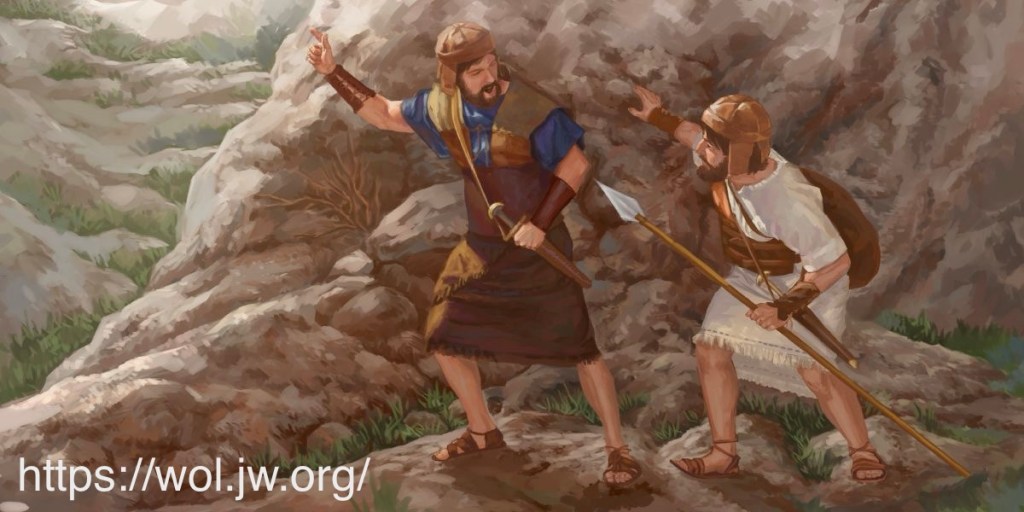

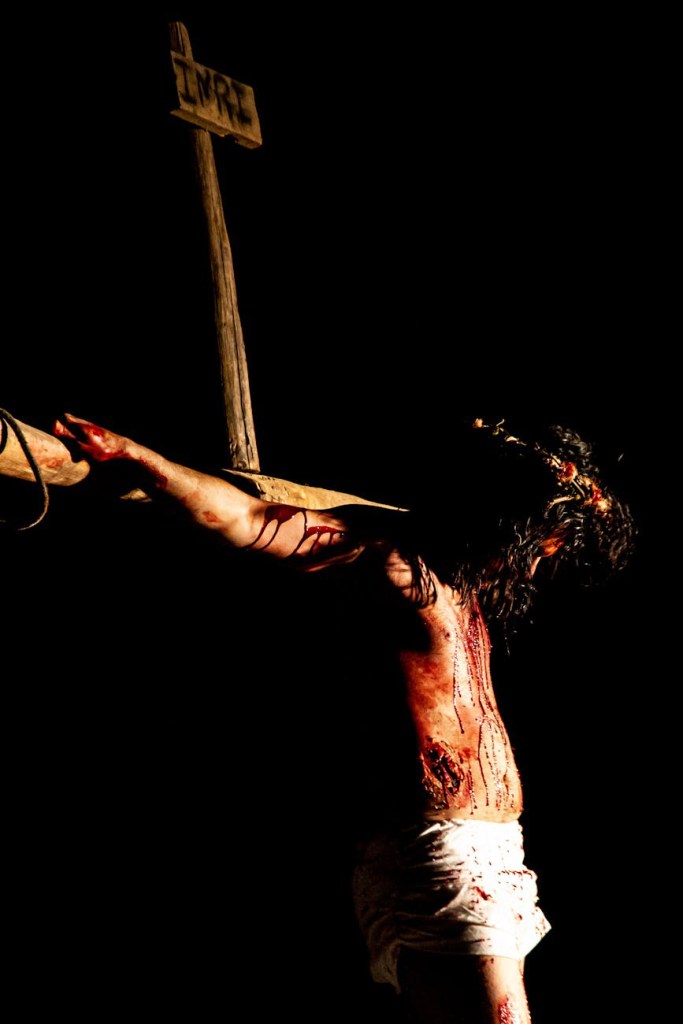


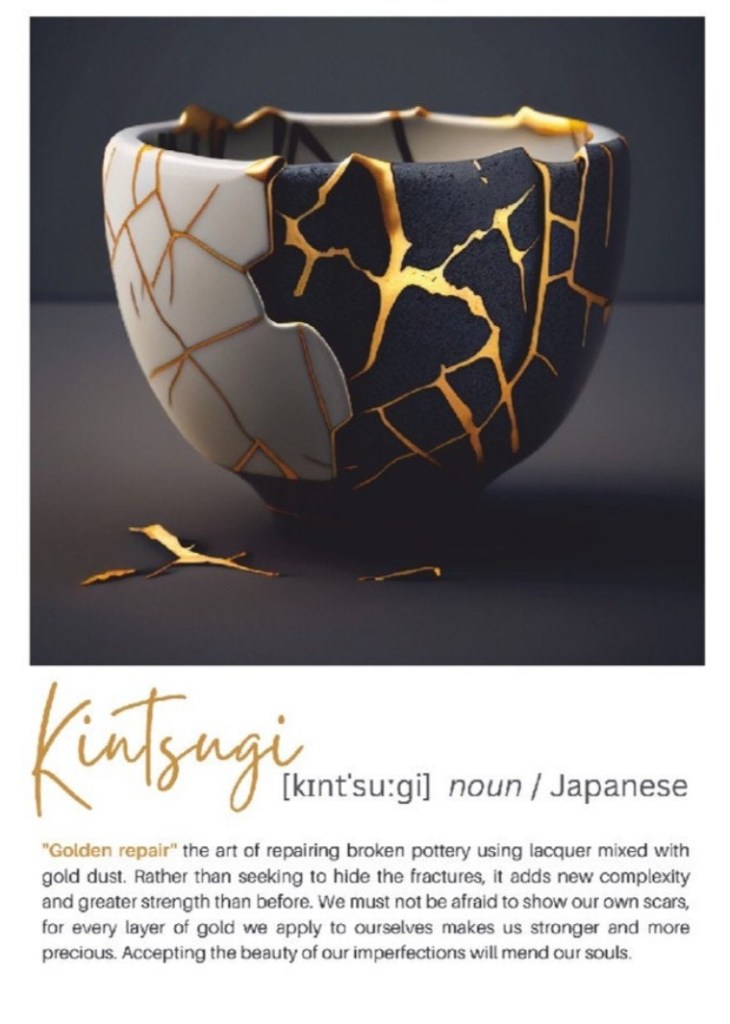
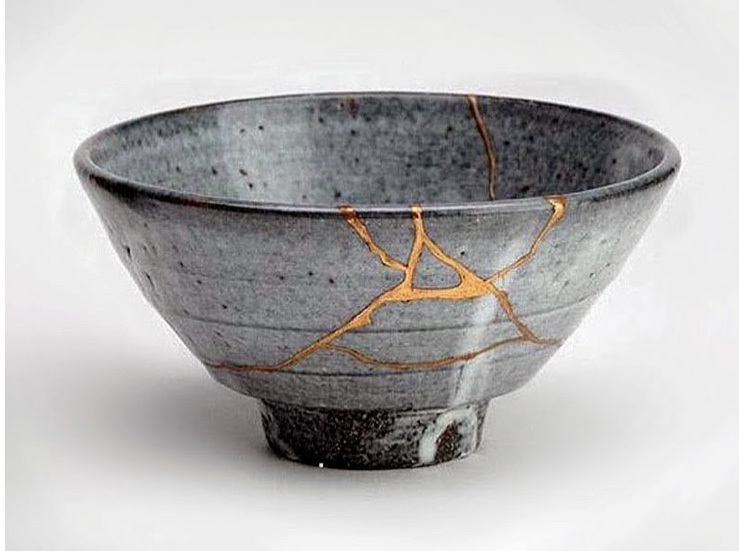


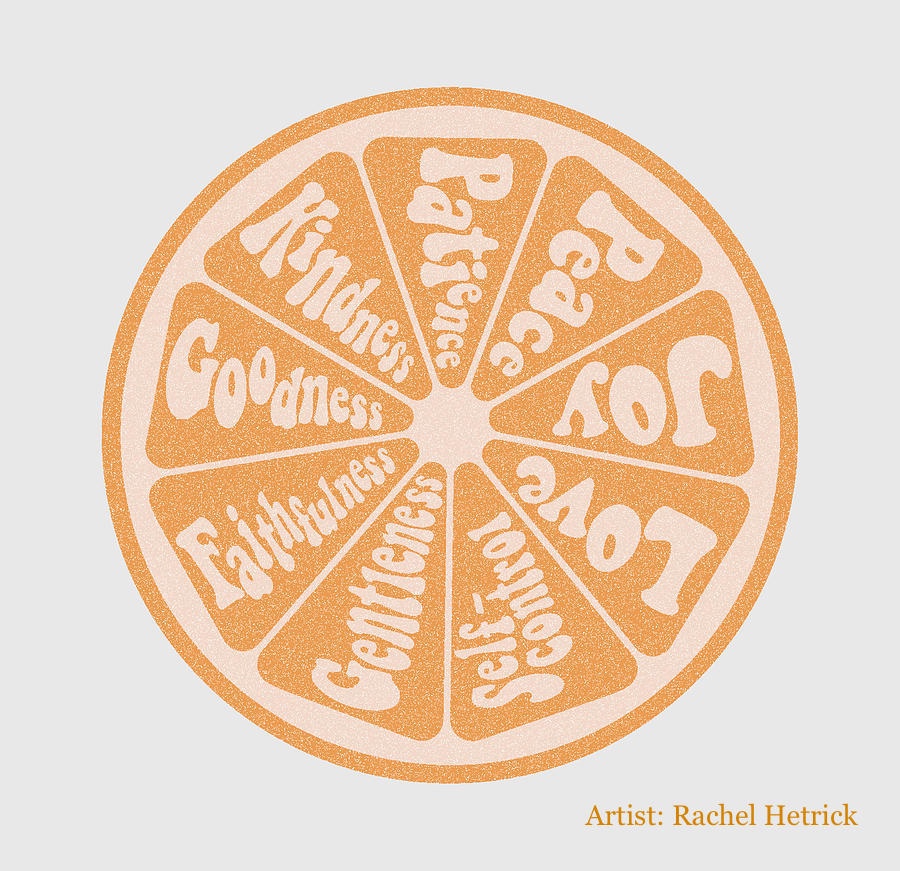




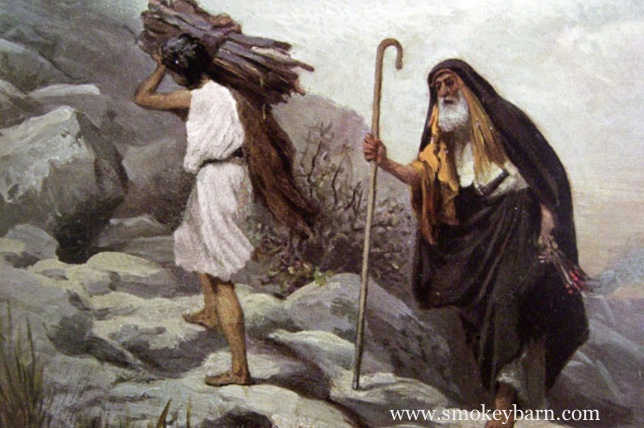
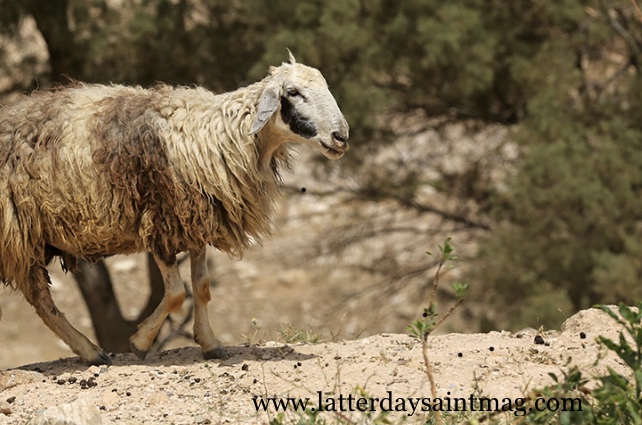

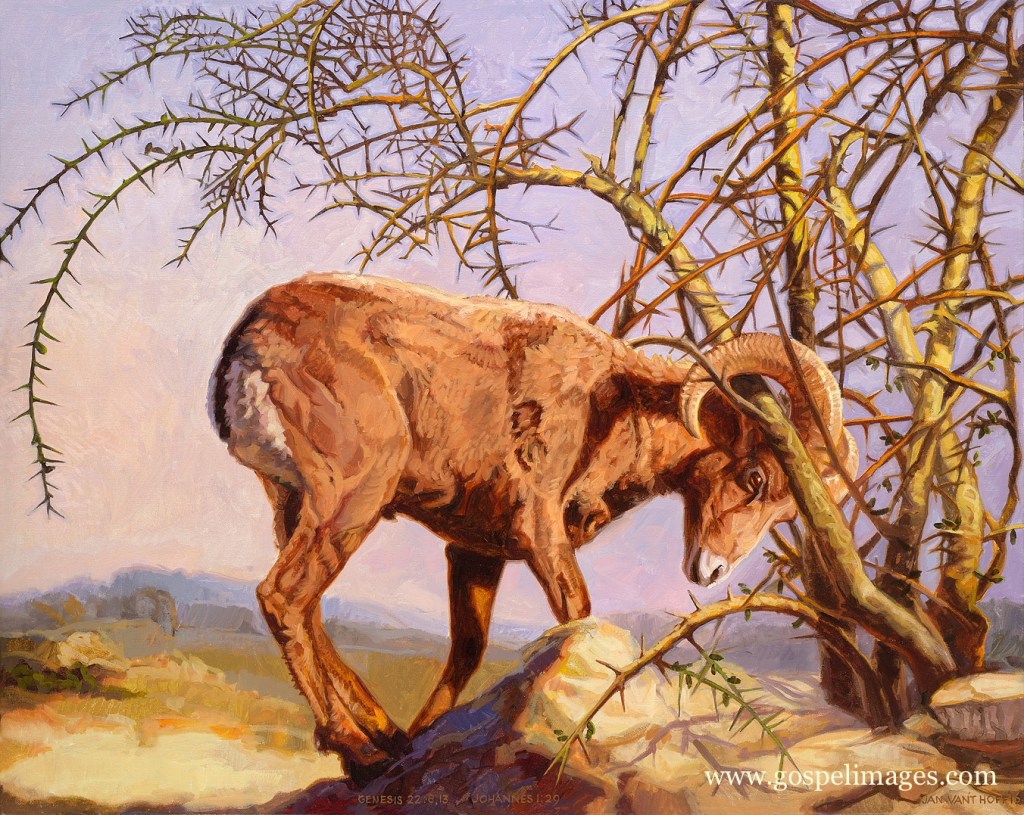
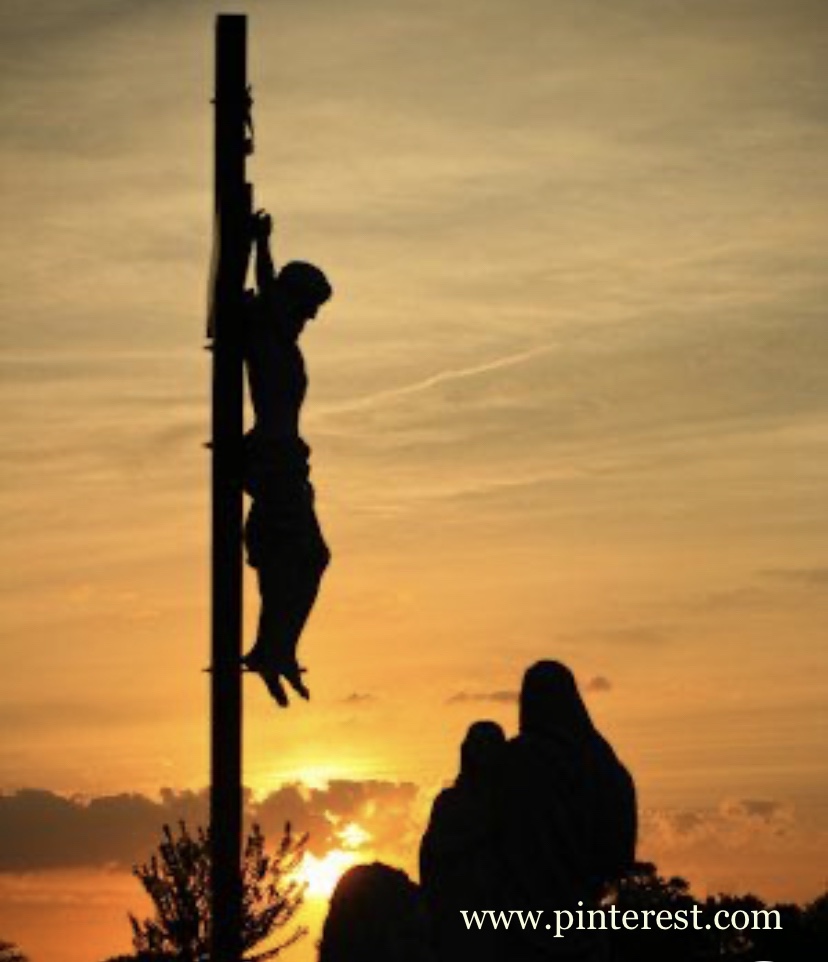

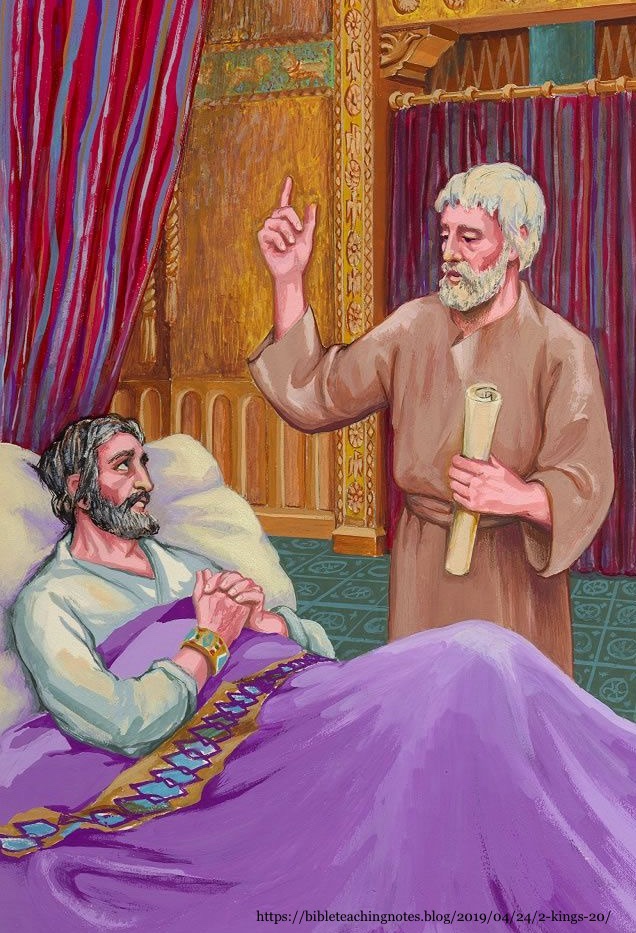





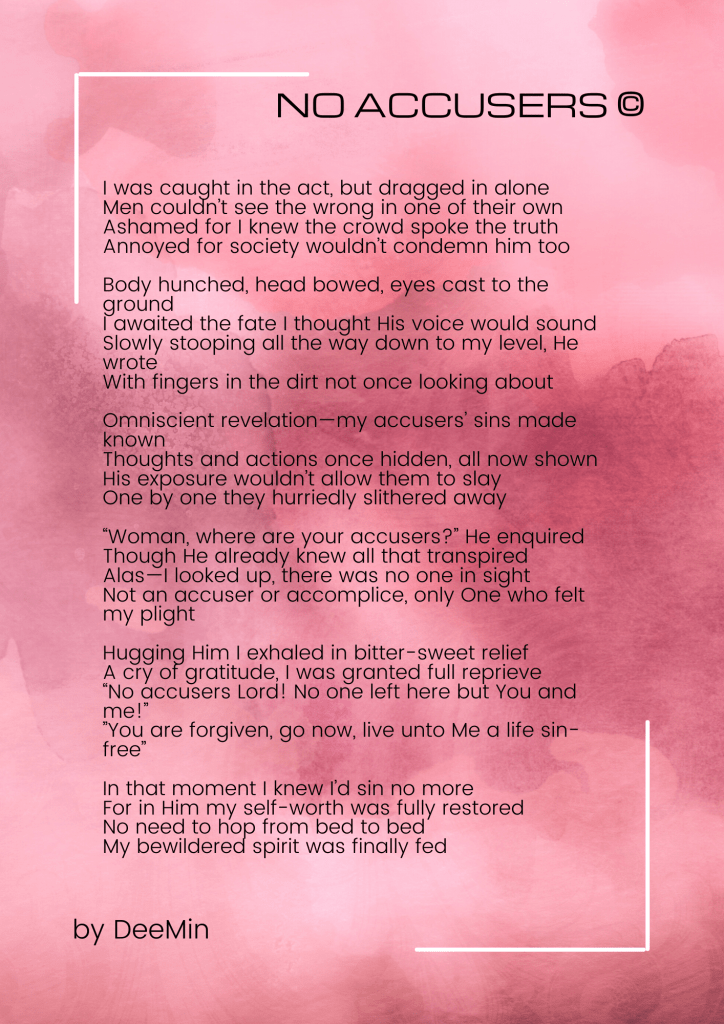
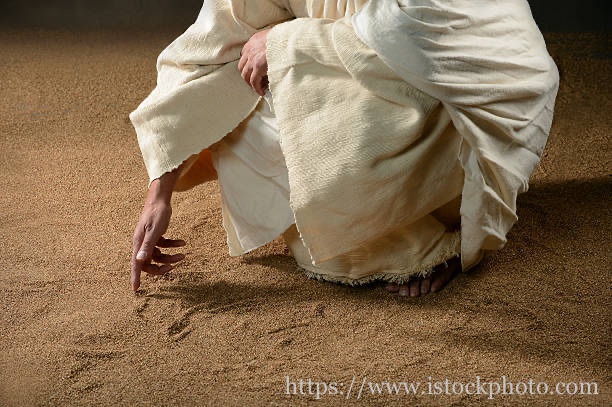
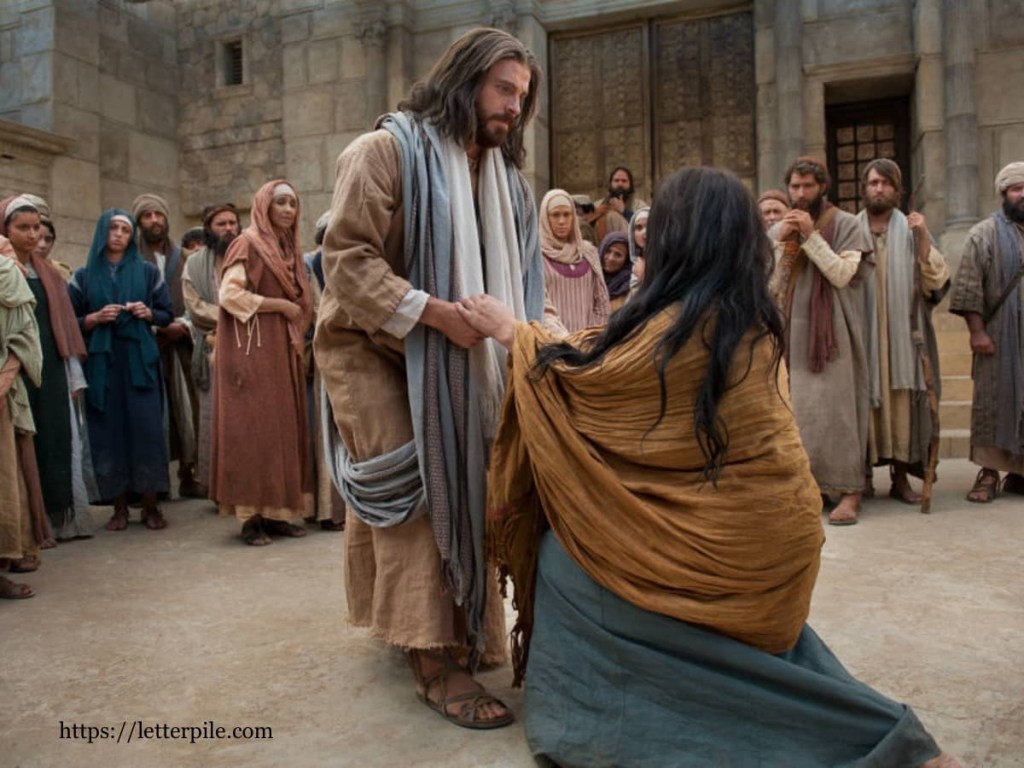
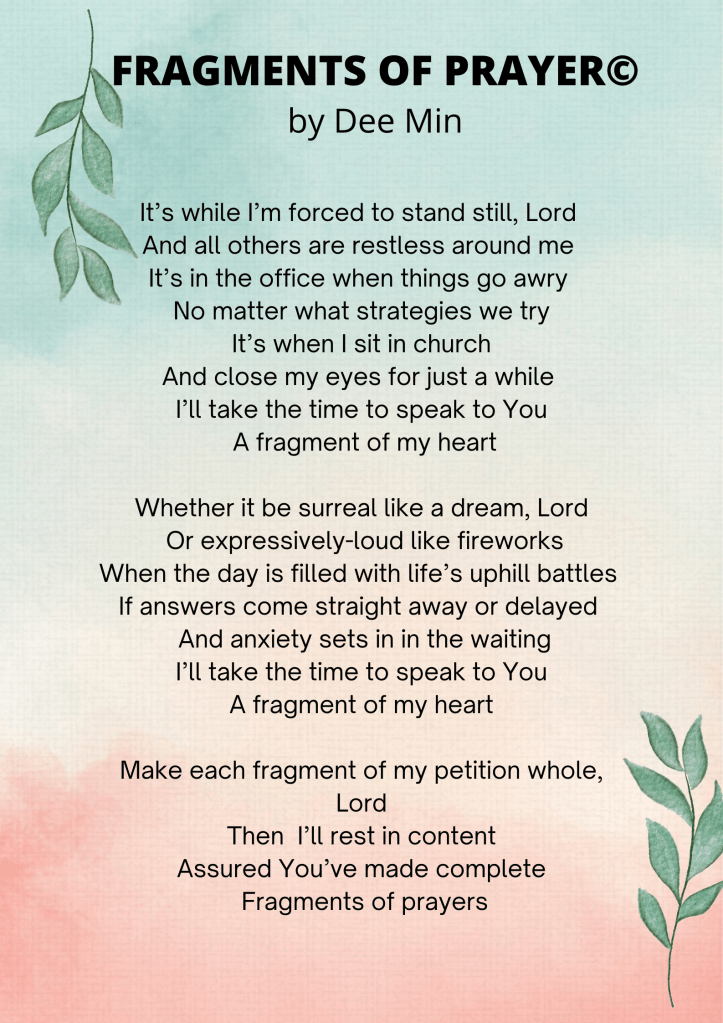





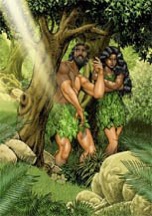




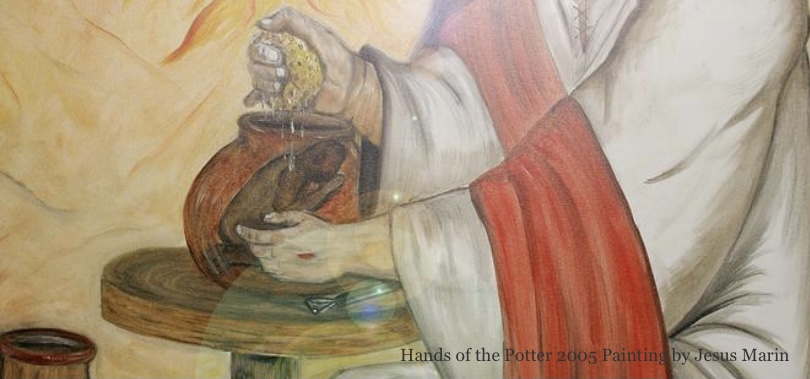



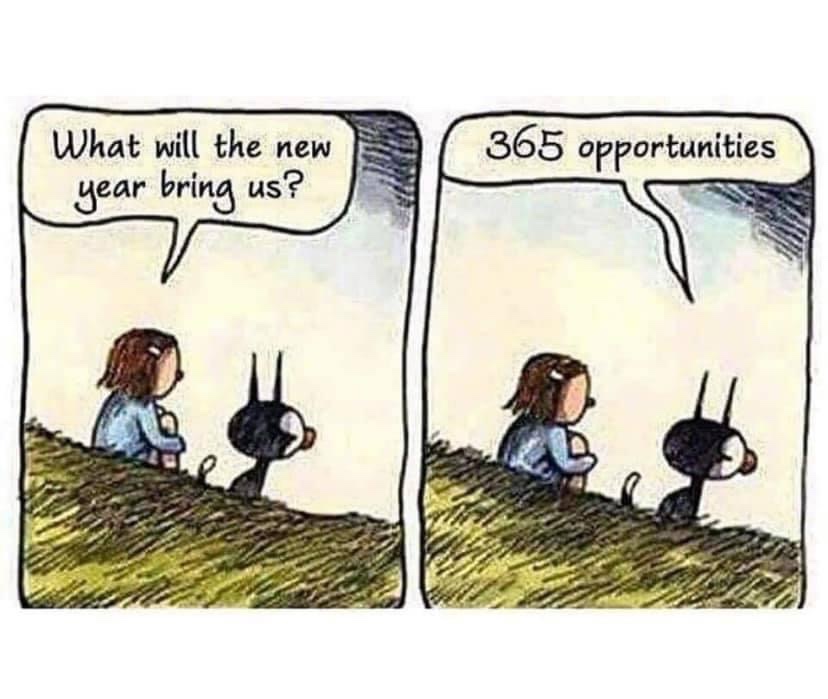












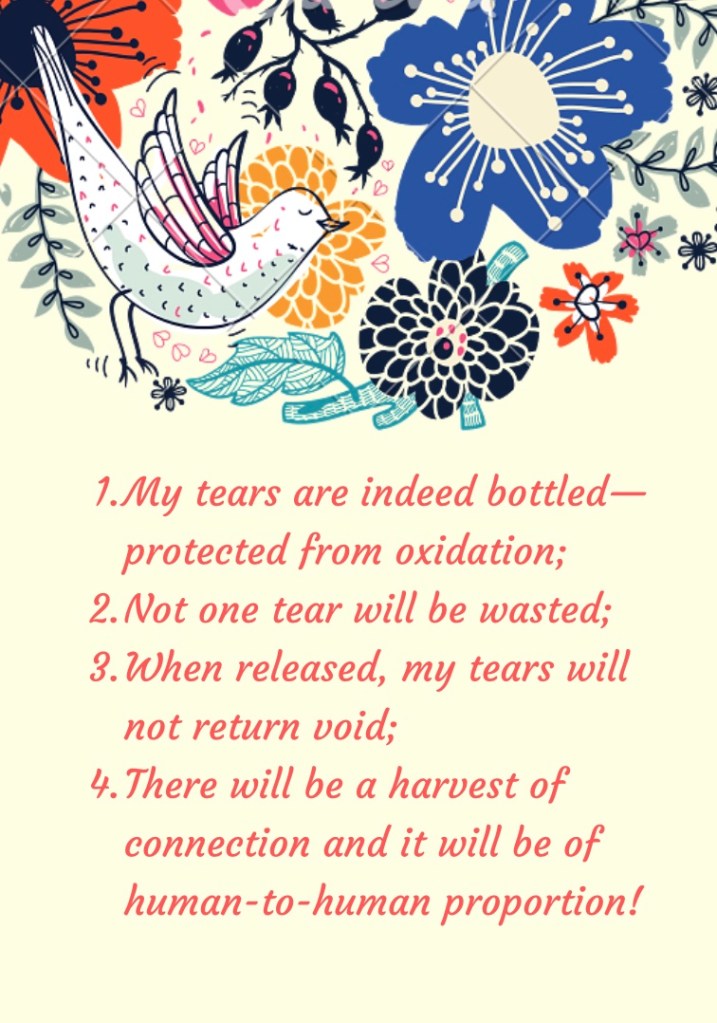


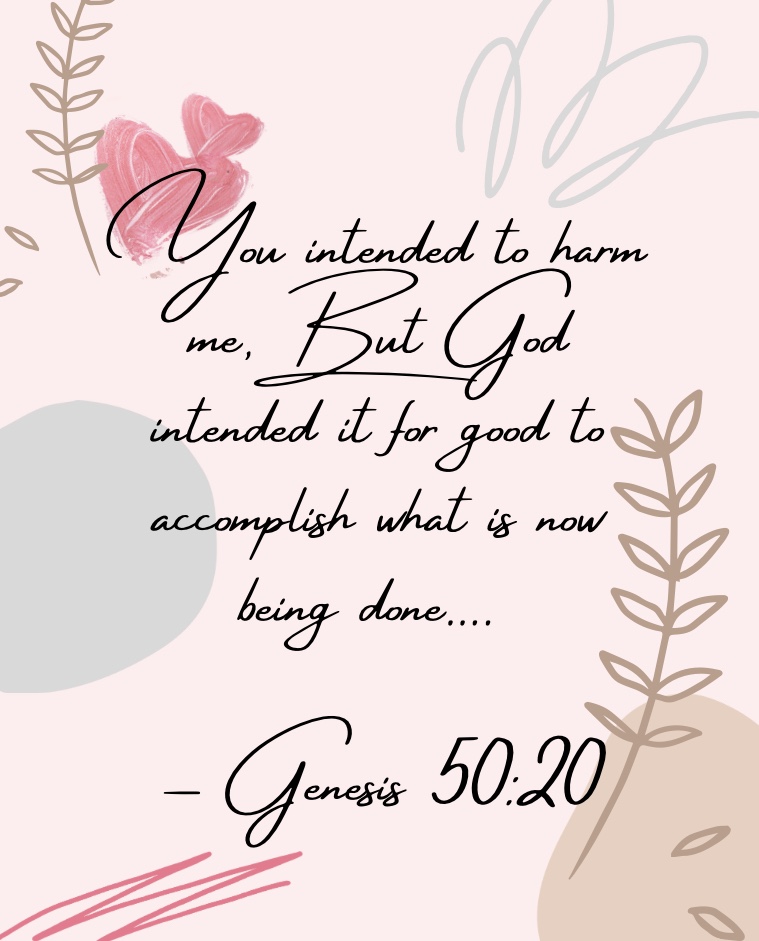






























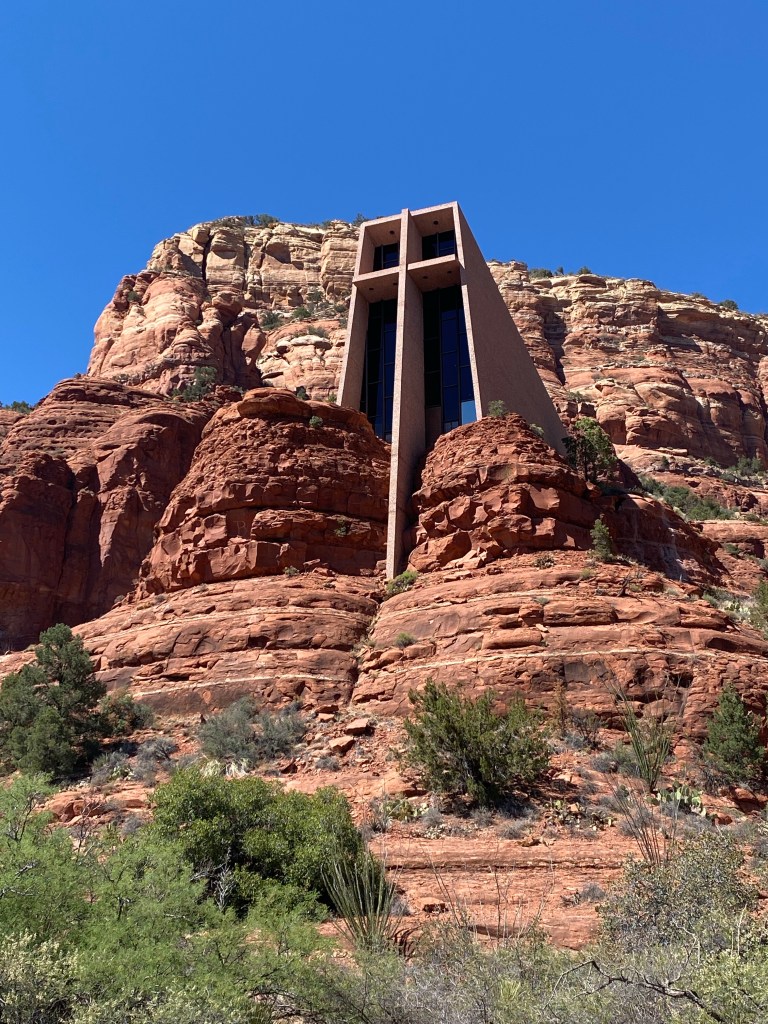



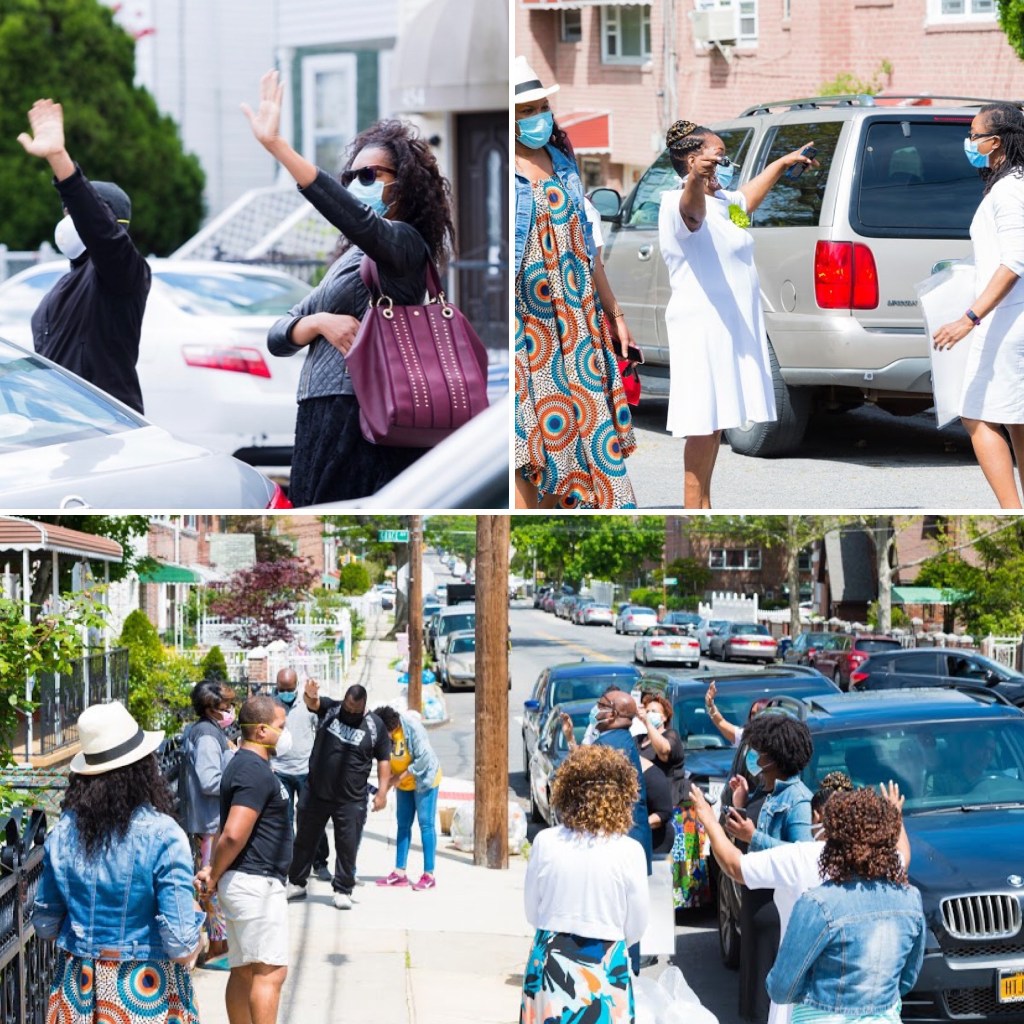

 Poems & More