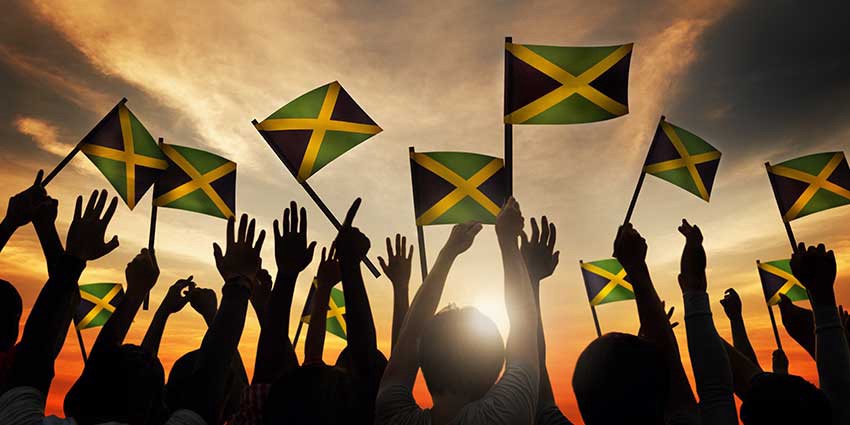
Beforeword: This piece is a pause to celebrate one of Jamaica’s greatest cultural treasures—Patois (Patwa). More than a way of speaking, Patwa is woven into the fabric of Jamaican life, history, and identity. It is the language of our humour, our music, our storytelling, our resilience, and our joy. Patwa is also a connector. Wherever Jamaicans gather—in Jamaica or across the diaspora—the sound of it has a remarkable way of turning strangers into family.
Distinctively Jamaican, Patwa carries the story of a people. “Speak Jamaican” is a tribute to that language, the heritage it preserves, and the generations who have given it life.
Speak Jamaican
As a Jamaican living abroad
When asked where I’m from an’ me seh: “I’m from Jamaica”
Non-Jamaicans are soon to ask me to:
“Speak Jamaican!”
Dat usually mean:
Dem wan fe ear de melody
De lilt—yuh know dat sing-song way dat we talk?
De rhythmic roll like poetry pan beat
Dem ear de music
But dem nuh feel de fight
Cause when yuh ask mi fi “speak Jamaican”
Yuh nah jus ask fi ear de soun
Yuh ah ask me fi call pan
Mi lineage
Mi bloodline
Mi people dem
Yuh ah ask me fi reclaim me identity, me dignity, me language—
Patois (Patwa)!
Patwa a nuh “broken English”
It’s a language dat was bawn in bondage
Shape pan suga plantations weh African tongues blen wid de colonial Spanish, French, Portuguese, an’ di “Queen’s English”
It was code
It was kin
It was freedom in syntax
It was survival
So when yuh ask me fi “speak Jamaican”
Yuh really a ask mi fi channel de powas of dose dat come before me
Like Louise Bennett-Coverley—who we lovingly call Miss Lou
Who tek de same words weh dem seh wasn’t proppa, an mek dem magic
She seh: patwa belang pan di page, pan di stage, an inna de people dem mout
Suh,
She gi we permission fi talk like weself
But when you seh: “speak Jamaican”
Mi know weh yuh really waan fi ear, yuh nuh
Yuh waan fe ear:
“Wha’gwone?”
“Mi irie!”
“No problem, mon.”
De cute phrase dem
De soundbites
Yuh nuh really waan fi ear ’bout de istry weh mix wid sweat, blood, bullets, an rebellion
Cause yuh nuh undastan seh yuh a ask mi fi talk a language weh carry di istry, di struggle, an di brilliance of a people who neva did wait fi freedom but who tek it
Suh—
Yuh ready fi ear bout colonial rule?
Bout how we bruk free?
Bout de 1950s, early ’60s—
De rise of Patwa in book, in band, in beat?
Yuh ready fi stan up in de trut, bout how English siddun high pan pedestal while di native language was silenced in classrooms an courtrooms?
An’ who can feget de ’70s—
De era when reggae did a com inna its own—saturated wid Patwa, it chant de Jamaican struggle against poverty an social injustices
It was de voice of those who lived in de ghettos dat was turned into garrisons
De cry gainst dose dat ‘arm de yout dem fi lock dun votes an’ lock dun neighborhoods
Where Cold War powers played chess wid people lives
An’ in a matta of months, ova 800 dead in di lead-up to a election
An still we cyaah feget di cries inna di streets
So when yuh ask mi fi “speak Jamaican”
Mi haffi ask yuh back—
Yuh ready fi listen?
Yuh ready fi feel how dis language carry trauma an triumph, ardship an ope?
Yuh ready fi know dat dis language hol’ we togedda—
Jamaicans ah yawd, to Jamaicans abroad wid—
One tongue
One riddim
One heart
One love
Patwa—
A resistance song
A blueprint of resilience
A living archive of emotions
Dis a de voice weh preserve culcha long before wi could a write it dun
Wid every phrase a reflection of who we are as a people
weh we ah come from
an how we still a rise
Suh yeh, mi can “speak Jamaican”
But understan—
Yuh nah jus get words
Yuh a get all ah we—
All a we legacy
All a we istry
An how wi tek back wi voice
How wi claim independence—
Not just fe we nation
But fi weself
Suh, yeh, mi can “speak Jamaican”
But, can you hear it?!
2026 All Rights Reserved
Like what you see? To never miss a post click HERE👈 to subscribe & follow the blog. There’s more HERE👈 and on Spillwords, the Writers Club, Facebook & Bluesky.
In creative solidarity, Dee


 Poems & More
Leave a comment