In my article Holding Change & Loss I promised to return with more writing and on-the-ground updates from being in Jamaica.
You’ll recall, on October 28, 2025, Hurricane Melissa — a catastrophic Category 5 hurricane with sustained winds around 185 mph (295 km/h) — made historic landfall near Jamaica’s southwest coast. At the time, every major news outlet carried images and stories of devastation; now the world has moved on, but the work of recovery is just beginning and sustained attention, accountability, and action are essential.
With that in mind, I made it to Jamaica. I wanted to be here sooner, but the reality is this: the country will be in recovery for a long time. So arriving now still feels right — not too late.
If you’ve read my other posts about Jamaica, you know how heightened the anticipation of returning home always is for me. I’m always on the lookout for that first stretch of green and coastline which always settles something in me. This time I started filming earlier than usual — not just the landing, but the first sight of land itself.
When the wheels touched down, the usual clapping broke out — the applause of gratitude. Then the flight attendant invited a louder one. We obliged. It felt earned. My lips spoke the sentiments of my heart: “Me reach home!”
But this trip wasn’t just about returning home. It was about the work on the ground, and seeing what’s real beyond the headlines.
In Kingston it’s possible to feel like all is well. That illusion didn’t last long. On the drives west the story changed. There were more than 170 communities severely impacted in the 6 parishes that felt the brunt of the storm. I went to three of them: St. Elizabeth, Trelawny and Hanover.
From a distance, you’d miss the damage.
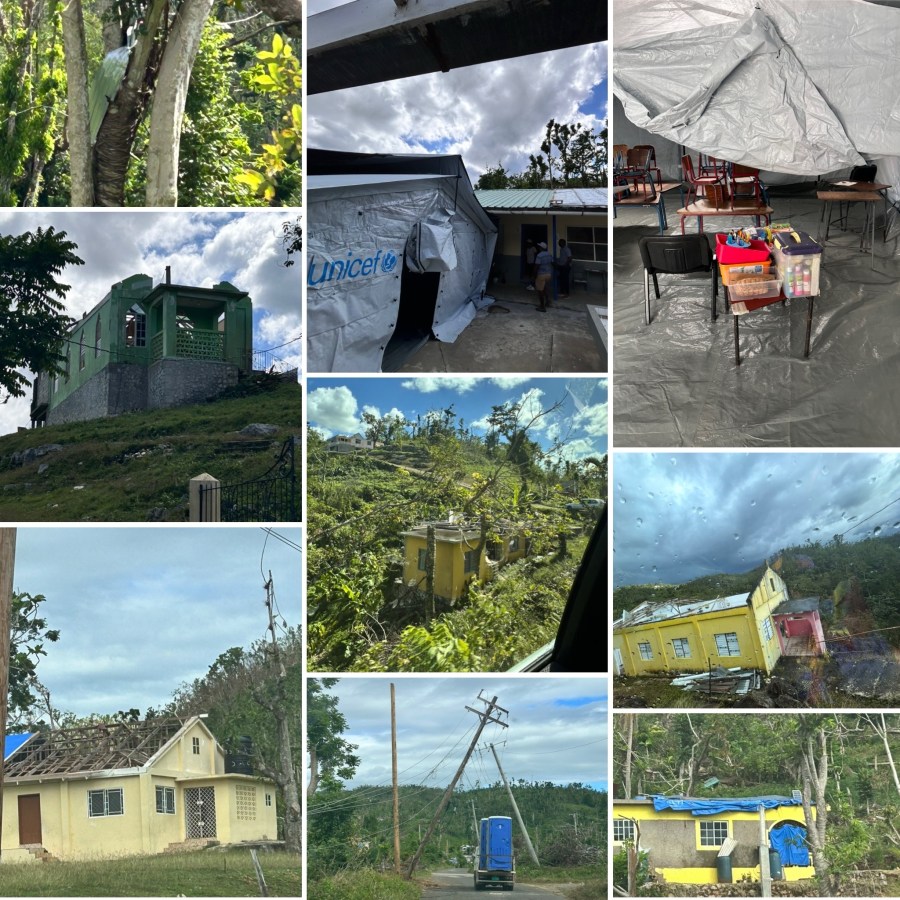
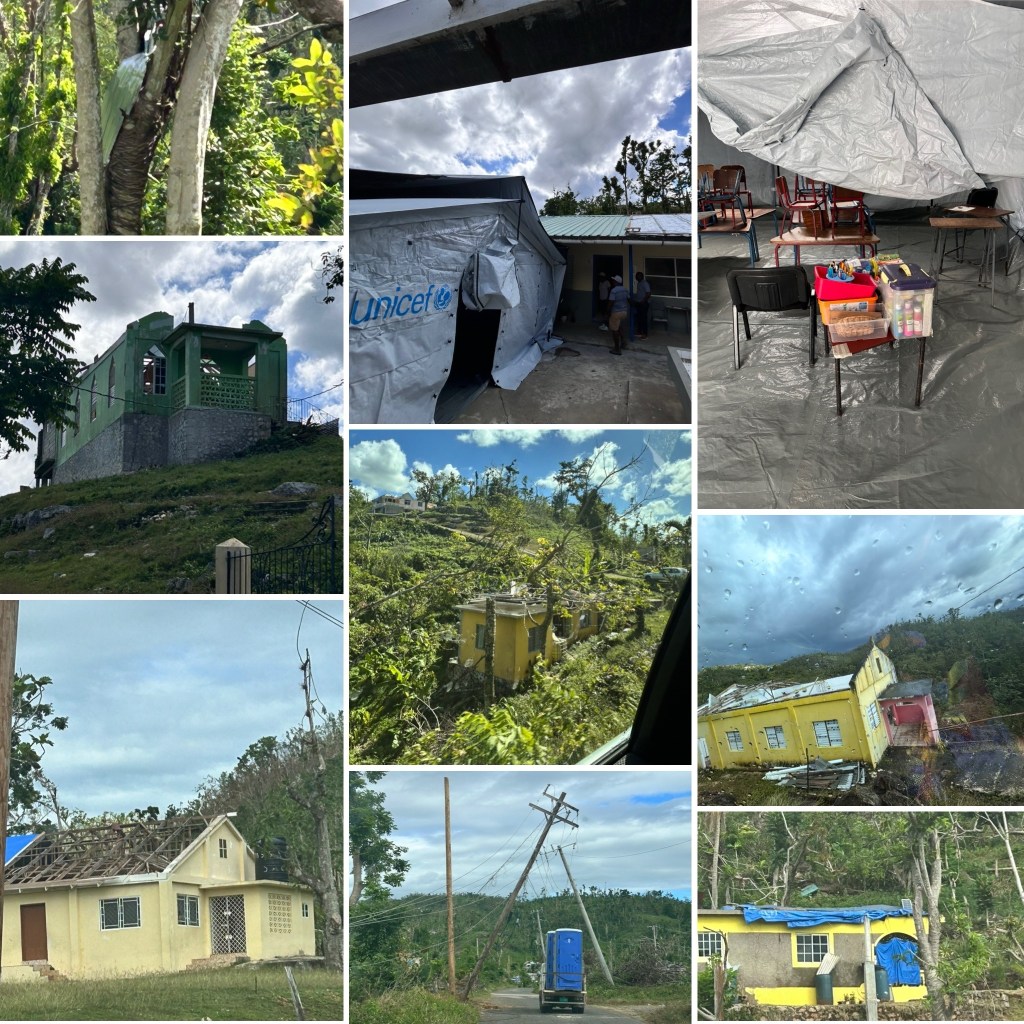
But, the reminders came fast. Downed light poles. Roofless houses, churches, schools, hospitals, infirmaries. Roads riddled with potholes that are now more like craters. The storm’s imprint cuts clearly through the green — twisted sheets of zincs wrapped around tress so tightly as if that was their natural home and trees precariously leaned to one side, an indication of the effects of sustained winds — all a physical reminder of what western Jamaica endured.
As hills and mountains passed by, what was most evident is that nature was already healing itself.
People tell me that the fresh greenery masks the havoc that stripped trees of bark and leaves and left slopes bare and brown.
What stood out just as much was the response.
People are already helping themselves and each other. Schools shifted to tents. Makeshift repairs are everywhere — zincs repurposed, tarpaulin stretched taut across roofs so that the landscape is dotted with blue. I said it out loud, and the CEO of the foundation I’m volunteering with agreed: she said soon after the hurricane, people were snatching zincs from wherever the wind had blown them to use to protect their homes.
In talking with people, amid the horror of having lived through Hurricane Melissa, what consistently emerged were stories of neighbors rallying around one another. In one case, someone gave a building to a shopkeeper who lost her entire business so she could start again. No waiting. No dramatics. Just movement. That’s the JamaiCAN spirit in action.
Hanover took us further into the hinterland. The drive was painstakingly slow. The hurricane had worsened the roads so severely and one shorter route was still submerged, appearing more like a dam from our view above. Our driver navigated potholes like a minefield as we followed a minivan bobbing and weaving its way through, carrying the more than 200 care packages we were to distribute to families as well as supplies for several small enterprises.
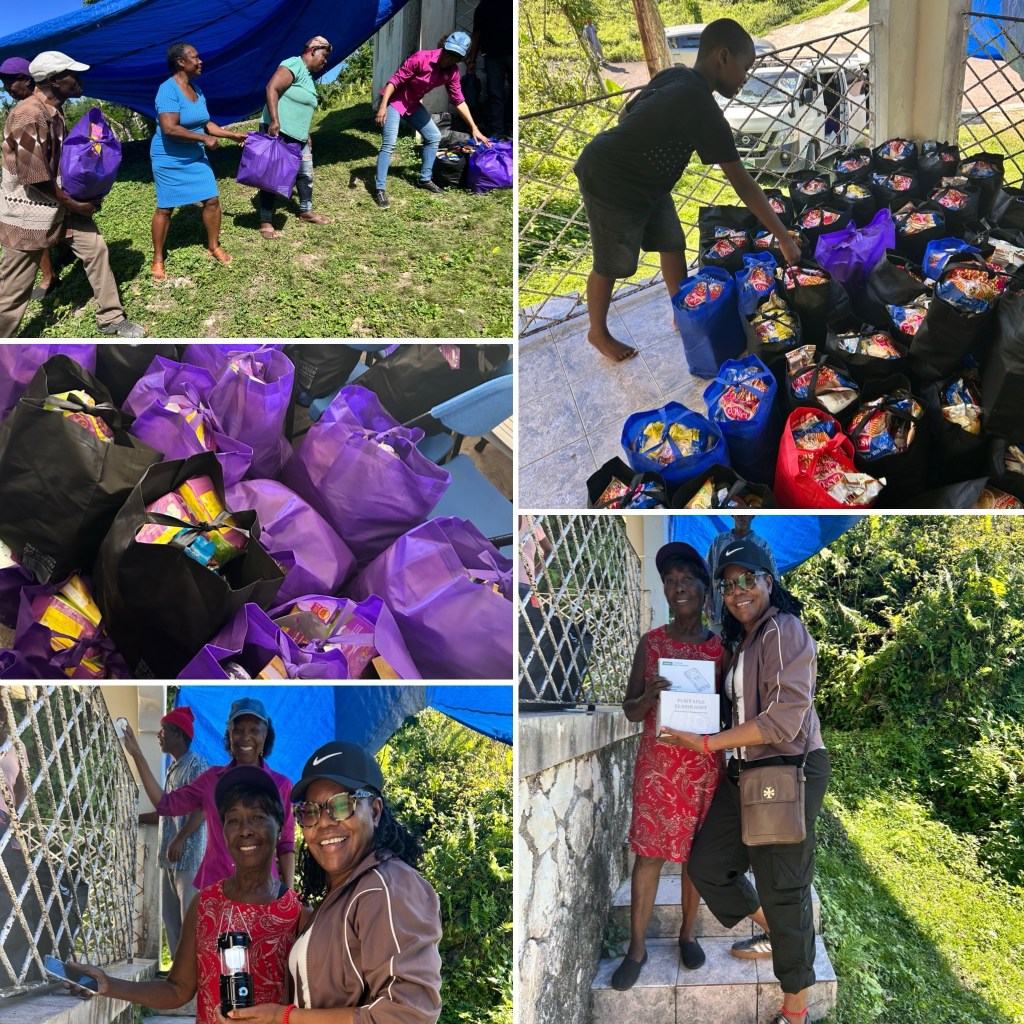
The needs are wide — from safe roofing materials and school supplies to infrastructure support, equipment for small businesses, and psychosocial care.
I chose to focus on schools and female-headed small enterprises, supporting both education and livelihoods while investing in people’s capacity and dignity. Based on advocacy efforts I was able to assist schools with books and, in one case, a tent mobilized through UNICEF that now serves as a gathering space after the school’s roof was completely ripped off. With electricity still not restored, the solar-powered lanterns and power banks were well received.
I was grateful to also be able to speak with people, offering a listening ear and psychological support. One that stood out was a single mother of three children in school who lost her home and everything in it. The only structure still standing is her small shop. Her shop served as a community meeting point—aptly called the “Hilltop Chill Spot”.
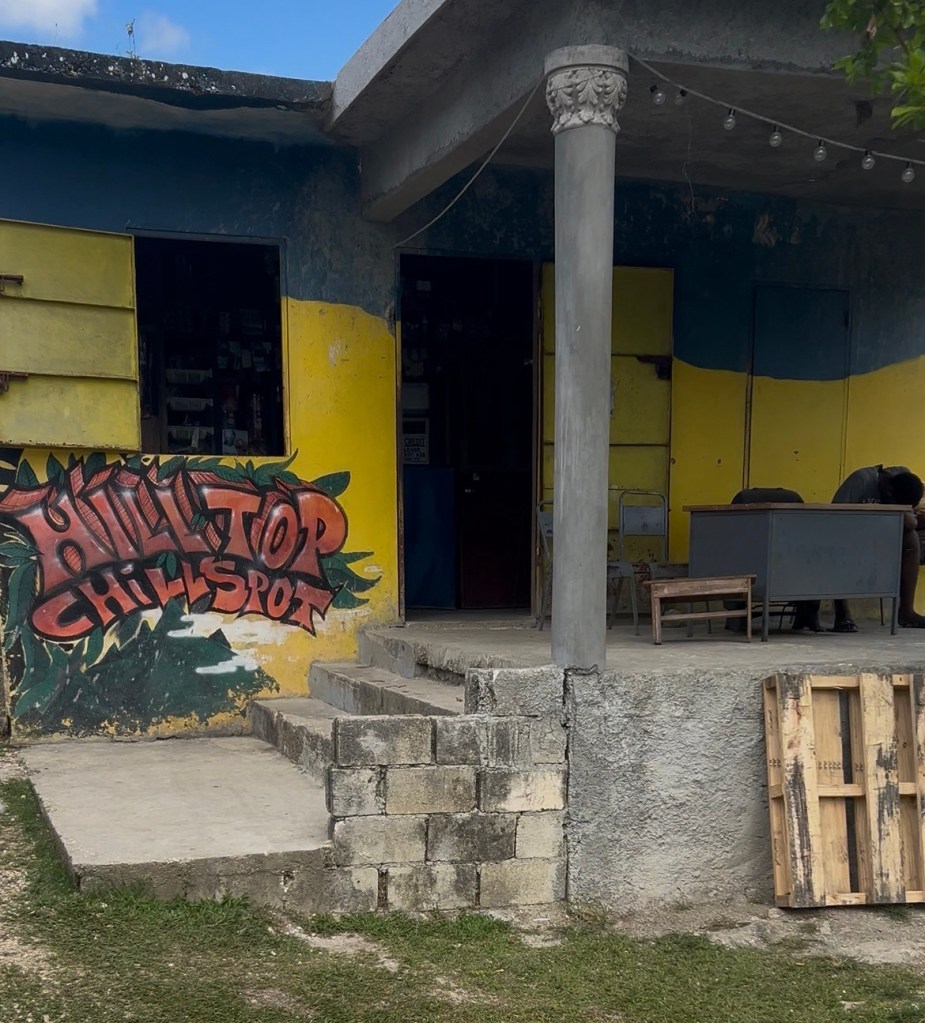
In fact, while World Central Kitchen was operating in the area, her shop served as the site where more than 250 meals were prepared and distributed each day. Now that WCK has moved on, the shop has the potential to continue as a community support hub with the right backing. Being part of the shift that allowed her — and another female shop owner — to look forward rather than backward was a privilege. Watching a flicker of hope brighten as practical support came into view is why getting here mattered. Seeing it firsthand matters.
But this isn’t just about Jamaica.
Hurricane Melissa joins a litany of climate-intensified storms that hit Small Island Developing States like ours with disproportionate force. These nations contribute the least to global emissions, yet face more frequent and severe hurricanes, rising seas, and shifting weather patterns that threaten agriculture, infrastructure, culture, and heritage—from livelihoods to historic sites and community roots. SIDS like Jamaica are on the front lines of this global challenge.
Cultural loss, heritage destruction, and community displacement are climate impacts that demand global responsibility. This isn’t a local issue — it’s an issue of climate justice.
Recovery will be long-term, and preparedness alone isn’t enough.
Infrastructural change is needed to build back not just what was lost, but what’s stronger, more resilient, and more equitable. This means supporting micro- and small enterprises — including those owned by women — to rebuild better and more sustainably. It also includes reskilling people in modern farming technologies, AI-driven resilience tools, construction practices that anticipate future climate realities, and ensuring meaningful community engagement at all stages.
Moving around the country, seeing firsthand and speaking with fellow Jamaicans, the national pledge kept coming back to mind and it stopped being just words. The pledge begins with the words “Before God and all mankind,” followed by lines expressing dedication of heart, mind, and body to the service of fellow citizens. Specifically:
I pledge the strength and vigor of my body in the service of my fellow citizens…
Raised on this pledge, Jamaicans embody it. I saw it in action — a people committed to helping one another, rebuilding together.
This article is not to imply that Jamaica isn’t carrying damage, but to show that it also carries resolve.
Jamaicans are resilient, yes, but resilience should not be mistaken for self-sufficiency. They are already rebuilding, but doing so with the same materials and methods risks repeating destruction. Resilience should be met with resources, systems, and sustained commitment — supporting communities, schools, churches and micro- and small enterprises, especially those led by women, to rebuild stronger and more sustainably. Small shops are often run by women and are the heartbeat of their communities: they provide income, social support, and gathering spaces, and their recovery is central to restoring both livelihoods and local life.
I’m here. I listened. I watched. I learned.
Being here allowed me to hold space for what was lost, to learn from what’s being rebuilt, and to bear witness to a country that refuses to yield — a people whose strength is matched only by their resolve to rise again.

SUPPORT JAMAICA REBUILD
If you’re able to support Jamaica’s recovery, the government has set up a site to coordinate all support coming to our beautiful island. We are grateful for all the countries, organizations, individuals, charities etc. that have come to our aid. We’re eternally grateful.
- Click to visit the site: Government of Jamaica Hurricane Melissa Relief
2026 All Rights Reserved
Like what you see? To never miss a post click HERE👈 to subscribe & follow the blog. There’s more HERE👈 and on Spillwords, the Writers Club, Facebook & Bluesky.
In creative solidarity, Dee💡 Only WordPress.com members can hit the “Like” button, but everyone’s welcome to share their thoughts in the comments. Thanks!
 Poems & More
Dawn,
Thank you for sharing and congratulations on your article, “Finally Home and Why It Matters!” You’ve expressed with such beauty and heart the love and resilience many Jamaicans feel but often cannot put into words.
Your imagery of arrival, reflections on recovery, and call for climate justice all shine with truth and dignity. What moves me most is how you framed Jamaica not just as a place of hardship, but of resolve.
Your writing is a beacon, and I was not aware of your powerful gift of writing and poetry—I am deeply moved by it!
LikeLiked by 1 person
Thanks dear DC!!! Thanks for stopping by and your insightful comments. Very much appreciate it.
LikeLike
I’m sure it was bittersweet to return to Jamaica after the devastating hurricane. You’re right, recovery will be long, but nature and people are resilient. And it’s amazing how people can come together. We’re definitely stronger together.
LikeLiked by 1 person
Yes Indeedy — we are stronger!!
How’s the snow by you?
LikeLiked by 1 person
There’s a lot of it! And it looks like it’s staying for awhile given that it’s supposed to stay cold for the next couple of weeks!
LikeLiked by 1 person
Yikes 🥶 stay warm ☀️
LikeLiked by 1 person
Thanks for sharing this Dawn. I am so glad you were able to come home and help with recovery.
Shelly
LikeLiked by 1 person
Thanks my dear friend for helping me make it possible!!! Cheers 💕🤗🙏🏽💕
LikeLike
Pingback: Apprecilove: Held While Helping |a Haibun ©Dawn Minott – Poems & More
Thank you so much for this vivid documentary of your visits and for offering your time, kindness and support to those who need it the most in the West aunty! I’m sure it was greatly appreciated. Kudus to you and your team 👏
LikeLiked by 1 person
That’s what we do as Jamaicans—we live out our national pledge !!! Thanks for stopping by 🙂💕🙂 my niece!
LikeLike
Thank you for sharing your journey to Jamaica, Dawn, and your first-hand accounts of the devastation and the work to rebuild. The effects of climate change are so widespread now and I do hope we can join together as a global community before it’s too late.
LikeLiked by 1 person
On this we must unite, there is no PLANet-B, this is it!!! The impact of our actions on the earth is telling. I too hope we change before it’s too late. Thanks for dropping by Alethea!!!
LikeLike
🤗
LikeLiked by 1 person
I have such deep admiration for the Jamaican people. Unstoppable! 🇯🇲
LikeLiked by 1 person
The JamaiCAN way 🇯🇲
Thanks dear Eliza!!!
LikeLiked by 1 person
Thanks for your care, help, and wise insights as to how rebuilding with resilience is needed.
LikeLiked by 1 person
Thanks a mil Brad!!!!
Cheers my friend 🙏🏽🙂🙏🏽
LikeLiked by 1 person
You’re most welcome.
LikeLiked by 1 person
Thank you Dawn for sharing the devastating effects of Melissa and how your brave countrymen and women are making a comeback. Bravo to all Jamaicans.
LikeLiked by 2 people
Thanks dear Sadje. We are all connected. The solidarity is greatly appreciated. Cheers 🙏🏽🙂🙏🏽
LikeLiked by 1 person
You’re very welcome dear sister
LikeLiked by 1 person
🙏🏽🙏🏽🙂🙏🏽🙏🏽
LikeLiked by 1 person
Hello Dawn, Trust all continues to be well. Beautiful expose’ and account of your Januarv visit to the island. Shows your heartfelt commitment and empathy to the motherland. As usual, your literary skills and expression are on display for the world to see. Keep on making your global contribution in many a way.
LH
LikeLiked by 1 person
Thanks a million. Appreciate your stopping by. One love 🇯🇲
LikeLike