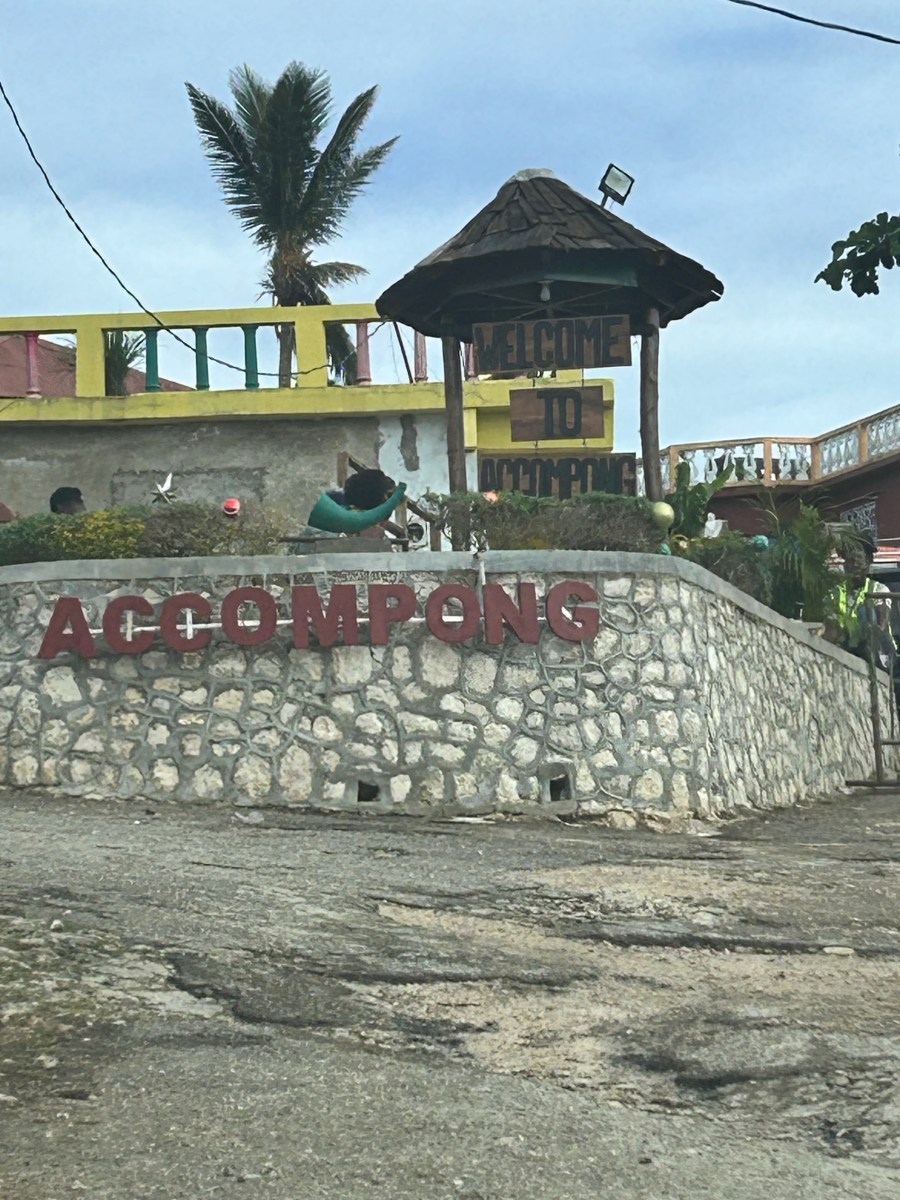
Timing really is everything. My trip to Jamaica aligned with one of the island’s longest and most enduring stories of freedom, resistance, self-determination, and cultural resilience—the story of the Maroons.
The original Maroons were a mix of indigenous Taínos and Africans brought to Jamaica in the seventeenth and eighteenth centuries who resisted British enslavement and established independent communities deep in the rugged mountainous interior known as the Cockpit Country.
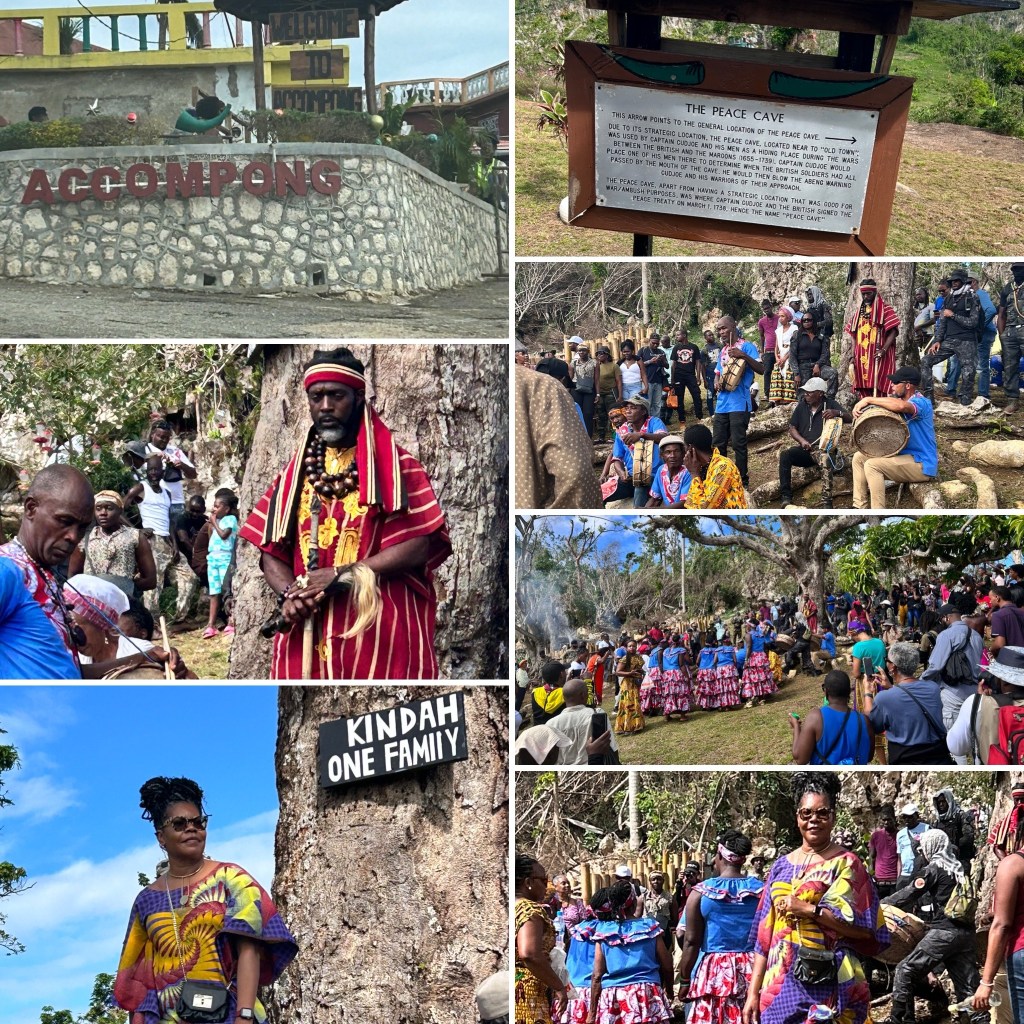
On January 6, 2026 I had the privilege of attending the 288th annual celebration of the Maroons of Accompong.
The story behind the Accompong celebration stretches back nearly three centuries to the end of the First Maroon War.
The day commemorates both the birth of the Maroon leader Kojo (Cudjoe) and his victory over the British, which led to the signing of the 1739 Peace Treaty. That treaty formally recognized Maroon freedom, granted land and self-governance, and laid the foundation for an autonomy that is still honored today.
The road to Accompong took us through small rural farming towns and villages, many shaped during the plantation era. Roads precariously carved into mountainsides—with deep precipices on one side—kept my foot planted on an imaginary brake on the passenger side, while the driver calmly assured us he knew these roads well enough to get us there safely.
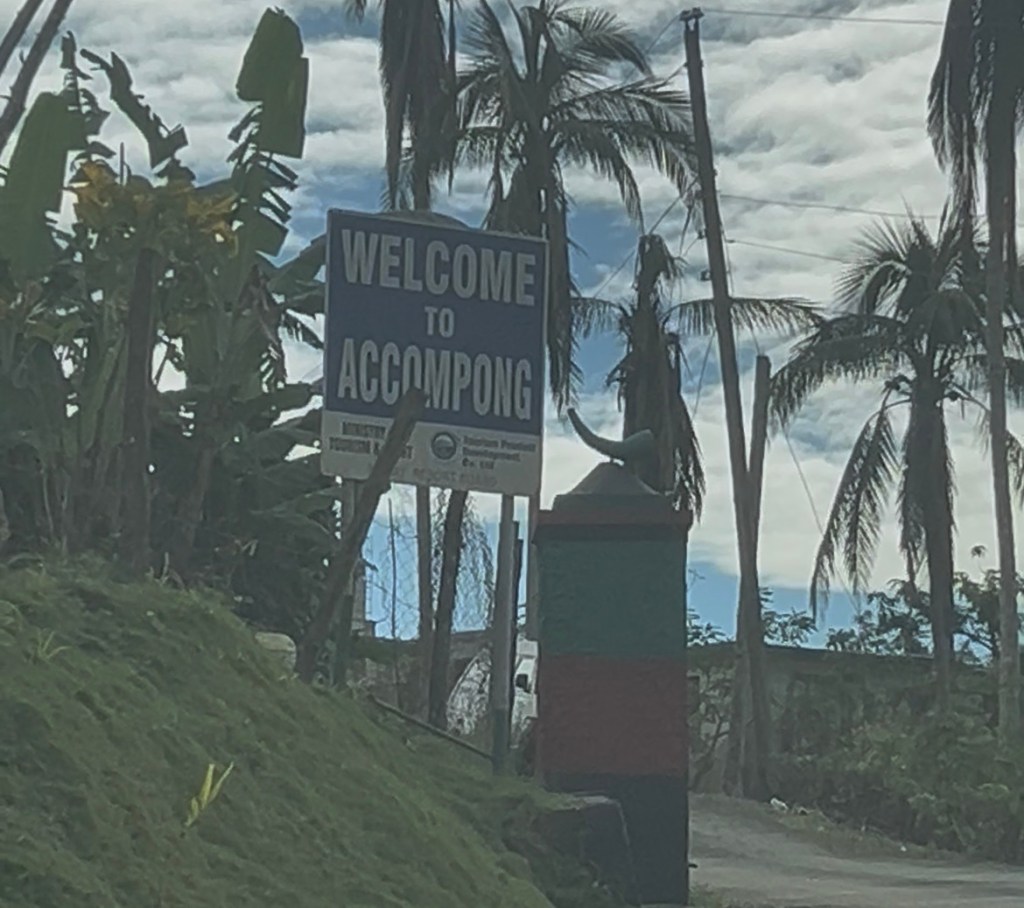
Accompong is in St. Elizabeth Parish. The community sits approximately 1,400–1,500 feet above sea level, surrounded by steep limestone hills and dense forest—terrain that once provided natural protection for Maroon resistance fighters.
The Parish was severely impacted by Hurricane Melissa. The damage is still visible in both nature and infrastructure. Known as Jamaica’s breadbasket, St. Elizabeth contributes a significant share of domestic food output. The effects of Melissa’s destruction will be felt here and across the Island for years to come.
Still, the hurricane could not interrupt 288 years of commemoration. Even as rain fell, the Maroons, under the leadership of Chief Richard Currie, carried on.
As I arrived, the sound of the Abeng horn—a cow horn once used to signal danger and communicate across the mountains—rang out, calling the Maroons to assemble.
We made our way to the Kindah Tree—Kindah meaning “one family.” Once a massive mango tree that spread its canopy wide to shelter gatherings from the sun, it now stands reduced to less than half its size after Hurricane Melissa’s winds.
Chief Currie addressed the gathering with no script, speaking plainly about peace, autonomy, and the responsibility to keep Maroon culture alive, not simply remembered.
Drummers, singers, and dancers gathered for ritual. Attendees sat on rocks likely used by Maroon warriors centuries ago—places where strategies were planned against the British or victories quietly celebrated.
Though as visitors we looked on, this was no performance, no spectacle—only purpose. Sound and movement drawing people into a shared memory. And for me, standing there alongside two of Jamaica’s leading historians who offered history lessons in real time, the past felt close and conversational.
Later, the Maroons descended to the old town to honor their ancestors with offerings of freshly cooked food. This part of the observance is reserved for Maroons only, and the boundary is deeply respected.
Attendance was lighter this year due to the storm’s aftermath, but those of us who were present witnessed ancestral rituals, drumming, dance, and storytelling—core expressions of the Maroon legacy.
For a first-time witness, nothing about the day felt like reenactment. In the movement of bodies, the rhythm of drums, the blare of the Abeng, and the unfiltered words of the Chief, I saw pride, reflection, and remembrance moving together. I felt humbled to witness it.
The drums still beat. The Abeng still calls. The people still gather.
Ever wondered what it’s like at a Maroon celebration? It’s not history on display. It’s continuity. Accompong remains freedom practiced—resilient, rooted, and self-defined.
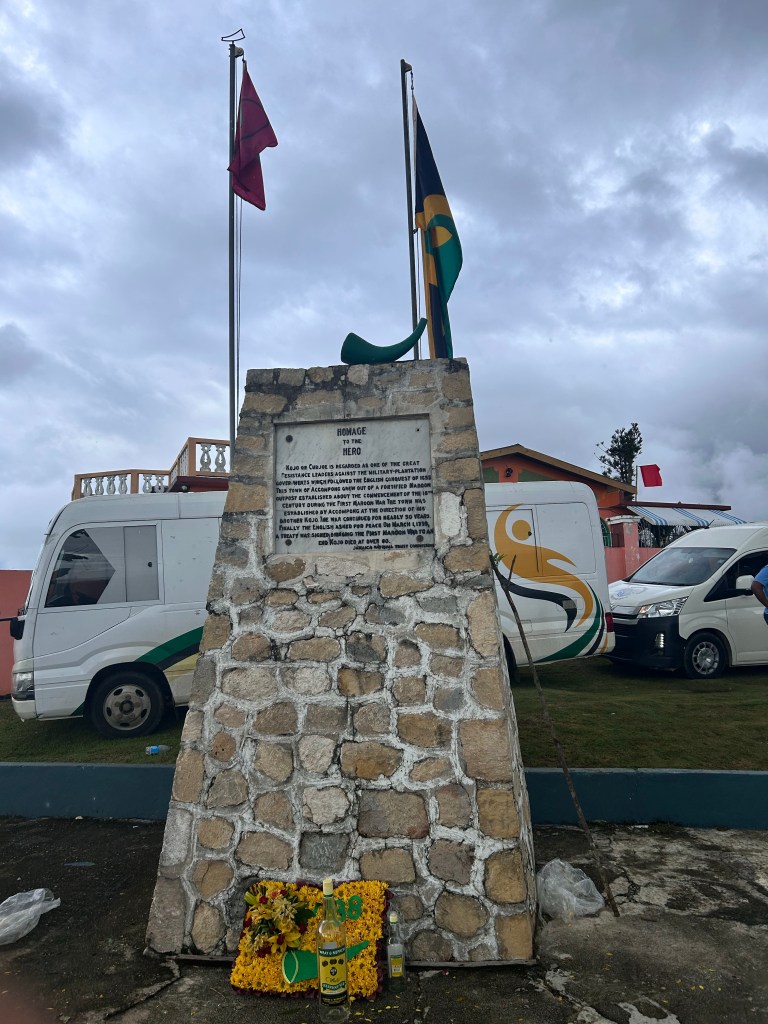
Monument close to entrance of the town reads: HOMAGE TO THE HERO
Kojo or Cudjoe is regarded as one of the great resistance leaders against the military-plantation governments which followed the English conquest of 1655.
This town of Accompong grew out of a fortified Maroon outpost established about the commencement of the 18th
century during the First Maroon War. The town was established by Accompong at the direction of his brother Kojo. The war continued for nearly 50 years. Finally the English asked for peace. On March 1, 1739, a treaty was signed bringing the First Maroon War to an end. Kojo died at over 90.
Jamaica National Trust Commission
2026 All Rights Reserved
Like what you see? To never miss a post click HERE👈 to subscribe & follow the blog. There’s more HERE👈 and on Spillwords, the Writers Club, Facebook & Bluesky.
In creative solidarity, Dee💡 Only WordPress.com members can hit the “Like” button, but everyone’s welcome to share their thoughts in the comments. Thanks!
 Poems & More
WHAT a journey; the sights, the colours, the WORDS. Mi cudda almost SMELL it!!!!
LikeLiked by 1 person
Awesome!!!!
LikeLike
A gathering not seen by many, a solemn tribute to its great history. Thanks for sharing it, Dawn. 🇯🇲
LikeLiked by 1 person
It’s a privilege to have been there. Thanks for stopping by Eliza!!!!!
LikeLiked by 1 person
Thanks for sharing this very inspiring story Dawn.
LikeLiked by 1 person
Thanks for reading and commenting Sadje!!!
LikeLiked by 1 person
It’s a pleasure dear sister.
LikeLiked by 1 person
🤗💖🤗
LikeLiked by 1 person