Afterword: A Senryu influenced by CeCe Woman’s song and a riff off the popular Psalm 23:6–“Surely goodness and mercy shall follow me all the days of my life…”. So, if you happen to see something chasing after me, don’t be alarmed, that’s just God’s goodness and His mercy following me every day of my life. #HeavenlyBodyGuards
Like what you see? To never miss a post click HERE👈 to subscribe & follow the blog. I love hearing from you, so remember to “like” & comment. For more content start HERE👈
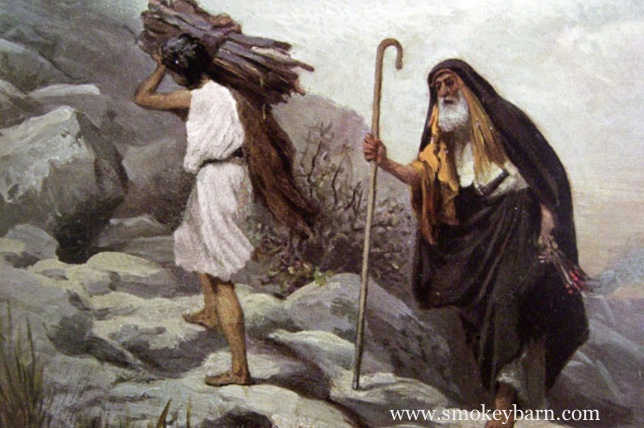
The place, Mount Moriah The time, the darkest of night The request was made The decision has been taken Separated, alone, he wrestled At dawn the journey began One heartbreaking step before the other Only begotten son in tow Three days he trods a beaten path up the mountain
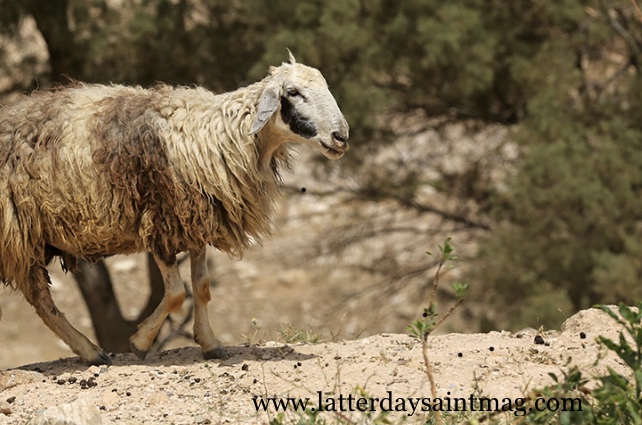
The place, Mount Moriah The time, the darkest of night In the sheepfold, huddled together Except for one lamb Separated, alone, he wandered At dawn the journey began One unsure-footed step before the other Blindly he trods an unknown path, through thickets, up the mountain
Part II
The stones of the altar have been stacked The sticks and brambles have been laid The stony place of sacrifice cushioned, made ready to receive The sacrificial instrument has been sharpened The binding cords have been secured The fire stones have been selected The sacrifice has surrendered, submitted, bounded, mounted The knife raised in shaking hands in space suspended …
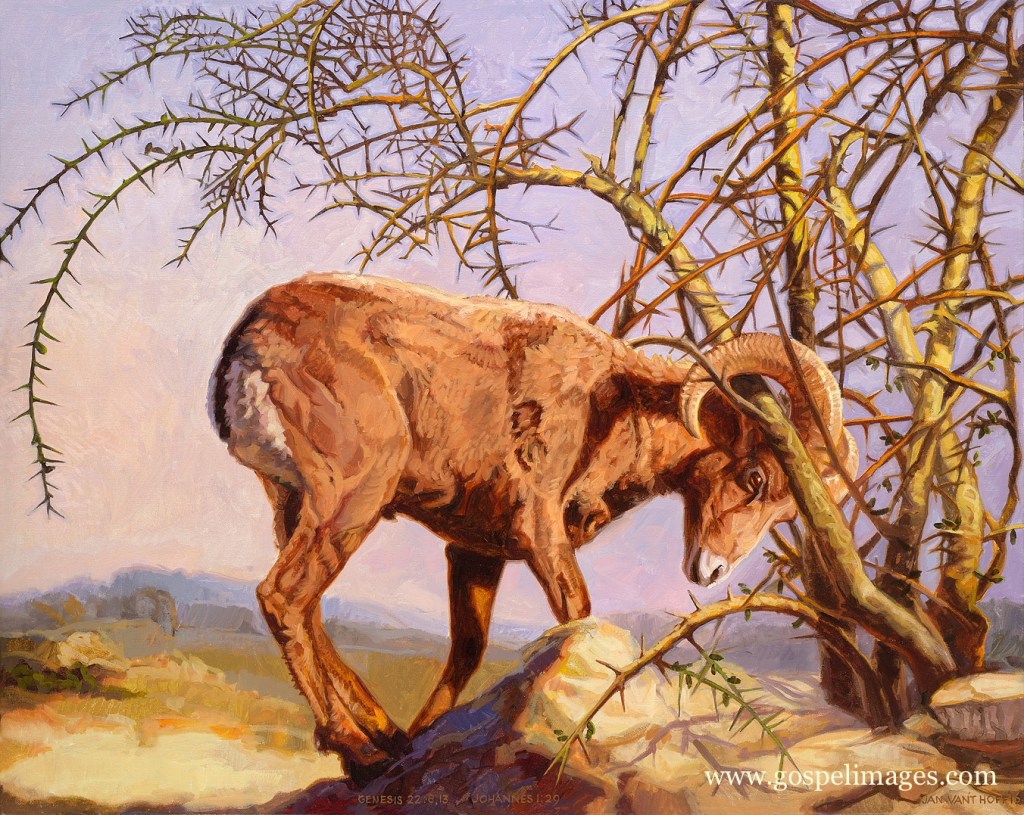
The thickets have grown thicker Sticks and brambles blurred his path Directed by a force unknown He stumbled forward up the backside of Moriah mountain To a place where the stones of an altar have been stacked Where a sacrifice has surrendered, submitted, bounded, mounted Where the sacrificial instrument raised in shaking hands, in space suspended Caught in the thicket, he’s suspended …
In that moment of dual suspension A voice thundered: “Touch not your only begotten son Look over yonder, there, see A sacrificial lamb caught in the thicket for thee”
Part III
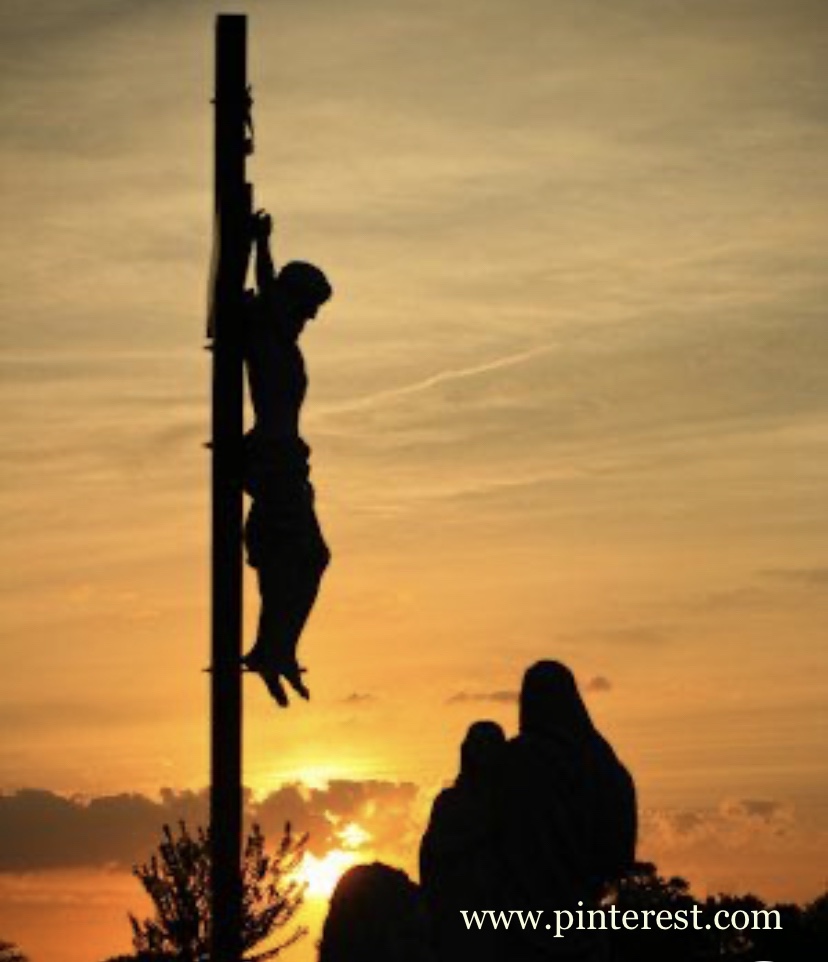
The place, Mount Golgatha The time, the darkest of days The decision has been taken Separated, forsaken, alone He wrestled At dawn the journey began One back-breaking step before the other Sacrificial instrument in tow Dutifully he stumbled forward up Calvary’s mountain Where a cross has been stacked Where the sacrificial tools have been sharpened Where the sacrifice has surrendered, submitted, bounded, mounted To be nailed-up upon a cross, in space, He too, suspended …
When the voice of heaven thundered: “It is finished” And a terrified voice confessed: “Truly He was the only begotten Son of God” To be placed in a grave, three days enshroud
Part IV
Two only begotten sons But only One begotten Son of God
Two went up the mountain But only One went up Calvary’s Mountain
Two lambs But only One Lamb slain from the world’s foundation
Jesus—the Son of God, the Sacrificial Lamb
After-word: This epic poem is a parallelism of the Abrahamic and the Messianic sacrifice experiences. Abraham’s would-be sacrifice of Isaac was a foreshadow of the crucifixion of Christ. The sacrifice of Christ was a symbolism of high sabbaths (John 19:31)as the complete story of salvation—that is, the work of Christ beginning with His death on the cross as the Passover Lamb and to end at His second coming.
2023 All Rights Reserved
Like what you see? To never miss a post click HERE👈 to subscribe & follow the blog. I love hearing from you, so remember to “like” & comment. For more content start HERE👈
Did you know that there are only three recorded times in the Bible that God used His fingers to write?
Yes! Once when He wrote the Ten Commandments as standard of righteousness on two tablets of stone (Exodus 31:18). The second time was when He pronounced a message of judgment on King Belshazzar by writing on a wall (Daniel 5:5).
In both of these instances He wrote on concreted matter—stone and wall—signifying permanence.
The third time God wrote with His fingers is fascinating and quite intriguing to me and so it’s the focus of today’s Shabbat Shalom post.
Picture this—they were in the throes of lovemaking when community leaders broke into the privacy of the room. Astonished, they hastily separated their bodies from each other.
She was barely able to cover up her before they dragged her from the bed. As they pulled her from the room she grabbed her outerwear and clumsily covered her body. The last she saw of her lover, he was already dressed and melding into the crowd of angry men.
Hair unkempt. Clothing dangling untidily. Afraid to look up, she kept her head downcast, her eyes fixed on the sandaled-feet before her. Ears deafened by the angry mob.
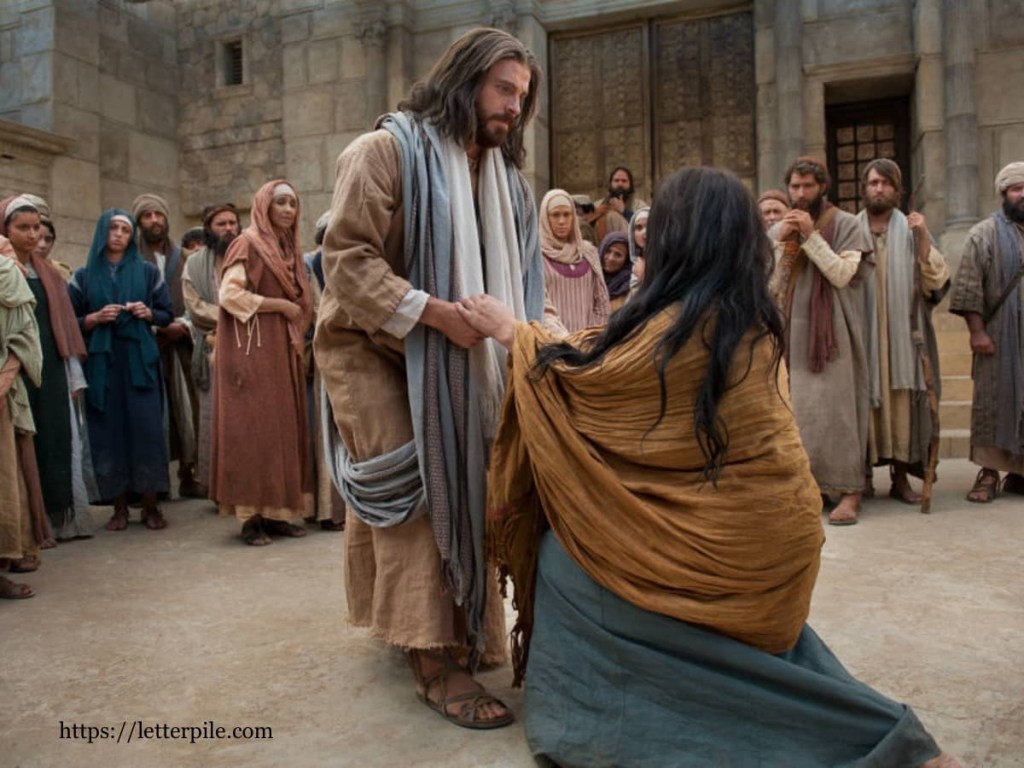
This is one of the stories recorded in the Bible and referred to as the woman caught in the act of adultery (John 7:53-8:11). This story appears in only one of the four Gospels—the book of Saint John. Though there has been much debate about its authorship and its authenticity as part of the life story of Christ, I find it to be one of the best examples showing how grace and mercy coalesced with judgement and justice.
My intrigued with this story is first because it showed that Jesus was intolerant of ‘isms’ like male chauvinism and sexism. Being “caught in the act” implies that both the woman and the man were present. However, it was the woman alone who was brought before Jesus for condemnation even though the Law of Moses stipulated that both the man and the woman should be put to death (Leviticus 20:10).
The intent of these men therefore was not for true justice but rather to entrap Jesus—would He apply the law of Moses and called for her stoning and in so doing break the Roman law?
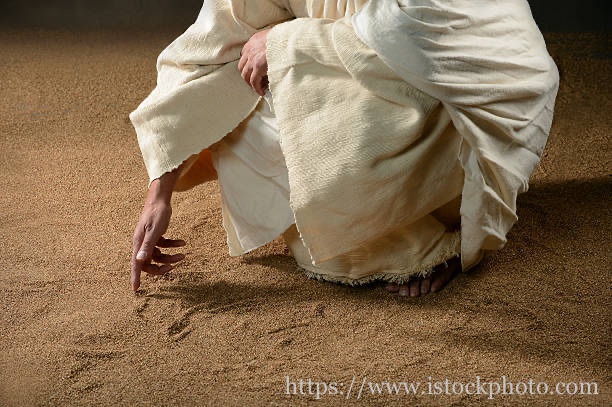
But, Jesus is such a smooth operator though. He doesn’t say one word out loud. Instead, He looks them knowingly in the eye, He stoops down to the ground and He began to speak with fingerprints in the sand.
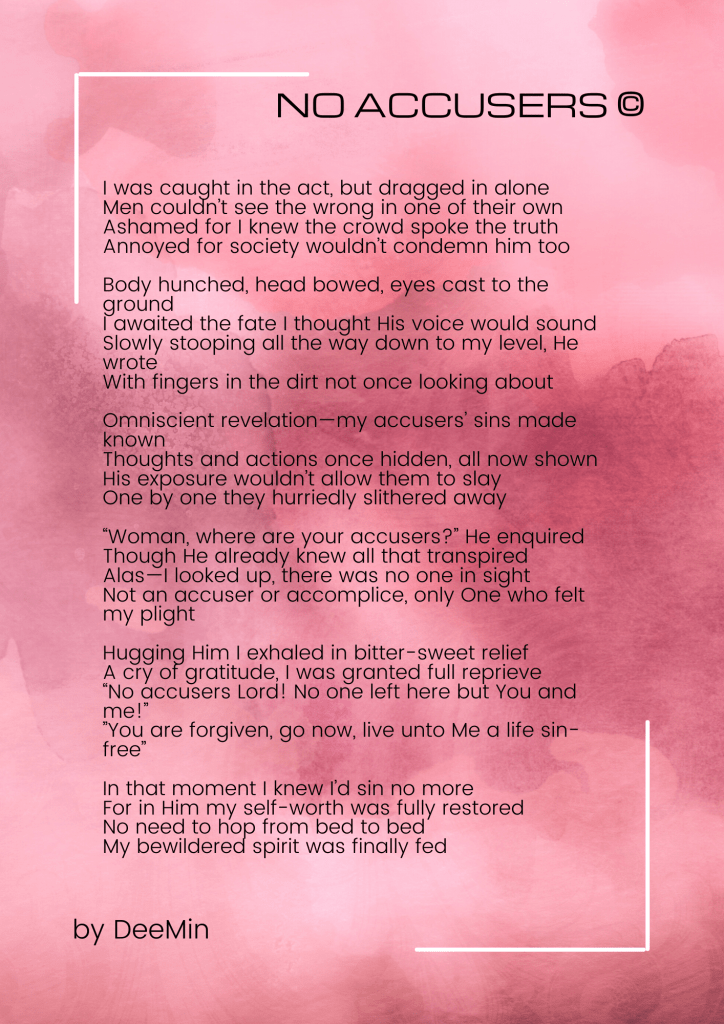
Let’s hear the story through the woman’s voice as I captured it poetically:
The second thing that intrigued me about this story is the fact that Jesus wrote in the sand.
So, what is intriguing you may ask?
That, inscriptions in sand are not meant to be permanent.
This story outlines the beauty of salvation that not only will God show up in the messiness of our sins, but He’ll acknowledge them in sand—tiny particles that are easily scattered and dissipated. And just like when sand is scattered, so are our confessed sins removed and dispersed as far as the east is from the west (Psalm 103:12).
This story also reinforces that Jesus does not encourage sin, but that He’s equally and unequivocally clear in the depth of His love for sinners. This is why He first seeks to heal our hearts and the proclivities that drive us to sin, then He calls us to turn away from a life of sinning while He silences those who stand in judgement and condemnation.
Shabbat Shalom.
What accusers have you encountered? Who’ve marred your name or brought you shame? Who’ve dragged you before a disciplinary board? Expecting condemnation to settle the score? Can you see Jesus stooping, getting down to your level? Hear Him say: My child, go now, your sins are forgiven Then with rejoicing you too will say: No accusers Lord to see None left here but You and me
ART to heART is more than a homophone. It’s a life-changing salvific principle used in the recreative-poetic expression of God.
The Greek word poiēma is used ONLY TWICE in the Bible and both times in reference to the creative power of God. First, when He created eARTh referred to as “things that are made”—a phrase translated from poiēma. Romans 1:20 And second, in reference to the recreating of our heARTs referenced as “masterpiece”—a word also translated from poiēma. Ephesians 2:10
In essence, God demonstrates Himself as both Creator and Redeemer through and in us.
We’re both a complete work created by the Creator, and a transforming process being recreated by the Redeemer.
Humankind was the only part of creation that God made with His hands, in His image and after His likeness. Genesis 1:26 He poured the very essence of His divine artistry in us. We were created perfect in every way.
The Bible went on to reveal that sin entered. I like the way the great theologian Charles Spurgeon puts it: he says, when sin entered it was as if “we quit [God’s] … workshop”. [Treasury of David, p239.]
Because of sin our hearts turned away from God and our ways of thinking and behaving toward God and our fellow human beings were also distorted. And sin had but one consequence—eternal death. Romans 6:23
But God wasn’t having it! Absolutely not!
Determined not to lose the crowning jewel of His creation eternally to death, God puts His redemptive plan in motion. A plan to draw us back to Himself, back into His workshop, in order to recreate His ART/His poiēma in our heARTs.
Let’s talk about God’s heart and how He loves.
God has a “SO LOVE” heart. A heart that loves far beyond a Significant-Other kind o’ love. God’s SO—to-such-a-great-extent—LOVE, is a die-for kind o’ love.
For God so loved the world, He gave His one and only Son [to die], that whoever believes in Him shall not perish but have eternal life.
In the act of creation, God stooped down to breathe life into us. However, in the act of redemption God offered Himself up, to die.
And He didn’t just die, God bled for us. He endured a crown of thorns that pierced His brow and spilt His blood. He endured hammering nails that tore through skin and bone and spilt His blood. He endured a piercing sword that slit His side and spilt His blood.
God bled and died to redeem us back to Himself, and to rescue us from eternal death.
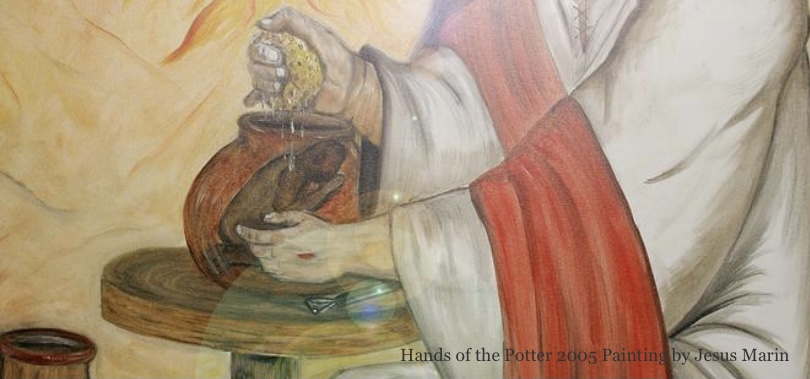
This is gifted to us as grace and can only be received through faith. For those who choose to accept His gift, Romans 6:23 God likens the process to a potter transforming clay. Isaiah 64:8
And again, we see God returning to the posture of stooping—molding and shaping us, recreating the ART in our heARTs, redeeming us back as His masterpiece.
… we are God’s masterpiece [poiēma]. He has created us anew in Christ Jesus, so we can do the good things He planned for us long ago.
Created anew in Jesus means we are again spiritually acceptable to God because of His redemptive power which is working in and through us. His redemptive power enables our hearts, our thoughts and our behaviors to glorify God and to be beneficial to our fellow humans.
In other words, we are redeemed/saved not by good works but for good works.
ART to heART. Now we are twice God’s—once by creation, twice by redemption. We are His ultimate workmanship—His work of art.
Shabbat Shalom. Rest assuredly in knowing you are a work of ART in progress in the hands of the genius Creator and Redeemer who uses only the right tools to reshape your heART into its perfect masterpiece design. You Are A Masterpiece, body and heART!
After-word: In the last Shabbat Shalom post I referred to God’s poetic expressions in creation through the ART He created in the midst of eARTh and the crowning jewel of His creation—human—as His masterpiece. [You can see more on that in this post: You’re A Masterpiece: God’s Work of Art.] One reader’s comment referred to the ART in heART which was expounded on for today’s post—“God’s Art to HeART”.
I came across 12 Bloggerz! hosted by Rory. Rory you asked 12 great questions but one really jumped out at me. So, I’ll answer only that one because it aligned so strongly to something that is integral to who I am—my faith and being a Christian.
This is the question: How would you feel if everything you didn’t believe in today turned out to be true – which of your new disbeliefs now truths would affect you the most profoundly?
But also answer this question from the opposite spectrum as in –
How would you feel if everything you believed in today turned out to be false – would this affect you and if so which falsehood that you hold now true would affect you the most profoundly?
I’m a Christian. I’ve questioned things in the Bible. I’ve stripped down my faith to the bare ‘bone’ and built it up again just on the basis of who God has been to me. Not on theology and doctrine, but on a living faith. A faith in a God who grants me goodness and mercy every day of my life. Even in the hardest and saddest of times, I’ve experienced His goodness and love and walked in His mercy and grace. Now I KNOW that I know.
Turning now to answering Rory’s question: if it turns out that there is no God and no rapture and no heaven, living my life by biblical Christian principles in a world of “alternative facts” and intense hopelessness and despair would still be worth it. And I’d choose to live this way again and again because it affords me a joy and peace to live life in all its dimensions—the good, the bad, and the in-between.
I like how Pascal lays it out in his Pensées—as a wager: If I believe that God exists and I live by His principles, there is only a finite loss (like the “pleasures” of the world I choose to abstain from), but I will gain infinite blessings such as life after death. However, if I believe that God does not exist and He actually does, then my loss is infinite in that there is a life after death that I would have forfeited for finite gains.
My wager: I chose to believe that God is real, the rapture is real, and heaven is real. And, that when this life is over, it is not the end, I shall live again. This gives me immense HOPE—there’s got to be more than this life.
Shabbat Shalom. May you find contentment in your faith.
We know that God established Sabbath as a day of rest at the end of the 7-day week. On the 6th day human beings were created. So clearly there wasn’t much work, if any at all, for humankind to do between them being created and Sabbath rest being instituted. So, if not to rest from work, what then was the purpose of that very first sabbath? And what can that teach us about sabbath rest today?
Imagine that you’re Adam or Eve. It’s Friday and you came to know yourself and to meet the One who created you. And together with your Creator you start to explore the vastness of your garden-home. You are enveloped in nature. You go off to sleep with wonderment and immense joy and wake up just as blissful with jubilant expectation to see what else the Creator has to reveal of His eARTh. And He bids you “good morning, welcome to your first Sabbath!” He invites you to explore and reflect on all He did for you despite you having done nothing. He invites you to receive Sabbath grace.
Grace, simply defined in Christian theology, is a favor given to us by God only on the basis that He desires for us to have it, not because of anything we have done to earn it (i.e. it’s unmerited).
Nature is one way grace is demonstrated. We did nothing to have received the gift of nature. All its wonder and splendor is the grace that Sabbath affords us to reflect on.
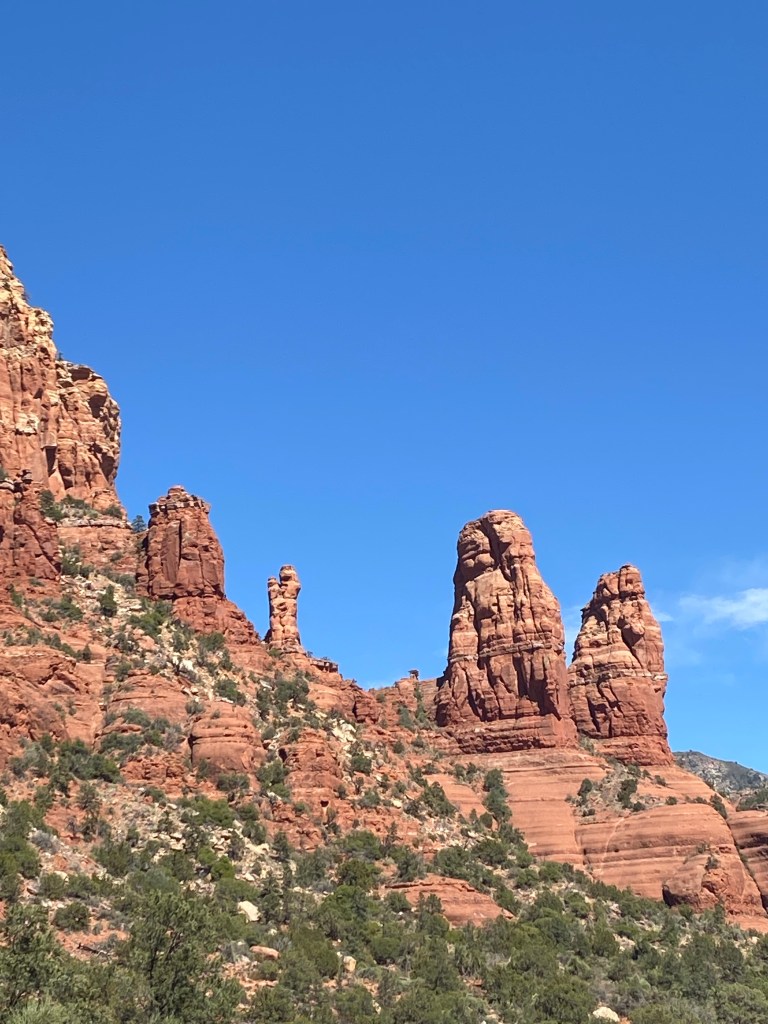
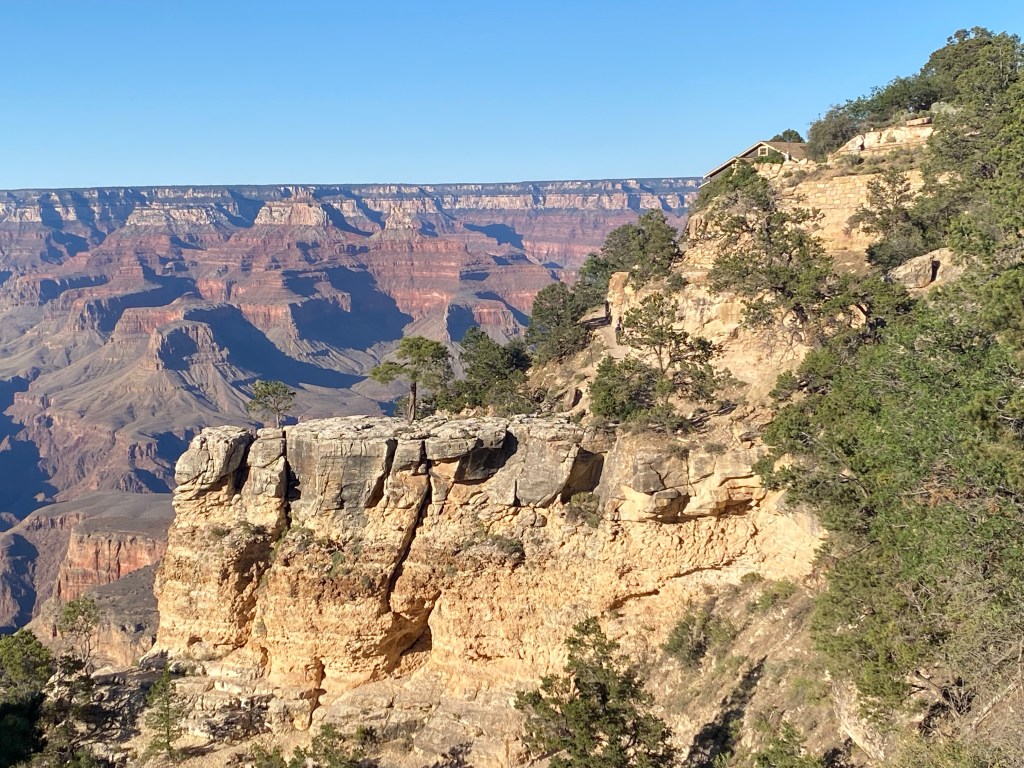
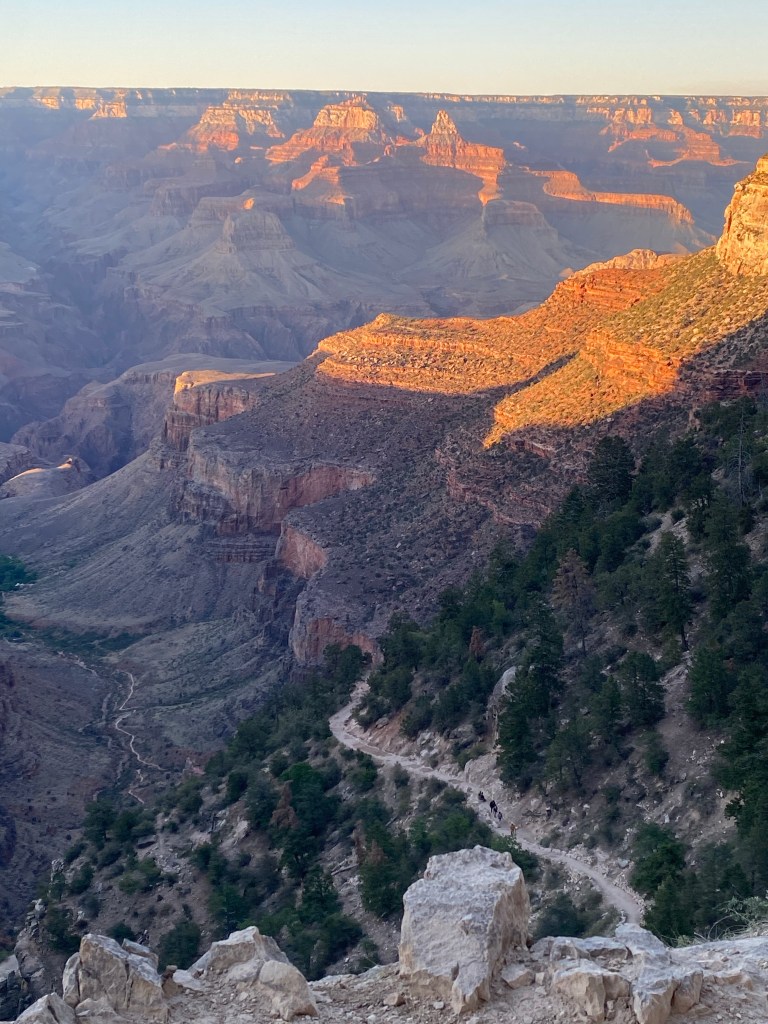
Join me on this pictorial ode to nature, journeying through Arizona:
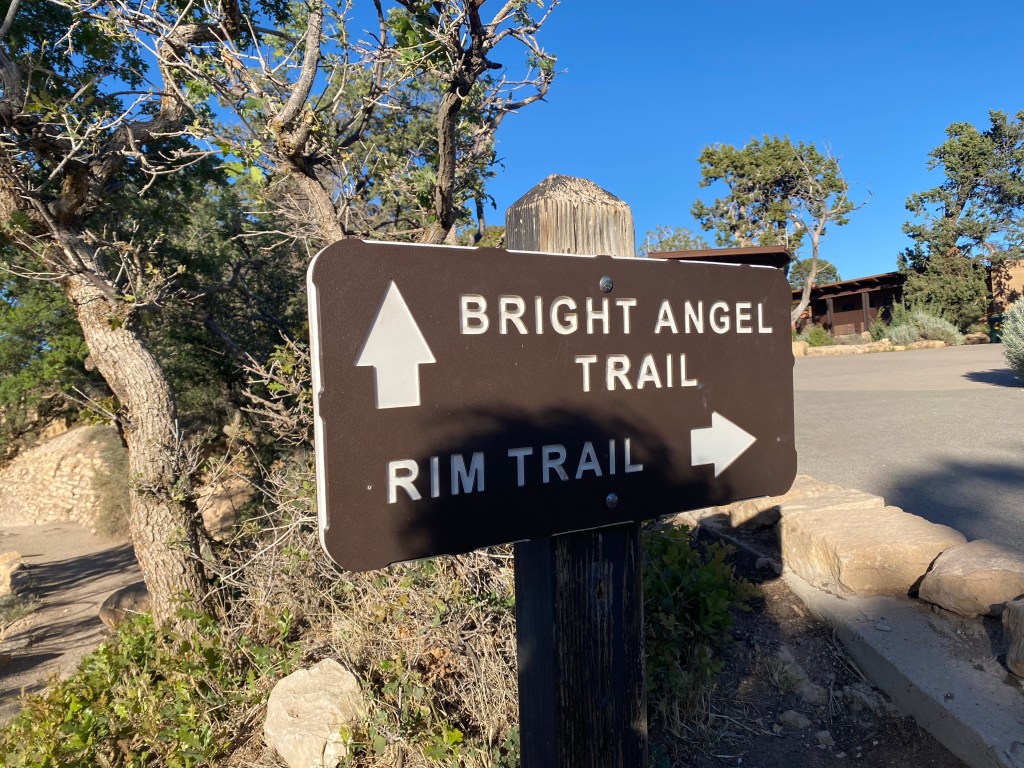
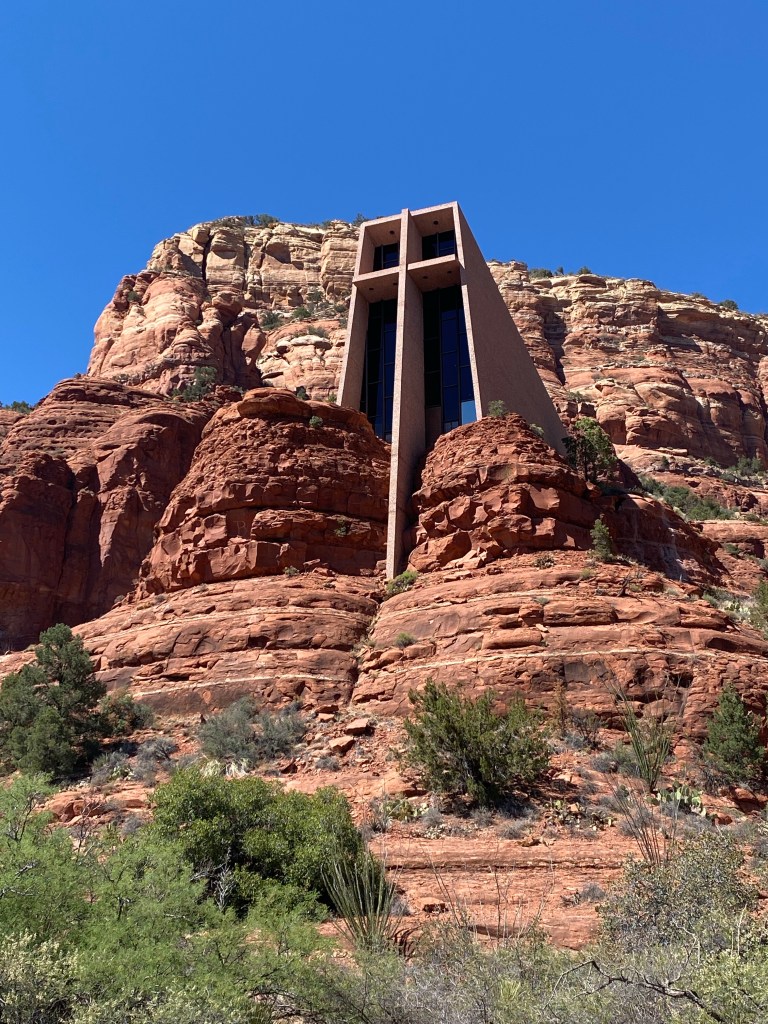
Surveying the incisions that over time water has cut into the plateau revealing layer after layer of rock in hues so red to influence the naming of Sedona, Arizona—Red Rock Country.Whether you look to the left or the right, your eyes will land on stunning red rock vistas.Determined to climb to the highest level of the Bell Rock to bask in the earth’s energy from the vortex, I often got down on all fours.There she is in her full splendor, the Bell Rock, as only can be fully appreciated from above in a helicopter ride over … I hiked that! Getting re-centered in a circle of cairns at the 1st level of the Bell Rock vortex. Vortex is a concentrated area of energy rising up from the earth. If you’re sensitive enough to the surrounds, you do feel the energy. Nature equally awes in the Grand Canyon with massive boulders so precise and grandiose ……and mountain ranges flat like a table top juxtaposed to ragged-edged peaks draped in golden sunlight. No trip to the Grand Canyon is complete without a roadside encounter with the wild life whether grazing lazily along the highway…… or skillfully scaling rock faces. These sheep mountaineers blend seamlessly into their environment. Had this enchanting encounter while hiking the Bright Angel Trail in …… the Grand Canyon. Arizona also boasts plants flowering in arid landscapes … … and bigger-than-life cactus growing wild……or tamed for exterior decor. We often think of grace in the context of Jesus’ death on the cross. This crucifix hangs in the Chapel of the Holy Cross, one of the strongest vortex sites (there are 4 vortexes in Sedona). The Chapel of the Holy Cross, built in between 2 towering red rock formations in Sedona is the perfect place to sit in quiet reflection of all of nature surrounding you while gazing up on the embodiment of grace—an image of Christ hanging from a cross.
In every direction throughout Arizona there is the beauty of the natural wonders of nature, and this too is a reminder of the grace of Sabbath.
Shabbat Shalom. May you experience the grace of the Sabbath in nature today and every day.
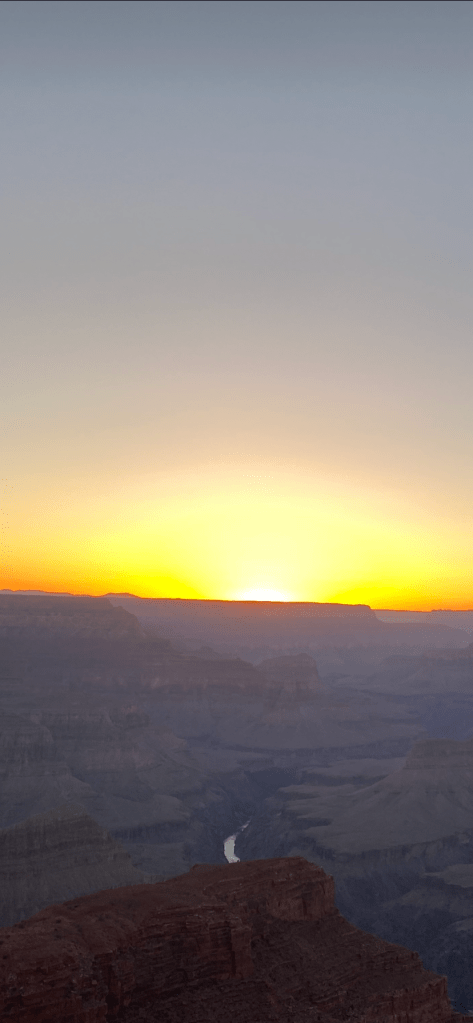
The sun sets on my time in Arizona, blanketing the horizon over the Grand Canyon.
This blog, titled "Empowering Leadership: Building a Harmonious Partnership Between School Management and Principals," explores the essential factors that foster a strong and effective relationship between school management and principals. Drawing on historical context, philosophical principles, Indian legal frameworks, and mythological analogies, the blog offers insights into creating a balanced dynamic where principals are empowered yet accountable. It provides practical strategies for ensuring the administrative, academic, and financial health of educational institutions through clear communication, shared vision, and mutual respect.















 Poems & More