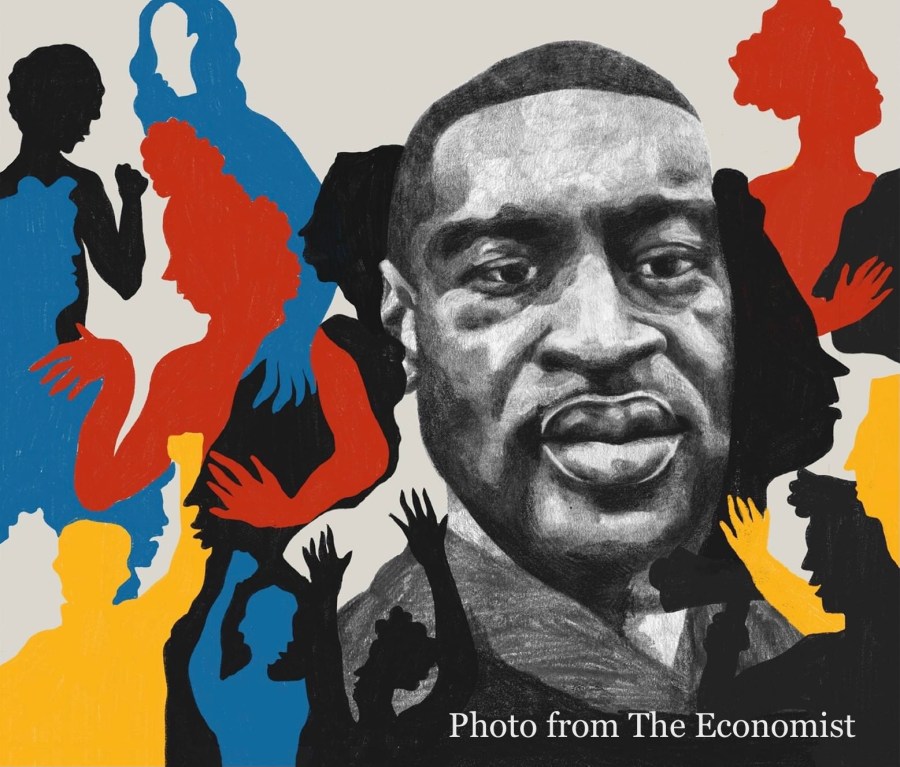
George Floyd your life mattered. Your death sparked a movement. We will not forget. (Your sunset: 25 May 2020)
I CAN’T BREATHE His voice reached back over 400 years to the belly of slave ships Summoning the plight of fore-mamas and -papas Black bodies snatched from homeland stacked up for export Crammed in places too cramped for air Constrained. Pressed. Till urine leaked, undignified Shackled and restrained from neck to feet Black bodies stretched out beneath deck, unseen
Too dark to see Too constrained to touch Too dense to be heard Too putrid to breathe in
I CAN’T BREATHE His voice reached back 46 years to the belly of his mamma To summon the space he’s always felt protected, safer Invoking relief from the indignity of shackled wrists Pinned under the knee-weight embodiment of bigotry and racist hatred 8 minutes:46 seconds Breath. Of. Life … deliberately snuffed out, stolen Black body stretched out for the world to view
Too riotous not to see Too palpable not to touch Too loud not to be heard Too blatant not to breathe in
I CAN’T BREATHE Ricocheted off sidewalks from cities and towns around the globe Escaped the lips of mamas, papas, sistas, brothas of every age, color and creed Galvanizing protests undaunted by a pandemic Bodies of all races stretched out, collective voices shout Demanding revolution, transformation, radical alteration
Too multi-ethnic not to see Too seismic not to touch Too forceful not to be heard Too copious not to breathe in
I CAN’T BREATHE Ignite change … too enormous not to see Ignite change … too radical not to touch Ignite change … too disruptive not to be heard Ignite change … too transforming not to breathe-in
Change.
So.
I.
Can.
BREATHE.
Like what you see? To never miss a post click HERE👈 to subscribe & follow the blog. I love hearing from you, so remember to “like” & comment. For more content start HERE👈
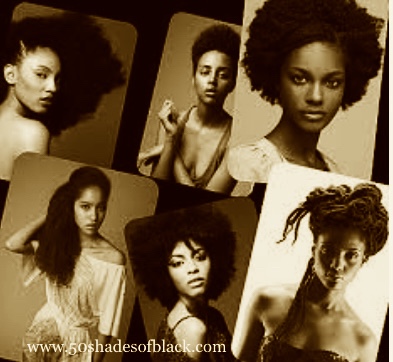
My curls are kinky They coil to the twist of their own internal rhythm So twisted—me and my curls—we had a love-hate thang going ‘Cause others didn’t understand ‘em They couldn’t really teach me to ‘preciate ‘em And ‘cause I wasn’t woke enough to defend ‘em I kinda sorta love-hate ‘em
My curls are wool-like Pulled over eyes, they can be deceptive They’ll coil up tight and shrink to scalp at even water’s sighting They make for a beautiful ‘fro Exposed to the elements for too long though They’ll defy any comb’s attempts to un-kink their flo’
My curls have been terribly misunderstood Their fullness and density been processed to straightness They been pressed, relaxed, texturized, straight-out-flattened Clipped, chopped, colored, razored Braided, weaved, locked, cornrowed And they been greased, greased and mo’ greased
My curls are acrobatic They’ll flip and bounce, changing with my every mood And they’ll totally flip at even the sign of uninvited touch moves Egocentric—yeah, they are—they regard only me Me and my curls now, we got mad chemistry One-hundred-percent-LOVE-only y’all—that’s we
My curls evolved empowered—now they’re unapologetic survivalists Every natural kink in bouncebackability mode Defying every relaxer, every straightening comb They curl unmolested into their resilient-mystique self—whole Conveying cultural, political and social justice opinions In stylish kinky hair expressions
From Madam CJ Walker To Mrs. Michelle Obama My curls are audacious My curls are bold My curls are fully deserving of this— Their very own ode
All rights reserved
[first published in 2022, bringing it back for BHM ‘25]
Afterword: Hair was a sacred cultural and spiritual symbol in ancient African societies. Slave traders, as a first step in a process of systemic culture and identity erasure, would shave the heads of all African people they captured. Hair texture and styling played an important role in the survival of enslaved Black people. For instance, in the 1960s, the afro became a symbol of self-empowerment and activism. Black hair is black resistance.
Like what you see? To never miss a post click HERE👈 to subscribe & follow the blog. I love hearing from you, so remember to “like” & comment. For more content start HERE👈
I am worthy of my own time, my own attention, my own love. I honor my spiritual, mental, emotional, physical needs. I show up for myself 100% committed. Period!
In the quiet sanctuary of reflection I find solace In the depths of my being I come to know I’m worthy
Each heartbeat a testament To the value of my existence I am worthy of my own time Amidst the chaos of life’s clamor
My essence whispers softly Echoes of self-compassion reverberate I honor my spiritual, mental, emotional, physical needs Crafting a symphony of self-care
In the labyrinth of my mind I navigate, seeking balance With each step, I affirm: I show up for myself, 100% committed
I start from the point of knowing In the sacred embrace of divinity’s grace I am a child of God Born from the essence of infinite love
You’re a woman of faith, said he Refusing to join the party of “woe is me” Standing at the crossroads of hyphenated identity Straddling the fine line of conjoined affinity The shortest distance connecting divergent words Yet the greatest distance between colliding worlds
Wrestling within with identities, two Pondering which is the true you Is it the half that doubts and frets Filled with sadness and regrets? Is it the other that’s thrilled with hope and wonder Scavenging life’s downs—a fortune hunter?
What comes in the hyphen is the interval Whether left or right it’s a fight for survival Too deep under there’s no indicator light No redirection to the surface, a frightening plight Release air, bubbles of self-assurance forming Follow bubbles—rise always toward surface soaring
Identity is who you are despite the circumstances Who you are is not a game of luck or chances Whether in the good times or in the bad Whether the situation makes you happy or makes you sad You are betwixt and between the hyphenated you Grab ahold of the purpose of what you’re born to do
Child-of-God/child-of-human—interconnected being One you—living duality inward refereeing You—the image of God, a god-given soul Yet you—locked in a body of skin and bone The paradoxical self—looking out through eyes Visions of living hyphenated—the you to harmonize
2023 All Rights Reserved
Like what you see? To never miss a post click HERE👈 to subscribe & follow the blog. I love hearing from you, so remember to “like” & comment. For more content start HERE👈
For today’s Shabbat Shalom post we’ll talk about God as name changer.
One of the reasons why I love God is that He is a doer of astoundingly-great things. One of those exceptional things He does is to change names.
Throughout the Bible there are examples of God’s name-changing power at work. And God didn’t just change names, He also spoke into those people who or what they were to be as embodied in their new names, even when they were still operating in old name ways.
For instance, He renamed Abram Abraham, meaning “father of a multitude”; and his wife Sarai He renamed Sarah, meaning “mother of nations”. And He did this while as a couple they were still childless and well on into their 90s!
For God has the power to call those things which are not as though they are. Romans 4:17
Another example is Simon. I like this name change best for two reasons. One, because it speaks to the dichotomy of human nature. And two, because it demonstrates the calling-in approach God uses in bringing us into our new names.
Simon was a character. A fisherman by trade. He was a fast-talker and he was belligerent. He could cuss you out at the drop of a hat. Interestingly enough, Jesus called him to be one of His twelve disciples. But, to the extent to which Simon was flawed, he was also faithful and courageous. And Jesus saw that within Simon, as well as solid-unshakable-leadership like qualities that would benefit the growth of the early church.
This is how the Bible records their first meeting:
And when Jesus beheld him, he said, Thou art Simon the son of Jona: thou shalt be called Cephas, which is by interpretation, a stone.
Although Jesus changed his name, within him were both Simon-traits and Peter-traits contending against each other. And we have many examples, because of the twelve disciples Peter is the most written about. His name appears 120 times in the four books that comprise the Gospels (Matthew, Mark, Luke, John). For the most part, when he’s referenced by his old and new name together—Simon Peter—it’s when his behavior demonstrated the dichotomy of desiring to do good but end up doing evil instead. And in those instances it’s as if he was being called out.
Here’s one example: the Bible says,
Then Simon Peter having a sword drew it, and smote the high priest’s servant, and cut off his right ear….
This was Simon acting in defense of Jesus, but it was definitely not Peter-like behavior. [By the way, Jesus intervened by reprimanding Simon Peter and restoring the soldier’s ear.]
The point here is that Jesus knows the dichotomy, the two sides of our beings, and so He knew Simon Peter’s struggle. While others were quick to call him out as Simon, Jesus instead used the call-in approach and spoke to the Peter he was becoming.
Listen to the way Jesus spoke to both the Simon side and the Peter side:
Simon, Simon, listen! Satan has demanded to sift you like grain; but I have prayed for you that your faith may not fail….
And Peter said to Him, “Lord, I am ready to go with You both to prison and to death!”
Jesus said, “I say to you, Peter, before the rooster crows today, you will utterly deny three times that you know Me.”
Notice Jesus called him by his old name twice. I think He did that on purpose to reassure Peter while he struggled with his own Simon-ness. I imagine Jesus placing His two hands on Peter’s shoulders, looking him square in the eyes and with compassion in His voice gave Simon the best assurance—that He, Jesus, would pray him through to his Peter-ness.
Wow! To have Jesus pray for you!
But, no sooner than Jesus gave Peter this assurance than he manifested Simon-ness—he exclaimed his commitment to stand by Jesus to the point of imprisonment or death. And no doubt Simon meant it. But, Jesus told him that what he’d actually do was to deny knowing Him. But notice this time Jesus didn’t call him Simon. He called him by his new name—Peter—using a call-in approach to remind him of what he’s becoming; that is, “stone-like” in his faith and this was at the point where Simon probably felt his worst.
History goes on to tell us that in the end Peter did lay down his life for the gospel and chose to be crucified upside down. Britannica: St Peter the Apostle
Yes I focused on Simon Peter, but the reality is we are all a bit of Simon Peter. Aren’t we?! We all struggle with names or labels others place on us. Calling us out for our flaws, our faults and our shortcomings. But God is calling us in. He wants to change our names and speak into and over us all the traits that come with that new name.
Because Jesus died to redeem us back to Himself, in accepting Him we inherit new names. And we get to choose depending on what our needs are. Feeling abandoned? God calls you WANTED. Feeling like an orphan? God calls you DAUGHTER or SON OF GOD. Or maybe you feel unattractive. God calls you WONDERFULLY MADE.
Free. Not forgotten. Forgiven. Honored. Blessed. Chosen. This is who and what God says you are!
Shabbat Shalom. May you find peace in embracing your new name and in knowing who you are based on who God says you are.
T-shirts are arguable the most functional piece of clothing in our closets. More recently I’ve come across Tees used as signposts for thoughts/feelings/stance on a range of issues making them artistic creative statement apparels.
Statements like:
Unapologetically dope
I never lose, I either win or I learn
Periodt. [oh yeah, when the “t” is added (“periodt”), you know no further discussion will be tolerated]
I’m not for everyone
I love the skin I’m in
Classy but thou shalt not try me. Mood 3:65 [I really like this one, it’s feisty with a nod to “commandment”-level caution/warning]
You want my rhythm?! You gotta take my blues.
Black lives matter
So it seems whether solidarity or protest, whether reclaiming space or questioning narratives, the messages we champion on our chests can contribute to how we’re understood in the world.
Particularly when you’re part of any group that has been OTHERED in the mainstream, the message on a T-shirt is one way to articulate a point without a direct action (like the caveat to start what may otherwise be a difficult conversation).
Whether challenging racial inequality or promoting body positivity or questioning gender inequities, when you can mirror what you think/feel (emotional level) with words prominently worn on your chest/close to your heart (aesthetic level), it’s as if your WHOLE self culminates in your fashion choice.
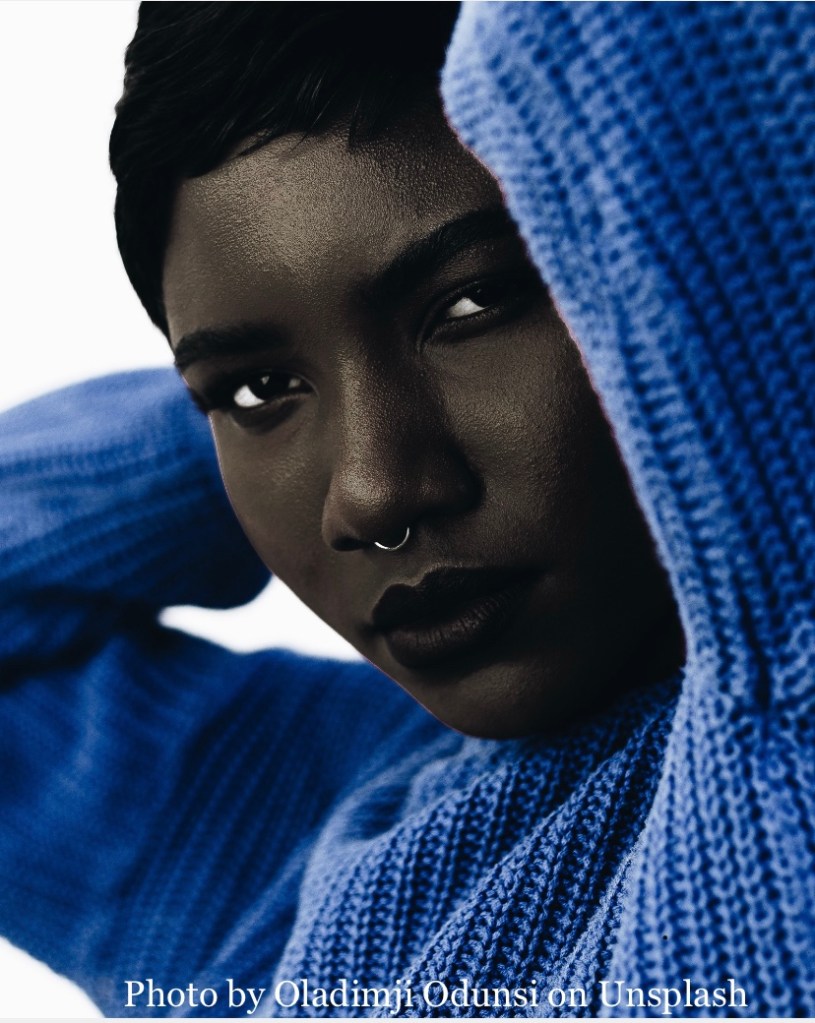
You may only look at the dark pigmentation of my skin You may only look at the full contours of my lips You may only look at the rounded fatness of my nose You may only look at whatever creative way I choose to wear my hair today Nubian curls, afro, braids or just that low flow
You don’t see ME ME in all my diversity
See the person that I am Not the person you perceive this skin color to represent Check the fake smiles and the hypocritical relations Drop the derogative names and the questioning gaze End criminalization and discrimination See beyond See the person that I am Yes, I am black There’s more to me than the color of my skin
Thanks for reading. You can interact with this post/me by hitting any of the “share this” icons below or the “like” star or “leave a comment” or “follow”.
I did this exercise (writing to my younger self) a few years ago and revisited it recently. I found it therapeutic and fun! It’s a good way to explore your relationship with yourself, to reconnect to points in your past and use that connection to inform positive changes for your now and your future.
Have you done this exercise? If not and you’d like to, here are a few tips to get you through it:
Start by choosing a period in time or age and try to recall the major experiences of that time. As your memories unfold, also connect to the emotions they evoke.
Think of what advice the you today would give the you at that age. You could give tips on how to not “sweat the small stuff” and also encouragement to face challenges.
This is a good exercise to find self acceptance and also to boost your self esteem. To get the greatest value, lean into the emotions that you feel, don’t judge just allow yourself to feel. You may journal these emotional feelings and do so with intention. Intentionality means seeing how you can shift the perceptions around those old emotions and open space for healing.
Instead of ruminating negatively, do so with gratitude. Look for ways you have grown or what lessons can be learned to be a more resilient you.
Be sure to affirm you and speak with love and acceptance.
Your life is a journey. You cannot change the past but you can learn from it and grow. This exercise is one fun way to do that.
I believe no experience goes to waste, instead we can learn and grow from them.
He didn’t change She fell in love With the him he wanted her to see To steal What she wouldn’t give an imposter Unmasked— Her love knows not this man she sees
After-word: I wrote this piece long before masking became part of global health guidelines. Today we mask-up to protect our immune systems from an unseen predator—the novel corona virus. So for that reason, follow the golden rule of masking: mask-up for others as you’d have them mask-up for you.
However, when I wrote this piece it was based on reflecting on deception masked as truth and when unmasked the toll it takes on the heart-system.
Before-word: This piece was written based on the culmination of experiences of those of us who’ve encountered a lying, deceitful, manipulator who masqueraded as love. Who among us haven’t had such an encounter? This is a live recording of a recital of D.O.A. at the Bowery Poetry Café (NY City).
[click the “play” icon to watch live recital of D.O.A]
This blog, titled "Empowering Leadership: Building a Harmonious Partnership Between School Management and Principals," explores the essential factors that foster a strong and effective relationship between school management and principals. Drawing on historical context, philosophical principles, Indian legal frameworks, and mythological analogies, the blog offers insights into creating a balanced dynamic where principals are empowered yet accountable. It provides practical strategies for ensuring the administrative, academic, and financial health of educational institutions through clear communication, shared vision, and mutual respect.










 Poems & More