Hiraeth: “A deep homesickness; an intense form of longing or nostalgia; an unaccountable homesickness for a place you have never visited”.
Hiraeth!
Hiraeth! Something irretrievably lost, beckons
Beckons my soul from deep
Deep within, this unexplainable, unattainable longing
Longing—intense yearning, reminiscing for a place
A place I’ve never been but somehow
Somehow I know
I know it’s home
Home before I was born
Born into this displaced world
World of sickness and suffering and death
Death that’s foreign to my soul
Soul born to live
To live for forever
Forever, now irretrievably lost, so
So deep—it echoes, ricochets off the walls of my soul
My soul yearning for home, calling
Calling deep unto deep, the roar of Your waterfalls sweep
Sweep over me, the depth of my soul opens
Opens up and drinks, for I thirst
I thirst for Your presence Oh …
Oh God, like a deer panting
Panting for streams of waters I thirst
I thirst for You
You, Oh God, You are my home
After-word: How can you be homesick and nostalgic for a place you’ve never been? Because God built a desire for Himself in our souls—our very DNA yearns for Him. And the deep of our need inherently calls unto the deep of His fullness; and vice-a-versa, the deep of His fullness calls unto the deep of our need. Between our emptiness and God’s all-sufficiency there is a great divide and so deep calleth unto deep—our souls cry: hiraeth (Psalm 42:7).
Shabbat Shalom. May you find completeness in the deep mercy of God’s fullness.
Love one another with brotherly affection (Romans 12:10) Bear one another’s burdens (Galatians 6:2). Encourage one another and build one another up (1 Thessalonians 5:11) Live in harmony with one another (Romans 12:16) Forgiving one another as God in Christ forgave you (Ephesians 4:32)
Outdo one another in showing honor (Romans 12:10) Be at peace with one another (Mark 9:50) Through love, serve one another (Galatians 5:13) Submit to one another out of reverence for Christ (Ephesians 5:21) Let us stir up one another to love and good works (Hebrews 10:24)
Bear with one another in love (Ephesians 4:2) Confess your sins to one another, pray for one another (James 5:16). Do not grumble against one another (James 5:9) Welcome one another as Christ has welcomed you (Romans 15:7) Love one another, just as I have loved you (John 13:34)
Clothe yourselves in humility toward one another (1 Peter 5:5) Teaching and admonishing one another in wisdom (Colossians 3:16) Do not speak evil against one another (James 4:11) But exhort one another daily, while it’s called today (Hebrews 3:13) And above all— Let us love one another, for love is from God (1 John 4:7)
Afterword:
One of the greatest blessings of holidays like Christmas is how they bring us together, reminding us of the power of community and connection. But what if we extended this spirit of togetherness throughout the year? Would our homes, communities, and world be filled with more love? Would we see peace on earth and goodwill truly extended to all people?
The Bible is rich with “one another” statements—guiding principles that call us to live in harmony, serve with humility, and love unconditionally. These statements remind us that we are not meant to navigate life alone; they can only be fulfilled with… one another.
This cento weaves together these timeless “one another” verses. Though written over two thousand years ago, their message remains strikingly relevant today, offering a blueprint for unity, love, and hope in our lives and our world.
In stillness and surrender, I find my way Where numbness wraps me, there God will stay In moments weak, when shadows fall His presence lifts, embracing all
Perfection is Not My Aim
Not a chase for perfect, not a polished being But in my flaws, my truth is seen To manage imperfection, to embrace it all Owning my flawsome, without a flaw
Transformation is Selfish and Hard
The path to change is hard and steep To let old selves die, to lose and weep For the woman I’m becoming, I will strive In selfish toil, I keep alive
The Author
God holds the pen, He writes this tale of mine He scripts and re-scripts, line upon line With bravery bold, my truth I will carry A vision, though delayed, know it will not tarry
For the vision is yet for an appointed time; But at the end it will speak, and it will not lie. Though it tarries, wait for it; Because it will surely come, It will not tarry.
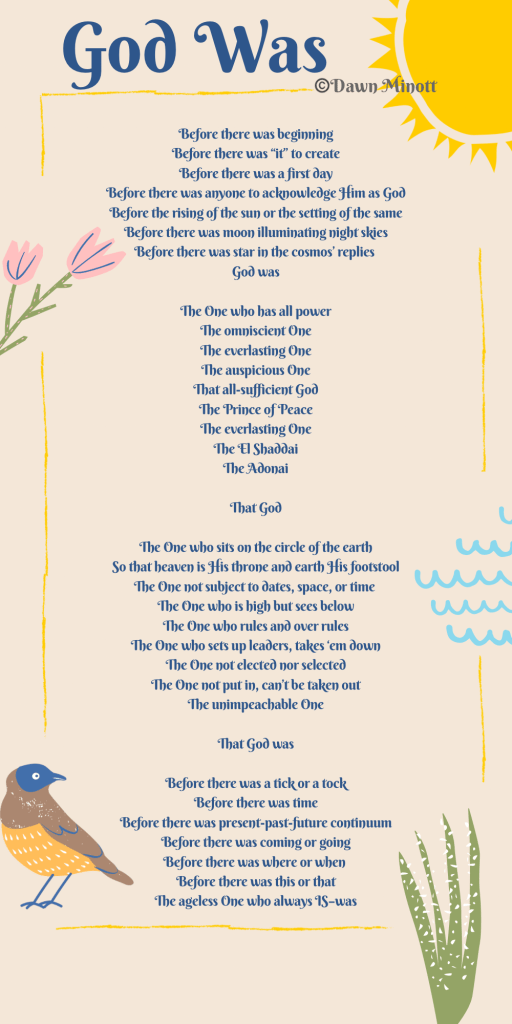
Before there was before, there was God. God was. God is. God will always be.
2023 All Rights Reserved
Like what you see? To never miss a post click HERE👈 to subscribe & follow the blog. I love hearing from you, so remember to “like” & comment. For more content start HERE👈
Afterword: I thought a fitting way to conclude this week’s poetry-music collaboration is with a Senryu influenced by CeCe Woman’s song and a riff off the popular Psalm 23:6–“Surely goodness and mercy shall follow me all the days of my life…”. So, if you happen to see something chasing after me, don’t be alarmed, that’s just God’s goodness and His mercy following me every day of my life. #BodyGuard
Like what you see? To never miss a post click HERE👈 to subscribe & follow the blog. I love hearing from you, so remember to “like” & comment. For more content start HERE👈
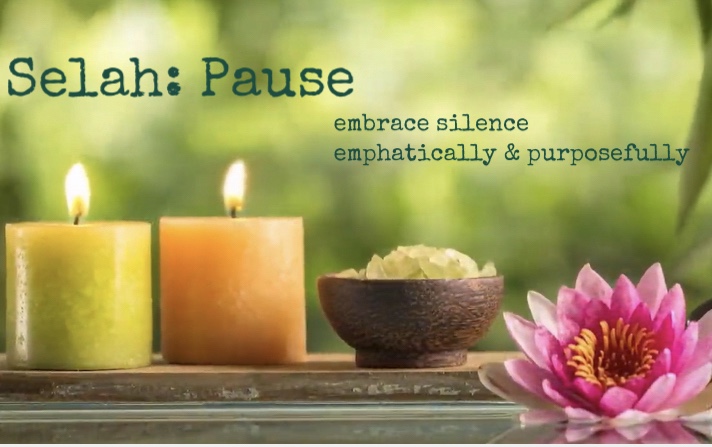
Selah! This may be the most mysterious word in the Bible. It appears at the end of verses primarily in the books of Psalms and Habakkuk. There’s no one definition but all may be summed up to be interpreted as: “stop and listen”, or “pause and consider”, or “contemplate, reflect and praise”. The operative word in these definitions—though only implicit—is silence.
Abba Father, I pause before You in the silence of quietness
I calm all around me and within that which would distract from the tranquility of peacefulness
I slow the racing of my thoughts and pause to dwell upon Your kindness
I settle my heart in contemplative wonder of creation’s vastness
Abba Father, I pause so I may feel You in the gentleness of the breeze
To reflect on You in the stillness of the billowing clouds
To behold Your greatness in the expanse of the oceans
And praise You from the gratefulness in my being
Abba Father, I pause in this moment, to embrace the silence
Like what you see? To never miss a post click HERE👈 to subscribe & follow the blog. I love hearing from you, so remember to “like” & comment. For more content start HERE👈
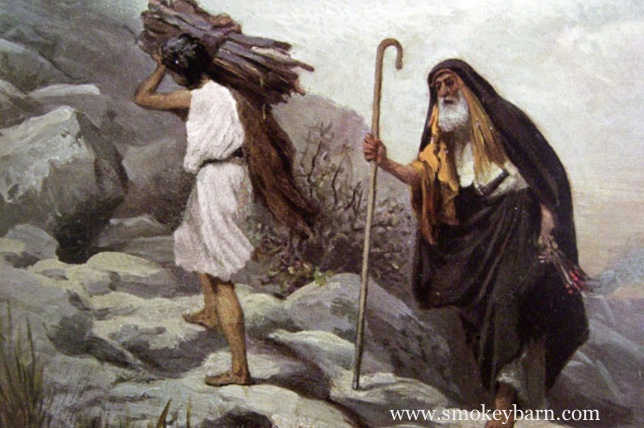
The place, Mount Moriah The time, the darkest of night The request was made The decision has been taken Separated, alone, he wrestled At dawn the journey began One heartbreaking step before the other Only begotten son in tow Three days he trods a beaten path up the mountain
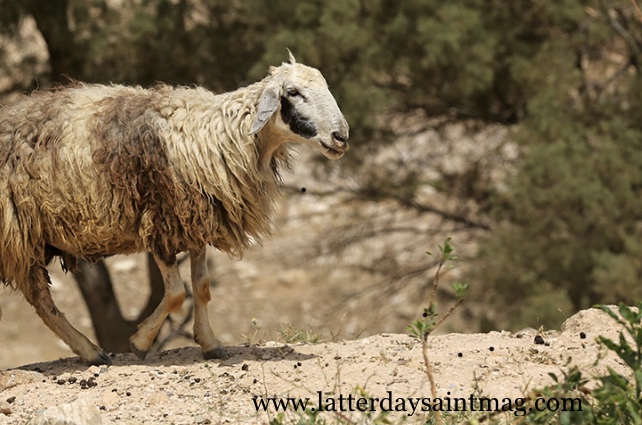
The place, Mount Moriah The time, the darkest of night In the sheepfold, huddled together Except for one lamb Separated, alone, he wandered At dawn the journey began One unsure-footed step before the other Blindly he trods an unknown path, through thickets, up the mountain
Part II
The stones of the altar have been stacked The sticks and brambles have been laid The stony place of sacrifice cushioned, made ready to receive The sacrificial instrument has been sharpened The binding cords have been secured The fire stones have been selected The sacrifice has surrendered, submitted, bounded, mounted The knife raised in shaking hands in space suspended …
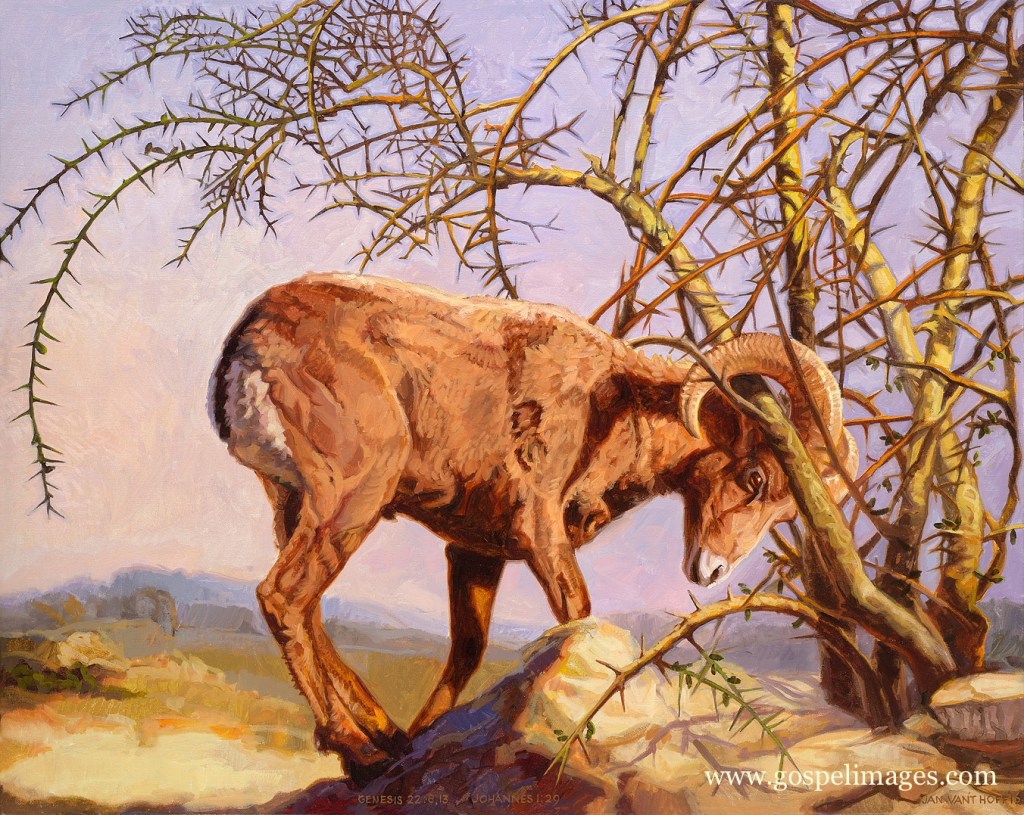
The thickets have grown thicker Sticks and brambles blurred his path Directed by a force unknown He stumbled forward up the backside of Moriah mountain To a place where the stones of an altar have been stacked Where a sacrifice has surrendered, submitted, bounded, mounted Where the sacrificial instrument raised in shaking hands, in space suspended Caught in the thicket, he’s suspended …
In that moment of dual suspension A voice thundered: “Touch not your only begotten son Look over yonder, there, see A sacrificial lamb caught in the thicket for thee”
Part III
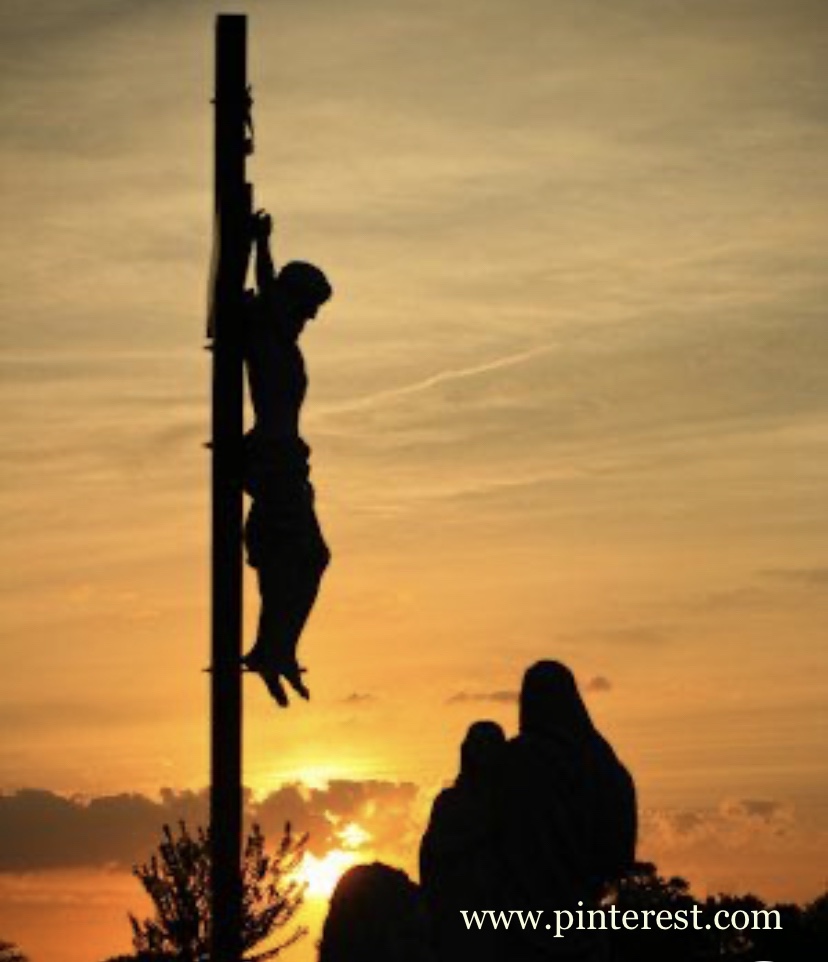
The place, Mount Golgatha The time, the darkest of days The decision has been taken Separated, forsaken, alone He wrestled At dawn the journey began One back-breaking step before the other Sacrificial instrument in tow Dutifully he stumbled forward up Calvary’s mountain Where a cross has been stacked Where the sacrificial tools have been sharpened Where the sacrifice has surrendered, submitted, bounded, mounted To be nailed-up upon a cross, in space, He too, suspended …
When the voice of heaven thundered: “It is finished” And a terrified voice confessed: “Truly He was the only begotten Son of God” To be placed in a grave, three days enshroud
Part IV
Two only begotten sons But only One begotten Son of God
Two went up the mountain But only One went up Calvary’s Mountain
Two lambs But only One Lamb slain from the world’s foundation
Jesus—the Son of God, the Sacrificial Lamb
After-word: This epic poem is a parallelism of the Abrahamic and the Messianic sacrifice experiences. Abraham’s would-be sacrifice of Isaac was a foreshadow of the crucifixion of Christ. The sacrifice of Christ was a symbolism of high sabbaths (John 19:31)as the complete story of salvation—that is, the work of Christ beginning with His death on the cross as the Passover Lamb and to end at His second coming.
2023 All Rights Reserved
Like what you see? To never miss a post click HERE👈 to subscribe & follow the blog. I love hearing from you, so remember to “like” & comment. For more content start HERE👈
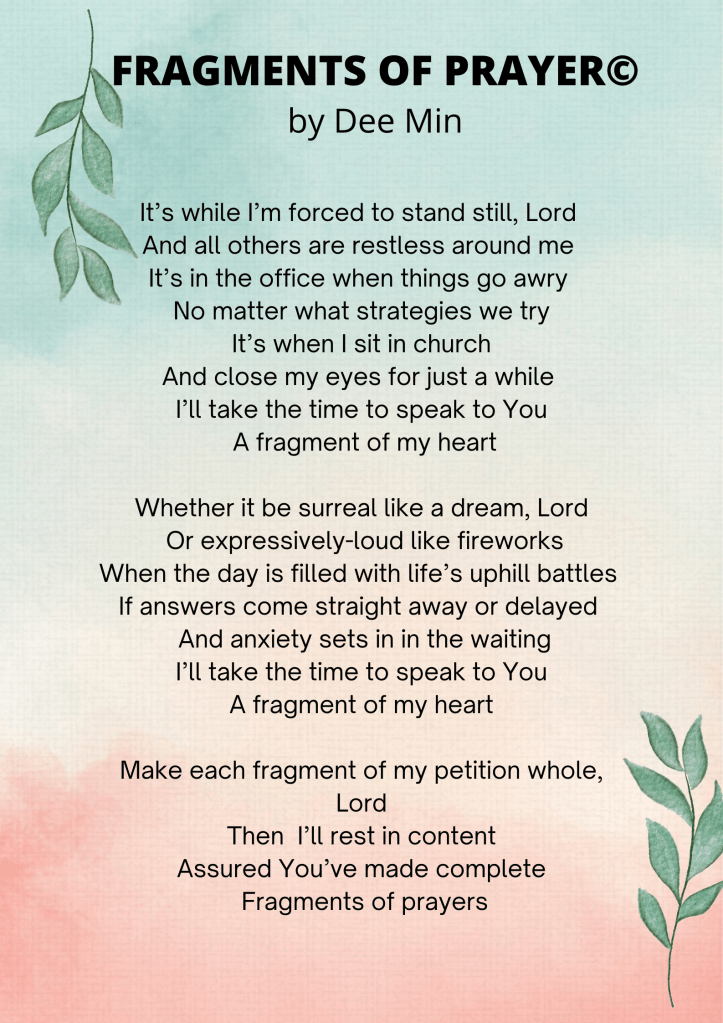
The more I think on why I pray, the more I come to realize that my prayers are really but fragments of my heart.
Like when I’m compelled to stop in acknowledgement that the normalcy and routine of my life has been interrupted by the supernatural.
Like when my eyes open in the morning and I realize that I’m alive, the fragment of gratitude from my heart escapes upon my lips: “thank you Father for waking me up”.
WITH ALL THERE IS TO SAY TO GOD—
—the thanksgiving, the praising, the adoration, the questioning …
—the joy, the sorrow, the loss, the longing, the hurting …
—the wonderings and what-ifs, the near-misses and could-have-been …
My prayers are unending conversations taking place with:
—eyes-wide-open, eyes-tightly-closed …
—standing-up or kneeling-down …
—hands clasped or held high …
My prayers are often filled with emotions seen in:
—tears of joy or tears of sadness …
—unending smiles and abandoned laughter …
—sometimes loud and sometimes soft …
—sometimes no words at all just groans
Shabbat Shalom. May you find the peace, the joy, the release, the assurance that comes with praying.
Like what you see? To never miss a post click HERE👈 to subscribe & follow the blog. I love hearing from you, so remember to “like” & comment. For more content start HERE👈
Like what you see? To never miss a post click HERE👈 to subscribe & follow the blog. I love hearing from you, so remember to “like” & comment. For more content start HERE👈
God initiated it! Shabbat Shalom: It’s Worship Time!
God initiated the Sabbath and He also initiated worship!
Sabbath is for rest and it’s also for worship. And worship takes place wherever, whenever and how-ever like while:
Watching the sun go down, but not before it colors the clouds an autumn orange and the river a golden glimmering tint.
Standing on the bank of the river transfixed, in awe of all creation bustling around me.
Hearing geese honking, hissing and cackling as they waddle up and down the shore, till they fly off to their resting place for the night. Or,
Seeing a father and son skipping stones on the river; and a small child running around his mom as the cutest little Pomeranian chases him, tugging excitedly against the restraint of his leash.
In these moments while I’m standing by the river experiencing life around me by observing laughter, familial chatter and play, and expressions of love it all directs my heart to God. In essence, God revealed Himself—and I worshipped.
The word “worship” itself is not in the Bible but there’s evidence of worship from Genesis through to Revelation. How do we know this? By knowing how worship is defined and seeking reference to that definition in the Bible.
Worship comes from two Old English words: weorth, which means “worth,” and scipe or ship, which means something like shape or quality such as the -ship in friendship that denotes the quality of being a friend. Worth-ship then is the quality of having worth or of being worthy.
On the banks of the river as I ascribed and attributed all that I observed to God and in saying/in knowing that God is worthy—in that moment, I worshipped. Or as the Bible puts it—I praised God.
Worship that expresses the heart
I didn’t speak. I didn’t lift my hands. I didn’t bow, prostrate myself or even close my eyes for there is a worship that expresses the heart.
There is also a worship that involves the mind. And a worship that involves the body. There is a worship that is giving praise upward. And a worship that is receiving instructions from above. And there a worship that carries out instructions in the world around us. And above all, God initiates it!
So, God initiates worship and He does this by first revealing Himself.
Let’s think about it. God is beyond our scope of understanding. So how can we know His worth much less declare it, unless He reveals Himself to us?!
It’s when I see God revealed in His awe-inspiring-make-everything-from-nothing GREATNESS, His all-might-almighty-to-save POWER, His don’t-want-anything-in-return-kind-o’ LOVE, His flawless-perfect CHARACTER—then, and only then, do I begin to understand His worthiness.
This stands to reason then that the better I know what God declares about Himself is the better that I can declare His worth and the better I can truly worship.
Worship is therefore my response to God’s initiation in revealing Himself and I declare Him worthy—I worship—with and from my entire being—my heart, my mind, my soul, my strength—and with and in sincerity.
This is how Jesus explains it. He says:
… true worshipers will worship the Father in spirit and truth, for they are the kind of worshipers the Father seeks. God is spirit, and His worshipers must worship in spirit and in truth.
John 4:23-24
In essence, what was Jesus was saying? The most essential attribute of worship is sincerity. The externals do not matter if the heart isn’t right. If our attitude is wrong then we can sing the right songs, quote the right scriptures, even hold our hands in just the right way but it would mean nothing to God. For if our heart isn’t in it, it isn’t really worship.
And so God reveals Himself first—for He always takes the first step—He’s the initiator-God. Then He goes seeking to find worshippers—those who respond to His revelation of Himself by declaring His worthiness.
There is so much to say about worship than just one post won’t do. So join me next week as we dive more into the wherever, whenever and how-ever of worship.
Shabbat Shalom. May you find the joy in knowing the God who ceaselessly reveals Himself to you, and may your response to His initiation of revelation be one of worship.
God Shabbat. Yes, God rested. He showed us rest before he “commanded” it. In His rest there is power to be aware, to actively hope and to shift perspective to a new way of living.
And, He goes on to explain that He wants for us to work throughout the remaining 6 days, like He did when He created us, humans, and all that we’ve come to enjoy in the natural world around, above and beneath us. And when we’re complete with the tasks of those 6 days, then to rest purposefully like He did (Exodus 20:8-11).
When His creation was complete, God Shabbat/rested. In fact, the exact quote is God “rested the seventh day” (Exodus 20:11).
Not that He rested on the day, but that He rested theday.
In that kind of rest, there is power!
His work was complete, He paused to enjoy the beauty of His handiwork and to commune with His creation. I imagine Him chatting up a storm with Adam and Eve, exploring the bounties of this newly created world, and enjoying fellowship.
And this is why I love the Sabbath.
First, because it reminds me in a tangible way that God is creator.
Second, because I enjoy the freedom in focusing primarily on God and all He does for me. And,
Thirdly, because on a weekly basis I can rest with purpose—to actively and purposefully choose to remember, to take an active stance to refocus so I may better see and appreciate what God is doing in my life that might not be visible at first glance; and to recenter my life.
Throughout the week I’m pressed with work and though I spend time with God it’s not as dedicated as it is on Sabbath. And then, there’s just something about Sabbath rest.
Sabbath rest is more than refraining from work. It’s giving myself permission to enter into a mindset of completeness, to rest the day.
As my mom always tells me when I’m up late at night trying to meet one deadline or the other, “work is never done”, she’d say. But, on Sabbath, in coming to a sense of completeness—accepting that I’ve done all I can do for those 6 days—I shift my focus.
This means my focus is not on my goals, work deadlines, housework etc. All these are given a less important position in my mind and frees me up to simply enjoy what’s around me. To shift my focus to God and spending time with Him. It’s our weekly Daddy-daughter date. And I love meting up with my Daddy!
Shabbat Shalom. May you find the power in sabbath rest—a shift in perspective to a new way of being.
For unto us a Child is born, unto us a Son is given. And His name will be called Wonderful, Counselor, Mighty God, Everlasting Father, Prince of Peace. He is Jesus!
ART to heART is more than a homophone. It’s a life-changing salvific principle used in the recreative-poetic expression of God.
The Greek word poiēma is used ONLY TWICE in the Bible and both times in reference to the creative power of God. First, when He created eARTh referred to as “things that are made”—a phrase translated from poiēma. Romans 1:20 And second, in reference to the recreating of our heARTs referenced as “masterpiece”—a word also translated from poiēma. Ephesians 2:10
In essence, God demonstrates Himself as both Creator and Redeemer through and in us.
We’re both a complete work created by the Creator, and a transforming process being recreated by the Redeemer.
Humankind was the only part of creation that God made with His hands, in His image and after His likeness. Genesis 1:26 He poured the very essence of His divine artistry in us. We were created perfect in every way.
The Bible went on to reveal that sin entered. I like the way the great theologian Charles Spurgeon puts it: he says, when sin entered it was as if “we quit [God’s] … workshop”. [Treasury of David, p239.]
Because of sin our hearts turned away from God and our ways of thinking and behaving toward God and our fellow human beings were also distorted. And sin had but one consequence—eternal death. Romans 6:23
But God wasn’t having it! Absolutely not!
Determined not to lose the crowning jewel of His creation eternally to death, God puts His redemptive plan in motion. A plan to draw us back to Himself, back into His workshop, in order to recreate His ART/His poiēma in our heARTs.
Let’s talk about God’s heart and how He loves.
God has a “SO LOVE” heart. A heart that loves far beyond a Significant-Other kind o’ love. God’s SO—to-such-a-great-extent—LOVE, is a die-for kind o’ love.
For God so loved the world, He gave His one and only Son [to die], that whoever believes in Him shall not perish but have eternal life.
In the act of creation, God stooped down to breathe life into us. However, in the act of redemption God offered Himself up, to die.
And He didn’t just die, God bled for us. He endured a crown of thorns that pierced His brow and spilt His blood. He endured hammering nails that tore through skin and bone and spilt His blood. He endured a piercing sword that slit His side and spilt His blood.
God bled and died to redeem us back to Himself, and to rescue us from eternal death.
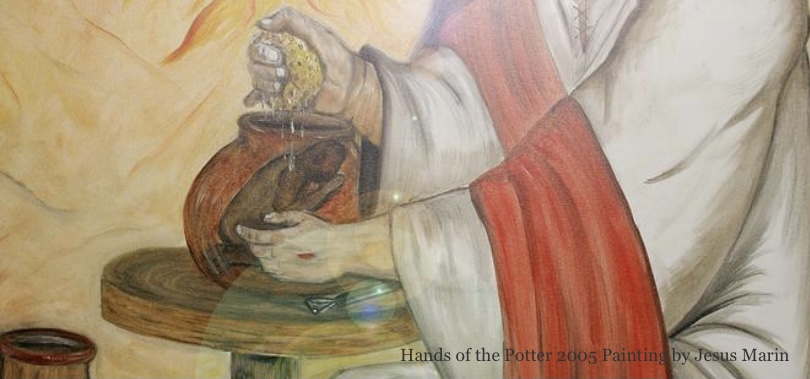
This is gifted to us as grace and can only be received through faith. For those who choose to accept His gift, Romans 6:23 God likens the process to a potter transforming clay. Isaiah 64:8
And again, we see God returning to the posture of stooping—molding and shaping us, recreating the ART in our heARTs, redeeming us back as His masterpiece.
… we are God’s masterpiece [poiēma]. He has created us anew in Christ Jesus, so we can do the good things He planned for us long ago.
Created anew in Jesus means we are again spiritually acceptable to God because of His redemptive power which is working in and through us. His redemptive power enables our hearts, our thoughts and our behaviors to glorify God and to be beneficial to our fellow humans.
In other words, we are redeemed/saved not by good works but for good works.
ART to heART. Now we are twice God’s—once by creation, twice by redemption. We are His ultimate workmanship—His work of art.
Shabbat Shalom. Rest assuredly in knowing you are a work of ART in progress in the hands of the genius Creator and Redeemer who uses only the right tools to reshape your heART into its perfect masterpiece design. You Are A Masterpiece, body and heART!
After-word: In the last Shabbat Shalom post I referred to God’s poetic expressions in creation through the ART He created in the midst of eARTh and the crowning jewel of His creation—human—as His masterpiece. [You can see more on that in this post: You’re A Masterpiece: God’s Work of Art.] One reader’s comment referred to the ART in heART which was expounded on for today’s post—“God’s Art to HeART”.
God is passionate about you because God is passionate about God.
OK … hold on. Before you think I’m saying God is egotistic, because that He is not, let me expound.
God knows who He is. In response to Moses’ question: “Who should I say you are?”, God responds with: “I Am”. I imagine Moses in that moment knitting his brow with that “Uh!?” expression, and God retorting emphatically with: “I Am that I Am”! (Exodus 3:14, KJV)
God is the I Am. But what does that mean?
God knows He is God and that besides Him there is no other. God is in a class by Himself.
Intrinsic to who and what God is as God—and that nobody else is—is His name. That is, embodied in His name is His infinite greatness, His infinite perfection, His infinite worth. And He’s fiercely protective of His name because of what is in His name.
What’s in His name? Everything!
In the name of God the sick find healing and the lame get to walking; the dead come alive and the living live to thrive; blinded eyes are made to see and demons have gotta flee; boisterous waves find calm and troubled souls find balm. In the name of God the weak are made strong and it covers all our wrongs.
God bestows His name, that powerful name, on you—God knows your name! And not just your name but your SURNAME!! He knows it because He Himself surnamed you.
In other words, God has given us His family-name—how intimate is that?! But more than intimate is the inconceivable gift that in surnaming us God has given us His identity and with that comes authority.
Now here’s the clincher: God lavishes His surname/identity on you, even if you do not know Him. He says:
I call you by your name, I surname you, though you do not know me.
God is passionate about YOU. God sees YOU. God knows YOU. God surnames you DAUGHTER. God surnames you SON. You are His. You are highly prized. You are cherished. You are loved. You are wanted. You are worthy. And, you are enough.
Now the question is: Do you know whose you are and who you are?
Not who you are by your birth-certificate name, but whose you are by your intrinsic name. With the same confidence that God knows His name and who He is, He wants you to know your name and who you are.
I will give you a good name, a name of distinction…. I, the Lord, have spoken!
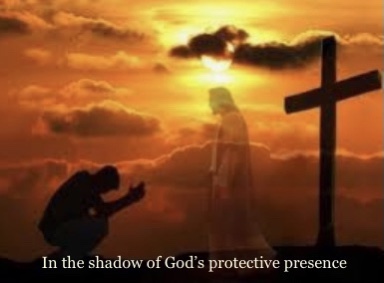
Shadow is mentioned quite frequently in the Bible, and usually in the context of God’s protective presence. Like: being covered with the shadow of God’s hand (Isaiah 51:16); resting in the shadow of the Almighty (Psalm 91:1); being hidden in the shadow of God’s wings (Psalms 17:8); or walking in the shadow of death (Psalms 23:4).
We know a shadow is cast when light cannot penetrate an object. We also know that the shape of an object always determines the shape of its shadow. BUT, the size and shape of the shadow can change. These changes are caused by the position of the light source.
The Bible defines Jesus (the Son) as our light source—the Son is the light of the world (John 8:12). So where we are positioned in relation to the Son determines how the shadow of His protective presence will be cast.
When our shadow falls in front, this means the Son is behind. It’s in those times when we’ll hear His voice behind us saying “go left” or “go right” (Isaiah 30:21). Sometimes God leads from behind.
When our shadow falls behind, then the Son is in front. In those times the Son invites us to follow Him, He leads from in front. (John 10:27)
And then, there are times when our shadow is beside. It’s in those intimate relational moments, those moments when you’re fully aligned to His will and walking in step as friend with friend, that He leads alongside. (Micah 6:8)
Well, what about when your shadow is short and appears under you. Do you know the time of day when this happens? It’s at midday—at the hottest point of the day—that’s when shadows are very short.
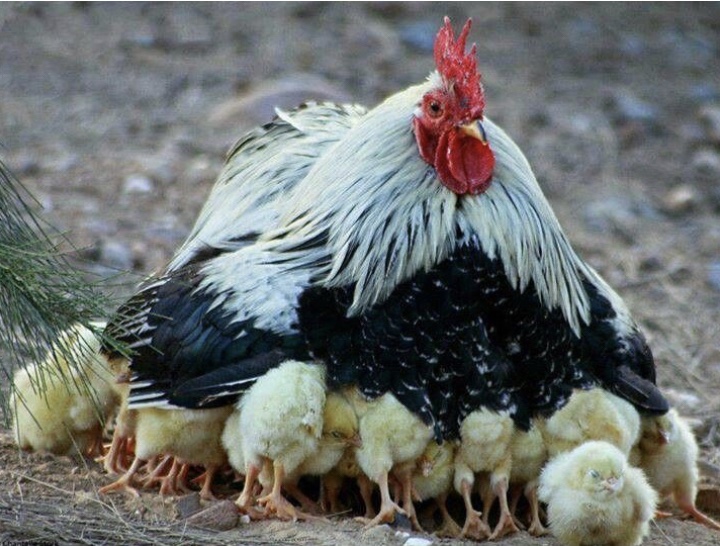
It’s in those moments that we are under His wings—hidden, snuggled, protected, surrounded. Those moments when our battles (physical, social, emotional, spiritual) are the hottest that God gathers us up like a hen gathers up her chicks. Those hot-battle moments is what the Psalmist called the “shadow of death”. What you’re going through feels as though it will snuff the life out of you, but it’s only shadow of…, it’s not death.
It is in those shadow-of-death moments when we need physical touch the most. In those moments a voice behind directing is not sufficient. Footprints in the path to follow is not sufficient. Side-by-side is intimate but that too is not sufficient. In all those times you have closeness with the Son. BUT, in the hot-battle moments you need to be held, to be hugged, to be under the banner of His wings, to have the assurance that you’re covered. And that’s when the Son scoops you up into His arms—like a mother bird protecting her young by covering them with her wings—and in so doing only a short shadow of you cradled, nestled in Him is cast.
“He will cover you with his feathers. He will shelter you with his wings. His faithful promises are your armor and protection.”Psalms 91:4
Shadows cast behind, in front, beside or under depends on the time of day and the seasons. However, in all instances it is the earth, not the light source (sun), that moves.
So it is with the Son, for with Him there is no variation or shifting shadow (James 1:17). We may move, but God is constant and immovable which means we can always find our way back to Him. Where you left Him in the changing seasons or times of your life, is where He will be when you come back to Him.
Shabbat Shalom. May you find peace in the shadow of the Almighty.
As we’re winding down the season of long summer days and about to enter the season of transition, I’m thinking about trees and the transformation they’re preparing to undergo—the stripping, the letting go—and how simultaneously beautiful and haunting that is. And that got me thinking about the life lessons we can learn from trees.
Lesson 1: Be Rooted. Most demons we fight as adults were planted during childhood, the formative years. Be aware of root causes. You can’t change what you don’t know or assess and won’t own. When the dysfunction is known and addressed/being addressed, be grounded in the transformed/transforming you. Roots that are strong enough will help you withstand what life throws at ya.
Lesson 2: Be vulnerable. In climes where seasons change, trees shed their leaves, they leave themselves bare. In the right circumstances and with the right people, let everything that would hinder your transformation fall away. Life seasons will inevitably change and you’ll bloom again, without pretending. When you know you, when you’re rooted in who you are, you can face the world with nothing to hide behind. Know your truth. Speak your truth. Live in your truth.
The trees are about to show us how lovely it is to let the dead things go.
Author Unknown
Lesson 3: Be Pliable. If you can’t or won’t bend, you can and will break. Rigidity leads to breakage while flexibility leaves room for movement.
Have you ever watched a tree dancing in placid-like wind, or flailing about in a storm? Sure, winds sometimes lead to breakage, but more often than not trees that are well rooted and can move in the direction of the wind, bounce back. Be pliable when life’s storm winds blow. You’ve got bouncebackability. Be open to breaking-through.
Some of us think holding on makes us strong; but sometimes it is letting go.
Hermann Hesse, German novelist & poet
Lesson 4: Be photosynthetic. It’s a process of absorbing and releasing. What you take in—either negative or positive—you must also release. The Dead Sea is “dead” because it receives but it doesn’t release, it has no outlet.
Where you are now, is not where you will be. Becoming the best you is transformational and that’s a process of letting go and letting God. God is a good outlet. In fact, I’d say the best. Trust the process, trust God and let your authentic self become uncovered.
Trees are poems that the earth writes upon the sky.
Kahlil Gibran
Lesson 5: Be poetic. You may not know this, but poetry was created in you. God says we are His “workmanship”, created and ordained for good works. The word “workmanship” is a translation from the Greek word “poiēma” from which the English word “poem” is derived. So, who are you not to be poetic when God created you so to be!?
Shabbat Shalom. May you find the courage to be like a tree—a poem in full authenticity—written across your sky!
Before-word: for today’s Shabbat Shalom celebration, sharing a piece commissioned by my church as a tribute to our members who’ve passed on as part of our 50th anniversary celebration. I did not want a macabre presentation, but rather one filled with hopeful anticipation.
Using the abecedarian poetry form, I chronicled our beginning; the joys of community building, the camaraderie, the friendship, the fellowship; juxtaposed to the lost of loved ones and the anticipation of the resurrection when we will be reunited.
[👆play video 👆] The piece—as delivered by Andrea McIntyre—with eloquence and emotive passion
Sabbath and tithing are two biblical principles. Both appear paradoxical or self-contradictory on the surface. And, both are associated with blessings.
Paradoxical and a blessing? How? Both are based on you giving up a portion of what you have a finite amount of on the basis of faith in a God who will bless you abundantly above what you had before you gave.
There’s no mystical hocus-pocus here. Rather, it’s one of the great paradoxes and a guiding principle in the economy of God: If you try to hold on to all of your resources, you may not have enough. When you give some of what you have over to God, you invariable end up with more than you need.
Let me give a personal take on this. When I don’t seem to have enough hours in the week and yet I set aside the Sabbath day for rest and worship, I’m still able to accomplish the tasks at hand. It’s not that more hours are added to my week, obviously not. But by virtue of deciding to honor the Sabbath—in spite of the heavy demands on my time—I’m saying to God: I’m honoring You and giving You rulership/Lordship over my time. Much the way I do with my money.
As a result, my perspective and priorities change. A rested mind generates better ideas. But more importantly, I make decisions on how to manage my time on the wisdom of God instead of being driven and informed by the stressful circumstances of life.
Tithing is the principle of setting aside a specific amount of our increase for a specific purpose. Celebrating Sabbath is an opportunity to make a conventional offering to the Lord—the offering of the most precious resource that we have in life—time.
Shabbat Shalom. May you find the blessings in setting aside/tithing a portion (24 hours) of your week-time in Sabbath rest and worship.
I’m a big fan of David. The David of the Bible. Yes, that prolific spoken word artist who was also a master harpist, a warrior King and a murderous adulterer.
So bloody were the hands of David from warding off assailants while he fled a jealous crazed king and from wars he waged to secure his rule when he himself became king, that God forbade him to build the famed temple of Jerusalem (first built in 957 BC).
Yet and in spite of all this, when God described David, He didn’t look at the externals. Instead God said, I sought after David because he’s “a man after my own heart” (1 Samuel 13:14).
It’s no wonder, because David was all heart. Whether he fought or he loved, whether he schemed or he wrote, he was 100% heart.
The record we have of David’s life showed that he never really had a season of peace. For much of his early adulthood he was fending off attempts on his life by a wildly out of control king. Then when he became king, he was constantly warding off attacks on his kingdom. Yet amidst the tumultuous times of his life, David wrote.
He wrote poetic lines like: “commune with your own heart and be still” (Psalm 4:4).
In other words, rest in stillness and undertake/arrest your thoughts in awareness.
If David could find mindfulness—to be in a state of active, open, intentional attention on the present—while all around him is unrest, then certainly so can we.
I’d like to share just 3 lessons I’m learning on this journey to living in the moment:
Being intentional to stop doing and focus on just being. Writing is one way to help me do that.
Knowing that I am not my thoughts. I try to observe my thoughts without judging them and this way I don’t get lost in my mind and I’m able to appreciate the living present.
This I know to be true: worrying about the future and ruminating about what’s past is one sure way to squander what precious moments I am granted in life.
“I have known a great many troubles”, said Mark Twain, “but most of them never happened” he concluded.
Shabbat Shalom. What better day than today—Sabbath—to rest in stillness. Give your mind a break from the rat race of this week.
I came across 12 Bloggerz! hosted by Rory. Rory you asked 12 great questions but one really jumped out at me. So, I’ll answer only that one because it aligned so strongly to something that is integral to who I am—my faith and being a Christian.
This is the question: How would you feel if everything you didn’t believe in today turned out to be true – which of your new disbeliefs now truths would affect you the most profoundly?
But also answer this question from the opposite spectrum as in –
How would you feel if everything you believed in today turned out to be false – would this affect you and if so which falsehood that you hold now true would affect you the most profoundly?
I’m a Christian. I’ve questioned things in the Bible. I’ve stripped down my faith to the bare ‘bone’ and built it up again just on the basis of who God has been to me. Not on theology and doctrine, but on a living faith. A faith in a God who grants me goodness and mercy every day of my life. Even in the hardest and saddest of times, I’ve experienced His goodness and love and walked in His mercy and grace. Now I KNOW that I know.
Turning now to answering Rory’s question: if it turns out that there is no God and no rapture and no heaven, living my life by biblical Christian principles in a world of “alternative facts” and intense hopelessness and despair would still be worth it. And I’d choose to live this way again and again because it affords me a joy and peace to live life in all its dimensions—the good, the bad, and the in-between.
I like how Pascal lays it out in his Pensées—as a wager: If I believe that God exists and I live by His principles, there is only a finite loss (like the “pleasures” of the world I choose to abstain from), but I will gain infinite blessings such as life after death. However, if I believe that God does not exist and He actually does, then my loss is infinite in that there is a life after death that I would have forfeited for finite gains.
My wager: I chose to believe that God is real, the rapture is real, and heaven is real. And, that when this life is over, it is not the end, I shall live again. This gives me immense HOPE—there’s got to be more than this life.
Shabbat Shalom. May you find contentment in your faith.
Before I understood the true meaning and the blessings of the Sabbath, it was more like an arduous religious ritual observance. And as an adolescent, I recall at the end of just about every Sabbath I came down with a terrible migraine headache.
Research on the anthropology and psychology of religion have confirmed the psychological impact and mental health implications of ritual observance.
Sabbath is not about rituals or a litany of restrictive dos and don’ts. Sabbath was intended to help people, not burden them.
The Bible says it best: Sabbath was made for man and not the other way around (Mark 2:27). Meaning the sabbath was made for our good, and not our hurt. For the good of our souls (spiritual, mental, psychological renewal); for the good of our bodies (physical rest and restoration); for the good of our communities (connecting families, friends, society); and for the good of our world (socially, culturally, environmentally).
The world is US. Therefore, what we do at the individual level has a ripple effect. I believe God’s intent behind the Sabbath was to heal the world/us and keep it/us healthy.
Imagine if each week there’s the opportunity to recenter ourselves; to reconnect with family and friends; to truly REST; to have dedicated-unrushed worship time to commune with the Divine God; and, to truly understand and appreciate the connection between Sabbath-keeping and nature. Well, that is what Sabbath is! And it is accessible to each of us.
This kind of transformation at the personal level over time would have a profound healing effect on the world.
Scientific and empirical research prove that when we set aside the ritualistic approach to Sabbath, we open ourselves up to holistic health benefits that can contribute to our well-being as individuals.
The benefits include longevity (up to 10 years added to lifespan); few deadly diseases; more healthy years of life; better mental health; and, better physical health.
However, Sabbath was never intended to be about me, the individual, but about US, the community. The celebration of sabbath should synchronize us with others—me>> family>> friends>> community>> society>> earth—for a ripple effect of transformation.
Shabbat Shalom. May you find the spiritual, psychological, social, physical, cultural, and environmental health benefits of Sabbath for yourself and your community at large.
We know that God established Sabbath as a day of rest at the end of the 7-day week. On the 6th day human beings were created. So clearly there wasn’t much work, if any at all, for humankind to do between them being created and Sabbath rest being instituted. So, if not to rest from work, what then was the purpose of that very first sabbath? And what can that teach us about sabbath rest today?
Imagine that you’re Adam or Eve. It’s Friday and you came to know yourself and to meet the One who created you. And together with your Creator you start to explore the vastness of your garden-home. You are enveloped in nature. You go off to sleep with wonderment and immense joy and wake up just as blissful with jubilant expectation to see what else the Creator has to reveal of His eARTh. And He bids you “good morning, welcome to your first Sabbath!” He invites you to explore and reflect on all He did for you despite you having done nothing. He invites you to receive Sabbath grace.
Grace, simply defined in Christian theology, is a favor given to us by God only on the basis that He desires for us to have it, not because of anything we have done to earn it (i.e. it’s unmerited).
Nature is one way grace is demonstrated. We did nothing to have received the gift of nature. All its wonder and splendor is the grace that Sabbath affords us to reflect on.
Join me on this pictorial ode to nature, journeying through Arizona:
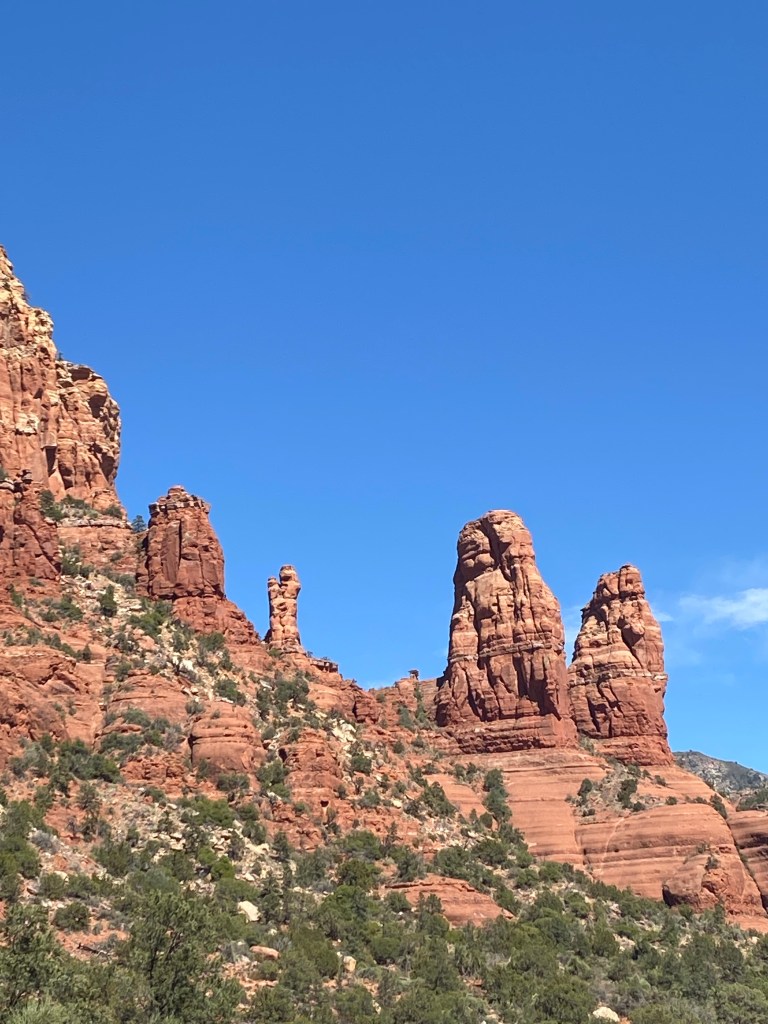
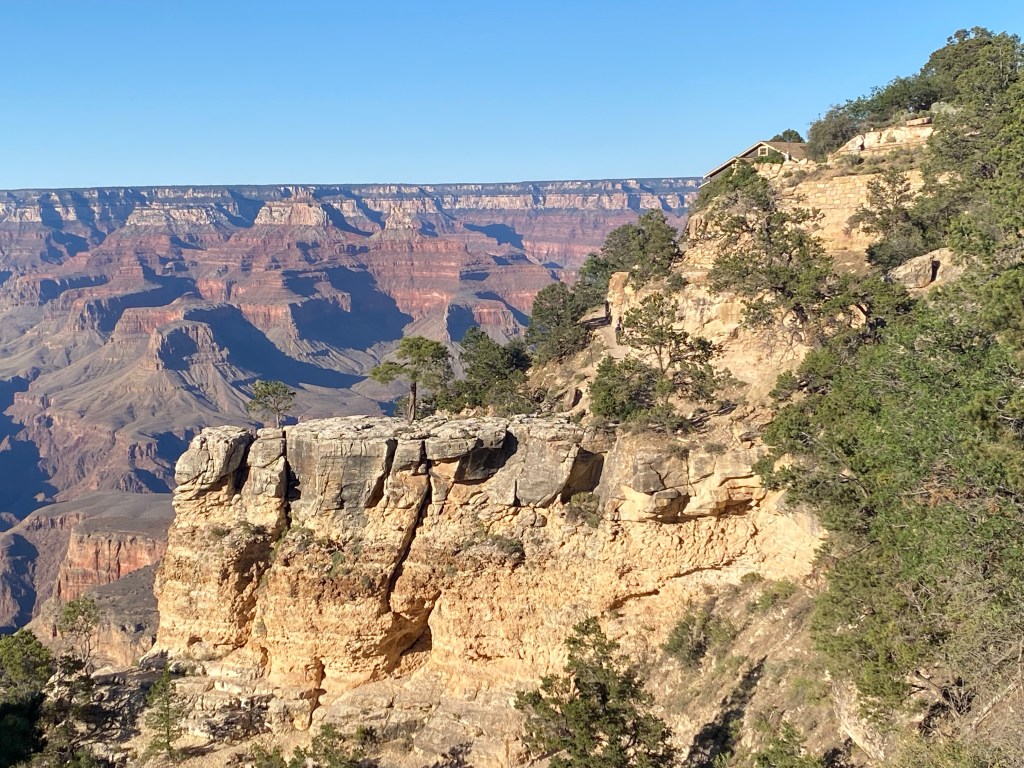
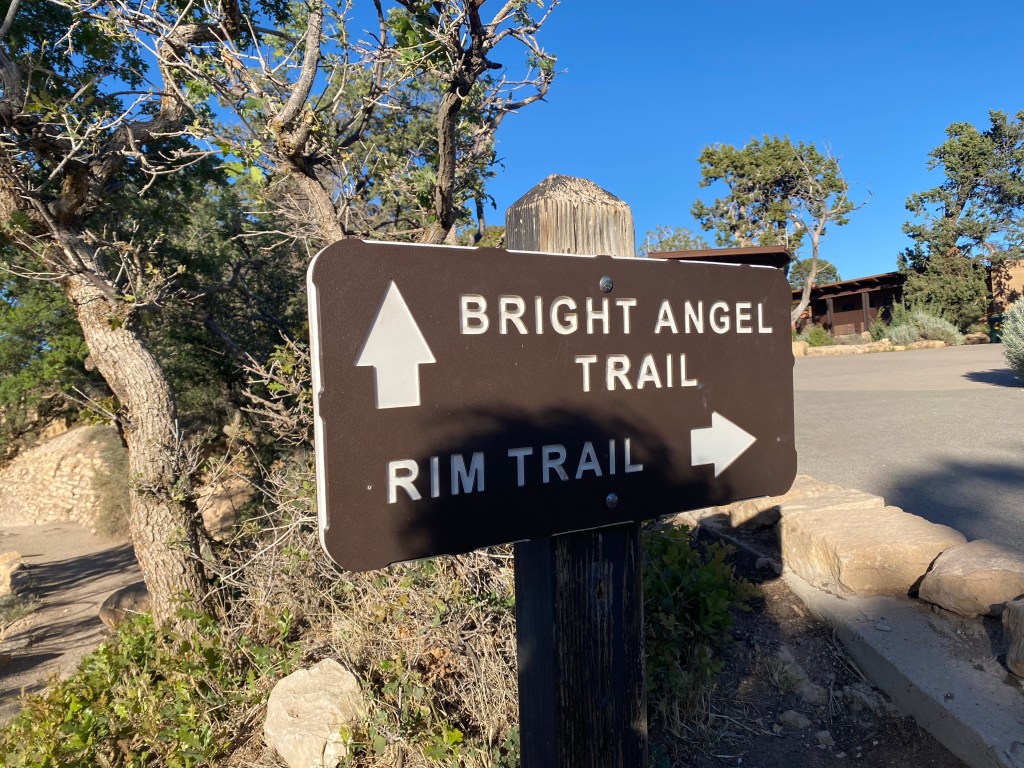
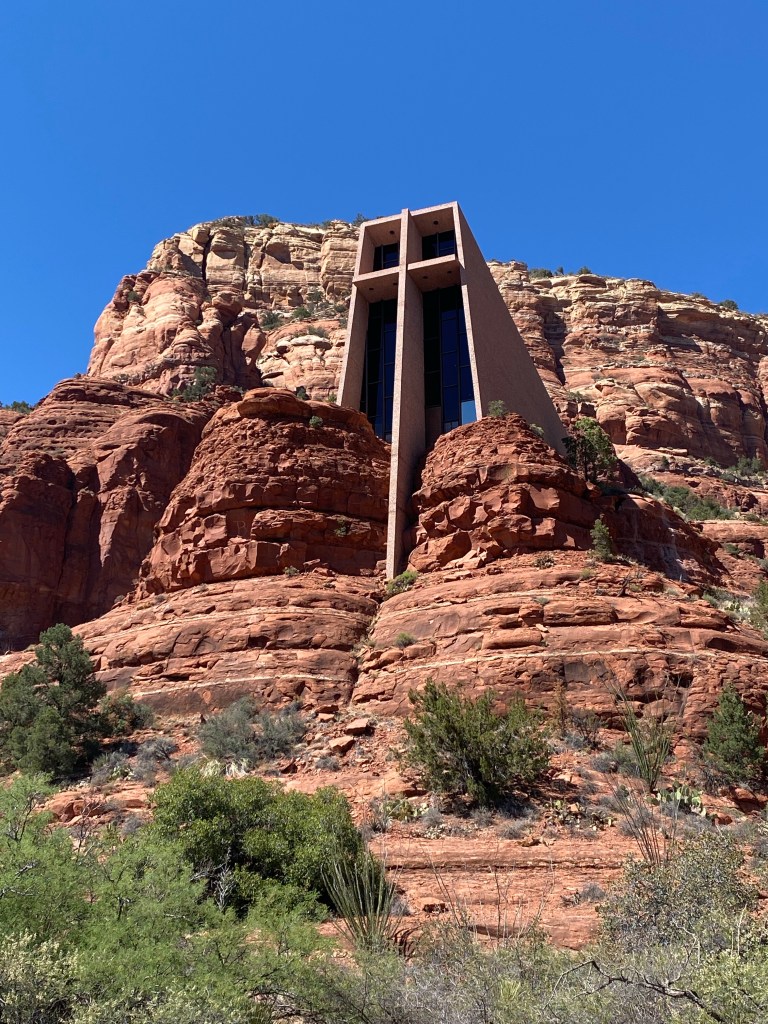
Surveying the incisions that over time water has cut into the plateau revealing layer after layer of rock in hues so red to influence the naming of Sedona, Arizona—Red Rock Country.Whether you look to the left or the right, your eyes will land on stunning red rock vistas.Determined to climb to the highest level of the Bell Rock to bask in the earth’s energy from the vortex, I often got down on all fours.There she is in her full splendor, the Bell Rock, as only can be fully appreciated from above in a helicopter ride over … I hiked that! Getting re-centered in a circle of cairns at the 1st level of the Bell Rock vortex. Vortex is a concentrated area of energy rising up from the earth. If you’re sensitive enough to the surrounds, you do feel the energy. Nature equally awes in the Grand Canyon with massive boulders so precise and grandiose ……and mountain ranges flat like a table top juxtaposed to ragged-edged peaks draped in golden sunlight. No trip to the Grand Canyon is complete without a roadside encounter with the wild life whether grazing lazily along the highway…… or skillfully scaling rock faces. These sheep mountaineers blend seamlessly into their environment. Had this enchanting encounter while hiking the Bright Angel Trail in …… the Grand Canyon. Arizona also boasts plants flowering in arid landscapes … … and bigger-than-life cactus growing wild……or tamed for exterior decor. We often think of grace in the context of Jesus’ death on the cross. This crucifix hangs in the Chapel of the Holy Cross, one of the strongest vortex sites (there are 4 vortexes in Sedona). The Chapel of the Holy Cross, built in between 2 towering red rock formations in Sedona is the perfect place to sit in quiet reflection of all of nature surrounding you while gazing up on the embodiment of grace—an image of Christ hanging from a cross.
In every direction throughout Arizona there is the beauty of the natural wonders of nature, and this too is a reminder of the grace of Sabbath.
Shabbat Shalom. May you experience the grace of the Sabbath in nature today and every day.
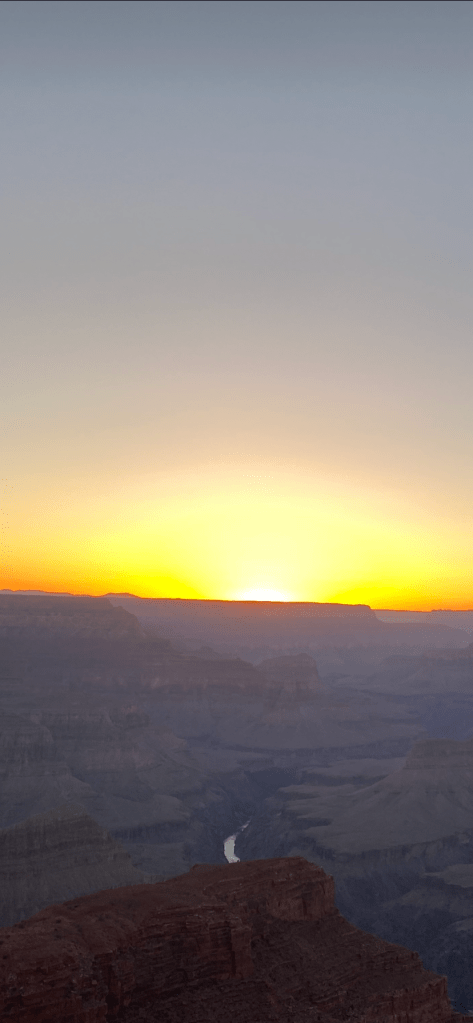
The sun sets on my time in Arizona, blanketing the horizon over the Grand Canyon.
In addition to—the tranquility of Sabbath peace; the blessings of Sabbath worship; the refreshing of Sabbath rest; and those Selah moments of pause like mini-Sabbaths that can be taken throughout the week—is the joy of Sabbath reflection.
Sabbath is a time of reflection.
Many people tend to think of Sabbath as merely a command given by an authoritarian God: “Thou shalt keep the Sabbath!” (imagine a gruffly voice). Seen in this way the most essential attribute of Sabbath— i.e. relationship—is lost.
Prior to Sabbath being carved into stone, it was carved into the psyche. How do I know this? Because in pronouncing the Sabbath, God started with “remember”. To remember is to bring back to one’s mind an awareness of something previously seen, known, or experienced in the past.
“Remember the Sabbath day…”, He says. But why? To reflect on one of the primary attributes of God—creator—“…for in six days the Lord made [created] …” (Exodus 20:8-11).
Sabbath is a call back to reflection, not on ourselves, but on creation and in so doing we find/see God. For, within everything God created is embedded a revelation and a reflection of who He is.
The joy of Sabbath reflection lies in the opportunity it affords our brains to pause amidst the chaos of life and to shift focus. To foster a deeper sense of connection to God and all that He’s created and in so doing build our relationship with Him and with our communities of family, friends, believers etc.
Shabbat Shalom. May you find the joy of Sabbath reflection.
I previously wrote about attributes that Sabbath affords us—the tranquility of Sabbath peace; the blessings of Sabbath worship; the refreshing of Sabbath rest; and those Selah moments of pause that we can take throughout the days that are like mini-Sabbaths.
This post is about another facet of Sabbath, fellowship.
One of the things I miss most about not being able to assemble in church on Sabbath is fellowship.
Follow with me with your mind’s eye:
It’s Sabbath morning. I’m awake with a feeling of renewal—the work week is behind me and I’m about to start my weekly day-long date with my Father-God. I’m relaxed for it’s a time to reboot, reset, recharge. I take extra care in getting dressed because this is the highlight of my week and I want to look my best on my date.
I arrive at church, open the doors and the air is alive with the hum of voices that float out to greet me. People are smiling, laughing, shaking hands and there’s even hugging. It feels like a celebration.
And it is!
It’s sabbath fellowship.
And it’s refreshing. But there is far more than what meets the eye going on, there’s a much deeper meaning to this interaction. John describes it best in I John 1:3: “…truly our fellowship is with the Father, and with His Son Jesus Christ.”
Yes, fellowship is partly about the interaction with those of like mind, but most importantly it is our individual and communal interaction with God. That’s what the fellowship of Sabbath affords us—the blessing of oneness with fellow believers and with God.
Under the pandemic we’ve not been able to assemble or have person-to-person fellowship. Online services give one part of what is needed for spiritual growth—expounding the word of God through sermons. But, in the absence of fellowship there’s one critical element of assembling ourselves together that Hebrews 10:25 spoke of that’s missing, and that’s “exhorting one another”. The encouragement, the learning, the motivation and uplifting that comes during fellowship cannot be duplicated or replicated.
However, one guiding principle for fellowship is to make a concerted effort to take the focus away from yourself and put it on others. So while we can’t assemble in the church building, finding socially-distanced ways to connect is critical.
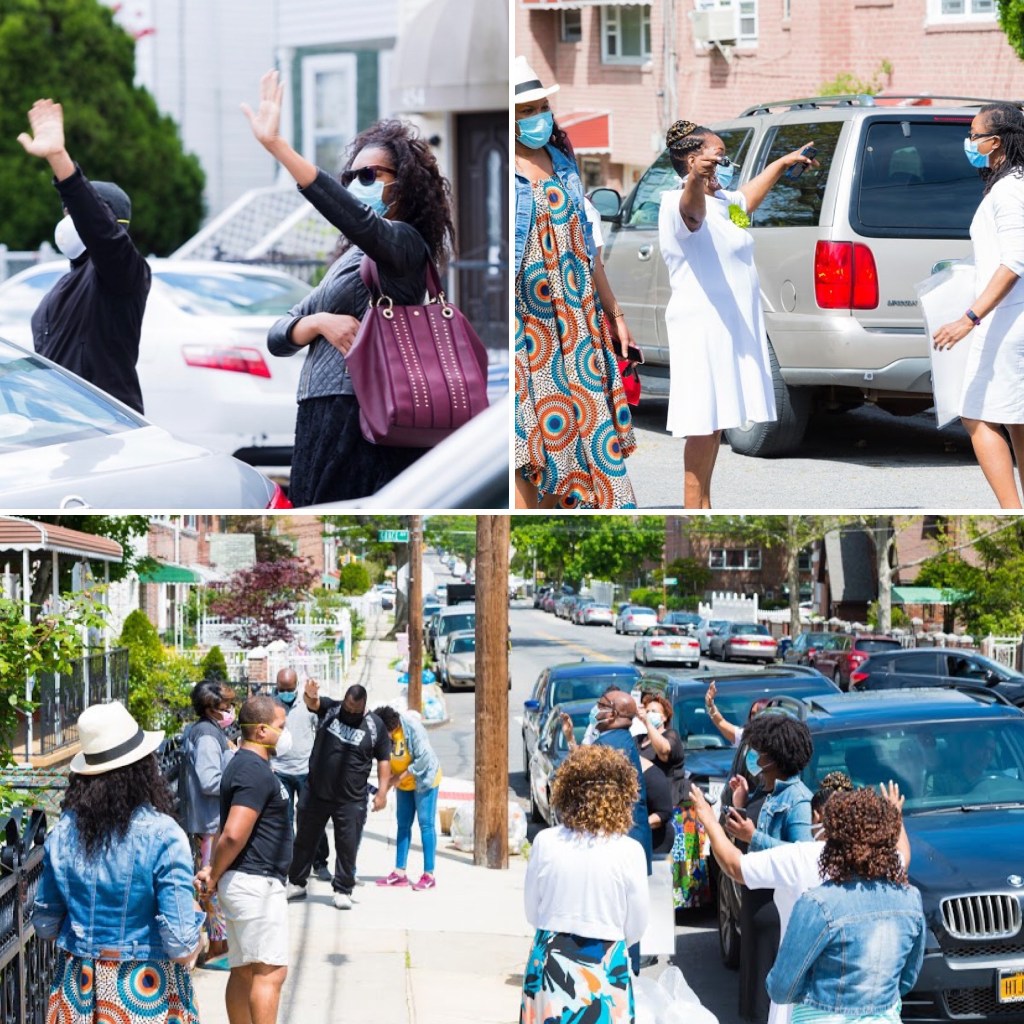
My church instituted the Caravan of Hope. We drive by houses to sing and pray (socially distanced, with air hugs and blown kisses and sometimes with gifts) then drive on to the next house and repeat. Even though we can’t hug or shake hands, we haven’t forsaken the assembling of ourselves together-apart and in so doing have the blessing of Sabbath fellowship in a hybrid way.
Shabbat Shalom. May you find fellowship with friends/family and with God.
“Peace I leave with you; My [perfect] peace I give to you; not as the world gives do I give to you. Do not let your heart be troubled, nor let it be afraid.” St John 14:27 (Holy Bible)
I took this photo last night as the sun was setting, ushering in another Sabbath. And though the clouds seemed threatening, the edges of light still reflecting off of the setting sun gave me a sense of peace. Peace amidst the threat of storms is the peace the Most High God promises.
I pray His perfect peace calms you in every circumstance and give you courage and strength for every challenge.
A collection of writing by Dominic Riccitello — intimate conversations, personal essays, and poetic reflections on relationships, loss, and self-discovery.































 Poems & More